

DeepSeek R4 for AI Agents: The Business Case
⏱ 8 min read
TL;DR
- What it is: DeepSeek R4 is positioned as a reasoning model with strong agent capabilities, tool calling, long context, and API compatibility for workflow automation.
- Who it's for: Business teams looking to automate repeatable tasks like customer support, sales operations, coding workflows, and document processing with measurable outcomes.
- How it works: The model reads context, calls tools, structures outputs, and moves tasks forward across multiple steps with human oversight at decision points.
- Bottom line: Start with narrow, boring workflows. Add boundaries. Track ROI. Use human review where judgment matters.
What is DeepSeek R4 for AI agents?
DeepSeek R4 for AI agents is a reasoning model designed to handle multi-step workflows by planning, calling tools, reading files, and generating structured outputs across long contexts. Unlike chatbots that answer single questions, agent systems use DeepSeek R4 to automate repeatable business tasks like customer support triage, coding assistance, and document processing with human oversight.
Best for: Teams automating rule-based workflows with clear boundaries and measurable outcomes.
Not ideal for: Unpredictable decisions, unstructured tasks, or workflows without human review checkpoints.
The next wave of AI will not be about better chat.
It will be about better work.
That is why AI agents matter.
An agent is not just a chatbot that answers a question. It is a system that can plan, call tools, read files, write outputs, check progress, and move a task forward.
That sounds exciting.
It should also make you cautious.
Because when AI moves from answering to acting, the cost of a mistake rises.
DeepSeek R4 matters because it is being positioned for this new agent layer. Officially, DeepSeek says V4 has stronger agent capabilities, supports tool calls, supports long context, and is integrated with AI agent workflows.
For business leaders, the real question is not whether that sounds impressive.
The real question is whether it creates measurable value.
What makes a model useful for agents?
Agents need more than clever answers.
They need several things to work well:
They need reasoning.
They need memory.
They need tool use.
They need long context.
They need speed.
They need cost control.
They need predictable formatting.
They need guardrails.
A weak model can answer a simple question. A stronger model can hold a plan across steps.
That is the difference.
A customer support chatbot answers, "Where is my order?"
An agent checks the order system, reads the policy, drafts a reply, updates the ticket, and flags the case if it is outside the rules.
That is a different kind of AI.
Why DeepSeek R4 is interesting for agents
DeepSeek says V4 supports 1M context, tool calls, JSON output, thinking and non-thinking modes, and OpenAI-compatible and Anthropic-compatible APIs.
That combination is important.
Long context helps the agent read more.
Tool calls help the agent act.
JSON output helps the agent send structured data.
Thinking mode helps with harder tasks.
API compatibility helps developers test it inside existing systems.
This does not mean DeepSeek R4 will be the best agent model for every business.
It means it deserves a serious test.
For a full technical breakdown, read the DeepSeek R4 AI model guide. For cost planning, see the DeepSeek R4 API pricing breakdown.
The best agent use cases are boring
Most people imagine agents doing huge things.
Replacing departments.
Running companies.
Making decisions.
That is not where most ROI starts.
ROI starts with boring work.
The work that happens every day.
The work that follows rules.
The work that people avoid because it is repetitive.
Examples:
- Prepare a sales call brief.
- Summarize a customer ticket.
- Draft a proposal outline.
- Review a support transcript.
- Create a content brief.
- Compare vendor documents.
- Clean CRM notes.
- Find missing data.
- Write first-pass code comments.
- Turn a meeting into tasks.
This is where DeepSeek R4 can help.
Not because the work is glamorous.
Because the work is constant.
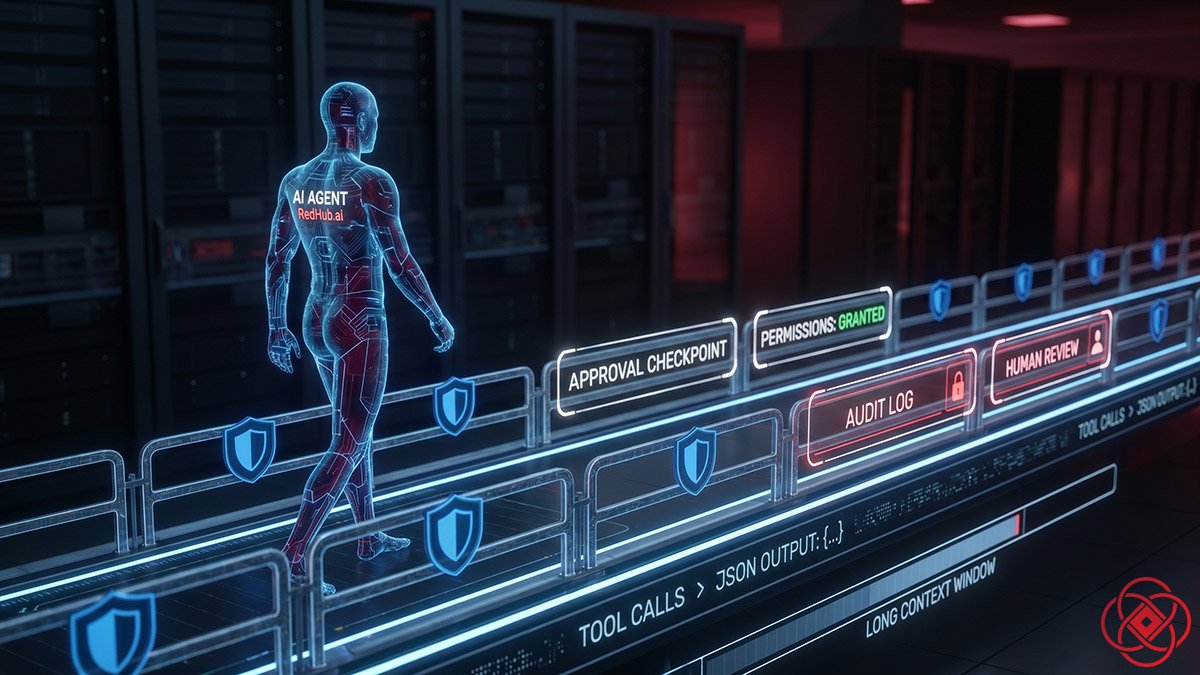
Agents need clear boundaries
An agent without boundaries is not automation.
It is risk.
A business should never start by asking, "What can the agent do?"
Start with a better question:
"What should the agent not be allowed to do?"
That question protects the business.
A DeepSeek R4 agent might be allowed to draft a refund message. It should not approve the refund without rules.
It might summarize a contract. It should not make the legal decision.
It might write code. It should not deploy without review.
It might research a lead. It should not send outreach without approval.
Agents need lanes.
The lane is what makes the system useful.
DeepSeek R4 and coding agents
Coding is one of the strongest agent use cases.
DeepSeek's official release notes describe V4-Pro as having enhanced agentic capabilities and open-source state-of-the-art performance in agentic coding benchmarks.
The Hugging Face model card also lists strong coding-related evaluation results, including SWE-bench resolved and Terminal Bench scores.
That matters for developer teams.
A coding agent can:
- Read a repo.
- Explain a function.
- Find bugs.
- Write tests.
- Draft a migration plan.
- Summarize a pull request.
- Create documentation.
- Suggest refactors.
But again, the best use is not blind trust.
The best use is acceleration.
Let the model do the first pass.
Let humans approve the final pass.
That is where productivity improves without giving up control.
DeepSeek R4 and business process agents
Business process agents may be even more valuable than coding agents.
Every company has workflows that live in scattered places.
Emails.
Docs.
Spreadsheets.
CRMs.
Support tools.
Slack messages.
PDFs.
Meeting notes.
An agent with long context and tool access can connect pieces of that work.
For example, a sales operations agent could read CRM notes, summarize the account, identify the next action, draft a follow-up, and update a pipeline field.
A marketing agent could read a transcript, pull themes, create a brief, draft social posts, and suggest internal links.
A support agent could read policy docs, match a ticket to the correct rule, draft a response, and escalate edge cases.
This is not magic.
It is workflow design.
What to test first
Start with one agent.
One workflow.
One measurable outcome.
Do not build a giant system first.
Build a small loop.
For example:
Input: customer ticket.
Task: classify, summarize, draft reply.
Human review: required.
Output: suggested response and reason.
Success metric: minutes saved per ticket.
That is how you test DeepSeek R4 without making the business fragile.
Then expand.
The risks
There are real risks.
The model can misunderstand context.
The agent can call the wrong tool.
The output can sound right and still be wrong.
The system can leak sensitive information if permissions are loose.
The cost can rise if the agent loops.
This is why governance matters.
Logging matters.
Human review matters.
Permission control matters.
You do not need fear.
You need operating discipline.
For more guidance on implementing AI for business, explore the AI tutorials hub.
Bottom line
DeepSeek R4 for AI agents is not about replacing workers overnight.
It is about moving repeatable work into structured systems.
The best use cases are clear, narrow, and measurable.
Start with boring tasks.
Add boundaries.
Track outcomes.
Use humans where judgment matters.
That is how agentic AI becomes business value instead of another demo.
If you are evaluating alternatives, compare DeepSeek R4 vs GPT-5 to understand trade-offs in agent performance, cost, and deployment.
Decision Guide
Use it if: You have repeatable workflows with clear rules, need structured outputs, and can enforce human review at decision points.
Skip it if: Your tasks require unpredictable judgment, lack defined success metrics, or cannot tolerate any error risk without review.
Best first step: Pick one boring, high-volume task. Build a small agent loop. Measure time saved. Add guardrails. Scale only after proof of ROI.
FAQ
What is DeepSeek R4 for AI agents in simple terms?
DeepSeek R4 is a reasoning model designed to power AI agents that automate multi-step business workflows. Unlike chatbots that answer questions, agents using DeepSeek R4 can plan tasks, call tools, read long documents, and generate structured outputs across repeatable processes with human oversight.
How does DeepSeek R4 compare to other models for agent tasks?
DeepSeek R4 offers long context (1M tokens), tool calling, JSON output, and API compatibility with OpenAI and Anthropic formats. It performs well on coding benchmarks like SWE-bench and is cost-effective compared to proprietary alternatives, though real-world performance depends on your specific workflow design and guardrails.
What are the best business use cases for DeepSeek R4 agents?
The highest ROI comes from boring, repetitive tasks: customer support triage, sales call prep, CRM data cleaning, document summarization, coding assistance, and content brief generation. These workflows follow clear rules, happen frequently, and deliver measurable time savings when automated with human review checkpoints.
What risks should businesses watch for when deploying DeepSeek R4 agents?
Key risks include context misunderstanding, incorrect tool calls, plausible-sounding but wrong outputs, permission leaks, and runaway costs from looping. Mitigation requires logging, human review at decision points, strict permission controls, and clear boundaries defining what agents cannot do without approval.
How much does it cost to run DeepSeek R4 for agent workflows?
DeepSeek R4 pricing is significantly lower than GPT-4 or Claude for equivalent tasks, typically measured in fractions of a cent per 1,000 tokens. Actual costs depend on context length, tool call frequency, and whether the agent loops. Start with a single workflow to measure real cost per completed task.
Do I need technical expertise to build a DeepSeek R4 agent?
Basic agent workflows require developer skills to integrate APIs, design tool calls, structure prompts, and implement guardrails. Non-technical teams can start by working with agent platforms that abstract the complexity, but understanding workflow design and success metrics is essential regardless of technical implementation.
Can DeepSeek R4 agents replace human workers entirely?
No. DeepSeek R4 agents excel at acceleration, not replacement. They handle repeatable first passes—drafting responses, summarizing data, generating code—while humans review final outputs and make judgment calls. The goal is measurable productivity gains, not eliminating oversight or expertise.