AI Listings and Vendor Durability: What a Pop Tells You
RedHub AI Editorialupdated August 16, 20264 min read

In short
A first-day pop mainly shows the shares were priced below what buyers would pay and the float was small, which describes the sale rather than the company. For a buyer, the useful output of a listing is disclosure: audited revenue, cost structure, named risks and customer concentration. Judge a vendor you depend on by revenue concentration, cash runway, what happens to your data on acquisition, your exit cost, and whether the thing you rely on is their core product.
Jump to a section6
This is general information about assessing vendors you depend on. It is not investment advice, and nothing here is a recommendation to buy or sell any security.
A first-day pop measures the sale, not the company
An AI company lists, the stock jumps, and the number becomes the story. It is the wrong number to care about if you are a buyer, not a trader.
A large first-day move mostly says the shares were priced below what buyers would pay, and that the float was small enough for demand to move it. Both are facts about the sale. Neither is a fact about whether the product works, whether the company is profitable, or whether it will still support your integration in three years.
Percentage gains from a listing are also quoted loosely. Gains from the offer price, from the first trade, and from a later close are three different numbers, and coverage swaps them freely. Before repeating one, find out which baseline it used.
What a listing does tell you
It is not nothing, and the useful parts are the boring parts.
A company that lists has to publish a prospectus and then keep reporting. You get audited revenue, a stated cost structure, named risk factors, and disclosed customer concentration. For a vendor you are about to depend on, that file is worth more than any launch announcement they will ever write.
Listing also converts private promises into public obligations. A private company can tell you anything about its growth. A public one has to say it in a filing, with consequences attached.
The five things a buyer should check
- How does it make money, and from how many customers? Concentrated revenue is fragile revenue. If a handful of accounts carry the business, your roadmap follows their priorities, not yours.
- How long does the cash last? Burn against reserves is the crudest survival estimate available and usually the most honest one.
- What happens to your data if they are acquired? This is a contract question with a real answer, and it is easier to ask before you sign than after the announcement.
- What is your exit cost? Export formats, API portability, how much of your workflow assumes their specific behavior. Measure this on the way in.
- Is the thing you depend on their core product? Companies keep what earns and prune what does not. A feature at the edge of the business is the first thing to go quiet.
Why the AI category makes this sharper
Two features of this market raise the stakes on all of the above.
Costs are unusual. Model inference is a real, recurring, volume-scaling expense, unlike traditional software where serving one more customer is nearly free. A vendor priced for growth may be pricing below cost, and that gap closes eventually, in your renewal.
The dependency is also deeper than most software. When a vendor sits inside your workflow and handles judgment, switching is not a data migration. It is a change to how work gets done, and the cost of that is mostly invisible until you try.
The part that cuts both ways
Everything above argues for caution, and caution has its own bill.
Waiting for a vendor to look durable usually means waiting until the capability is common, which is exactly when it stops being an advantage. Some of the largest gains available go to teams that adopted something early from a company that might not have made it.
So the question is not whether to take vendor risk. It is which risks are recoverable. A vendor failing is survivable if your exit cost is low and your data comes out clean. The same failure is a crisis if you never checked. Take the bet, and take it with the exit mapped.
If you want that judgment written down instead of argued each time, our AI Vendor Reliability & Spend Justification Scorecard ($79) grades a vendor on exactly these dimensions and returns a verdict you can put in front of whoever signs.
Frequently Asked Questions
Does a big first-day stock jump mean an AI company is strong?
No. A large first-day move mainly indicates the shares were priced below what buyers would pay and that the available float was small enough for demand to move the price. Both describe the sale. Neither describes whether the product works, whether the business is profitable, or whether the company will support your integration in three years.
Why are quoted IPO gains often inconsistent?
Because there are several possible baselines and coverage swaps between them. A gain measured from the offer price, from the first traded price, and from a later closing price are three different figures for the same event. Before repeating a percentage, establish which baseline produced it.
What is useful about a vendor going public?
The disclosure. A listed company publishes a prospectus and then reports regularly, which gives you audited revenue, a stated cost structure, named risk factors and customer concentration. For a vendor you plan to depend on, that filing is more informative than any product announcement, because it carries consequences for being wrong.
What makes AI vendors riskier than other software vendors?
Two things. Inference is a real recurring cost that scales with usage, unlike traditional software where an extra customer is nearly free, so a vendor priced for growth may be priced below cost. And the dependency runs deeper, because a tool that handles judgment inside your workflow cannot be swapped by migrating data alone.
Should I avoid vendors that might not survive?
Not necessarily. Waiting until a vendor looks durable usually means waiting until the capability is common and no longer an advantage. The better question is whether the risk is recoverable: a vendor failing is survivable when your exit cost is low and your data comes out cleanly, and a crisis when neither was checked in advance.
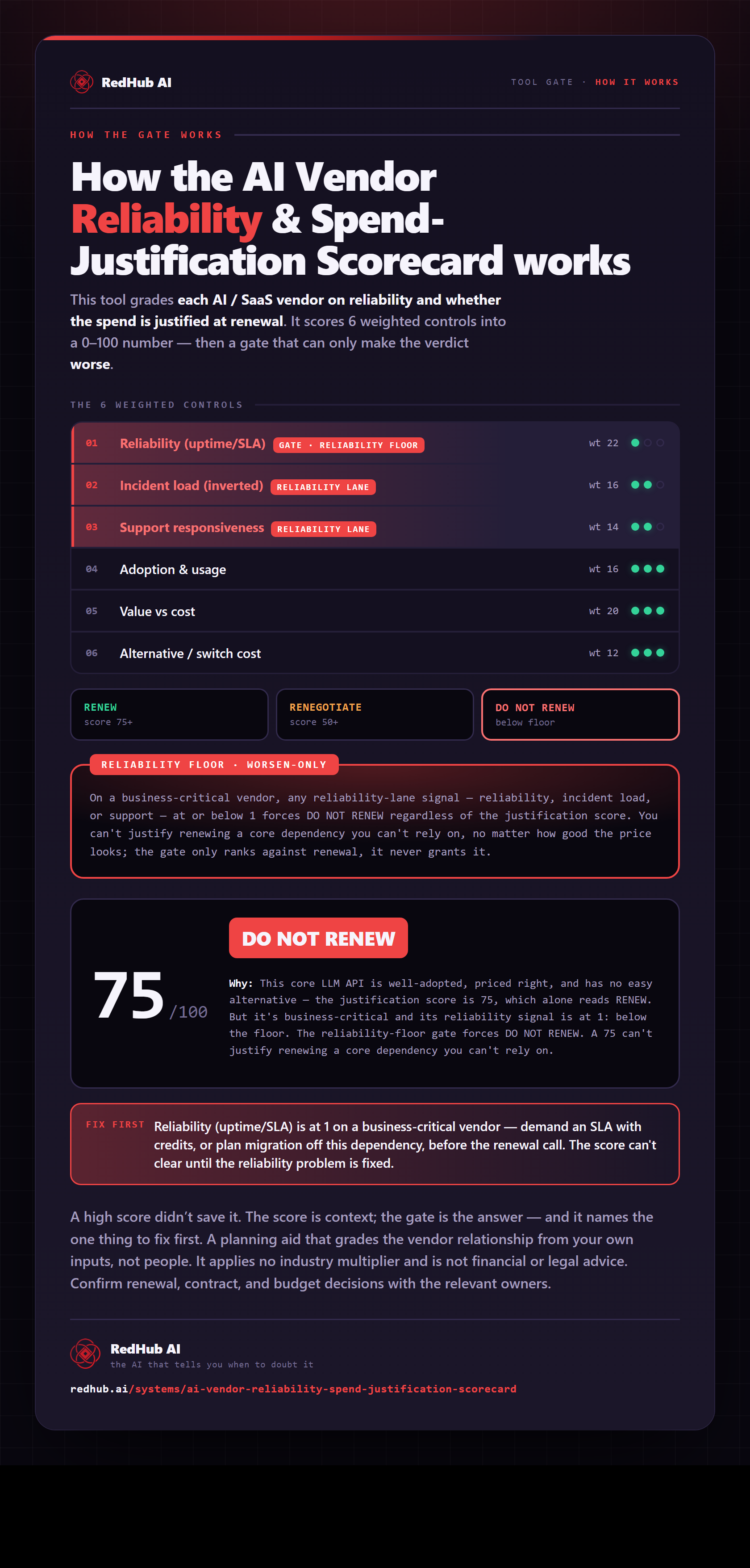
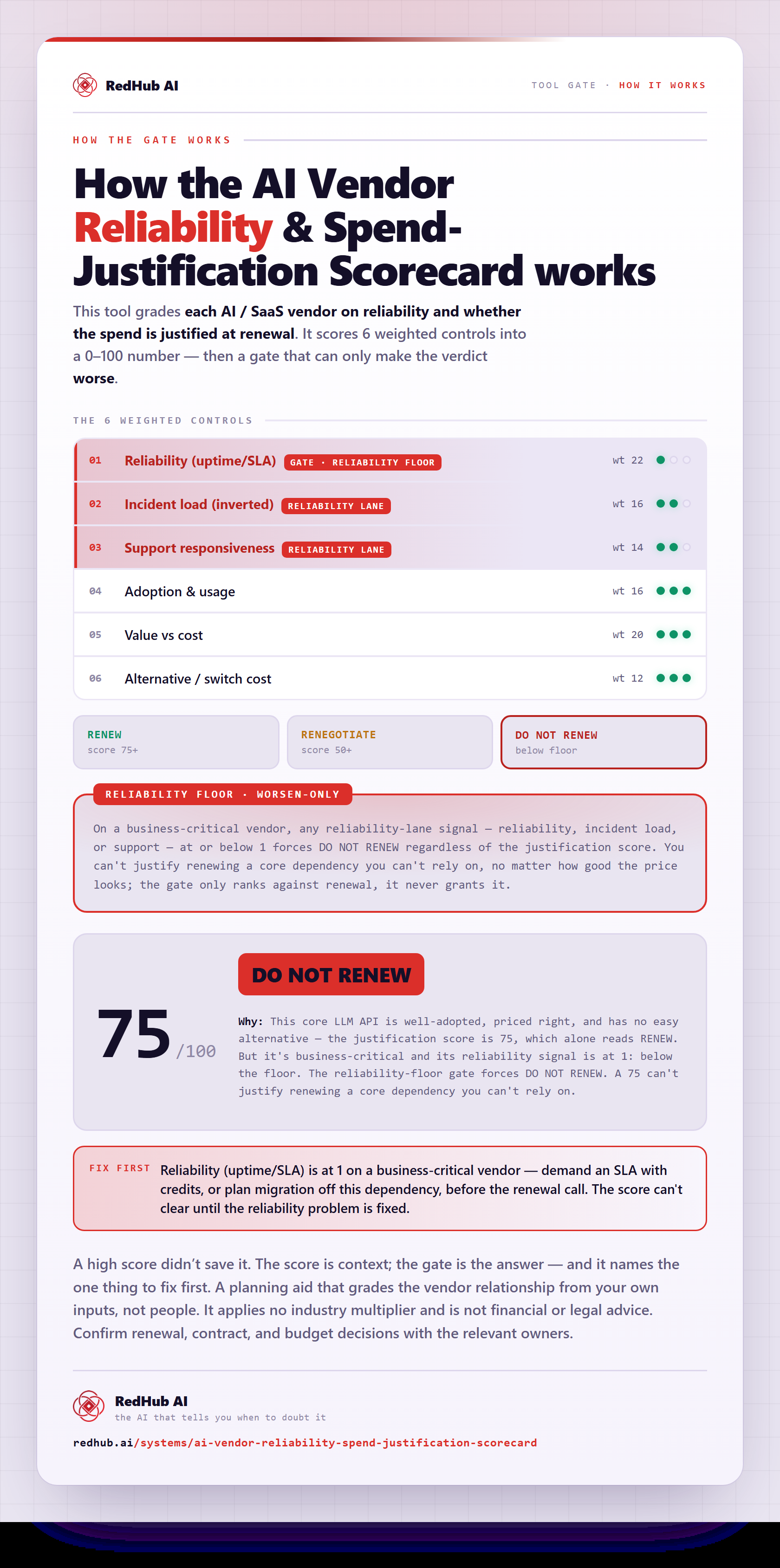
The gate this post refers to, drawn from the tool’s own logic. See the tool.