AI Chip Export Rules and Your Compute Supply
RedHub AI Editorialupdated August 16, 20264 min read

In short
Export controls set a performance threshold, manufacturers design parts that sit under it, and regulators move the line again. The specific thresholds go stale within months; the shape does not. Compute is now allocated by policy as well as by price, so a roadmap can be redrawn by a rule its owner had no part in. Most teams never buy a chip and are still exposed, through API pricing, regional capability differences, and their vendor's own allocation.
Jump to a section7
This is general information about supply and infrastructure risk. It is not legal or export-control advice. Export rules change frequently and apply differently by product and destination, so confirm your position with qualified counsel.
The pattern, which outlasts any particular rule
Export controls set a performance threshold. Chips above it cannot be sold into restricted markets. Manufacturers respond by designing parts that sit under the line, and regulators respond by moving the line.
That cycle has repeated across several rounds, and the specific thresholds in any article about it are stale within months. What does not go stale is the shape: compute is now allocated by policy as well as by price, and a company's roadmap can be redrawn by a rule it had no part in.
So the useful thing to carry away is not which chip is currently permitted. It is that your access to compute has a political input, and that input is not something your vendor controls either.
Where this reaches an ordinary business
Most teams never buy a chip and are still exposed, because the effects arrive through the layers above.
- Price and availability at the API. Constrained supply shows up as higher prices, waitlists on newer models, or rate limits that appear without announcement.
- Regional capability differences. The same product can behave differently by region when the hardware behind it differs, which matters if you operate in more than one.
- Your vendor's own supply. The AI company you depend on depends on someone else's allocation. That dependency is invisible in their pricing page and real in their capacity.
- Contractual exposure. If you have committed to service levels built on assumptions about compute cost, a supply shift lands on your margin, not theirs.
What is worth doing
Little of this is worth reacting to in the moment, and reacting is what most coverage encourages.
The durable moves are the boring ones. Know which providers sit underneath the tools you depend on, because two vendors are often one dependency wearing different logos. Understand the switching cost for anything load-bearing, in advance, so a price change is a decision instead of a scramble. Avoid architectures that assume one specific model at one specific price, because that assumption is the thing supply shifts break.
None of that requires predicting policy. All of it makes you less sensitive to being wrong about it, which is the only defensible posture available.
How to read coverage of this
Two habits will save you from most of the noise.
Separate what has happened from what someone expects. Reporting in this area mixes announced rules, shipped products and analyst projection in the same paragraph, and the projections are usually the part carrying the dramatic number. Ask who is quantifying it and whether the figure has a named source.
And treat revenue and market-share figures with a date attached as historical, not current. This area moves faster than the reporting cycle, so a percentage from two quarters ago describes a market that has since changed.
The complication
The advice to diversify dependencies is correct and it is not free, which most versions of it skip.
Building against multiple providers costs real engineering time, and abstraction layers that keep you portable usually mean giving up whatever each provider does best. Teams that optimize hard for portability often ship slower than teams that commit to one stack and accept the risk.
For a small team the honest answer is frequently to commit, move fast, and keep the exit understood instead of built. Knowing what a migration would cost is cheap. Maintaining permanent readiness to migrate is not, and it buys insurance against something that may never happen.
Know where the concentration is
The risk in this whole area reduces to one question most companies cannot answer quickly: where is your supply concentrated, and what breaks if that single point moves?
Our Supplier Concentration Risk Gate ($99) answers it on readable rules and returns a verdict, including which single dependency to address first. That is a stronger position than any forecast about export policy.
Frequently Asked Questions
How do AI chip export rules work?
Controls set a performance threshold, above which chips cannot be sold into restricted markets. Manufacturers design parts that fall below the line, and regulators subsequently move the line. That cycle has repeated across several rounds, so specific thresholds quoted in any article go stale quickly while the pattern does not.
Does this matter if I never buy hardware?
Yes, because the effects arrive through the layers above. Constrained supply appears as higher API prices, waitlists for newer models, or rate limits introduced without announcement. The same product can also behave differently by region when the hardware behind it differs, which matters for multi-region operations.
What should I do about it?
Boring things, not reactive ones. Know which providers sit underneath the tools you depend on, since two vendors are often one dependency in different packaging. Understand switching costs in advance so a price change is a decision, not a scramble. Avoid architectures that assume one specific model at one specific price.
How should I read reporting on chip restrictions?
Separate what has happened from what someone expects. Coverage routinely mixes announced rules, shipped products and analyst projection in one paragraph, and the projection usually carries the dramatic number. Ask whether a figure has a named source. Treat market-share and revenue percentages as historical, because this area moves faster than the reporting cycle.
Should I diversify across AI providers?
It depends on your size, and the advice is not free. Building against multiple providers costs engineering time, and portability layers usually mean forgoing what each provider does best. For small teams, committing to one stack and understanding what a migration would cost is often better than maintaining permanent readiness to switch.
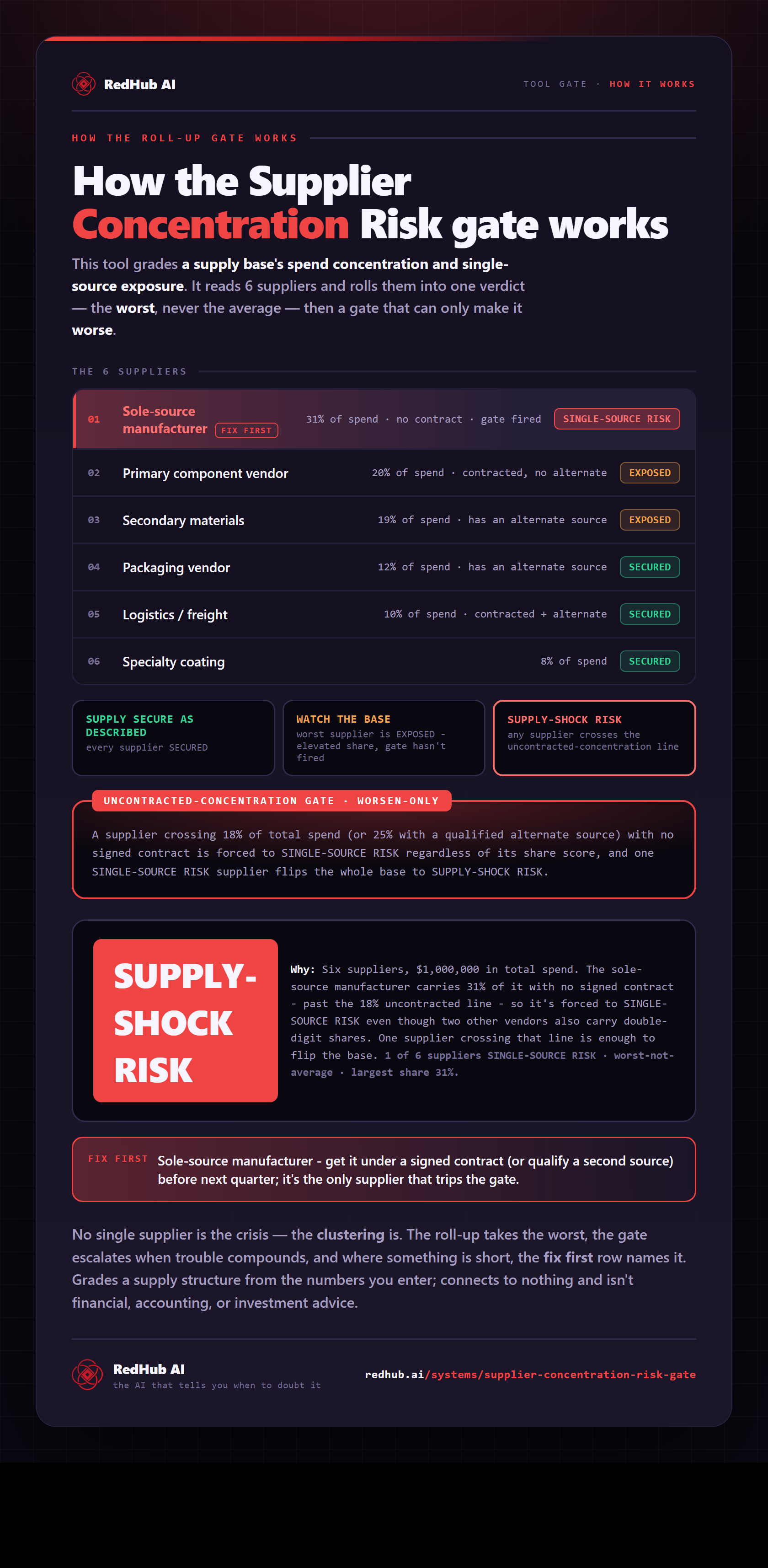
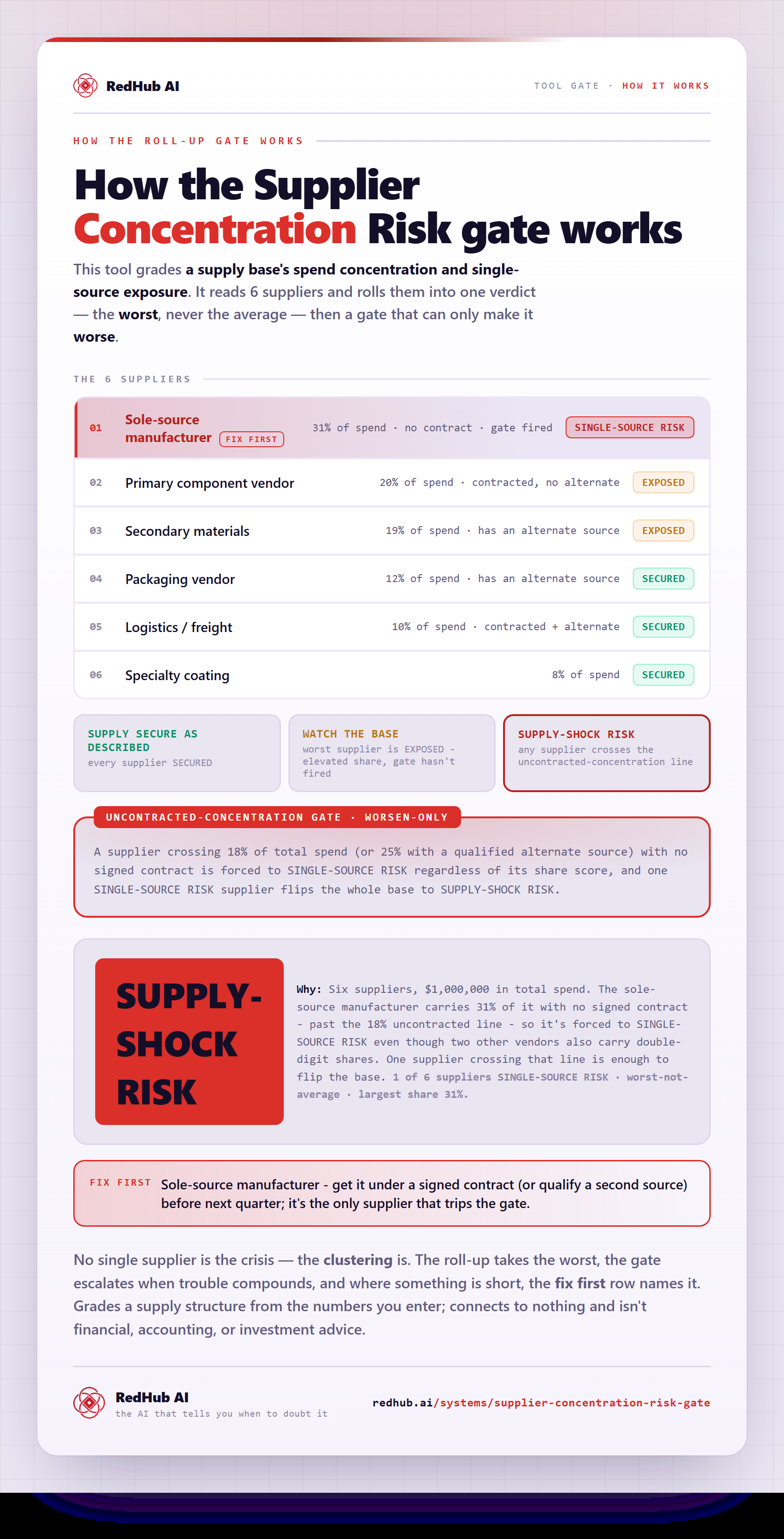
The gate this post refers to, drawn from the tool’s own logic. See the tool.