

RedHub.ai • Cluster • Ring / AI Surveillance
⏱️ Read Time: 7 minutes
TL;DR: Ring’s first Super Bowl commercial tried to sell a heartwarming lost-dog rescue, but its cinematic “neighborhood scan” visuals triggered an immediate backlash about surveillance, defaults, and who controls AI camera networks.
📚 Start Here (Pillar + Related Guides)
Ring's Super Bowl Ad Backlash, Explained
The ad was supposed to be heartwarming.
A lost dog. A worried little girl. A neighborhood that quietly comes together through technology to bring them back to each other. Thirty seconds of exactly what a Super Bowl advertiser is supposed to deliver: emotion, resolution, brand warmth.
Instead, Ring's first-ever Super Bowl commercial became the most controversial tech ad since Pepsi handed Kendall Jenner a soda and called it social justice.
Here's what happened, why it matters, and what Ring did about it.
What Was Ring's Super Bowl Ad?
Ring aired a 30-second commercial during Super Bowl LX in February 2026, the company's debut on the biggest advertising stage in the United States.
The ad promoted a feature called Search Party—an AI-powered tool that lets Ring camera owners collectively scan their neighborhood for a missing pet. In the spot, a family's dog named Milo goes missing. The family uses the Ring app to launch a search. Blue rings radiate outward across a map of the neighborhood as nearby Ring cameras scan for the dog. Milo is found. The child cries tears of relief.
Ring founder Jamie Siminoff appears in the ad alongside his own dog, Biscuit, to close the scene. It was personal. It was polished. It reportedly cost somewhere in the range of $8 to $10 million in airtime alone.
And it backfired almost immediately.
Why Did People Hate Ring's Super Bowl Ad?
The backlash came fast and it came from multiple directions at once.
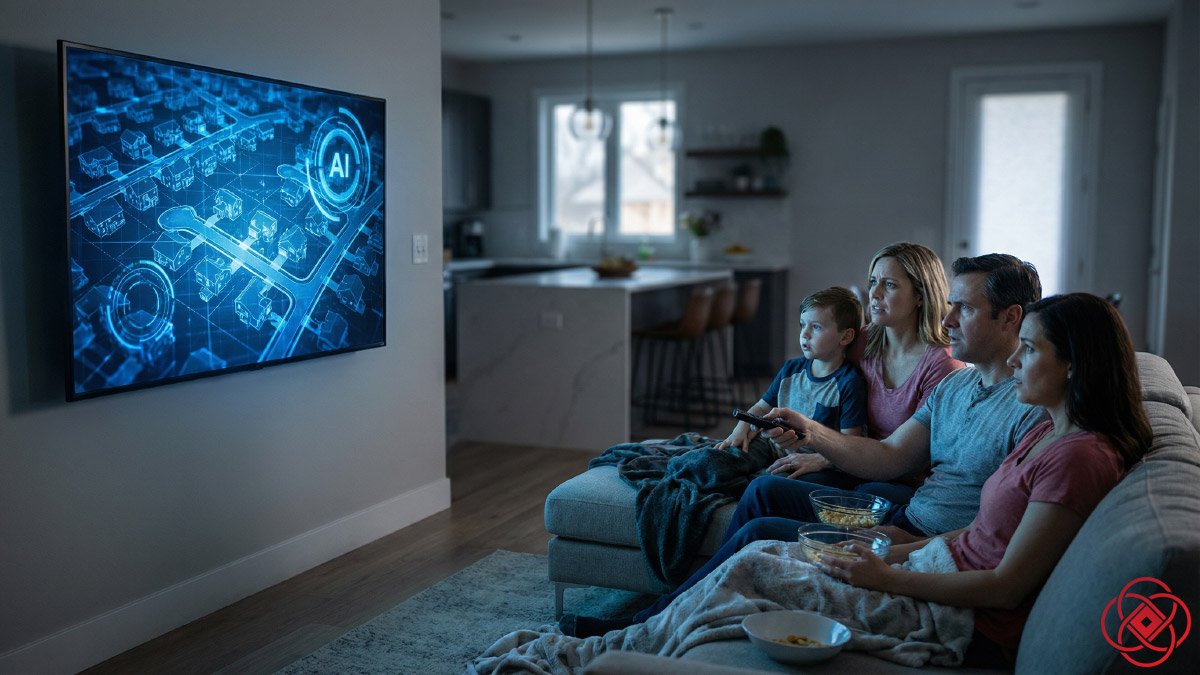
The imagery felt surveillance-adjacent. The visual centerpiece of the ad—a map of suburban homes with blue pulse rings radiating outward as cameras scanned—looked less like a neighborhood watch and more like a drone strike targeting display. Viewers who might have accepted the feature quietly in a product tutorial were seeing it rendered at cinematic scale for 125 million people, and the optics were jarring.
The timing was terrible. Eight days before the Super Bowl, the disappearance of Nancy Guthrie—84-year-old mother of Today anchor Savannah Guthrie—was dominating the news. Investigators had revealed that the FBI extracted footage from a Nest doorbell camera that technically should have had no stored video because the homeowner didn't pay for a cloud subscription. The footage came from "residual data in backend systems." The message that landed with the public: your doorbell camera is watching, even when you think it isn't.
Flock Safety changed the context entirely. In October 2025, Ring had announced a partnership with Flock Safety—a company that operates one of the country's largest automated license plate reader networks, used by thousands of police departments. Investigators had documented that some agencies were querying Flock data using search terms tied to immigration enforcement. Cities were canceling their Flock contracts over those concerns. When Ring's ad then visualized a neighborhood-wide scanning network, a significant portion of the audience wasn't thinking about dogs. They were thinking about who else that network might search for.
The feature was already on. Search Party wasn't a future feature. It was already active, already rolled out—and enabled by default on eligible Ring cameras. Guides explaining how to turn it off began circulating within hours of the ad airing.
What Is Ring's Search Party Feature?
Search Party is an opt-out AI feature built into Ring's Neighbors app that lets pet owners crowdsource a neighborhood camera search for a missing dog.
Here's how it works:
1. A pet owner uploads a photo of their missing dog to the Ring app
2. A Search Party alert is sent to nearby Ring camera owners who have the feature enabled
3. Those cameras—which have Search Party turned on by default—use AI to scan their footage for a visual match
4. If a match is detected, the camera owner gets an alert and can choose to share a clip
Ring says the feature is limited to dogs, and that the system is "not capable of processing human biometrics." Camera owners retain control over whether they share any specific clip.
Critics note that Ring already offers a separate feature called Familiar Faces, which does use biometric face recognition to identify regular visitors. The infrastructure for person-level AI identification, in other words, already exists inside the same product.
How Big Was the Backlash?
By any measurable standard, it was significant.
Analytics firm PeakMetrics tracked Ring's social media conversation in the days following the Super Bowl and found that approximately 17 percent of brand-related conversations included boycott or cancellation language—an unusually high share for a brand ad.
Users began posting to Reddit, Twitter/X, and TikTok about returning their Ring cameras to Amazon. Guides from Engadget, The Verge, and others on how to disable Search Party circulated widely. Senator Ed Markey publicly called the feature "dystopian," stating: "This isn't about dogs—it's about mass surveillance."
New York Magazine described Ring's spot as part of a broader unsettling pattern of Super Bowl AI advertising, writing that the AI ad slate felt like "a strange and unsettling mess."
And then Wyze entered the conversation.
What Did Wyze Do?
Wyze—a home camera company founded by former Amazon employees—released a parody ad within days of the Super Bowl that became its own viral moment.
The parody leaned directly into the anxiety Ring had accidentally created. The core joke: "We could use AI to find literally anyone, but we only use this technology to find lost dogs." It was short, pointed, and landed cleanly because it articulated exactly what viewers were afraid Ring had already done.
The parody got significant earned media coverage, with Inc. magazine framing it as a case study in turning a competitor's crisis into a marketing win.
What Did Ring Do After the Backlash?
Ring moved quickly through several damage-control plays.
February 12: Ring announced it was ending its partnership with Flock Safety, stating the integration had been "a limited test" that never fully launched and that no Ring customer video had ever been shared with Flock. Privacy advocates noted the timing—three days after the Super Bowl—was not coincidental.
February 12: Ring announced a $1 million commitment to help animal shelters install Ring cameras, doubling down on the lost-pet messaging and attempting to reanchor the story around positive use cases.
February 14: The New York Times reported on the Flock cancellation, connecting it explicitly to the Super Bowl backlash.
February 17–19: Siminoff began what outlets were calling an "explanation tour"—appearances on CNN, NBC, ABC, and a sit-down interview with The New York Times. He acknowledged the ad may have "triggered" viewers, particularly the map visual. He promised future ads would "feature fewer maps."
He did not announce any changes to Search Party's default-on status. He did not announce any changes to the Familiar Faces feature. He did not announce changes to Community Requests, the program that allows law enforcement to request user footage.
What Didn't Change After the Backlash?
This is the part most coverage glossed over.
Ring's concessions were real but narrow:
• The Flock partnership was canceled (though Ring says it never launched)
• Siminoff apologized for the ad's visuals
• A charitable pledge was made
What remained intact:
• Search Party is still active and still on by default
• Familiar Faces biometric recognition still exists
• Community Requests still gives law enforcement a channel to request user footage
• The underlying AI infrastructure—the ability to scan camera feeds for specific visual targets—is unchanged
The Electronic Frontier Foundation's Dave Maass summed up the broader concern: "Surveillance companies like Ring have previously made promises amid public pressure only to backtrack later."
That pattern—expand, get caught, concede on optics, keep the infrastructure—is not new for Ring. It has played out across multiple cycles since 2019.
Why This Story Isn't Really About the Ad
The Ring Super Bowl ad was never really about the ad.
It was about the moment a piece of marketing accidentally stripped away the comfortable distance between "smart home tech" and "neighborhood surveillance apparatus." It showed, at national scale, what happens when ambient sensing infrastructure—the cameras already on millions of doors—gets upgraded with AI and pointed outward at the block.
The question the backlash raised wasn't "should Ring have aired this commercial?"
It was: "If this system can find a dog by scanning every camera on the street, what will it find next—and who gets to decide?"
That question didn't get answered in Siminoff's explanation tour. It didn't get answered in the Flock cancellation. It's still open.
And the cameras are still running.
Want to go deeper?
Want to go deeper? Read our full investigation: The Trojan Dog: Ring Search Party Backlash. Or learn exactly how to audit and disable Ring's AI features in our step-by-step guide: How to Turn Off Ring Search Party—(Step-by-Step)