What is an AI SDR?
Todd Brooks, Founderupdated July 22, 20262 min read
Jump to a section5
How AI agents replace list building, scoring, and top-of-funnel prospecting.
Definition: An AI SDR (AI Sales Development Representative) is an automated system that identifies prospects, scores their buying intent, warms them through contextual engagement, and routes qualified conversations into your pipeline. It replaces manual list building and repetitive top-of-funnel outreach with intent-driven automation.
AI SDRs are a core component of modern AI sales automation. Instead of relying on static contact lists and high-volume cold messaging, they operate as structured systems that prioritize timing, relevance, and behavioral signals.
How Do AI SDRs Work?
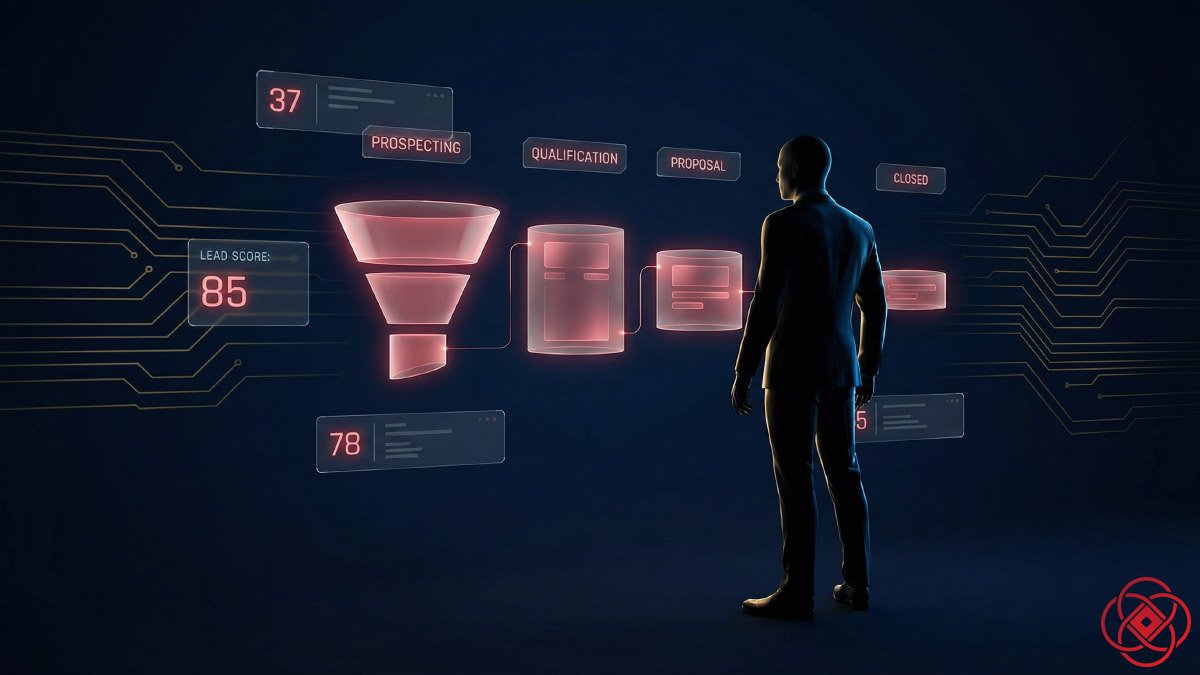
An AI SDR works as a repeatable workflow. It doesn’t just send messages—it orchestrates prospecting, qualification, and engagement in stages.
1. Intent & Signal Detection
AI SDR systems monitor behavioral activity—such as engagement with niche content, repeated topic interaction, and visible participation in relevant conversations.
Instead of asking “Who matches our job-title filter?” the system asks: Who is actively signaling interest right now?
(Deep dive: Social Signal Prospecting Explained)
2. AI Lead Scoring
Once prospects are identified, AI models evaluate:
- Role relevance
- Company context
- Engagement patterns
- Frequency of signal activity
Leads are assigned a score (often 0–100), allowing sales teams to focus only on high-probability conversations.
3. Contextual Warming
Instead of immediately sending cold DMs, many AI SDR systems warm prospects through comments, contextual interactions, or light engagement before escalation.
4. Workflow Routing
Once engagement thresholds are met, the AI SDR routes the conversation into your CRM, assigns it to a rep, or triggers a follow-up sequence.
(Full system architecture: AI Sales Workflow Blueprint)
AI SDR vs Human SDR
AI SDRs do not replace closers. They replace repetitive early-stage prospecting.
Human SDR Strengths
- Complex objection handling
- High-empathy conversations
- Creative deal shaping
- Strategic follow-up timing
AI SDR Strengths
- Continuous signal monitoring
- Scalable lead scoring
- Consistent workflow execution
- No fatigue or manual list scraping
The ideal model is hybrid: AI handles detection and prioritization. Humans handle nuanced selling.
Where AI SDRs Fail
AI SDRs are powerful, but they fail under predictable conditions:
- Weak positioning: If your offer lacks clarity, automation magnifies the problem.
- Low-intent markets: Impulse consumer products don’t benefit from conversation-based workflows.
- Volume-first strategies: Over-automation increases risk and reduces authenticity.
- No measurement discipline: If you don’t track conversation and meeting rates, you can’t optimize.
AI SDRs are not magic. They amplify structure—good or bad.
AI SDR Tool Examples
AI SDR functionality can be implemented through specialized platforms or custom workflows.
1. Social-Signal LinkedIn Systems
Tools like Horlio focus on detecting engagement signals on LinkedIn, applying AI scoring, and warming leads before escalation.
2. Workflow-Based Prospecting Systems
Clay-based enrichment workflows and LLM scoring pipelines allow teams to build custom AI SDR stacks combining data providers, scoring logic, and CRM automation.
3. Hybrid CRM Automations
AI layers integrated directly into CRM systems can score and route inbound or outbound leads without manual qualification.
The Bottom Line
An AI SDR is not just an automation tool—it’s a structured pipeline system. It monitors intent, prioritizes intelligently, engages contextually, and hands qualified prospects to human sellers.
When integrated into a broader AI sales automation strategy, it transforms outbound from a volume game into a timing game.
The future of top-of-funnel prospecting isn’t louder. It’s smarter.