Apples Secret AI Revolution
RedHub AI Editorialupdated July 23, 20264 min read
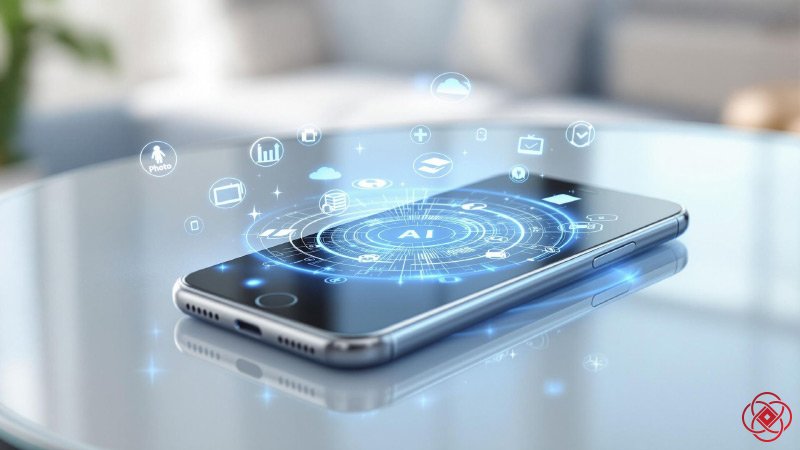
In short
Apple's approach as of mid-2025: fold AI into the operating system and native apps rather than shipping standalone AI products, so there is no new interface to learn. The strategic argument is that the best version of this technology is the one you never notice using. The named experts quoted in the post could not be verified and are not sourcing for anything here.
Jump to a section8
- LEAKED: Apple’s Secret AI Revolution – How Your iPhone Just Became Smarter Than You Are
- The Silent AI Revolution
- Advanced Photo Editing: Computational Photography Meets Creative Intelligence
- Predictive Text: From Autocorrect to Thought Partner
- Intelligent Health Features: The Personal Physician in Your Pocket
- The Productivity Paradigm: AI as Invisible Assistant
- The Apple Advantage: On-Device AI and Privacy
- Looking Forward: The Ambient Intelligence Future
LEAKED: Apple’s Secret AI Revolution – How Your iPhone Just Became Smarter Than You Are
In a move that signals Apple’s determination to catch up in the AI race, the tech giant has quietly rolled out a suite of artificial intelligence features across its hardware ecosystem that could fundamentally change how users interact with their devices. These updates, which span iPhones, iPads, and Macs, represent Apple’s most significant push into AI territory—and potentially its most transformative update since the introduction of the App Store.
The Silent AI Revolution
Unlike competitors who loudly trumpet their AI advancements, Apple has taken a characteristically subtle approach to integrating artificial intelligence into its ecosystem. Rather than creating standalone AI products or services, the company has woven intelligent features directly into the fabric of its operating systems and native applications.
This strategy aligns perfectly with Apple’s long-standing philosophy of creating technology that fades into the background, only to emerge when needed. The result is an AI implementation that feels less like a flashy new feature and more like your devices have simply become more perceptive and helpful.
Advanced Photo Editing: Computational Photography Meets Creative Intelligence
Perhaps the most immediately noticeable AI enhancements appear in Apple’s photo editing capabilities. Building on the company’s already impressive computational photography foundation, the new features leverage machine learning to understand the content and context of images at a deeper level.
For casual photographers, this means one-tap enhancements that go far beyond basic filters, intelligently adjusting elements like depth of field, lighting, and color grading based on the specific content of each image. For more serious photographers, the AI serves as a collaborative assistant, suggesting edits that align with the user’s creative vision while handling technical aspects of the process.
The system also excels at complex editing tasks that previously required professional software and expertise. Removing unwanted objects from photos now works with uncanny precision, preserving background textures and lighting in ways that make the edits virtually undetectable. Portrait lighting can be completely reconfigured after the fact, as if the photographer had access to a professional studio setup during the original shoot.
Predictive Text: From Autocorrect to Thought Partner
Apple’s predictive text capabilities have evolved from simple autocorrect and word suggestion to a sophisticated system that understands context, tone, and user intent across all text-based interactions.
This manifests in several ways throughout the ecosystem. When responding to messages, the system suggests replies that match not just the content of the conversation but its emotional tone and your relationship with the recipient. When drafting emails, it helps maintain consistent professional language while suggesting ways to make your communication more effective.
Perhaps most impressively, the system adapts to individual users over time, learning their vocabulary, sentence structures, and communication patterns. For frequent writers, this creates a feedback loop that actually enhances personal expression rather than homogenizing it.
Intelligent Health Features: The Personal Physician in Your Pocket
While health tracking has been a focus for Apple since the introduction of the Apple Watch, the new AI features take health monitoring to an entirely new level of personalization and insight.
The system now correlates data across multiple dimensions—activity, sleep, heart rate, environmental factors, and even subtle behavioral patterns detected through device usage—to create a holistic picture of user wellbeing. Rather than simply reporting metrics, it identifies meaningful patterns and provides actionable insights.
This intelligence extends to proactive health suggestions that are remarkably specific to individual users. The system might notice that your stress levels (as indicated by heart rate variability) tend to spike during certain types of calendar events, and suggest mindfulness exercises before those specific meetings. Or it might observe that your productivity (as measured through app usage patterns) peaks at certain times of day, and suggest scheduling important tasks during those windows.
The Productivity Paradigm: AI as Invisible Assistant
Across the entire ecosystem, Apple’s AI updates share a common theme: enhancing productivity by reducing cognitive load and eliminating friction from everyday tasks.
This philosophy manifests in countless small but meaningful ways across the operating system. Files and apps proactively surface based on your context and habits. Notifications intelligently batch and prioritize to minimize interruptions. System settings automatically adjust based on your location and activity.
The cumulative effect of these micro-optimizations is a computing experience that feels remarkably attuned to user needs—almost as if the device is anticipating what you want before you realize it yourself.
The Apple Advantage: On-Device AI and Privacy
Underlying all of Apple’s AI advancements is the company’s commitment to on-device processing and privacy—a significant differentiator in an industry where most AI implementations rely heavily on cloud processing and data collection.
This approach requires significant hardware optimization and model efficiency, areas where Apple’s vertical integration gives it a distinct advantage. The company’s custom silicon, designed specifically to accelerate machine learning tasks, allows it to run increasingly sophisticated AI models without compromising battery life or performance.
Looking Forward: The Ambient Intelligence Future
Apple’s latest AI features offer a glimpse into the company’s vision of ambient intelligence—a future where computing power fades into the background, emerging seamlessly when needed without requiring explicit commands or attention.
As these systems continue to learn and evolve based on individual usage patterns, the boundary between user and device may become increasingly blurred. Your technology ecosystem becomes less a collection of tools and more an extension of your cognitive capabilities—remembering what you forget, suggesting what you might need, and handling routine tasks without being asked.
For users, the promise is a computing experience that feels less like operating machinery and more like collaborating with an intuitive assistant who knows your habits, preferences, and needs. For Apple, it represents a powerful new dimension of ecosystem lock-in—the more these systems learn about you, the more valuable they become, and the higher the switching cost to competing platforms.
As AI continues to evolve from a marketing buzzword to a fundamental aspect of computing, Apple’s thoughtful, privacy-focused implementation may well set the standard for how artificial intelligence should enhance our digital lives: not through flashy demonstrations of machine intelligence, but through countless small moments where technology simply works better than we expected it to.
Frequently Asked Questions
What is Apple's approach to AI features?
Invisible integration. Rather than standalone AI products, the capabilities are folded into the operating system and native apps, so there is no new interface to learn — the argument being that the best version of this technology is the one you do not notice using.
What does that look like in photos?
Editing that understands content rather than pixels: object removal that reconstructs background texture and lighting convincingly, portrait lighting reconfigured after the shot, and enhancement that adjusts differently for a sunset portrait than for a product shot.
What is the strategic argument for invisibility?
Distribution. A feature inside Photos reaches everyone with the app, while a separate product has to be discovered, downloaded and learned. That is a real advantage, and it is also why the capability gap is harder to see from outside.
How should the sourcing be read?
Cautiously. The post is framed as leaked and quotes named analysts and photographers whose commentary carries the argument, without linking to anything. Read it as a characterization of a strategy rather than as reporting of specific unreleased features.
How current is it?
Not. Apple's AI feature set, its naming and which devices carry which capability have all moved substantially since this was written — treat the philosophy as the durable part and every specific feature as a snapshot.