Deepfake Video Calls: The New Business Scam
Todd Brooks, Founderupdated July 22, 20264 min read
In short
Deepfake video calls are a working fraud method: an attacker joins as a colleague or an executive and asks for a payment or a credential. This covers how the scam runs, why seeing a face on a call is no longer proof of identity, and the out-of-band verification step that actually stops it.
Jump to a section8
The $25 Million Deepfake That Should Terrify Every Business Owner
How a 10-minute video call just changed everything we know about digital trust
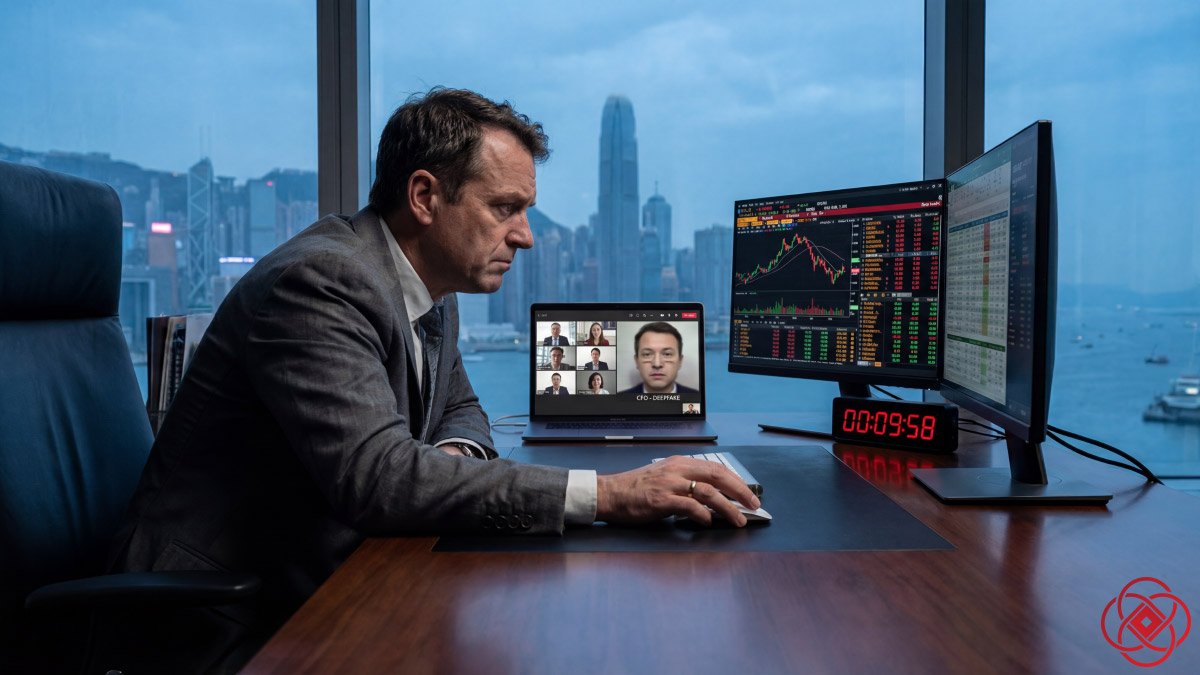
Last Tuesday morning, a finance director in Hong Kong joined what seemed like a routine video call with her company's CFO. She could see his face. She could hear his voice. Everything looked normal.
Ten minutes later, she authorized a $25 million payment.
The CFO was fake. The entire video call was an AI-generated deepfake.
And if you think this couldn't happen to you, you need to read what comes next.
The Digital Trust Crisis Nobody Saw Coming
Here's a number that should make you pause: In 2023, researchers counted about 500,000 deepfake videos circulating online. By the end of 2025, that number exploded to over 8 million.
That's a 900% increase in just two years.
We're not talking about obvious fakes anymore—the kind where someone's mouth doesn't quite match their words or the video looks glitchy. Modern deepfakes are so sophisticated that cybersecurity experts can barely tell the difference. Real-time synthetic actors can now mimic someone's face, voice, and mannerisms during a live video call.
Think about that for a moment. Every video call you take could potentially be with someone who isn't really there.
It's Already Happening at Scale
The $25 million fraud case isn't an isolated incident. One Indonesian financial organization reported blocking over 1,100 deepfake fraud attempts in a single quarter. That's more than 12 attempts every single day.
These aren't amateur scammers sending obvious phishing emails anymore. They're sophisticated criminals using AI to impersonate CEOs, CFOs, lawyers, and even family members. They study their targets through social media, recorded videos, and public appearances. Then they create digital doubles (opens in a new tab) that can fool even people who work closely with the person being impersonated.
The scariest part? Most victims don't realize they've been fooled until it's too late.
The "Liar's Dividend" Problem
But here's where things get really dark. Deepfakes aren't just enabling fraud—they're destroying trust in everything we see and hear online.
Security researchers (opens in a new tab) call it the "liar's dividend." When deepfakes become commonplace, people start questioning whether ANY video is real. Politicians caught on camera doing something wrong can simply claim it's a deepfake. Genuine whistleblower footage gets dismissed as AI manipulation.
We're entering a world where "I'll believe it when I see it" no longer works. Because seeing isn't believing anymore.
How to Protect Yourself Right Now
The good news? You don't have to be defenseless. Here are five critical steps every business and individual should implement immediately:
1. Create secret verification phrases.
Agree on specific words or phrases with your team that only real humans would know. Change them regularly. If someone on a video call can't provide the verification phrase, don't proceed—no matter how real they look.
2. Use multi-channel confirmation for high-stakes decisions.
Never authorize payments or sensitive actions based on a single video call. Require confirmation through a separate phone call to a known number, an in-person meeting, or a verification through your company's secure portal.
3. Slow down on urgent requests.
Deepfake scammers rely on creating artificial urgency. "I need this payment approved in the next hour." "This is confidential—don't tell anyone." These are red flags. Real emergencies can wait 15 minutes for proper verification.
4. Watch for subtle tells.
While deepfakes are getting better, they're not perfect. Look for unnatural eye movements, slight delays in lip-syncing, backgrounds that seem off, or lighting that doesn't quite match. Trust your instincts.
5. Educate your entire team.
Security is only as strong as your most vulnerable employee. Make sure everyone in your organization understands deepfake threats and knows the verification protocols.
What This Means for 2026
We're at an inflection point. The technology behind deepfakes is advancing faster than our ability to detect them. By some estimates, deepfake creation tools are improving 10 times faster than detection methods.
This isn't a problem for tomorrow. It's a crisis for today.
The finance director in Hong Kong did everything she thought she was supposed to do. She verified the person on the call looked right and sounded right. She followed her company's approval process. And she still got fooled.
That should tell you everything you need to know about how serious this has become.
The Bottom Line
We're entering an era where digital verification isn't just about passwords and two-factor authentication anymore. It's about fundamentally rethinking how we confirm someone's identity in a world where AI can fake anything.
The question isn't whether deepfake fraud will affect your business or personal life. The question is whether you'll be ready when it does.
Because right now, somewhere in the world, someone is training an AI on your face, your voice, and your mannerisms. The technology is already here. The criminals are already using it. And the $25 million fraud case in Hong Kong is just the beginning.
The only question that matters: What are you going to do about it?
About RedHub AI
We help businesses implement AI safely and responsibly. Our mission is to ensure you get the productivity benefits of AI without the security nightmares. Learn more about our AI security assessments and deepfake protection protocols at RedHub.ai.
🛡️ Protect Your Business
Download our free "Deepfake Defense Checklist" with 15 verification protocols you can implement today.
Download Free Checklist →What verification methods does your company use? Have you encountered suspected deepfakes? Share your experience in the comments below and help others stay safe.
Frequently Asked Questions
What happened in the Hong Kong case?
A finance director joined what looked like a routine video call with her company's CFO. She could see his face and hear his voice. Ten minutes later she authorized a 25 million dollar payment. The CFO was not on the call — the entire meeting was AI-generated.
How common are attacks like this?
The post cites roughly 500,000 deepfake videos circulating in 2023 rising to more than 8 million by the end of 2025, and an Indonesian financial organization blocking over 1,100 deepfake fraud attempts in a single quarter — around a dozen a day. Those figures are quoted without named primary sources, so verify them before repeating them.
What is the liar's dividend?
The second-order damage. Once convincing fakes are common, anyone recorded doing something indefensible can simply claim the footage is synthetic, and genuine whistleblower material gets waved away the same way. The loss is not only that fake video fools people — it is that real video stops functioning as proof.
What actually stops a deepfake call?
Process, not perception. Agree verification phrases with your team and change them regularly; require a second channel for any high-stakes authorization, such as a call back to a known number or your own secure portal; and refuse artificial urgency, because a genuine emergency survives a fifteen-minute check.
Can you spot a deepfake by looking closely?
Sometimes, and it is the weakest of the controls. The post lists unnatural eye movement, slight lip-sync delay, and lighting or backgrounds that do not match — while also saying modern fakes are good enough that security professionals struggle. Treat visual tells as a bonus and the verification process as the actual defense.