Microsoft AutoGen: What It Is and Where It Fits
RedHub AI Editorialupdated August 16, 20264 min read

In short
AutoGen is a Microsoft Research framework where multiple agents converse to finish a task, commonly one writing, one reviewing and one executing. The gain is separation of concerns and iteration against an objective test, not model diversity or personalities. Failure modes: cost multiplies per exchange, loops may not end without turn caps, early wrong assumptions propagate as fact, and debugging means reading a transcript. Many such projects are one prompt in costume.
Jump to a section7
This is general information about agent orchestration frameworks. It is not a security assessment of any deployment, and framework APIs change, so check current documentation before building.
What it is, without the positioning
AutoGen is a Microsoft Research framework for building systems where multiple AI agents talk to each other to finish a task. You define agents, give each a role and tools, and the framework handles the conversation between them and the loop that decides when the work is done.
The pattern people build most often is a small crew. One agent writes code, another reviews it, a third runs it and reports errors, and they iterate until the tests pass. That is a genuine use of the shape, because each role has a different job and a natural handoff.
It is a research framework in origin, and that shows in the API surface and the release cadence. Fine for building. Worth knowing before you standardize on it.
What multi-agent buys
Two things, and both are about structure, not intelligence.
Separation of concerns is the real one. An agent told to write code and critique it in the same breath does both worse, because the instructions pull against each other. Split them and each has one job with one standard, and the critic is not defending work it just produced.
The second is iteration with a stopping condition. A reviewer that can send work back creates a loop, and a loop with a test in it runs until something objective passes instead of until the model decides it is finished.
Neither benefit requires the agents to be different models or to have personalities. Role separation does the work. Vendors dramatize it as a team of specialists because that demos better than "we split one prompt into three."
Where it goes wrong
- Cost multiplies quietly. Every exchange between agents is inference you pay for. A conversation that runs fifteen turns costs roughly fifteen times a single call, and nothing warns you before the bill does.
- Loops do not always end. Two agents can disagree politely and indefinitely. Turn caps are not optional, and the default is rarely the one you want.
- Errors propagate with confidence. A wrong assumption in step one becomes established fact for every agent downstream. The output arrives coherent and wrong, which is worse than arriving broken.
- Debugging is hard. When the answer is bad, the cause sits somewhere in a long transcript. Logging every message is the only way to find anything.
The question to ask before building a crew
Would this be better as one prompt, or as ordinary code?
A surprising share of multi-agent projects are a single well-specified call wearing a costume. The framework adds cost, latency and failure modes, and returns nothing the simpler version lacked. That is not a knock on the framework. It is a knock on reaching for it first.
Multi-agent earns the overhead when the steps differ in role, when a critic that did not produce the work adds real signal, and when there is an objective test to iterate against. Missing that last one is the common mistake, because without a real check the loop only produces agreement.
The complication
Everything above pushes toward the simpler option, and simpler has a ceiling that is easy to miss from outside.
Teams that stay with single calls too long end up with one enormous prompt carrying six responsibilities. That is unmaintainable in a way you cannot see until you change one part and break three others. The multi-agent structure is partly an architecture for keeping responsibilities separate, and that value shows up in month four, not in the prototype.
So "start simple" is right and incomplete. Start simple, and treat prompt size as the signal. When one prompt is doing several unrelated jobs, the split is overdue whether or not the framework is fashionable.
Before you trust one in production
What separates a working demo from a system you can depend on is knowing how often it succeeds, on which inputs, and how it behaves when a step fails. Most multi-agent projects never measure that, which is why they feel impressive and stay in pilot.
Our Agent Reliability Harness ($149) is built for the measurement: run the same cases repeatedly, record where it breaks, and get a verdict on whether the thing is stable enough to depend on.
Frequently Asked Questions
What is Microsoft AutoGen?
A Microsoft Research framework for building systems in which multiple AI agents converse to complete a task. You define agents with roles and tools, and the framework manages the conversation between them and the loop deciding when work is finished. The most common pattern is a small crew where one agent writes, another reviews, and a third executes.
What does a multi-agent setup gain you?
Mainly separation of concerns. An agent asked to produce work and critique it in the same instruction does both worse, because the goals conflict. Splitting them gives each one job and one standard, and the critic is not defending its own output. The second gain is iteration with an objective stopping condition.
Do the agents need to be different models?
No. Role separation produces the benefit, not model diversity or assigned personalities. Vendors present multi-agent systems as teams of specialists because it demonstrates well, but the mechanism is that each agent carries a narrower instruction than one combined prompt would.
What are the main failure modes?
Cost multiplies with every exchange, since each turn is billed inference. Loops can continue indefinitely when agents disagree politely, so turn caps are required. Early wrong assumptions get treated as fact by every agent downstream, producing coherent wrong output. And debugging means reading a long transcript, so message logging is essential.
When should I not use a multi-agent framework?
When the work would be better as one well-specified prompt or as ordinary code. Many multi-agent projects are a single call in costume, paying cost, latency and failure modes for nothing. The overhead is justified when steps differ in role, an independent critic adds signal, and there is an objective test to iterate against.
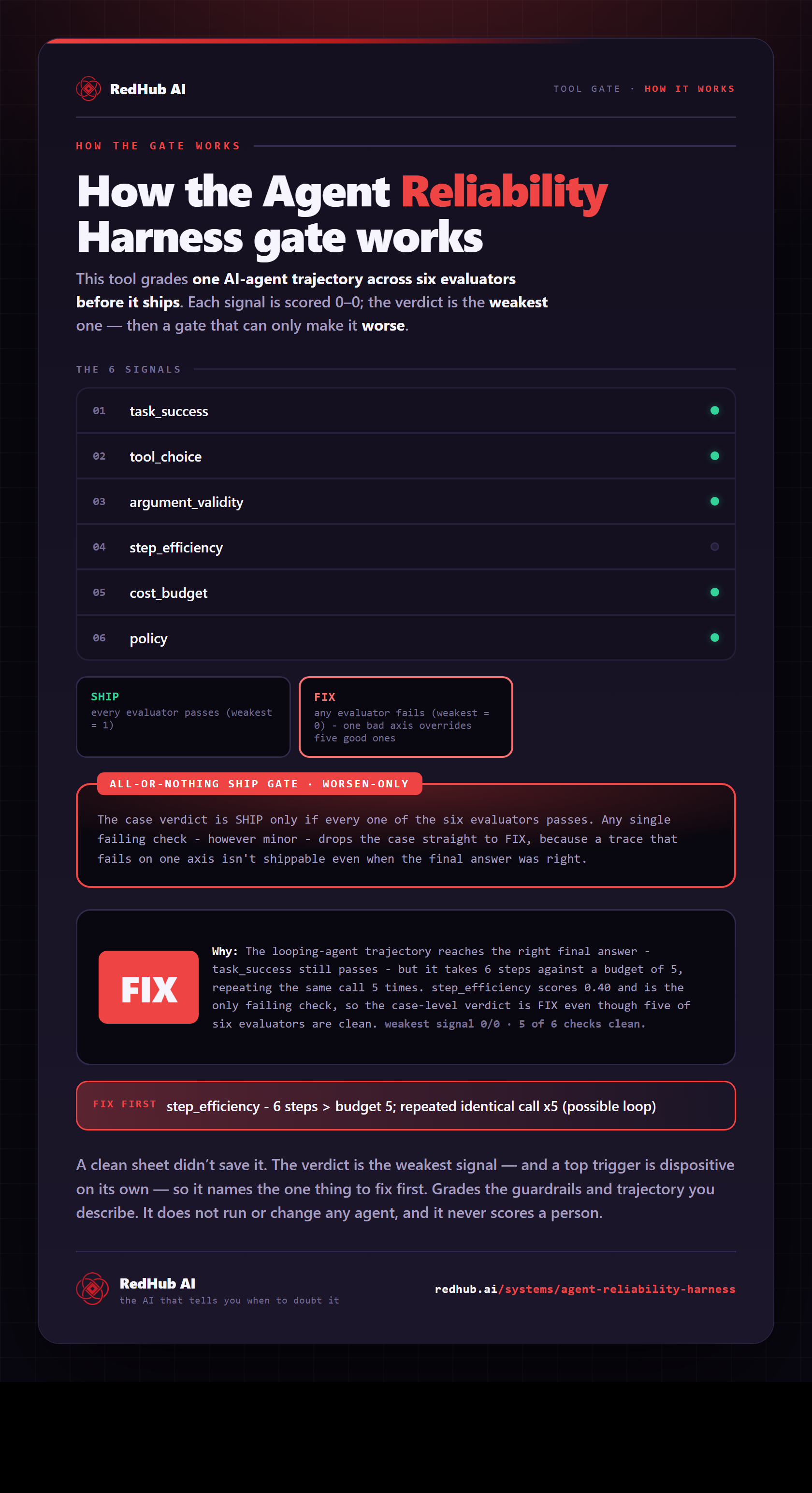
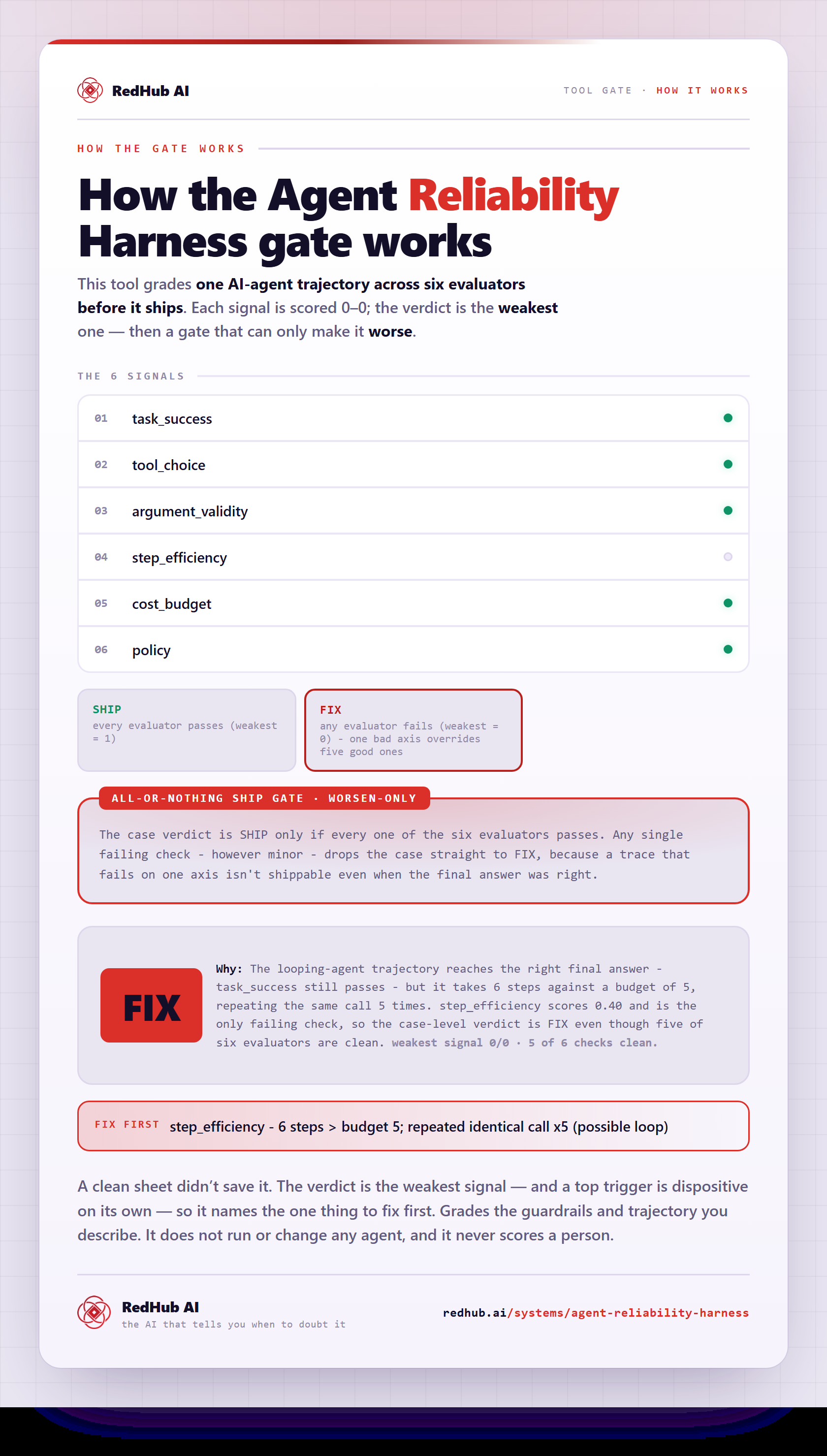
The gate this post refers to, drawn from the tool’s own logic. See the tool.