Native Audio in AI Video: What It Changes and What It Doesn't
RedHub AI Editorialupdated August 16, 20264 min read
In short
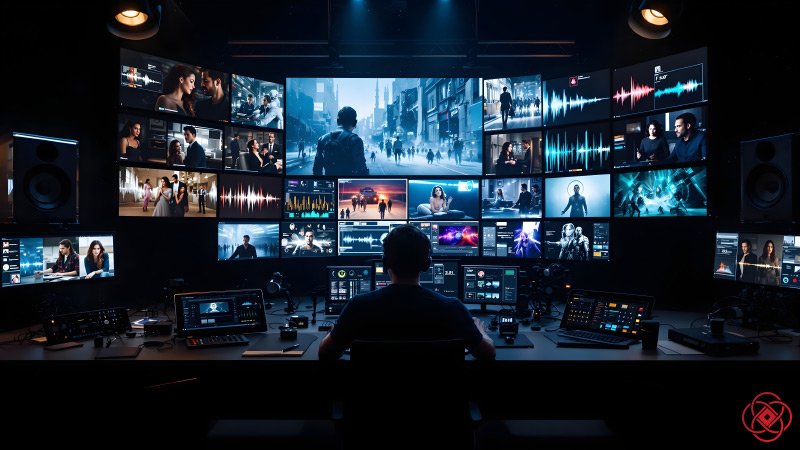
Generating audio alongside video removes the alignment step, not the sound-design judgment: elements arrive matched to their frames, but plausible is not the same as intended. The sound-on statistic usually quoted is inverted — Digiday reported in May 2016 that 85 percent of Facebook video was watched without sound. It is old and platform-specific, so the durable rule is to design for both states: picture carries the meaning, sound adds to it.
Jump to a section6
This is general information about video production workflow. It is not advice about any specific platform, and platform capabilities change frequently, so verify current behavior with the vendor before planning around it.
One step vanished, and it was the tedious one
Generated video used to land silent. Everything a viewer would hear got built somewhere else and dragged into alignment afterward. Dialogue recorded or synthesized. Effects sourced and placed. Ambience layered underneath. Music cut to length.
Sound generated with the picture kills the alignment work. Footsteps arrive on the frames that contain the feet. Nothing needs nudging.
It does not kill the judgment. Generated audio is plausible by construction, because plausible is what the model was built to produce. Plausible and intended are different things, and the gap between them is where the remaining work sits.
The stat everyone quotes is backwards
Every argument for generated audio eventually leans on how many people watch with the sound on. The number in circulation is usually inverted.
It traces to Digiday, reporting in May 2016 from publisher data, and the finding was that 85 percent of Facebook video was watched without sound. It gets cited as 85 percent watching with sound, which reverses the original.
So the figure is close to a decade old, covers one platform in one period, and points the opposite way from how it is used. Sound-on rates also swing hard by context. A vertical feed people scroll with headphones in and an autoplaying clip in a desktop news article are not the same situation. We could not find a reliable current cross-platform number, and we are not going to invent one.
The practical consequence holds either way. A real share of your audience will never hear the audio. Video that only works with sound fails silently for those people.
Build for both states
- Put anything load-bearing on screen. A claim, a number, a name. Spoken-only information is information some viewers never get.
- Caption everything, and design the captions. They serve sound-off viewers, accessibility and noisy rooms at once. Auto-captions mangle names and jargon, so read them before you post.
- Give sound the jobs picture cannot do. Tone, pace, emphasis, presence. Sound should deepen a video that already works without it.
- Watch it muted before publishing. Thirty seconds, and it catches the failure directly. If it does not hold up silent, the edit is not done.
Where generation is strong and where it guesses
Ambience, incidental effects and room tone are the strong case. They need to be believable, not specific, and believable is exactly the output.
Anything carrying meaning is the weak case. A line reading has an intended emphasis. A music cue has an intended emotional turn at an intended moment. Generation returns something reasonable, and reasonable is not the thing you meant. That is why the review step survives.
A rights question arrives with the convenience. Whether generated audio can be used commercially, and on what terms, depends on the platform license and on law that is still moving. Read the terms for the tool you used and the tier you were on. Output from a free tier does not always carry the rights that paid output does.
The constraint moved, it did not leave
When production gets cheap, production stops being the constraint and whatever sat behind it takes over. Usually that is deciding what deserves making, and holding it to a standard once it exists.
Watch for the failure this creates: teams get faster at producing and no better at judging, then publish more forgettable work than before. Volume without a standard is not leverage, it is just volume.
Honest complication, though. Some teams do need volume first, because they have no idea what works yet and only publishing will tell them. Cheap production is a real gift to them. The trap is staying in that mode after the data arrives.
Keeping one voice and one standard across output that suddenly costs nothing to make is its own discipline. Our Brand Voice & Content Multiplier ($99) handles that half, encoding the standard so it survives the volume.
Frequently Asked Questions
What does native audio generation actually change?
It removes the alignment step. Dialogue, effects, ambience and music used to be produced separately and synchronized to picture afterwards. When sound is generated with the video, those elements arrive already matched to the frames that contain them. It does not remove sound design judgment, only the manual work of lining things up.
Do most people watch video with sound on?
The figure usually quoted is inverted. Digiday reported in May 2016, from publisher data, that 85 percent of Facebook video was watched without sound, not with it. That figure is old and platform-specific, and sound-on rates vary widely by platform and context. There is no reliable current cross-platform number, so design for both states.
Should I still caption AI-generated video?
Yes, and captions deserve to be treated as a design element not an accessibility afterthought. They serve sound-off viewers, accessibility requirements and comprehension in noisy environments at the same time. Automatic captions handle proper nouns and jargon poorly, so they need reading before publication.
Where does generated audio still fall short?
It is strong at texture, meaning ambience, incidental effects and room tone, because those need to be believable not specific. It is weak wherever sound carries meaning. A line reading has an intended emphasis and a music cue has an intended emotional turn at an intended moment. Generation returns something reasonable, which is not the thing you meant.
Can I use AI-generated audio commercially?
It depends on the platform license and on law that is still developing. Check the terms for the specific tool and the specific pricing tier you used, because rights often differ between free and paid tiers. The ability to generate something is not the same as the right to use it commercially.
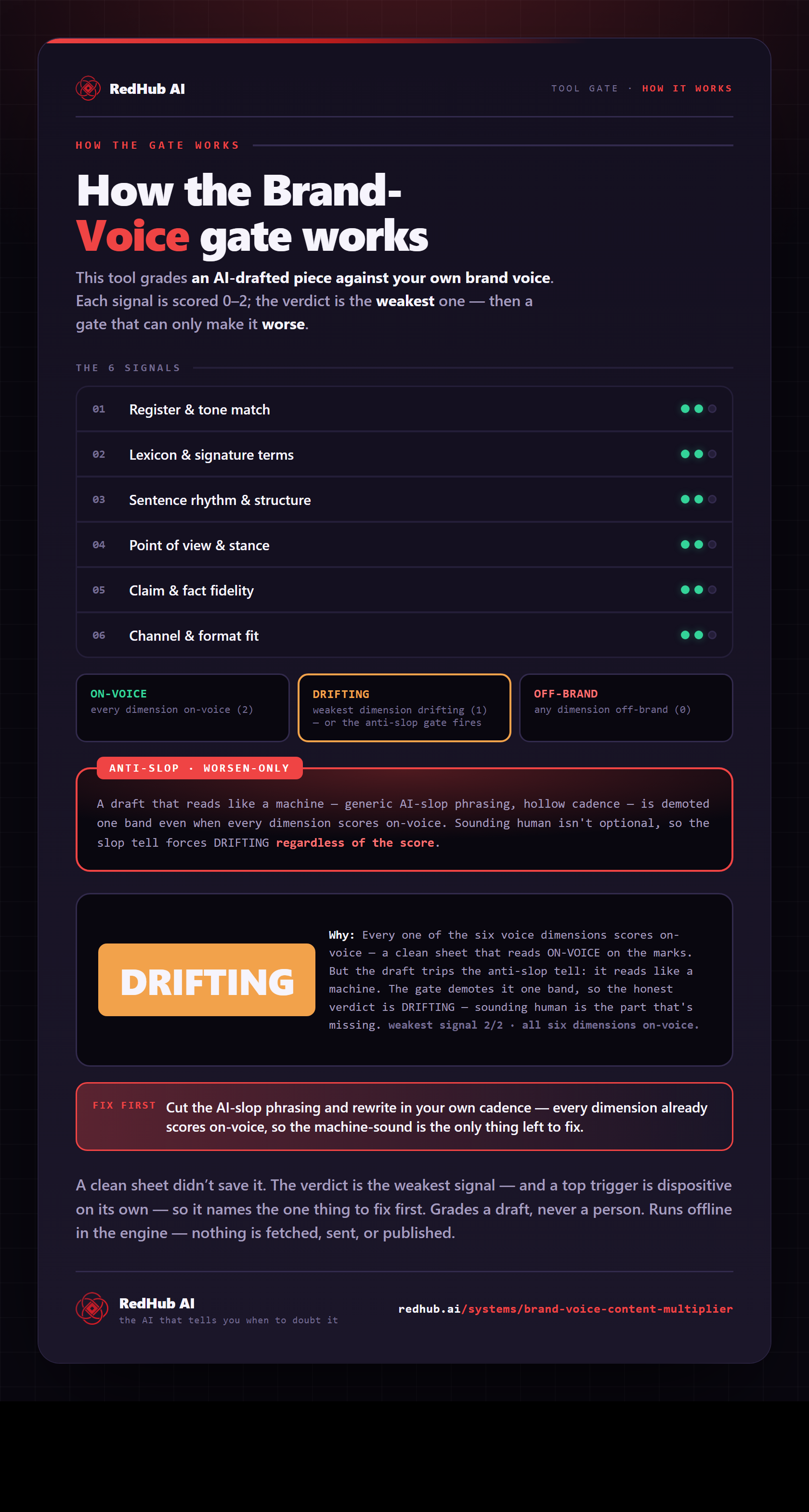
The gate this post refers to, drawn from the tool’s own logic. See the tool.