Microsoft Agent Governance Toolkit Explained

by RedHub - Vision Executive
Microsoft Agent Governance Toolkit Explained

Microsoft Agent Governance Toolkit Explained

8 min read

TL;DR

  • What it is: An open-source runtime security layer that watches every AI agent action and enforces policy in under 0.1 milliseconds.
  • Who it's for: Enterprises, startups, and developers building autonomous AI agents that need compliance, identity, and deterministic control.
  • How it works: Acts as a traffic cop between agents and systems—blocks unauthorized actions, assigns cryptographic identities, tracks trust scores, and maps compliance to frameworks like EU AI Act and HIPAA.
  • Bottom line: Governance is no longer optional for production AI agents—this toolkit makes enterprise-grade safety accessible to everyone.

What Is the Microsoft Agent Governance Toolkit?

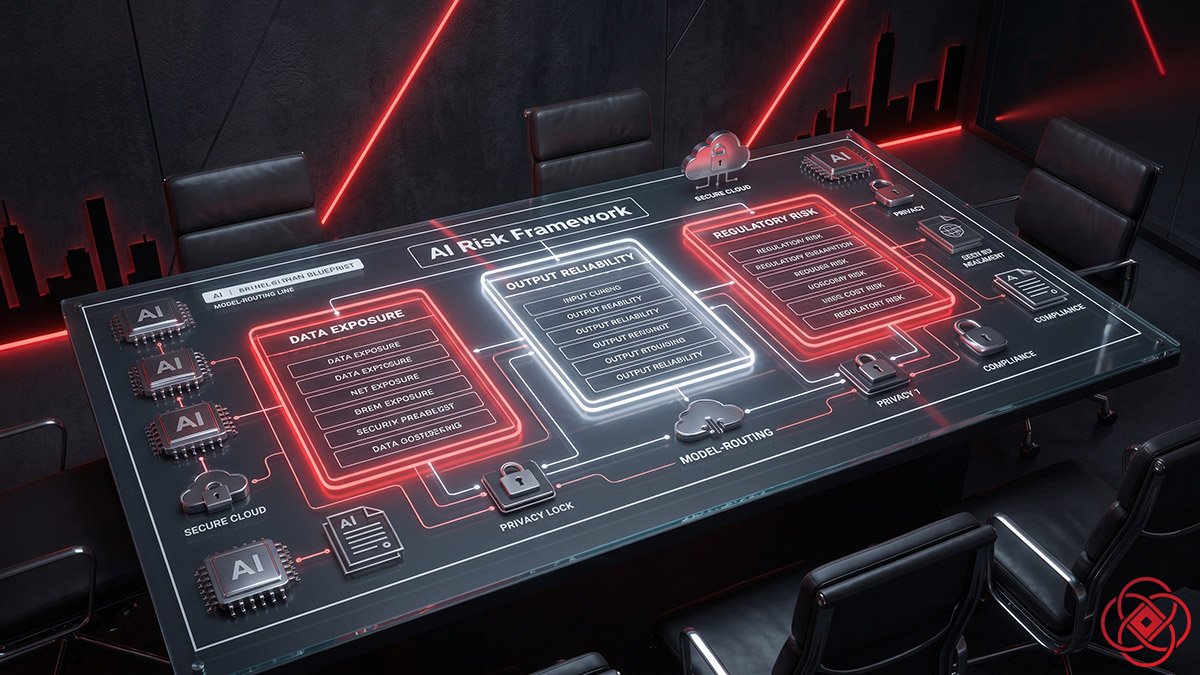
The Microsoft Agent Governance Toolkit is an open-source runtime security system that enforces policies on every action an AI agent attempts—before it executes. It provides cryptographic identity, trust scoring, compliance mapping, and sub-millisecond policy enforcement to make autonomous agents safe for production use.

Best for: Organizations deploying AI agents in regulated industries or high-stakes environments.
Not ideal for: Simple chatbots or read-only AI assistants with no write/execute permissions.


The moment everything sped up

If you've played with AI agents, you know the promise. You tell an agent, "Clean up our customer data," and it figures out the steps: finds the systems, calls APIs, writes updates, sends emails. You stop pushing buttons; you start giving goals.

And that's exactly the problem.

Agents don't just answer questions. They act. They spend money, move files, post messages, trigger workflows, and talk to other agents. One wrong move and your "helpful assistant" can leak private health data, delete a database, or spam thousands of customers.

Until now, most companies have tried to control this with duct tape and trust.

  • Limits baked into the app UI.
  • "Please don't do X" instructions buried in prompts.
  • Manual reviews and after-the-fact audits.

It's like letting a robot drive a truck because you told it, "Be careful," and hoping for the best.

Meanwhile, big enterprises—banks, hospitals, manufacturers—have been saying the same thing: "We will not deploy these agents in production until we can prove they are safe, predictable, and compliant."

That's the tension: innovation on one side, risk on the other. Then Microsoft quietly slid a new tool onto the table.

The invisible gatekeeper

The Agent Governance Toolkit does one simple but powerful thing: it watches every single action an AI agent tries to take, and decides "allow" or "block" in less than a thousandth of a second—before anything actually happens.

Not once in a while. Not for "sensitive" actions only.

Every. Single. Action.

  • Every tool call.
  • Every API request.
  • Every file read or write.

Engineers call this a policy engine. Think of it as a traffic cop at the center of your AI system. Agents can propose actions all day long, but nothing hits your real systems unless it passes the rules.

What makes this toolkit unusual is how fast and how strict it is.

Microsoft's benchmarks show that this governance layer adds less than 0.1 milliseconds of delay per action—even when thousands of agents are running at the same time. For real teams inside Microsoft, 7,000+ governance decisions across 11 agents added less than half a second of overhead over 11 days. In other words, the agents barely notice, but your security and compliance teams do.

Behind that speed is a simple principle: don't rely on the model's "good behavior." Put a hard gate in front of everything it can touch.

Identity: agents become real "actors"

The second big piece is identity.

In most early agent systems, agents are just code. They don't "have" an identity in the same way a human employee does. That makes it hard to answer basic questions like:

  • Which agent changed this record?
  • Who approved that action?
  • Should this agent have access to this database at all?

Microsoft's toolkit changes that by giving each agent a cryptographic identity—basically a digital passport—using decentralized identifiers (DIDs) and Ed25519 keys. It also defines an "Inter‑Agent Trust Protocol" so agents can talk to each other securely and prove who they are.

On top of that, it tracks trust scores for agents on a 0–1000 scale with behavioral tiers. As an agent behaves well, its score stays high. If it starts acting strange—pushing unusual actions, bumping into blocked rules—its trust score decays.

Now imagine a future incident report: "Agent A‑492, trust score 610, attempted to export customer data at 3:17 p.m., blocked by policy, flagged for review." That's a very different world from "The AI did something weird and we're not sure how."

Compliance, without the 300‑page binder

The third pillar is where this gets especially interesting for businesses: compliance.

Regulations like the EU AI Act, HIPAA, and SOC2 are not "nice to have" checklists. They decide whether a hospital can legally use an AI agent to process patient data, or whether a financial firm can let an agent touch account information.

The Agent Governance Toolkit includes an Agent Compliance module that:

  • Grades how well your agent setup meets key requirements.
  • Maps your controls to frameworks like the EU AI Act, HIPAA, and SOC2.
  • Automatically collects evidence tied to the OWASP "Agentic AI Top 10" risk categories.

So instead of a startup founder hand‑waving in a sales call—"Yeah, we're safe, we're compliant"—they can point to concrete reports: here are the policies, here are the logs, here's how we cover all 10 major risk categories for agents.

This is what "enterprise‑ready" looks like in practice.

Governance becomes table stakes

Here's the deeper shift: governance is no longer a bonus feature. It's becoming the price of entry.

Big customers are already demanding:

  • Deterministic controls over what agents can and can't do.
  • Clear identities and audit trails.
  • Proof that the system respects regulation and company policy.

Until now, that kind of setup required a large security team, custom infrastructure, and months of work. It was the advantage of giants.

By open‑sourcing this toolkit under an MIT license, and making it available in multiple languages (Python, TypeScript, .NET, Rust, Go), Microsoft just dropped that barrier dramatically. It plugs into popular agent frameworks like LangChain, AutoGen, and others, so teams can add deep governance without rebuilding everything from scratch.

For startups, this is huge.

You can now say, with a straight face, "We ship with sub‑millisecond policy enforcement, cryptographic agent identities, mapped compliance, and coverage of all 10 OWASP agent risks—out of the box."

That's not marketing copy. That's a real technical claim, backed by open code on GitHub and packages on PyPI.

Three quiet but real consequences

If you zoom out, three things start to come into focus.

1. Safety moves from advice to architecture.
Instead of "prompt your way to safety," more teams will treat governance as code: version‑controlled rules, measurable latency, tested coverage, clear logs. That's a grown‑up way to run important systems.

2. Agent "sprawl" gets a leash.
With identity, trust scoring, and centralized policies, companies can actually see and control how many agents they have, what they do, and when they should be turned off. This is how you avoid a wild mess of bots with unknown access.

3. The bar for "serious" AI products rises.
Once one vendor ships agents with this level of governance built in, customers will start asking everyone else: "Where's your policy engine? Where are your compliance mappings? How do you handle OWASP agent risks?" The answer "We don't" won't cut it for long.

In a way, Microsoft is doing what cloud providers did years ago: taking something hard, expensive, and risky—and turning it into shared infrastructure.

We're moving from "move fast and break things" to "move fast, but every move is checked in under a millisecond."

That sounds technical, but it matters in simple, human ways.

It means a doctor can trust that an agent helping with patient records can't quietly send data to some random service. It means a CFO can sleep at night knowing that no AI agent can wire money without passing strict, logged rules. It means a founder can tell a risk‑averse buyer, "Yes, we can innovate—and no, we're not asking you to bet your job on blind trust."

We are still early in the age of AI agents. The tools are rough, the stories are messy, and mistakes will happen. But this release marks a line in the sand.

If your product ships agents that act in the world, governance is no longer optional. It's part of the job.

And now, for the first time, the same level of protection that used to belong only to giant, slow‑moving enterprises is available as open‑source code anyone can download, install, and build on.

Microsoft didn't just launch another AI feature.

They handed the ecosystem a new default: agents that can move fast, but never without someone—silent, invisible, sub‑millisecond fast—asking one simple question before every action:

"Are you allowed to do that?"


Decision Guide

Use it if: You're deploying AI agents in production environments where compliance, audit trails, or regulatory approval matters—banks, healthcare, SaaS platforms, or any system where agents write, delete, or move data.

Skip it if: You're building simple read-only chatbots, internal prototypes with no external data access, or experimental agents that never touch production systems.

Best first step: Clone the GitHub repository, run the Python or TypeScript quickstart, and test a basic policy rule on a sandbox agent before integrating with your production stack.

Frequently Asked Questions

What is the Microsoft Agent Governance Toolkit in simple terms?

It's an open-source security layer that sits between your AI agents and the systems they interact with. Before any agent action executes—calling an API, writing a file, sending an email—the toolkit checks whether that action is allowed based on your rules. If it passes, the action proceeds. If not, it's blocked instantly.

How is this different from prompt engineering for safety?

Prompt engineering relies on the AI model behaving correctly based on instructions—essentially hoping it follows the rules. The Agent Governance Toolkit enforces rules at the system level, regardless of what the model "thinks." Even if a model tries to take a forbidden action, the toolkit blocks it before it reaches your infrastructure. It's the difference between asking nicely and installing a lock.

Does adding this toolkit slow down my AI agents?

Barely. Microsoft's benchmarks show the governance layer adds less than 0.1 milliseconds of latency per action. In real-world testing with 11 agents making 7,000+ policy decisions over 11 days, total overhead was under half a second. For most applications, this delay is imperceptible and well worth the security and compliance benefits.

What frameworks and languages does it support?

The toolkit is available in Python, TypeScript, .NET, Rust, and Go. It integrates with popular agent frameworks like LangChain, AutoGen, and others. Microsoft designed it to be framework-agnostic, so you can plug it into your existing agent architecture without a complete rebuild.

Who benefits most from using this toolkit?

Enterprises in regulated industries (healthcare, finance, government) benefit most, as do startups building production-grade AI agents for B2B customers who demand compliance and audit trails. Any team deploying agents that write, delete, or move data—rather than just answering questions—should consider this toolkit essential infrastructure.

Is this toolkit only for large enterprises, or can small teams use it?

Small teams and startups can absolutely use it. Because it's open-source (MIT license) and available as installable packages, there's no enterprise licensing barrier. The documentation includes quickstart guides, and the toolkit is designed to add governance without requiring a dedicated security team. It levels the playing field, giving small teams the same safety controls that previously only giants could afford.

You may also like

Leave a Comment

Stay ahead of the curve with RedHub—your source for expert AI reviews, trends, and tools. Discover top AI apps and exclusive deals that power your future.