AI and the 4-Day Workweek
Todd Brooks, Founderupdated July 22, 20265 min read
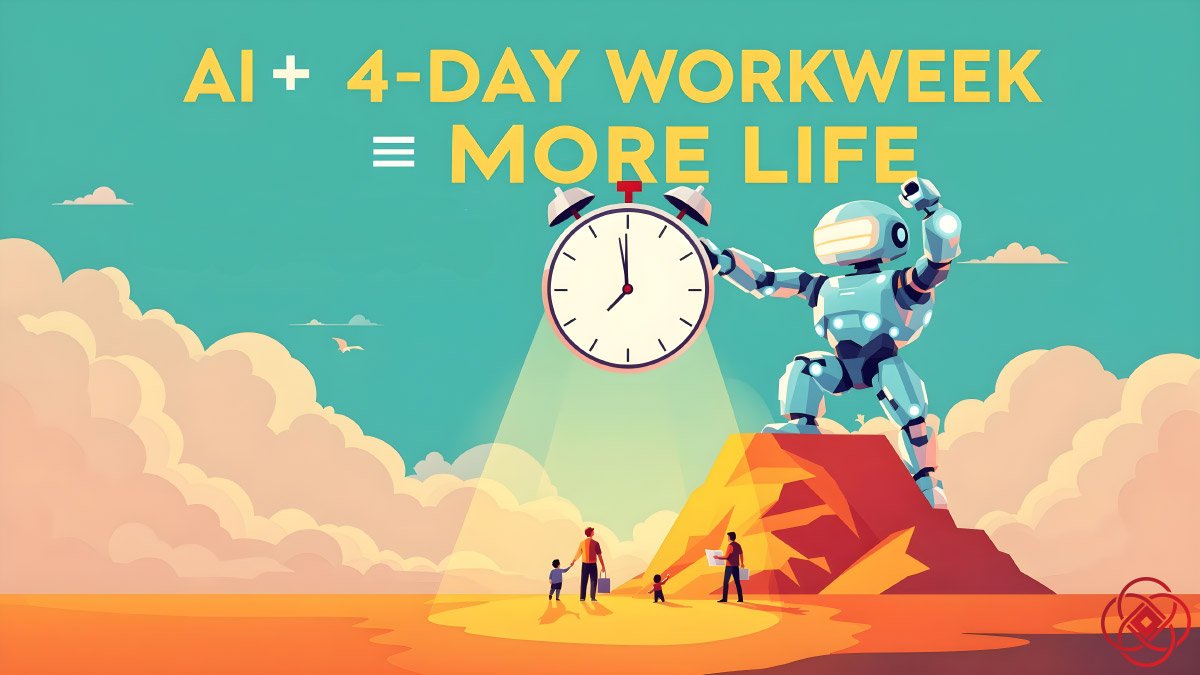
In short
The argument that AI-driven productivity gains could fund a shorter week rather than more output, drawing on UK and Icelandic trial results. None of the figures carry linked sources here, so verify before quoting. One correction: the post's framing of Unilever as a New Zealand company has been fixed — it ran the trial through its New Zealand office.
Jump to a section7
The question isn’t whether we can. The question is whether we will.
The Evidence Is Already In
Right now, 92% of companies in Britain who tried a four-day workweek are still doing it. Not because they’re nice. Because it works. Employees worked less. Companies made the same money. Sometimes more. Stress dropped. Burnout disappeared. People showed up healthier, happier, more focused. This isn’t a prediction. It’s already here.
What AI Actually Takes Off Your Plate
The AI part changes everything. Not because robots are taking over. Because machines are finally handling the boring stuff. Think about your average Tuesday: 31 wasted hours per month in pointless meetings, endless email chains going nowhere, data entry that could be done while you sleep, reports that write themselves but you’re writing them anyway. AI doesn’t do your job. It does the parts of your job that aren’t actually your job.
Microsoft measured this: People using their AI assistant finish tasks 29% faster. GitHub found developers code 55% quicker with AI help. The math is simple. If you eliminate 8 hours of busywork every week, you’ve got a four-day workweek. Same output. Different schedule.
It Only Works If We Choose It
But here’s the uncomfortable part: This only works if we choose it. Iceland tried this with 2,500 workers. Productivity stayed the same or got better in 86% of workplaces. So what did they do? They made it permanent. Now most of their country works less and lives more. We could do that. But we probably won’t.
Because we have a history problem. When farms got tractors, we didn’t work less. We farmed more land. When factories got electricity, we didn’t go home early. We added night shifts. When computers arrived, we didn’t take Fridays off. We invented new work to fill the time. Economist John Maynard Keynes predicted in 1930 that technology would give us 15-hour workweeks by now. He was right about the technology. Wrong about the choice.
The pattern is clear: Every productivity breakthrough creates a fork in the road. Path one: Use the gains to work less and live more. Path two: Use the gains to produce more and consume more. We always pick path two. Not because we have to. Because we’re afraid. Afraid that working less means being less. Afraid that rest is laziness. Afraid that if we’re not grinding, someone else will beat us. But here’s what the companies who actually tried this discovered: The opposite is true.
What Happened When Companies Tried It
Unilever ran the experiment through its New Zealand office: Four-day weeks. Same pay. AI handling the routine tasks. Result? Revenue grew. Sick days dropped 34%. Stress fell by a third. People stayed at the company longer. Another firm, Perpetual Guardian, found stress dropped seven percentage points. Work-life balance scores jumped from 54% to 78%. Commitment and engagement went up. The productivity didn’t disappear. It got focused.
Because here’s the truth about knowledge work: More hours doesn’t mean more output. It means more meetings. More busywork. More pretending to look busy. The actual creative thinking, problem solving, and value creation? That happens in bursts. Deep work. Flow states. You can’t sustain that for 50 hours a week. You can barely sustain it for 30.
This is where AI becomes the unlock. Not by replacing you. By giving you back your time. AI writes the first draft. You make it sing. AI crunches the numbers. You find the insight. AI schedules the meetings. You show up ready. The robot handles the repetitive. You handle the remarkable.
The Trap Waiting on the Other Side
But—and this is critical—there’s a trap here. The trap is using AI to cram five days of work into four days instead of using AI to actually work four days. The trap is creating two classes: knowledge workers with AI access enjoying short weeks, and everyone else grinding harder for less. The trap is wealthy countries optimizing their schedules while offshore teams work longer hours to support them. The trap is thinking efficiency is the point instead of humanity being the point.
Goldman Sachs estimates AI will affect 300 million jobs worldwide. Not eliminate. Affect. Which could mean liberation for some and exploitation for others. The technology doesn’t decide. We do.
What Has to Change
Here’s what needs to happen: Companies need to measure outcomes, not hours. Results, not presence. Workers need to learn AI tools the same way they learned computers. It’s not optional anymore. Leaders need to resist the urge to pile on more work just because the tools can handle it. Policies need to ensure productivity gains flow to workers, not just shareholders.
And individuals need to do something radical: Protect the space. If AI gives you Friday back, don’t fill it with more work. Fill it with life. Because the four-day week isn’t about Fridays. It’s about remembering what work is for. Work is supposed to fund your life, not replace it.
The companies succeeding at this aren’t just buying software. They’re changing their culture. They’re killing the 62 pointless meetings every month. They’re teaching people to use the tools, not just giving them the tools. They’re defining success by impact, not by hours logged on Slack. And most importantly, they’re admitting the old way was broken.
We convinced ourselves that sitting in an office for 40+ hours was productivity. It wasn’t. It was theater. We convinced ourselves that being busy meant being valuable. It didn’t. It meant being distracted. We convinced ourselves that rest was earned through exhaustion. It’s not. Rest is where excellence comes from.
The four-day workweek powered by AI is proof of something bigger: That we’ve been doing this wrong. That the “way it’s always been” was never set in stone. That we have permission to redesign work around humans instead of designing humans around work.
But none of this happens automatically. The UK trial worked because companies committed. Iceland’s success happened because they made it policy. Unilever’s results came because they measured what mattered. The technology is ready. AI can compress your workweek today. Right now. The tools exist. The question isn’t can we.
What Are We Optimizing For?
The question is: What are we optimizing for? More stuff? Or more life? Bigger numbers? Or bigger meaning? Grinding harder? Or thriving better?
The choice is coming for every company, every industry, every worker. Some will use AI to accelerate the hamster wheel. Others will use it to step off entirely. Some will keep measuring productivity by exhaustion. Others will measure it by excellence.
The four-day workweek isn’t a perk. It’s a signal. A signal that your company understands the purpose of work has changed. A signal that productivity isn’t performative busyness. A signal that humans are more than their output.
We’re at the fork in the road again. Just like we were with tractors, electricity, and computers. This time, maybe we choose differently. This time, maybe we remember that the point of progress isn’t to do more.
It’s to be more.
The tools are here. The data is clear. The choice is ours. What will we choose?
Frequently Asked Questions
What evidence is there that a four-day week works?
The figures cited are that 92 percent of British companies which trialled it kept it, and that Iceland's trial across 2,500 workers held or improved productivity in 86 percent of workplaces. Individual firms are reported with sick days down 34 percent and work-life balance scores rising from 54 to 78 percent. None of these carry linked sources here, so verify before quoting them.
Where does AI fit into the argument?
As the thing that removes the work that was never really your job — the pointless meetings, the email chains, the data entry, the reports that could write themselves. The productivity figures quoted are 29 percent faster task completion from Microsoft and 55 percent faster coding from GitHub, both vendor-reported.
What is the actual arithmetic?
Simple enough to check: remove roughly eight hours of busywork a week and you have a four-day week at the same output. The claim is not that people work faster, but that a day's worth of what they do is not work.
One correction worth knowing before you cite this post
It describes Unilever as a New Zealand company. Unilever is a British-Dutch multinational that ran its four-day-week trial through its New Zealand office; Perpetual Guardian, mentioned separately in the same passage, is the New Zealand firm. The trials both happened — the attribution is muddled.
Why does the post expect this not to happen anyway?
Because it has not before. Tractors led to farming more land, electricity to night shifts, computers to inventing new work to fill the time. Keynes predicted fifteen-hour weeks by now and was right about the technology and wrong about the choice — every productivity gain forks, and the fork is a decision rather than an outcome.