AI and the Future of Human Identity
Todd Brooks, Founderupdated July 22, 20265 min read
In short
An argument that the harder problem is not job displacement but what happens to purpose when what you do no longer defines who you are, anchored on McKinsey's finding that 70% of employees say their sense of purpose comes from work. Verified figures from McKinsey, Pew and the World Economic Forum; the timeline predictions around them are forecasts, not measurements.
Jump to a section8
AI and the Future of Human Identity: Beyond Job Disruption
AI disruption is accelerating. The real challenge may be what happens to purpose when "what you do" no longer defines who you are.
The Shift: Years, Not Decades
Here's the uncomfortable reality: for a growing number of roles, the timeline for change looks like years, not decades. Forecasts vary, but they are converging on a narrower window than most organizations—or individuals—have planned for.
According to CNBC's 2025 Workforce Executive Council survey (opens in a new tab), nearly 9 out of 10 senior HR leaders expect AI to reshape jobs in 2026, with some forecasts placing major entry-level white-collar disruption within 1–5 years.
If you treat this as a distant "future of work" problem, you will react late. If you treat it as a present-day "future of identity" problem, you can adapt early. Understanding how to use AI effectively is becoming essential for staying competitive.
Why the Paycheck Isn't the Whole Story
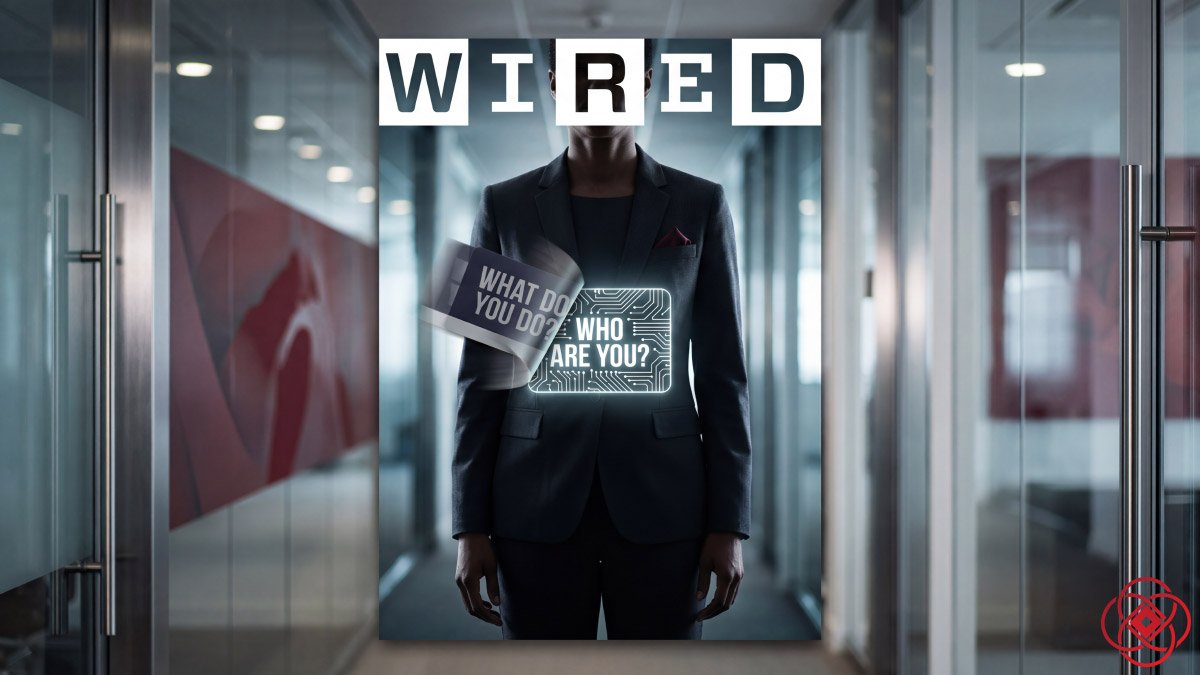
Work is more than money. It is social proof. It is routine. It is belonging. It is how many people answer the question: "What do you do?"
When that answer erodes, the risk is not only financial stress. It is a dignity shock. A meaning crisis. A quiet collapse of narrative: If I'm not useful in the old way, what am I?
Research from McKinsey (opens in a new tab) shows that 70% of employees say their personal sense of purpose is defined by their work. This is the job that's bigger than your job: figuring out who you are when work changes.
History's Warning Label
When large groups feel displaced and disrespected, volatility increases. In 19th-century England, workers targeted machines as symbols of loss and injustice. The lesson is not that technology is evil. It is that humans require more than survival—they require purpose and status.
The question isn't whether AI will transform work. The question is whether we'll design systems that give displaced workers dignity, agency, and new paths forward—or whether we'll repeat history's mistakes at digital speed. This is where developing a clear AI strategy becomes crucial for both organizations and individuals.
The Modern Signals
In the U.S., living arrangements and adulthood "milestones" have shifted substantially. Pew Research Center reported (opens in a new tab) that in 2023, 18% of adults ages 25–34 lived with a parent, with young men more likely than young women to do so.
These are not moral failures—these are system signals. They tell us that something fundamental has shifted in how young people access economic stability and independence.
Meanwhile, autonomous systems continue advancing. According to the World Economic Forum's 2025 report (opens in a new tab), AI and end-to-end automation are taking over key tasks across sectors, with workforce displacement becoming a permanent rather than transitory phenomenon. You do not need to believe every prediction to recognize the direction of travel.
The Three Skills That Travel Well
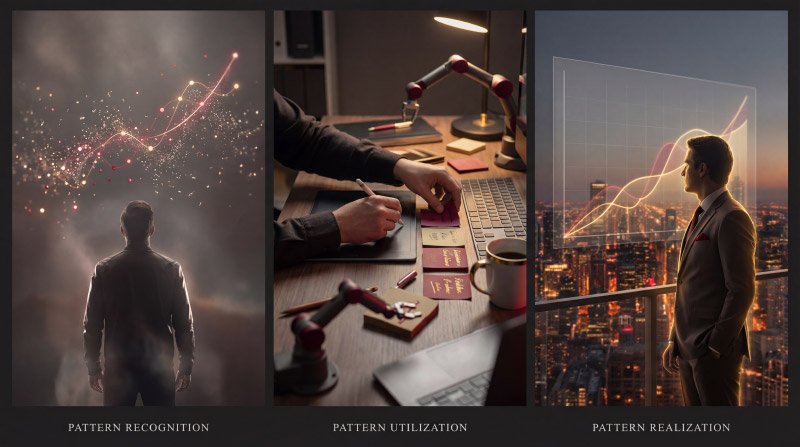
The people who navigate the transition best are rarely the most technical. They are the most adaptive. In practice, that adaptability shows up as three human skills that align with what we call human-AI collaboration:
1. Pattern Recognition
Seeing the shift early. Understanding cycles. Reducing fear by replacing mystery with model: chaos is often a pattern you have not learned yet. The people who spot emerging trends before they become obvious have time to position themselves advantageously.
2. Pattern Utilization
Turning what you see into action. Noticing is not enough. You must move—test, iterate, ship, learn. Opportunity is frequently "obvious" only in hindsight. The advantage goes to those who act while others are still analyzing.
3. Pattern Creation
Building new systems instead of defending old ones. Creating categories. Designing processes. Becoming the artist, not just a performer in someone else's song. This is where human creativity and agency become irreplaceable—not in replicating what exists, but in imagining what could exist.
What We Decide to Become
Yes, some jobs will disappear or shrink. But the larger question is not employment. It is identity. It is whether you are managing your life—or creating it.
The technology is coming whether we are ready or not. The remaining choice is what we decide to become: a person whose worth is defined by a job title, or a person whose worth is defined by agency, creativity, and contribution.
That shift—from passive recipient to active creator—is the job that's bigger than your job. And it starts now. If you're ready to take that step, explore getting started with AI to build your adaptive advantage.
What You Can Do Now
Start by building an "adaptation loop": learn an AI tool, apply it to a real workflow, measure results, and repeat weekly. Pair that with the three skills above: spot patterns, act on them, and build something new.
The future belongs to people who create it.
Frequently Asked Questions
When could AI meaningfully disrupt jobs?
Many forecasts emphasize a near-term window (years, not decades). Some leaders predict major entry-level impacts within 1–5 years, while others forecast more general capability milestones around 2029. These are planning inputs, not certainties.
Is the biggest risk financial or psychological?
Financial disruption matters, but identity disruption can be bigger: people often tie dignity and social standing to work, so loss of role can trigger anxiety, anger, and instability. The psychological impact of losing purpose and belonging often exceeds the financial challenge.
What are the three human skills highlighted in this article?
Pattern recognition (seeing shifts early), pattern utilization (turning insights into action), and pattern creation (building new systems and opportunities). These skills help people adapt to change rather than resist it.
Will people be replaced by AI or by AI-enabled people?
In many roles, the immediate competitive pressure comes from people who can effectively use AI tools to outperform peers who do not. The advantage goes to those who learn to direct AI, not compete with it.
Does universal basic income solve the identity problem?
UBI may address baseline needs, but it does not automatically provide meaning, belonging, or purpose—needs that many people previously satisfied through work. Purpose requires intentional design through community, craft, service, creativity, and contribution.
What is the core message of this article?
AI may reshape employment quickly, but the deeper risk is identity loss. Adaptation requires building human skills—pattern recognition, utilization, and creation—rather than purely technical skills. The goal is to shift from passive recipient to active creator.
What can I do immediately to prepare?
Establish a weekly cycle of learning and applying AI tools to real tasks, measuring outcomes, and iterating. Focus on building adaptive skills rather than defending current roles. Start creating value in new ways rather than protecting old ways.