No AI Without Consent: Your Face, Your Choice
RedHub AI Editorialupdated July 22, 20265 min read
In short
Consent rules for AI replicas of a person's face and voice have tightened, and the direction is authorization rather than prohibition — you can license a likeness, you cannot simply take one. This covers what the rules address and the guardrails behind them. Orientation, not legal advice; specifics vary by jurisdiction.
Jump to a section6
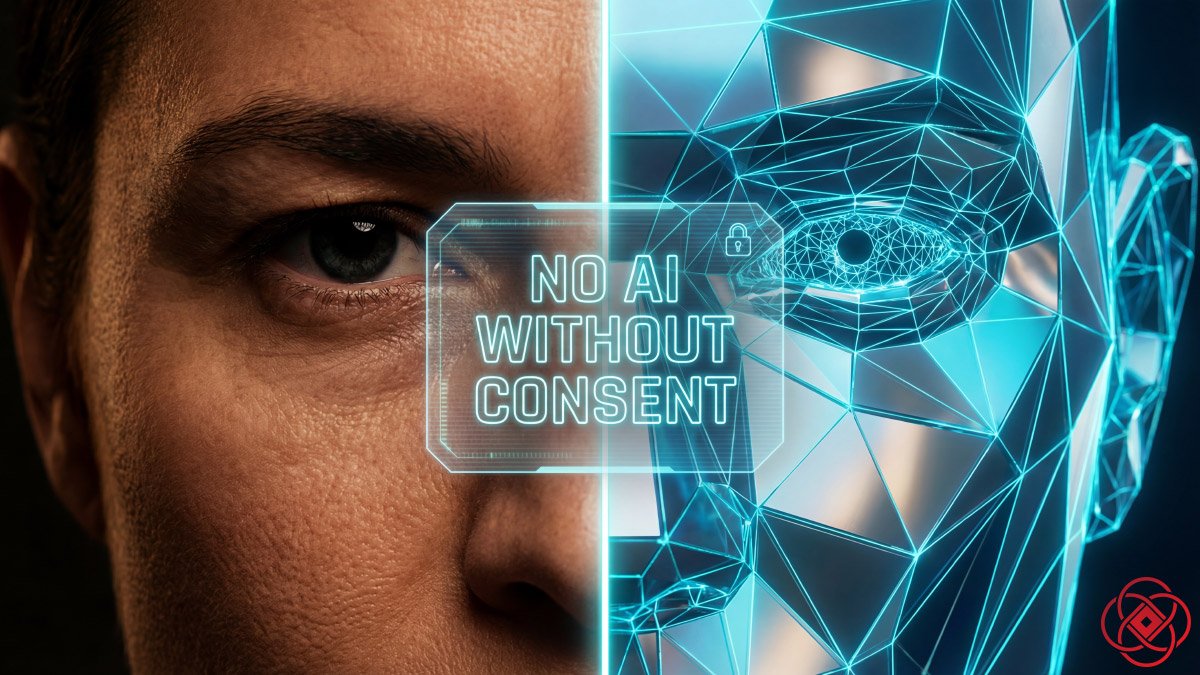
No AI without consent is becoming the new baseline for ethical AI in entertainment: if someone uses your face, voice, or movements, they should ask first—and pay fairly.
This post is general information, not legal advice. What binds you depends on your union status, your state, and what you signed. Have a lawyer or your union read anything involving your likeness before you sign it.
Here's something that sounds obvious but wasn't always true: If someone uses your face, they should ask first.
Simple, right? But in Hollywood, it took a strike, new laws, and a complete rulebook rewrite to make it happen.
Welcome to the age of "No AI Without Consent."
The moment everything changed
In 2023, actors went on strike. Not just for better pay or better hours—though those mattered too. They walked out because studios wanted something new: the right to scan their faces, copy their voices, and use digital versions of them forever. Without asking. Without paying extra.
SAG‑AFTRA’s (opens in a new tab) said no. And they won.
Inside a SAG-AFTRA signatory production. The new contract was clear: Your face is yours. Your voice is yours. Your movements are yours. If a studio wants to make a digital copy—what they call a "digital replica"—they have to tell that performer exactly what it's for, get their signature, and pay them every time it is used, under the terms of that agreement. Outside a signatory production, what binds anyone is whatever they signed.
Not once. Every time.
What the new rules actually say
California backed this up with a new law, AB 2602, which applies to performances fixed on or after January 1, 2025. Under California Labor Code §927 (added by AB 2602, effective January 1, 2025), a contract provision permitting the use of a digital replica of an individual’s voice or likeness in place of work the individual would otherwise have performed in person is unenforceable if all of the following are true: the provision does not include a specific description of the intended uses of the replica, the individual was not represented by legal counsel in negotiating the provision or was not covered by an applicable collective bargaining agreement addressing digital replicas, and the use is not consistent with the terms of the contract. The statute renders certain contract provisions unenforceable on stated conditions; it does not prohibit digital replicas. That representation condition is load-bearing: the protection is strongest exactly where someone was least represented.
Inside those agreements, contracts have to be specific. Outside them, what binds anyone is whatever they signed.
Inside a SAG-AFTRA signatory production, the rule is: if it looks like you, sounds like you, or moves like you, you control it. Outside one — non-union work, another state, any industry that isn’t entertainment — there is no single rule. You’re relying on your state’s right-of-publicity law, and those vary a lot.
What this means in the real world
In video games, this is already happening. The 2025 Interactive Media Agreement (opens in a new tab) says game developers can use "Independently Created Digital Replicas"—but only with consent and compensation.
The consent form has to spell out: Is this based on an existing character? Are you reprising a role? Will your digital version generate lines in real-time during gameplay?
Actors sign knowing exactly what's happening. That's the standard now.
Three guardrails holding everything in place
The new system works because it's coming from three directions at once:
- Contracts. Entertainment lawyers now build AI clauses into every agreement. They define what counts as a replica, how long rights last, and how actors can revoke consent if things go sideways.
- State laws. California and New York both legislated in this area. Neither statute bans digital replicas; both make certain contract provisions unenforceable on stated conditions. New York Civil Rights Law §§50-f and related provisions address digital replicas and the post-mortem right of publicity; those provisions have been amended in recent legislative sessions and their scope is narrower than a blanket ban on unauthorized replicas. There is still no federal digital-replica law: the NO FAKES Act cleared the Senate Judiciary Committee in June 2026 and is waiting on the full Senate. Until something passes, this is fifty different answers, not one.
- Copyright lawsuits. By late 2025, Disney, Warner Bros., and Universal filed lawsuits against AI companies for training models on their films without permission. Those cases are in discovery and nothing has been decided. Separately, Anthropic’s $1.5 billion settlement with authors over pirated books got final approval in July 2026. Worth knowing, but note what it isn’t: that was a copyright claim by authors, not a likeness claim by performers. Different rights, and they don’t automatically move together.
The pattern is clear. This isn't about stopping technology. It's about making sure technology respects people.
Worth saying plainly: Trust is the real product. When audiences know actors agreed to their digital doubles, they trust the performance. When actors know they're being treated fairly, they collaborate instead of resist.
AI in Hollywood isn't the problem. AI without consent is the problem.
What good practice looks like in 2026
Studios that want to “do AI right” now follow a simple checklist. None of it is a legal checklist — it is what the better agreements contain. What binds you depends on your union status, your state, and what you signed.
- Ask first. In writing. Be specific.
- Pay fairly for each use — a term many agreements now contain, not a legal requirement.
- Keep humans in charge of final decisions.
- Be honest with audiences about when AI is used.
- Build "kill switch" clauses if AI use becomes harmful.
This isn't the end of AI in entertainment. It's the beginning of AI done ethically. Done respectfully. Done with permission.
Your face. Your voice. Your choice.
That's not radical. That's just fair.