How to Build a Lean AI Back-Office Stack (Without Hiring an Ops Manager)
RedHub AI Editorialupdated August 18, 20265 min read

Jump to a section8
TL;DR
- What it is: a small set of AI tools that covers the three core back-office jobs — support, paperwork, and finance — so a lean team runs ops without a dedicated ops hire.
- Who it's for: founders and small teams who want an AI back-office stack they own, not another subscription.
- How it works: three kits, one rule — escalate, flag, reconcile — that chain from conversations to documents to numbers to reports.
- Bottom line: you don't need a rack of SaaS or an ops manager to run a clean back office. You need three honest tools and a discipline.
What is an AI back-office stack?
An AI back-office stack is a small, connected set of tools that handles the three jobs every business runs behind the scenes: answering repeat inquiries, turning paperwork into data, and reconciling the numbers into reports. A lean stack does this with three kits and one rule — escalate uncertain support tickets, flag low-confidence document fields, and hold reports that don't reconcile — so the routine work is automated and the judgment calls still reach a person. It replaces a scatter of point apps and, often, the need for an early ops hire.
Best for: lean teams that want to own their ops tooling — the AI Back-Office Bundle is exactly this stack.
Most lean teams build their back office by accident — a support tool here, a spreadsheet there, a new subscription every time something breaks. The result is a rack of disconnected apps that still leaves the hard parts manual. A deliberate stack is smaller and cleaner: three tools that each own one job and hand off to the next.
The three layers of a lean stack
Every back-office stack, no matter how fancy, reduces to three layers. Build them in this order.
- The front door — support. A support deflection tool answers repeat questions from your approved content and escalates anything sensitive or uncertain to a person. This clears the highest-volume, lowest-risk work first.
- The paperwork — documents. A document extraction tool turns invoices, receipts, and forms into structured data and flags any field it read with low confidence, so you review the exceptions instead of typing everything.
- The books — finance. A finance and reporting tool runs your tie-outs, labels each result, and holds any report that doesn't reconcile. This is the last gate before a number reaches a decision.
Key insight: the layers aren't independent. Clean extracted data makes honest reports, and honest reports make the upstream discipline worth it. That's why a connected stack beats three tools you bolt on separately.
Why one rule holds it together
The thing that turns three tools into a system is a shared discipline: don't guess — surface it. Escalate, flag, and reconcile are the same rule at three doors — the front door, the paperwork, and the books. When every layer follows it, a mistake surfaces at its source instead of three steps downstream where it's expensive to trace. Without it, you just have three separate places to be quietly wrong.
Get the whole stack, one discipline
The AI Back-Office Bundle is the three-layer stack — support, documents, finance — plus a connective playbook that runs them as one rule. $249 versus $317 separately.
Get the AI Back-Office Bundle — $249 →Build it in stages, not all at once
You don't have to stand up all three layers on day one. The smart path is to add a layer when its pain becomes the loudest.
| Stage | Add this layer | You'll feel it when… |
|---|---|---|
| 1 | Support deflection | Repeat tickets are eating your inbox |
| 2 | Document extraction | Invoices and forms are eating your afternoons |
| 3 | Finance & reporting | Month-end has become a white-knuckle ritual |
Because the tools are one-time kits you own — not subscriptions — adding a layer doesn't grow a monthly bill. And because they follow the same rule, each new layer plugs into the discipline you already have.
Why this beats hiring first
The instinct when the back office gets heavy is to hire an ops person or a bookkeeper. Sometimes that's right — but if you hire before automating, the new role spends its first months on data entry. Build the stack first and the picture flips: the routine work is handled, and when you do hire, the role is about judgment, exceptions, and growth. You've raised the size you can reach before that hire is even necessary.
A stack gives you
- Coverage of all three back-office jobs
- One honesty rule end to end
- Tools you own, no growing subscription
Keep in mind
- Humans still handle the flagged cases
- No guaranteed rates — it makes work faster and mistakes visible
- The finance layer checks; it isn't accounting advice
New to the concept? Start with the pillar: AI back-office automation, the honest way. Deciding where to begin? See which tasks to automate first.
Decision Guide
Use it if: you want to run support, paperwork, and finance without hiring a dedicated ops person yet.
Skip it if: you already have staffed back-office functions with vetted software you trust.
Best first step: add the support layer, prove the honesty rule on low-risk work, then extend to documents and finance.
FAQ
What tools do I need for an AI back-office stack?
Three: a support deflection tool for inquiries, a document extraction tool for paperwork, and a finance and reporting tool for the numbers. Together they cover the three jobs every back office runs, and following one rule — escalate, flag, reconcile — turns them into a system.
Can a small team run a back office without an ops manager?
Often, yes — if the routine work is automated. A lean stack handles repeat tickets, data entry, and reconciliations, leaving the judgment calls to the people you already have. That raises the size you can reach before an ops hire becomes necessary.
Do I have to buy all three tools at once?
No. Each kit works standalone, so you can add a layer when its pain is loudest — usually support first, then documents, then finance. The bundle is the cheaper path if you want all three plus the connective playbook.
Is an AI back-office stack a subscription?
These kits are one-time tools you own, not monthly software. Adding a layer doesn't grow a recurring bill, which is part of what makes owning the stack cheaper than renting a rack of SaaS over time.
How do the three tools work together?
They chain: conversations feed documents feed numbers feed reports. The extraction tool's flagged fields are the figures you don't want flowing unchecked into reporting, and the reporting tool's reconciliations are the last gate before a number reaches a decision. Each stage catches its own mistakes.
What are the limits of running the back office this way?
The tools automate the routine work and surface the uncertain cases — they don't promise fixed rates and they keep humans in the loop. The finance layer is a checking tool, not accounting, tax, or financial advice, and you enter the figures yourself.
Build the stack, skip the rack of SaaS
Support, documents, finance — three kits, one honest rule, tools you own. Humans stay in the loop.
Get the AI Back-Office Bundle — $249 →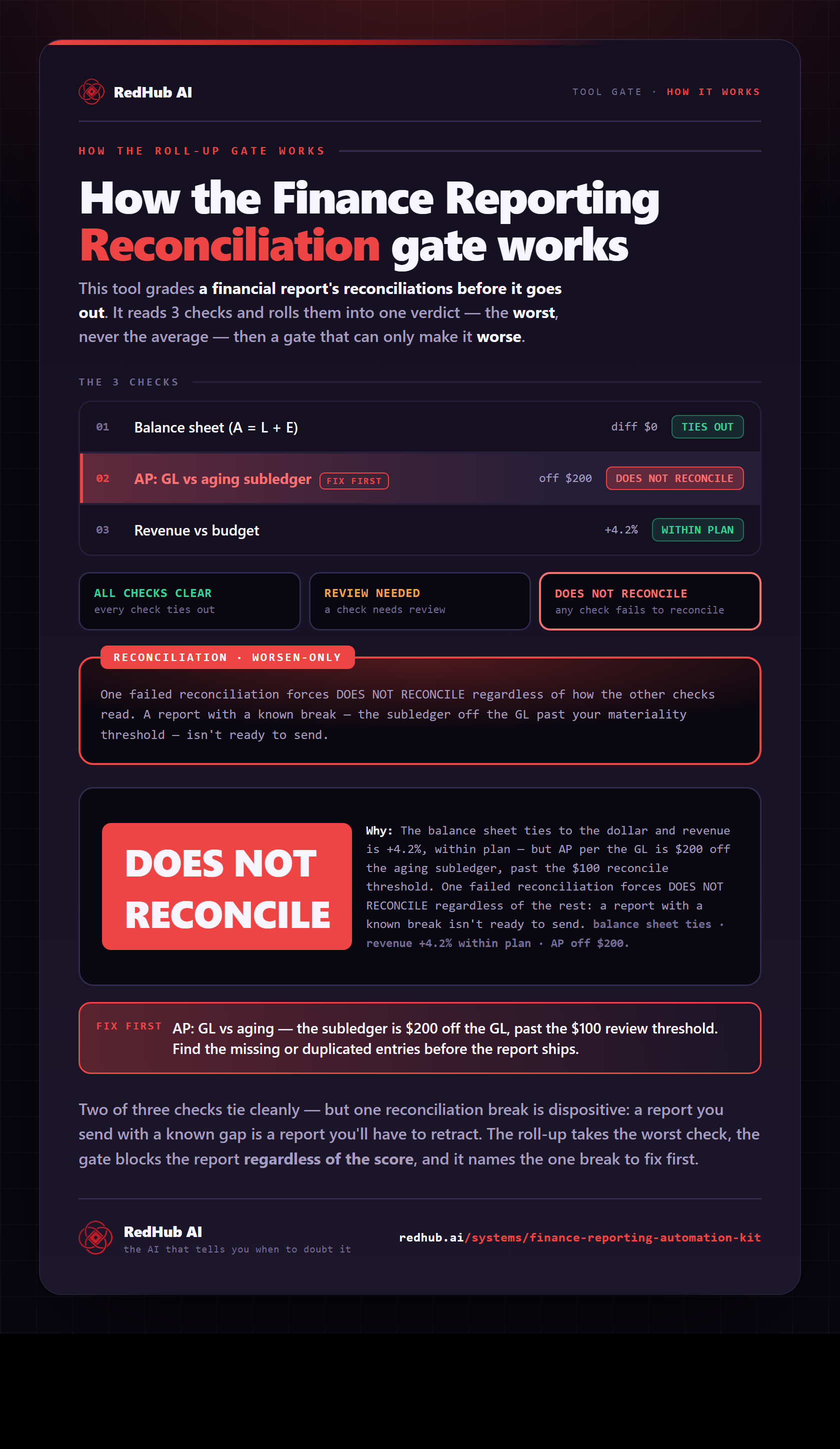
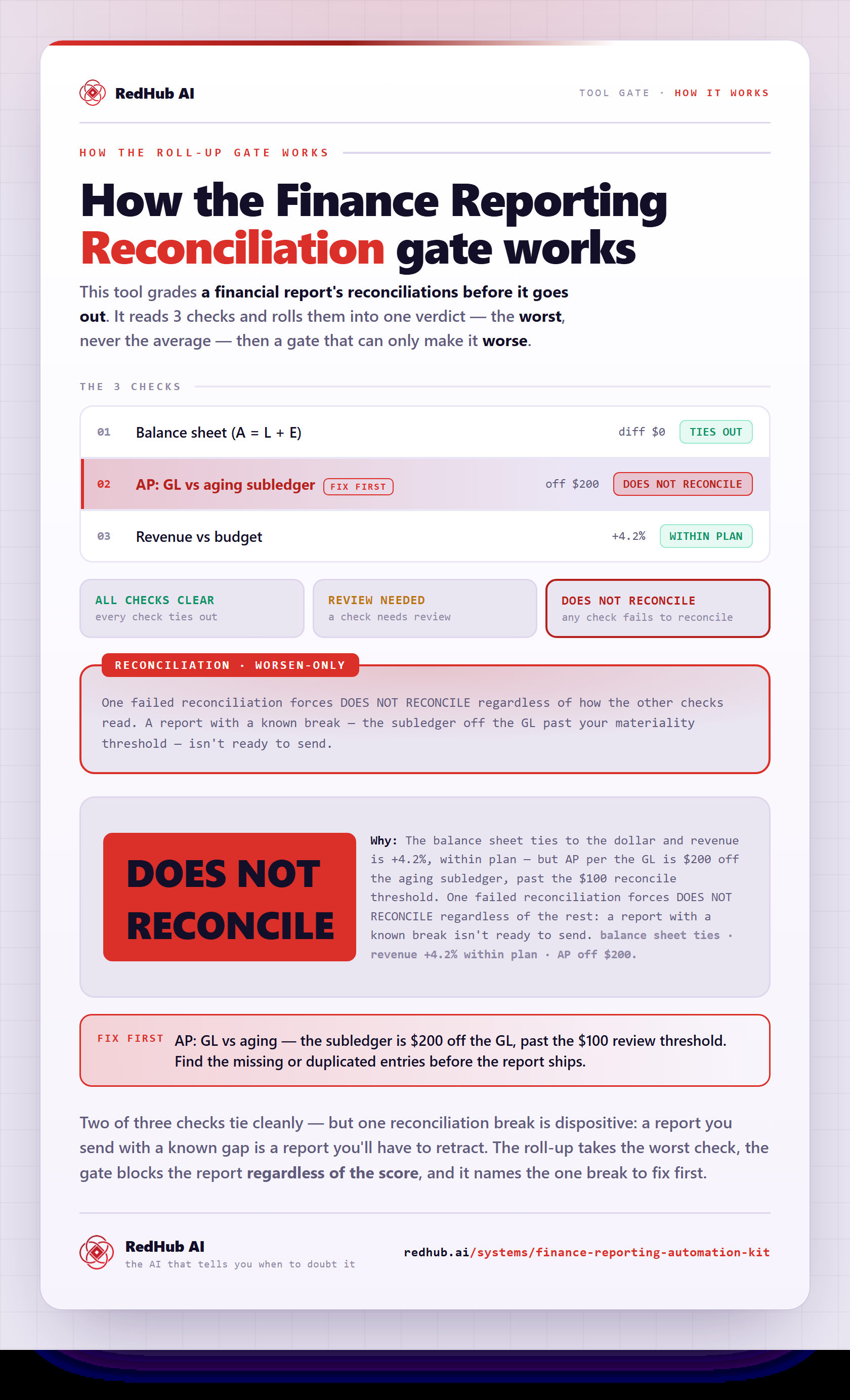
The gate this post refers to, drawn from the tool’s own logic. See the tool.