AI Code Review: What to Automate and What to Keep Human
RedHub AI Editorialupdated October 4, 20266 min read

Jump to a section7
AI code review is good at the parts of a pull request that a checklist can describe: drafting the description from the diff, flagging security smells, catching a changed function signature, cleaning up commit messages, and sorting review comments by severity. It is weak where the answer depends on context it does not have. Whether a flagged pattern is reachable by an attacker, whether the design fits where the codebase is heading, and whether the change should ship are still calls for a person.
TL;DR: Automate the repeatable review reflexes: PR descriptions, security-smell scans, breaking-change detection, commit hygiene and a pre-push gate. The Codex Code-Review & PR-Hygiene Pack ($79) does that before the PR exists. Keep exploitability, design fit and the ship decision with a human, and check your AI reviewer's settings, because some can now approve a pull request. For the gate itself, read how to gate bad commits before CI.
What AI code review does well
The parts of review that eat time without needing judgment are pattern-matching against a diff. An AI assistant handles those cleanly:
- Writing the PR description. What changed, why, and how to test it, drafted from the diff instead of typed from memory an hour later.
- Security-smell scanning. Injection patterns, unsafe sinks, hardcoded secrets and weak crypto, raised as candidates for a person to check.
- Breaking-change detection. A renamed parameter, a removed export or a changed response shape, caught before a downstream team finds it in production.
- Commit hygiene. Messages normalized to Conventional Commits, and a mixed staged change split into commits a reviewer can follow.
- Drafting review comments. Feedback sorted into BLOCKING, SUGGESTION and NIT, so the human reviewer spends attention on the first bucket only.
What the hosted reviewers do as of October 2026
The big platforms now ship their own AI reviewers, and they differ on one question that matters more than accuracy: can the bot approve the merge?
- Codex code review. Comment
@codex reviewon a GitHub pull request, or turn on automatic review. OpenAI's docs say that on GitHub it flags only P0 and P1 issues, and it follows any## Code Review Rulessection in yourAGENTS.mdfiles. - Claude Code Code Review. A research preview for Team and Enterprise plans. Anthropic's docs say its findings are tagged by severity and do not approve or block a PR, and its check run always finishes neutral, so it never blocks a merge through branch protection.
- GitHub Copilot code review. GitHub's docs say Copilot's reviews do not count toward required approvals by default. With Copilot approvals turned on, a public preview, Copilot can submit an approving review that satisfies the required-approval rule the way a teammate's would.
- CodeRabbit. Reviews pull requests on GitHub, GitLab, Azure DevOps and Bitbucket, and offers a CLI for review before you commit.
So "the ship call stays human" is no longer a given. It is a setting someone chose, and on some teams nobody chose it on purpose.
A second wrinkle sits in the Copilot docs. When it reviews a pull request, Copilot reads custom instructions, agent instructions and agent skills from the head branch, the branch with the changes, not the base branch. GitHub built it that way so you can test a rule change in the same PR. The cost is that a PR can edit the rules its own reviewer applies. No setting removes that trade, so a change to those files deserves a human look every time. The same reach that makes an AI reviewer useful is also its exposure: our post on prompt injection and AI coding agents covers what happens when it reads text a stranger wrote.
What still needs a human
Everything in the first list is propose-and-approve: the tool raises a candidate and a person decides. Three jobs do not belong to an AI reviewer at all:
- Exploitability. A scanner can flag a string built into a SQL query. It cannot tell you whether untrusted input ever reaches that line in your system. That is a security review or a dedicated SAST tool's job.
- Design fit. Whether a change is the right shape for where the codebase is going depends on plans that live in people's heads and roadmaps, not in the diff.
- Ship or don't ship. A gate can BLOCK a diff on hard rules such as debug statements, secrets and skipped tests. Whether the feature is ready for users is a separate decision.
Four checkpoints in the review workflow
Each moment in a pull request's life has its own failure when it is skipped:
- Before you push. A gate reads your diff and returns PASS or BLOCK with file-and-line locations. See how to gate bad commits before they reach CI.
- What every PR is checked for. Conflict markers, debug statements, secrets and skipped tests block, and four softer signals warn. The full list is in PR hygiene: the checks that belong in every pull request.
- How you describe the change. What changed, why, how to verify it, and what breaks. See how to write a PR description reviewers actually read.
- How you name the change. A commit format both people and release tools can parse, covered in Conventional Commits: a practical guide.
Where this pack stops
The pack guards the new code you are about to ship. It is diff-scoped and runs before the PR exists, and it hands off three adjacent jobs instead of claiming them:
- Fixing old code. Framework upgrades, dependency rot and dead-code removal are the Codex Migration & Refactor Pack's lane, with its own verifier.
- Documenting the code. Keeping docs in step with what shipped is the Technical Documentation Engine's job.
- Validated security depth. The security-smell scan flags candidates and never claims exploitability. OpenAI describes Codex Security as an application security agent that helps teams find, confirm and fix vulnerabilities. That tool, or a SAST tool such as Snyk or SonarQube, is where repo-wide depth belongs.
Clear the mechanical review work before the PR opens
The Codex Code-Review & PR-Hygiene Pack is six Codex skills plus a runnable PR-hygiene gate: PR descriptions, security smells, breaking-change detection, conventional commits and review comments. The gate returns PASS or BLOCK with file-and-line proof, and it only reads.
Get the Codex Code-Review & PR-Hygiene Pack — $79Pairs well with
If the code under review is inherited, not new, the Codex Migration & Refactor Pack ($99) handles framework upgrades, dependency sweeps and dead-code removal, and its verifier returns SHIP or HOLD with file-and-line proof. Once a change ships, the Technical Documentation Engine ($99) writes the README, API reference, ADRs and changelogs, and its coverage auditor returns DOCUMENTED or GAPS. If the app was built with an AI builder such as Lovable, Bolt or v0, the Vibe-Coded App Pre-Launch Security Gate ($79) grades six security controls and forces DO NOT SHIP on an exposed secret or an open route.
More in this guide
Should AI replace code review entirely?
No. AI code review handles the checklist work well: descriptions, security-smell scans, breaking-change detection and commit hygiene. Exploitability, design fit and the decision to ship still need a human reviewer who knows the system.
Can an AI reviewer approve a pull request?
It depends on the tool and its settings. GitHub's docs say Copilot's reviews do not count toward required approvals by default, but an admin can turn on Copilot approvals, a public preview, so they do. Anthropic says Claude Code's Code Review never approves or blocks a PR. Check the setting before assuming a person signed off.
What's the difference between a linter and a review gate?
A linter checks style and syntax. A review gate checks for the mistakes an experienced reviewer looks for by habit, such as leftover debug statements, hardcoded secrets and skipped tests, and returns PASS or BLOCK with the file and line.
Can an AI security scan replace a SAST tool?
No. A diff-scoped scan flags candidate patterns, such as injection risks or weak crypto, for a person to check. It does not prove a finding is exploitable. Validated, whole-repo analysis is the job of tools such as Codex Security, Snyk or SonarQube.
Does an AI review tool rewrite my code?
Some will when you ask. Claude Code's local /code-review command takes a --fix flag that applies its findings to your working tree. The pack's gate and detectors only read, and its skills propose changes you approve. Whatever the tool, check what it is allowed to write before you turn it on.
Does this work outside of Codex?
Yes. The skills follow the Agent Skills open standard, which agentskills.io lists as supported by Codex, Claude Code, Cursor, Gemini CLI and GitHub Copilot, among others. The gate script is plain Python and runs in a git hook or CI with no install.
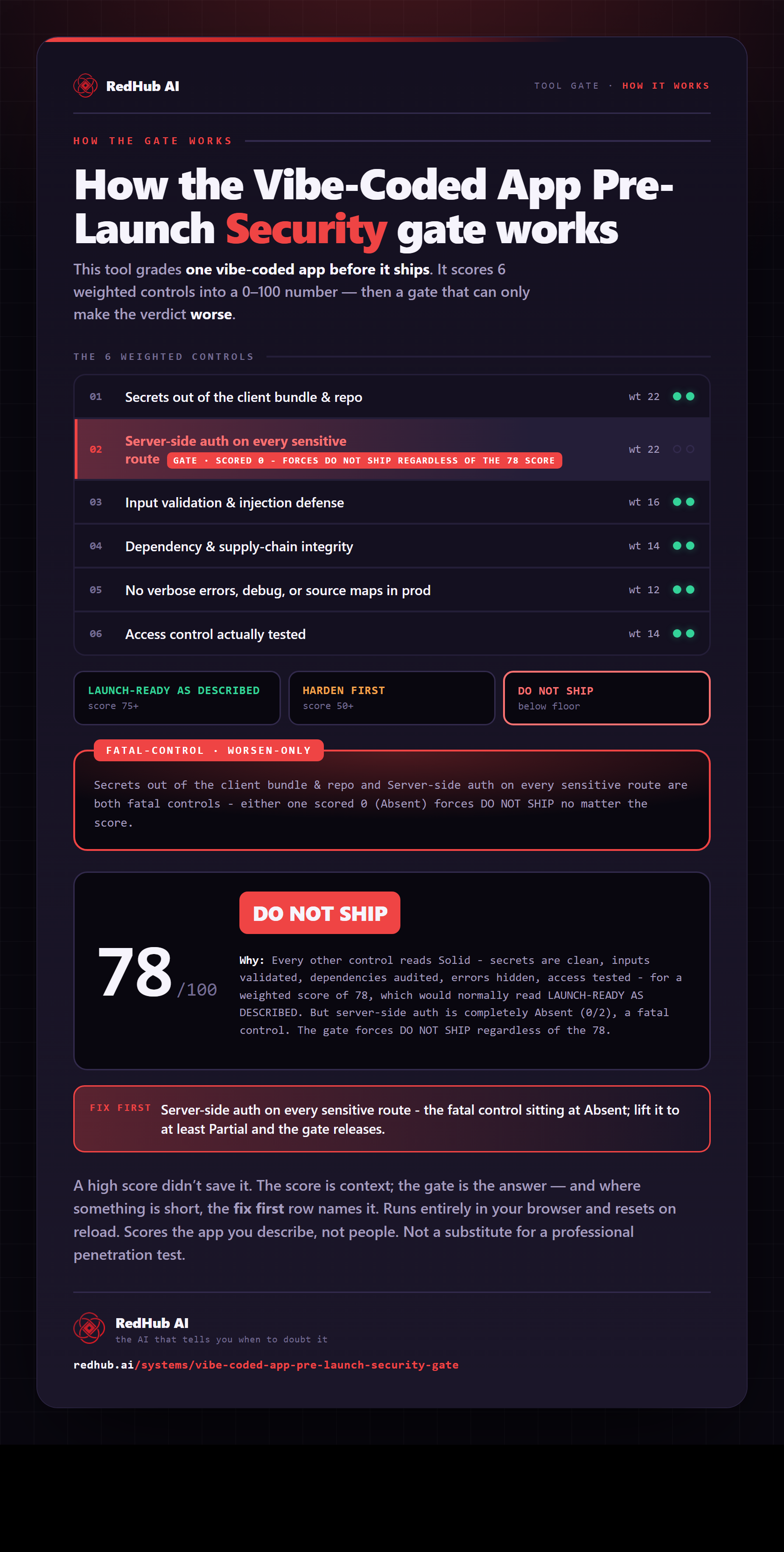
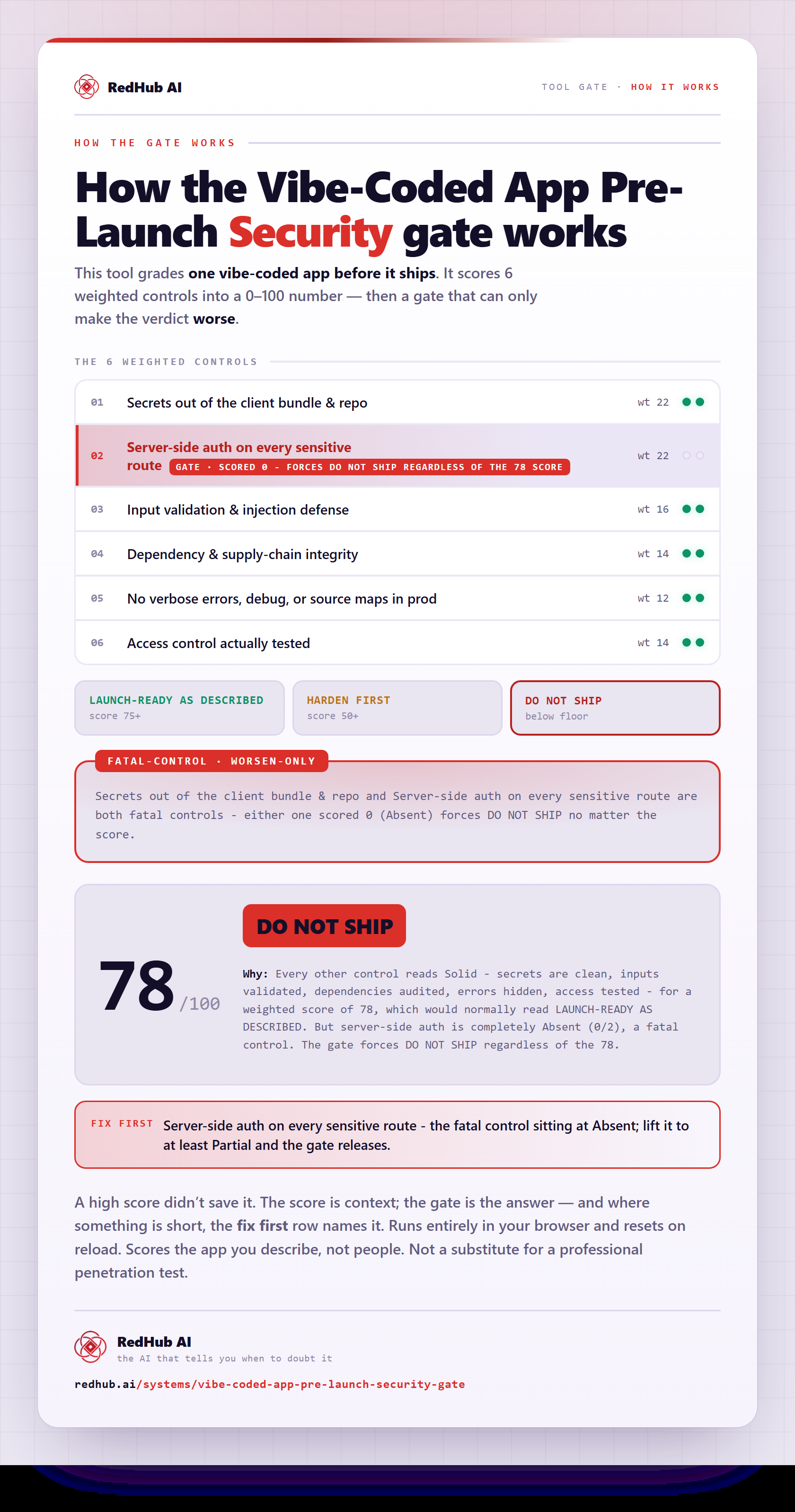
The gate this post refers to, drawn from the tool’s own logic. See the tool.