AI for Amazon Sellers: What to Automate (and What Not To)
RedHub AI Editorialupdated September 7, 20266 min read

Jump to a section10
TL;DR
- What it is: AI for Amazon sellers works well on listings, SKU inventory priority, and drafting replies to real reviews — and stays out of platform-policy judgment calls.
- Who it's for: FBA and FBM sellers with multi-variant catalogs and a review backlog — see the Ecommerce Skills Pack.
- How it works: a platform-aware skill drafts Amazon-format listings, ranks SKUs by contribution, and drafts responses to reviews you actually received.
- Bottom line: automate the drafting. Keep accuracy checks, policy interpretation, and what a review means to the business with a person.
What does AI actually do well for Amazon sellers?
AI helps Amazon sellers most on three jobs: writing listings that fit Amazon's exact format (a 200-character title and five bullets), ranking SKUs so you know which ones deserve attention this week, and drafting replies to reviews you actually received. It does not replace your judgment on what a claim means, what a policy allows, or which review is worth escalating.
Best for: sellers managing more than a handful of ASINs, especially with variants — see the Ecommerce Skills Pack ($89).
Amazon selling has its own rhythm: tighter listing formats, a review system that can make or break a product, and inventory decisions that move fast. AI for Amazon sellers only earns its keep on the jobs that are genuinely repeatable — everything else still needs a person who knows the account.
The Amazon-specific format AI needs to know
Amazon's listing structure is stricter than Shopify's: a 200-character title, five bullet points, and a backend search-terms field with its own limits. A tool built for general copywriting doesn't know these constraints exist. A tool built for ecommerce operators treats them as hard rules — never exceed the title limit, always lead each bullet with the differentiator, and stop writing before the format breaks.
That format-awareness matters more once you're managing variants. A parent-child ASIN structure with a dozen children needs the same variant-family logic covered in writing Shopify product descriptions with AI — write the shared copy once, then only the variant differentiator changes, in Amazon's shape instead of Shopify's.
Where AI genuinely helps Amazon sellers
- Listing drafts. Amazon-format titles and bullets for new or updated ASINs, with a factuality check on any claim about size, fit, or compatibility.
- Inventory priority. Ranking your catalog by revenue contribution so you know which SKUs deserve attention this week — the full method is in ABC inventory analysis.
- Review triage. Sorting a review export into respond, escalate, and ignore buckets, and drafting a first-pass reply for the ones that need one.
Where it shouldn't touch
| Job | AI's role | What stays with a person |
|---|---|---|
| Listing content | Drafts the copy in Amazon's format | Verifying every claim is accurate and the content isn't copied from another listing |
| Amazon policy questions | Can summarize what a published policy says | Interpreting how it applies to your specific account and category |
| Review response | Drafts a reply to a review you actually received | Deciding what the review reveals — and never fabricating, incentivizing, or hiding reviews |
| Inventory decisions | Ranks SKUs and flags dead stock | Deciding what to discount, discontinue, or reorder |
Key insight: Amazon's published 2026 policy permits AI-assisted listing content, as long as the seller is responsible for the final accuracy of every claim and the content is original. The tool is a drafting aid — the seller carries the accountability either way.
The honest review-response rule
This is the one place where "automate more" is the wrong instinct. AI can draft a reply to a review you actually received. It should never be used to write fake reviews, offer incentives for reviews, or hide negative ones. That's not a style preference — it's a direct violation of Amazon's review policy and FTC guidance on endorsements, and it puts your account at real risk. The honest lane is: real reviews, real replies, faster than you could write them by hand.
A good review-response skill sorts reviews into respond, escalate, and ignore, drafts the reply, and — separately — flags patterns worth acting on: a sizing complaint that shows up five times is a signal for your listing copy, not just a review to answer. That insight can feed straight back into your description writer, closing the loop between what customers say and what the listing promises.
A simple three-step workflow
- Draft the listing or reply in Amazon's format. Title, bullets, or a review response — whichever job is in front of you.
- Check it against your product data. Every claim about size, fit, materials, or compatibility should trace back to something real.
- Publish or send it yourself. No auto-publishing, no auto-posting replies — the last step stays a person's call.
One pack, five more Amazon-ready skills
The Ecommerce Skills Pack's listing writer and review-response triage both ship Amazon-format modes — alongside return triage, supplier negotiation, ABC inventory analysis, and ad creative briefs.
Get the Ecommerce Skills Pack — $89 →What this doesn't fix
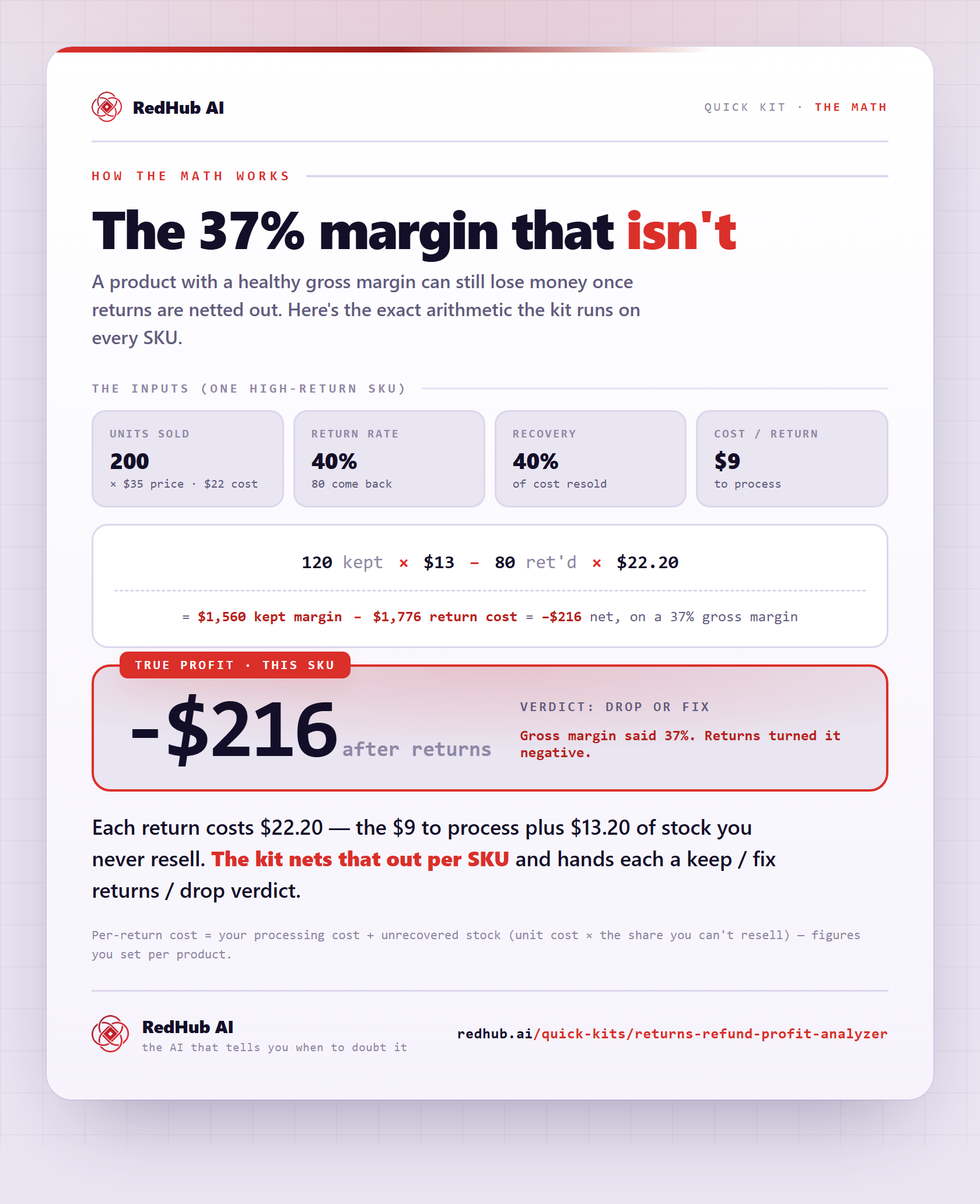
If your return rate is quietly eating margin on specific ASINs, listing tweaks alone won't show you that — you need the per-SKU math. The Returns & Refund Profit Analyzer ($39) nets out refunded margin, processing cost, and unrecovered inventory value per product, so you know which SKUs to fix first. And keeping every draft — listings, ad briefs, review replies — sounding like your brand instead of generic AI output is the job of the Brand Voice Engine ($59).
For the full six-job picture across every channel, start at AI for ecommerce: the operator jobs worth automating, or see the automate-vs-human framework in ecommerce automation: what to automate vs. keep human.
Decision Guide
Use it if: you manage more than a handful of ASINs, especially with variants, and you're drafting listings or review replies by hand every week.
Skip it if: you run one or two products with no variants and a review volume you can answer in ten minutes a week.
Best first step: run one review export through a triage skill and see how the respond/escalate/ignore split matches your own instincts before trusting it on a full week.
FAQ
Is AI allowed for Amazon product listings?
Yes. Amazon's published 2026 policy permits AI-assisted listing content as long as the seller verifies every claim and the content is original, not copied from another listing.
Can AI respond to my Amazon reviews for me?
It can draft a reply to a review you actually received. It should never be used to fabricate reviews, offer incentives for reviews, or hide negative ones — that breaks Amazon's review policy and FTC endorsement guidance.
How is Amazon listing AI different from a Shopify description tool?
The core logic is the same — variant families, brand-voice anchoring, factuality checks — but the output format is different. Amazon needs a 200-character title and five bullets; Shopify allows longer, SEO-rich copy. See writing Shopify product descriptions with AI for the Shopify side.
Should AI decide what to discontinue or reorder?
No. AI can rank SKUs by contribution and flag dead stock, but the discontinue-or-reorder call stays with a person who knows the full picture — cash flow, supplier terms, seasonality.
What's the risk of letting AI auto-publish listings?
An unverified claim about size, fit, or compatibility that ships live can trigger returns, bad reviews, or a policy violation. Every draft should get a human review before publishing, whether AI wrote it or not.
Do I need separate tools for Shopify and Amazon?
Not if the tool is platform-aware. One skill that knows both formats is simpler than learning Amazon's built-in tools and a separate Shopify writer.
How do I find which ASINs need attention first?
Rank your catalog by revenue contribution — the ABC method covered in ABC inventory analysis — rather than reviewing every SKU with equal attention.
Amazon-format listings, review triage, and inventory priority — one pack
Six Claude skills for Shopify and Amazon operators: variant-aware descriptions, return triage, supplier negotiation, ABC inventory analysis, ad creative briefs, and honest review response.
Get the Ecommerce Skills Pack — $89 →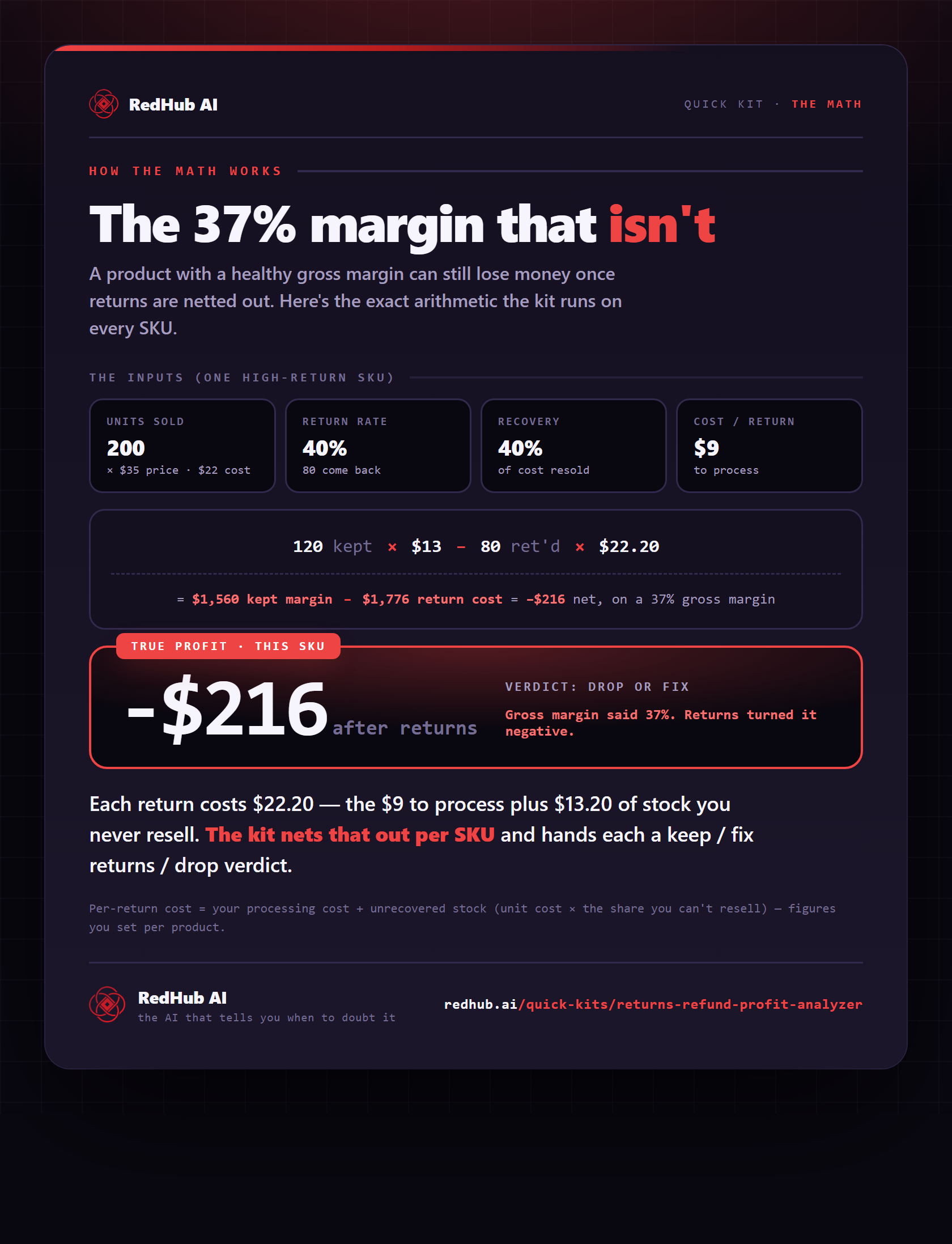
The gate this post refers to, drawn from the tool’s own logic. See the tool.