AI for independent filmmakers: Hollywood-Level Power
Todd Brooks, Founderupdated July 23, 202610 min read
In short
How AI production tools lowered the cost floor for independent film by early 2026 — text-to-video generation, virtual camera control with real optical behavior, and studios in India and elsewhere shipping full AI-assisted features rather than experiments. Company valuations, user counts and per-film costs come from the vendors and producers involved. Read the capability claims as vendor-stated.
Jump to a section9
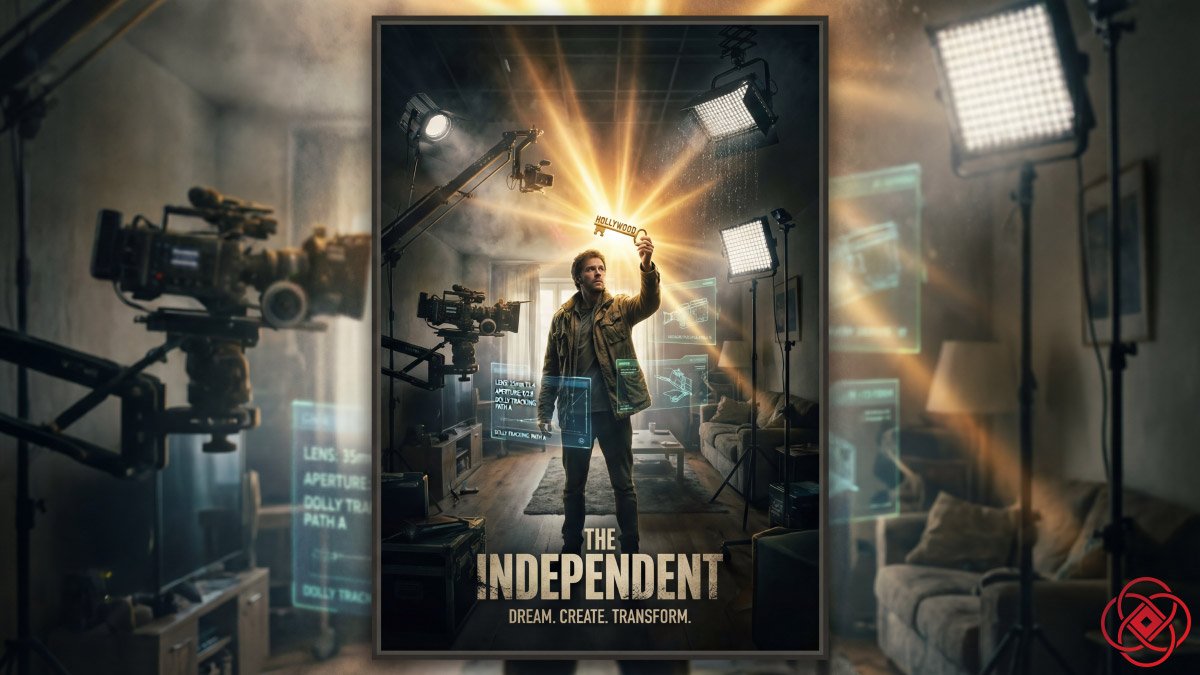
For over a hundred years, making movies belonged to the powerful studios. If you wanted to create a film, you needed millions of dollars, expensive cameras, and connections to the right people. That world is changing fast. In 2026, artificial intelligence is handing the keys to Hollywood to anyone with a story to tell.
The Old Way vs. The New Way
Traditional filmmaking costs a fortune. A single scene might require fifty crew members, rented equipment, location permits, and weeks of planning. Independent filmmakers often spent years raising money, only to run out of funds before finishing their projects.
Now, AI tools are rewriting these rules. A filmmaker working alone in a small apartment can create scenes that look like they came from a major studio. The technology handles the heavy lifting—generating realistic backgrounds, creating digital actors, and even helping with camera movements. This shift means stories that never would have been told are now reaching audiences worldwide.
Meet the Tools Changing Everything
Runway AI (opens in a new tab) leads this revolution. The company, now valued at $3 billion, partners with real Hollywood studios like Lionsgate and award-winning directors. Their latest Gen-4.5 model, available through Adobe's creative tools, lets creators generate professional-quality video clips from simple text descriptions. A filmmaker can type "a detective walks through rainy Tokyo streets at night" and get a usable scene in minutes.
Higgsfield AI (opens in a new tab) takes this further with Cinema Studio, a tool built specifically for filmmakers. Unlike basic AI generators, Cinema Studio works like a virtual movie set. Creators can choose specific camera lenses, set focal lengths, and control exactly how their digital camera moves. The system uses real optical physics, so a shot with an anamorphic lens looks genuinely cinematic, not like a computer effect. Over 5,000 filmmakers worldwide already use this professional-grade system.
Kling AI (opens in a new tab), developed by Chinese tech company Kuaishou, proves this isn't just an American story. Their platform creates high-quality videos from natural language and recently released a seven-episode anthology series called "Loading…" that premiered in Beijing IMAX theaters. Each episode used different visual styles—from claymation to photorealistic 3D—showing how versatile these tools have become.
Real People, Real Stories
The most exciting part isn't the technology itself—it's who's using it.
In India, film producer Dil Raju launched Lorvan AI Studio (opens in a new tab) in Hyderabad, while Bollywood star Ajay Devgn started Prismix in Mumbai. These aren't experiments; they're full production companies creating real movies. Devgn's Prismix already produces short films, animated graphic novels, and music videos using AI, with the actor calling it "a new era of storytelling."
Chandigarh-based Intelliflicks Studios (opens in a new tab) co-produced "Maharaja in Denims," one of India's first feature-length AI-generated films. Mumbai's Amazing Indian Stories is developing "Naisha," another AI-led project. These studios prove that AI filmmaking works for full movies, not just short clips.
Meanwhile, independent creators are achieving the impossible. Michael Evans built Creatorwood (opens in a new tab), a platform that turns books into movies for as little as $1,100. A 90-minute film that once cost millions can now be made for less than a used car. Evans explains: "Traditionally, you'd have to make a thousand prompts. That's not the average storyteller's experience. They write stories, as they should. That's what they're good at."
In South India, SRDS Design Studio created "The Lioness of Bharat—A Legend Reborn," India's first fully AI-generated short film. They used multiple AI tools to blend ancient Indian history with futuristic visuals, creating something that would have been impossible with their limited budget.
The Numbers Tell the Story
The cost differences are staggering. Traditional film production might cost $50,000 per minute of finished footage. AI tools slash this dramatically:
Runway (opens in a new tab) Gen-4: $12 per month for professional-quality video generation
Kling AI (opens in a new tab): $10 per month for 1080p footage
Higgsfield (opens in a new tab): Competitive pricing for cinema-grade tools
Industry experts predict AI will cut film production costs by 30-40% over the next two years. For animation, savings reach 50%. An AI-generated commercial that aired during the 2025 NBA Finals cost $2,000 and took three days to make. The traditional version would have cost $1 million and taken twelve weeks.
Time savings matter just as much. Netflix used AI to create a demolition scene ten times faster than traditional methods would have allowed. What took weeks now takes days. What took days now takes hours.
Breaking Down Barriers
These tools do more than save money—they remove gatekeepers. For decades, studios decided which stories deserved to be told. They chose based on market research, star power, and safe bets. Unique voices, especially from underrepresented communities, rarely got through.
AI changes this equation. A filmmaker in Iowa can create a science fiction epic without waiting for Hollywood approval. A writer in Nigeria can produce an animated fantasy series without finding a major backer. The technology doesn't care about your connections or your location. It cares about your creativity.
The tools also level the playing field for different genres. Science fiction and fantasy—traditionally the most expensive genres due to special effects—are now accessible to everyone. A solo creator can build entire worlds, alien planets, or magical kingdoms from their laptop.
Looking Ahead: What's Possible Now
In 2026, we're seeing the first wave of AI-native filmmakers—creators who never learned traditional methods because they didn't need to. They think in prompts and camera settings, not expensive equipment and large crews.
Schools are noticing. Film programs now teach AI tools alongside traditional cinematography. Students learn to direct both human actors and digital characters. They study lighting for real sets and for AI-generated environments.
The quality keeps improving. Early AI video looked strange, with weird movements and distorted faces. Today's tools create footage that holds up on IMAX screens. While they still work best for shorter clips and specific shots, the technology advances monthly.
The Human Heart of AI Filmmaking
Despite all this technology, the heart of filmmaking remains human. AI doesn't write great stories—people do. AI doesn't understand emotional truth—people do. The tools are just that: tools. A paintbrush doesn't paint a masterpiece; the artist does.
The difference is that now, millions more people can hold that paintbrush. The single mother working two jobs can tell her story at night. The teenager in a small town can create their dream movie after school. The veteran with stories to share can finally bring them to life.
This democratization doesn't mean the end of traditional filmmaking. Big studios still create blockbusters. Famous directors still make personal films. But now they're joined by a chorus of new voices that were previously silent.
A New Hollywood Emerges
The Hollywood of 2026 looks different. It's not just a physical place in California—it's a global network of creators connected by technology. A filmmaker in Mumbai collaborates with a visual effects artist in Toronto and a composer in Berlin, all using AI tools that make their work seamless.
The dream factory no longer owns the dreams. The power to create movies—to share stories that move people, that make them laugh and cry and think—belongs to anyone with a story worth telling and the courage to tell it.
The democratization of filmmaking isn't coming. It's here. And it's just getting started.
Frequently Asked Questions
What AI tools are available for independent filmmakers in 2026?
The leading AI tools for independent filmmakers include Runway AI (valued at $3 billion, partnering with Hollywood studios like Lionsgate), Higgsfield AI with Cinema Studio (offering virtual movie sets with real optical physics and camera controls), and Kling AI from Kuaishou (creating high-quality videos from natural language). Runway's Gen-4.5 model integrates with Adobe creative tools and generates professional video from text descriptions. Higgsfield's Cinema Studio lets filmmakers control camera lenses, focal lengths, and movements like a real movie set, with over 5,000 filmmakers using it worldwide. Kling AI recently premiered a seven-episode anthology series in Beijing IMAX theaters, demonstrating versatility from claymation to photorealistic 3D styles.
How much does AI filmmaking cost compared to traditional methods?
AI filmmaking dramatically reduces costs compared to traditional production. Traditional film production can cost $50,000 per minute of finished footage, while AI tools cost: Runway Gen-4 at $12 per month, Kling AI at $10 per month for 1080p footage, and Higgsfield at competitive cinema-grade pricing. Industry experts predict AI will cut film production costs by 30-40% over the next two years, with animation savings reaching 50%. Real examples include an AI-generated commercial that aired during the 2025 NBA Finals costing $2,000 and taking three days (traditional version: $1 million and twelve weeks), and platforms like Creatorwood turning books into 90-minute movies for as little as $1,100.
Can AI-generated films be shown in professional theaters?
Yes, AI-generated films are already being shown in professional theaters, including IMAX. Kling AI's seven-episode anthology series 'Loading...' premiered in Beijing IMAX theaters in 2026, demonstrating that AI-generated content can meet theatrical quality standards. India is producing feature-length AI films like 'Maharaja in Denims' (co-produced by Intelliflicks Studios in Chandigarh) and 'Naisha' (developed by Amazing Indian Stories in Mumbai). The quality of today's AI video tools has improved dramatically—early AI video looked strange with weird movements and distorted faces, but today's tools create footage that holds up on IMAX screens, though they still work best for shorter clips and specific shots with monthly improvements.
Who is using AI for professional film production?
Major industry professionals and studios are adopting AI filmmaking. In India, film producer Dil Raju launched Larven AI Studio in Hyderabad, while Bollywood star Ajay Devgn started Prismix in Mumbai, producing short films, animated graphic novels, and music videos. Runway AI partners with Hollywood studios like Lionsgate and award-winning directors. Netflix used AI to create a demolition scene ten times faster than traditional methods. Over 5,000 filmmakers worldwide use Higgsfield's Cinema Studio. Independent creators like Michael Evans built Creatorwood platform, and SRDS Design Studio in South India created 'The Lioness of Bharat—A Legend Reborn,' India's first fully AI-generated short film. Film schools now teach AI tools alongside traditional cinematography.
How does Higgsfield Cinema Studio work for filmmakers?
Higgsfield Cinema Studio works like a virtual movie set built specifically for filmmakers, unlike basic AI generators. Creators can choose specific camera lenses, set focal lengths, and control exactly how their digital camera moves. The system uses real optical physics, so a shot with an anamorphic lens looks genuinely cinematic rather than like a computer effect. This professional-grade system gives filmmakers the same level of control they would have on a physical movie set—controlling depth of field, lens distortion, bokeh, and camera movement—but without the expense of renting equipment, hiring crew, or securing locations. Over 5,000 filmmakers worldwide already use this cinema-grade tool to create Hollywood-quality footage from their laptops.
What are the time savings with AI video generation?
AI video generation provides dramatic time savings across all stages of production. Netflix created a demolition scene ten times faster using AI than traditional methods would have allowed—what took weeks now takes days, and what took days now takes hours. Runway AI's Gen-4.5 model lets filmmakers generate usable professional-quality scenes in minutes from text descriptions like 'a detective walks through rainy Tokyo streets at night.' An AI-generated commercial for the 2025 NBA Finals took three days to produce (traditional version would have taken twelve weeks). Michael Evans' Creatorwood platform eliminates the need for making thousands of individual prompts, letting storytellers write naturally while the AI handles technical execution. Monthly improvements in AI technology continue to accelerate production timelines.
How is AI democratizing filmmaking?
AI removes traditional gatekeepers and barriers in filmmaking. For decades, studios decided which stories deserved to be told based on market research, star power, and safe bets, with unique voices from underrepresented communities rarely getting through. AI changes this by not caring about connections or location—only creativity. A filmmaker in Iowa can create a science fiction epic without Hollywood approval; a writer in Nigeria can produce an animated fantasy series without major backing. Expensive genres like science fiction and fantasy are now accessible to solo creators who can build entire worlds from laptops. Single mothers working two jobs can tell stories at night, teenagers in small towns can create dream movies after school, and veterans can bring their stories to life—all without millions of dollars, expensive equipment, or industry connections.
What is Runway AI and why is it important for filmmakers?
Runway AI leads the AI filmmaking revolution as a $3 billion company that partners with real Hollywood studios like Lionsgate and award-winning directors. Their latest Gen-4.5 model, available through Adobe's creative tools, lets creators generate professional-quality video clips from simple text descriptions—a filmmaker can type a scene description and get usable footage in minutes. Runway's importance lies in bridging professional Hollywood production with accessible AI tools, proving that AI-generated content meets industry standards. Their partnerships with major studios validate AI filmmaking as legitimate professional practice, while their $12 per month pricing makes Hollywood-quality tools accessible to independent creators. This combination of professional quality, industry acceptance, and affordability makes Runway pivotal in democratizing filmmaking.
Are film schools teaching AI filmmaking tools?
Yes, film schools are actively integrating AI tools into their curricula alongside traditional cinematography. In 2026, film programs teach students to direct both human actors and digital characters, study lighting for real sets and AI-generated environments, and think in prompts and camera settings rather than exclusively expensive equipment and large crews. This reflects the emergence of 'AI-native filmmakers'—creators who never learned traditional methods because they don't need to. Educational institutions recognize that future filmmakers must understand both traditional and AI-driven production methods. Students learn cinematography principles that apply across both physical and virtual production, preparing them for a hybrid filmmaking landscape where AI tools complement rather than replace fundamental storytelling and visual skills.
Does AI replace human creativity in filmmaking?
No, AI does not replace human creativity—it amplifies it. The heart of filmmaking remains human: AI doesn't write great stories (people do), doesn't understand emotional truth (people do), and serves merely as a tool. Like a paintbrush that doesn't paint a masterpiece without an artist, AI requires human vision, storytelling, and emotional intelligence. The difference is that now millions more people can hold that paintbrush. AI handles technical heavy lifting—generating backgrounds, creating digital actors, camera movements—freeing creators to focus on storytelling, directing, and emotional resonance. The democratization doesn't mean the end of traditional filmmaking; big studios still create blockbusters and famous directors still make personal films, but they're now joined by a chorus of new voices that were previously silent due to financial and technical barriers.