Budget AI Tools for Small Businesses: How to Choose
RedHub AI Editorialupdated August 16, 20264 min read

In short
The subscription is the smallest cost. Setup and learning usually exceed the first year of fees, usage pricing scales with success, unused seats bill silently, and every workflow built on a tool becomes a cost to leave it. Spending leaks through accumulation nobody tracks rather than one overpriced product. Before subscribing, establish what it replaces, how it meters, what the free tier permits, how data exports, who owns output, and whether anyone will use it.
Jump to a section7
This is general information about evaluating software purchases. It is not financial or accounting advice, and prices and plan terms change constantly, so confirm current pricing with the vendor.
Any list of tools is wrong within months
Pricing changes, free tiers close, products get acquired and shut down. A ranked list of cheap AI tools is out of date by the time it ranks, which is why this is a method, not a list.
The method survives because the questions do not change even when every product does.
The sticker price is the smallest number
A $20 subscription is not a $20 decision. Four costs sit behind it and only one appears on the invoice.
- Setup and learning. Hours spent configuring it and getting a team past the awkward stage. This usually exceeds the first year of subscription and nobody counts it.
- Usage on top of the base. Many AI tools price a floor and then meter. The bill scales with success, so the month it works best is the month it costs most.
- The switching cost you are creating. Every workflow built on a tool is a cost to leave it. Cheap to adopt and expensive to abandon is the standard shape.
- The seats nobody uses. Per-seat pricing quietly bills for people who logged in twice in March.
Where the money leaks
The expensive mistake is almost never one overpriced tool. It is accumulation nobody is watching.
Tools get added by whoever needed them, on whoever's card was handy, and never removed. Three products end up doing the same job for different teams. A trial converts to annual billing because nobody canceled. Usage-priced tools drift upward as adoption grows, and drift does not trigger anything because no single month looks alarming.
Two habits fix most of it, and both are dull. Put every subscription on one list with a renewal date and an owner. Then set a spend alert on anything usage-priced, at a threshold that would surprise you.
Six questions before you subscribe
- What does it replace? If the answer is nothing, you are adding cost and a login. Tools that replace something have a measurable case. Tools that add a capability need a harder look.
- How is it metered? Find the meter. Words, calls, seats, minutes. Then estimate your real volume, not your pilot volume.
- What does the free tier allow? Free tiers frequently exclude commercial use or claim rights over your inputs. That is a licensing question with a real answer in the terms.
- How do I get my data out? Ask before you sign. Export format, completeness, whether it needs a paid plan. A vendor with no clean answer has told you something.
- Who owns the output? Varies by vendor and by tier, and matters for anything client-facing.
- Will anyone use it? The most common waste is a tool that works, bought for a team that quietly went back to the spreadsheet.
Buy fewer, deeper
Small teams do better with a handful of tools used properly than with a dozen used shallowly. Every tool carries a fixed overhead of accounts, training, integration and attention, and that overhead does not shrink with the price.
The strongest test is to run a single real job end to end during the trial. Not a demo, not a sample. One piece of real work, start to finish. Most tools that look excellent in a demo fail on the second real input, and you would sooner learn that in a trial than in month four of an annual contract.
The complication
Everything above argues for restraint, and restraint has a failure mode of its own.
A team that evaluates carefully and consolidates aggressively can end up standardized on tools chosen two years ago, in a category that moves fast enough for that to be a real disadvantage. The cost of missing a better tool does not show up on any invoice, which is exactly why it goes unnoticed while the visible subscription line gets all the scrutiny.
A reasonable compromise: hold the core stack steady and keep a small deliberate budget for trying things, with a rule that a trial either replaces something within ninety days or gets canceled. That keeps the accumulation problem bounded without freezing the stack.
If usage-priced AI tools are the part that worries you, our AI Spend Runaway & Billing-Safeguard Gate ($49) checks whether your setup has the caps and alerts that stop a quiet month from becoming a large invoice.
Frequently Asked Questions
What is the real cost of a cheap AI tool?
The subscription is the smallest part. Setup and learning time usually exceeds the first year of fees, usage-based charges scale with how well the tool works, unused seats bill silently, and every workflow built on the tool becomes a cost to leave it. Cheap to adopt and expensive to abandon is the standard shape.
Where does most AI tool spending leak?
Not in one overpriced product but in accumulation nobody tracks. Tools get added by whoever needed them and never removed, several end up doing the same job, trials convert to annual billing because nobody canceled, and usage-priced tools drift upward gradually enough that no single month looks alarming.
Are free tiers safe for business use?
Check the terms instead of assuming. Free tiers commonly exclude commercial use, claim rights over the content you submit, or differ from paid tiers on who owns the output. These are licensing questions with real answers written in the terms, and they matter most for anything client-facing.
How should I test a tool during a trial?
Run one real job end to end. Not the demo and not a sample, but one real piece of work from start to finish. Tools that look excellent in a demo often fail on the second real input, and a trial is a far cheaper place to discover that than month four of an annual contract.
Is consolidating down to fewer tools always right?
Mostly, because every tool carries fixed overhead in accounts, training and attention that does not shrink with price. The risk is standardizing on choices made two years ago in a fast-moving category, where missing a better tool costs real money that never appears on an invoice. Keep a small trial budget with a ninety-day replace-or-cancel rule.
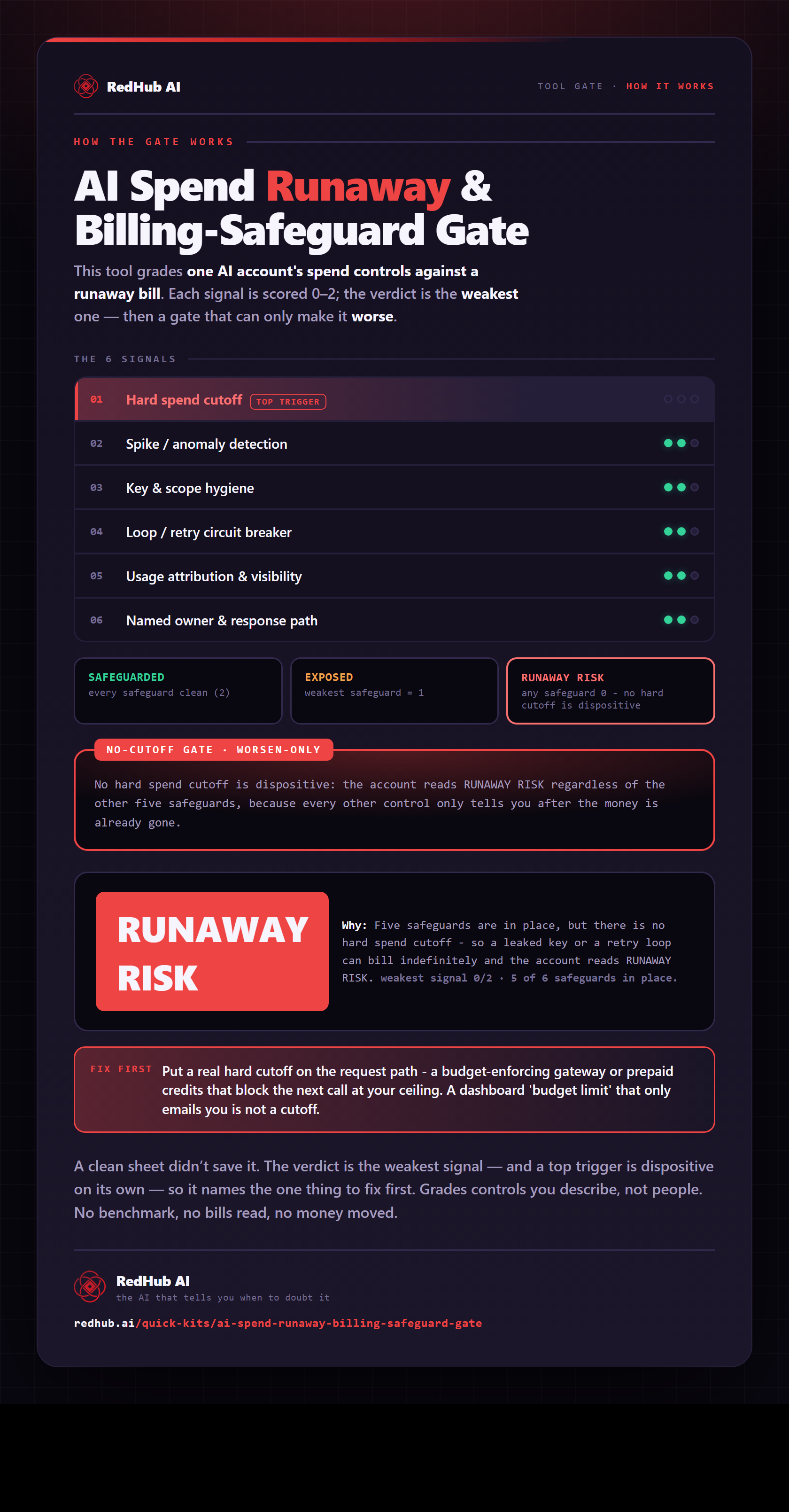
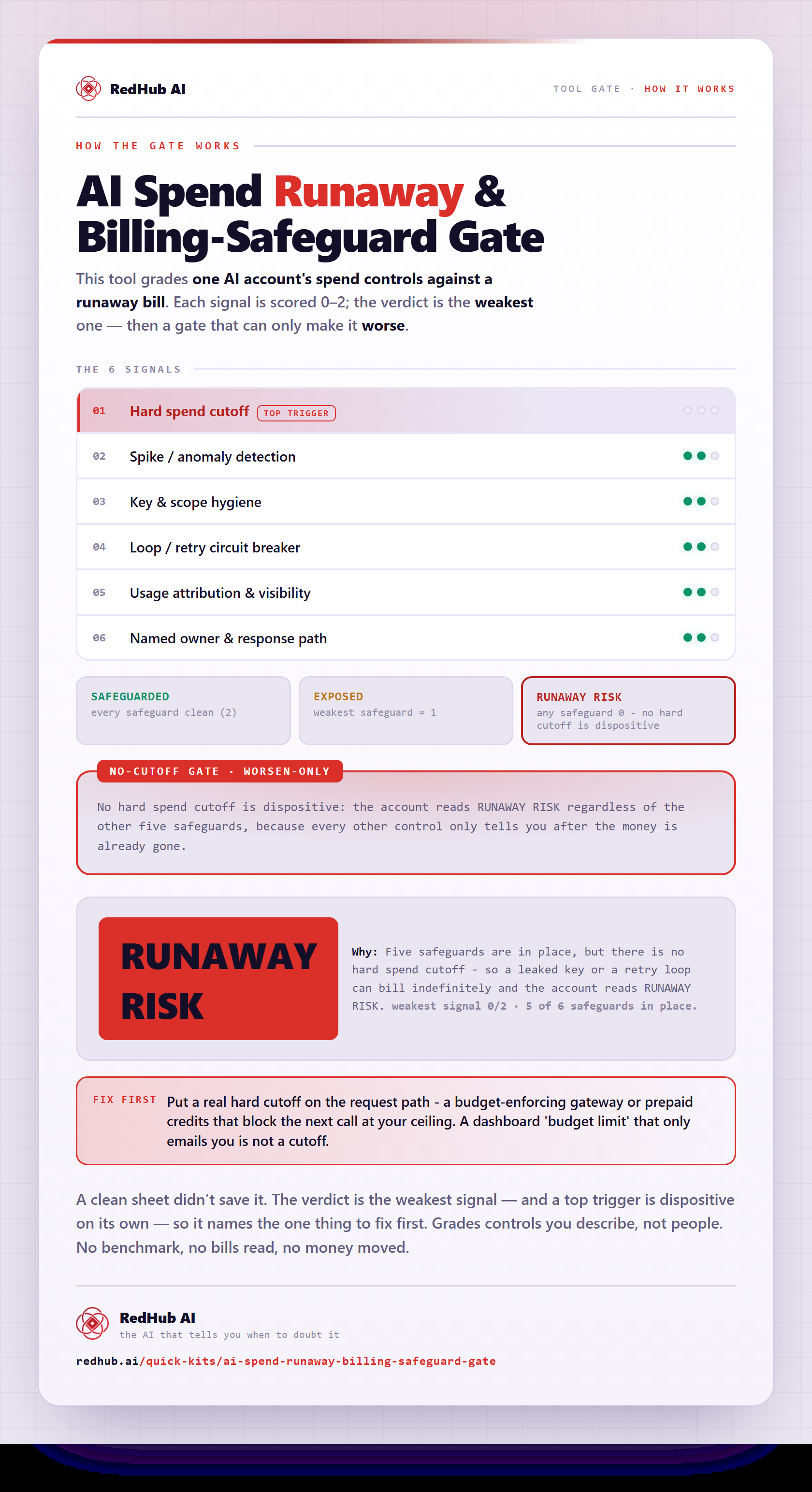
The gate this post refers to, drawn from the tool’s own logic. See the tool.