How to Use AI for Sales Prospecting and Research (Without the Creepy Cold Open)
RedHub AI Editorialupdated September 20, 20265 min read

Jump to a section8
The fastest way to use AI for sales prospecting without sounding creepy is simple: use it to gather and organize real information, never to invent personal-sounding details. AI research is a fast first draft you verify — not a shortcut around actually knowing your prospect.
TL;DR: AI can speed up prospect research and outreach drafting, but every specific claim needs a human check before it reaches a prospect. Fake-sounding personalization does more damage than a plain email. The AI for the Sales Rep Kit ($39) includes the research and outreach workflow that keeps this honest.
This is one of four deep-dive posts in our guide to AI for Sales Reps.
Why "AI personalization" gets a bad reputation
Most reps have gotten — or sent — an email that starts with "I noticed you recently..." followed by something vague, outdated, or flat-out wrong. That's what happens when AI is asked to personalize outreach with no real information to work from. It fills the gap with something plausible-sounding, and a sharp prospect can tell the difference between "this person actually looked at my company" and "a tool guessed."
The fix isn't avoiding AI for prospecting. It's changing what you ask it to do. AI should organize and summarize information you give it or that's genuinely available — not manufacture detail that sounds personal but isn't grounded in anything real.
The right way to use AI for prospect research
Say you're prospecting into a mid-market logistics company and your contact is the VP of Operations. Instead of asking AI to "research this company and write a personalized email," break it into two honest steps.
- Step 1 — Summarize what's real. Give AI whatever real information you have: the company's website copy, a recent press release, a LinkedIn post from the contact, or notes from a colleague who's talked to them. Ask it to summarize the likely priorities of a VP of Operations at a company that size, in that industry.
- Step 2 — Draft from the summary, not from thin air. Use that summary — grounded in real inputs — to draft an opening line. If the summary doesn't give you anything specific and true to reference, don't force personalization. A plain, well-written email that respects the prospect's time beats a fake-personal one every time.
- Step 3 — Verify before you send. Check every specific claim — a headcount number, a recent hire, an initiative you're referencing — against the actual source. If you can't verify it in under two minutes, cut it from the email.
A real example: cold email to a VP of Sales Ops
Imagine you sell a forecasting tool and you're reaching out to a VP of Sales Ops at a 200-person SaaS company that just posted a job listing for a "Revenue Operations Analyst." That's a real, verifiable signal — a genuine trigger for outreach.
A good AI-assisted draft references that listing directly and ties it to a specific, relevant reason you're reaching out — not a vague "I saw you're growing." A bad AI draft invents a detail like "congrats on your recent Series C" without checking whether that's even true. The difference is one sentence of verification work, and it's the sentence that keeps your outreach credible.
When AI research isn't enough — and what to hand off
AI-assisted prospecting is built for one-to-one work: you, researching and reaching out to a handful of accounts a day. It's not built to solve a volume or speed problem. If your challenge is actually getting a high volume of inbound leads booked onto a calendar before they go cold — not researching individual accounts — that's a different problem with a different tool. See the Lead-to-Meeting Engine, which is built specifically for speed-to-lead and meeting-booking at scale.
The line between helpful and invasive
There's a version of AI-assisted prospecting that crosses into invasive territory — cross-referencing personal social media, inferring private details, or referencing information a prospect would find unsettling that you know about them. Just because AI can surface something doesn't mean it belongs in a first email. A good rule: if you'd feel weird explaining how you knew that detail, leave it out.
Building the habit
Reps who get good at this treat AI research as the first ten minutes of a twenty-minute prospecting task, not the whole task. The other ten minutes — verifying, personalizing with judgment, and deciding what's actually worth saying — stays yours. That split is what keeps outreach fast and honest at the same time.
Pairs well with
If your bottleneck is volume and speed rather than individual account research, the Lead-to-Meeting Engine is built for booking meetings from inbound fast. Once a meeting's on the calendar, see Using AI to Prep for Sales Calls and Handle Objections for the next step, or read the full AI for Sales Reps guide for the bigger picture.
More in this guide
How do I use AI for sales prospecting without sounding fake?
Only let AI personalize outreach using real, verifiable information you give it. Never let it invent a detail to sound personal — verify every specific claim before you send.
Is AI-written cold outreach less effective than human-written?
It depends entirely on whether it's grounded in real research. A verified, well-edited AI draft performs like any well-written email. An unverified one that invents details performs worse than no personalization at all.
What's the biggest mistake reps make using AI for prospecting?
Asking AI to "research and personalize" in one step and sending the output without checking it. AI fills information gaps with plausible-sounding guesses, and those guesses read as fake or wrong to a sharp prospect.
Can AI find real information about a prospect's company?
AI can summarize and organize information you give it or that's genuinely public, but it can also fabricate plausible-sounding details. Treat any specific fact as unverified until you confirm it against a real source.
What should I do if AI prospecting doesn't turn up anything specific to reference?
Send a plain, respectful email instead of forcing fake personalization. A generic but honest email beats a personalized but fabricated one.
Is this different from the Lead-to-Meeting Engine?
Yes. This is about how one rep researches and reaches out to individual accounts. The Lead-to-Meeting Engine solves a volume and speed problem — getting inbound leads booked onto a calendar fast.
What's in the AI for the Sales Rep Kit?
A $39 role-based skills brief that includes the prospect research and outreach drafting workflow covered in this post, plus call prep, follow-up writing, and CRM note cleanup.
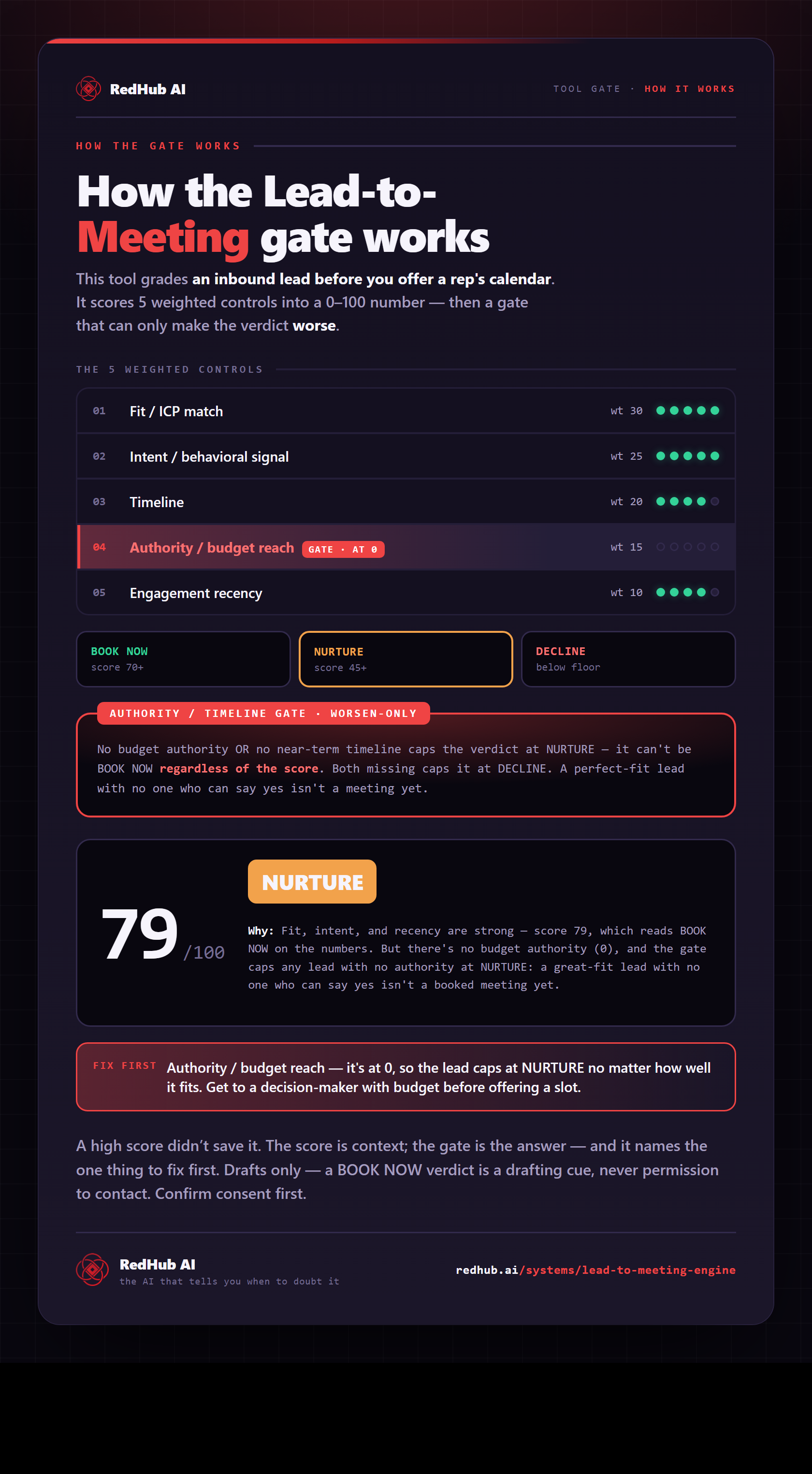
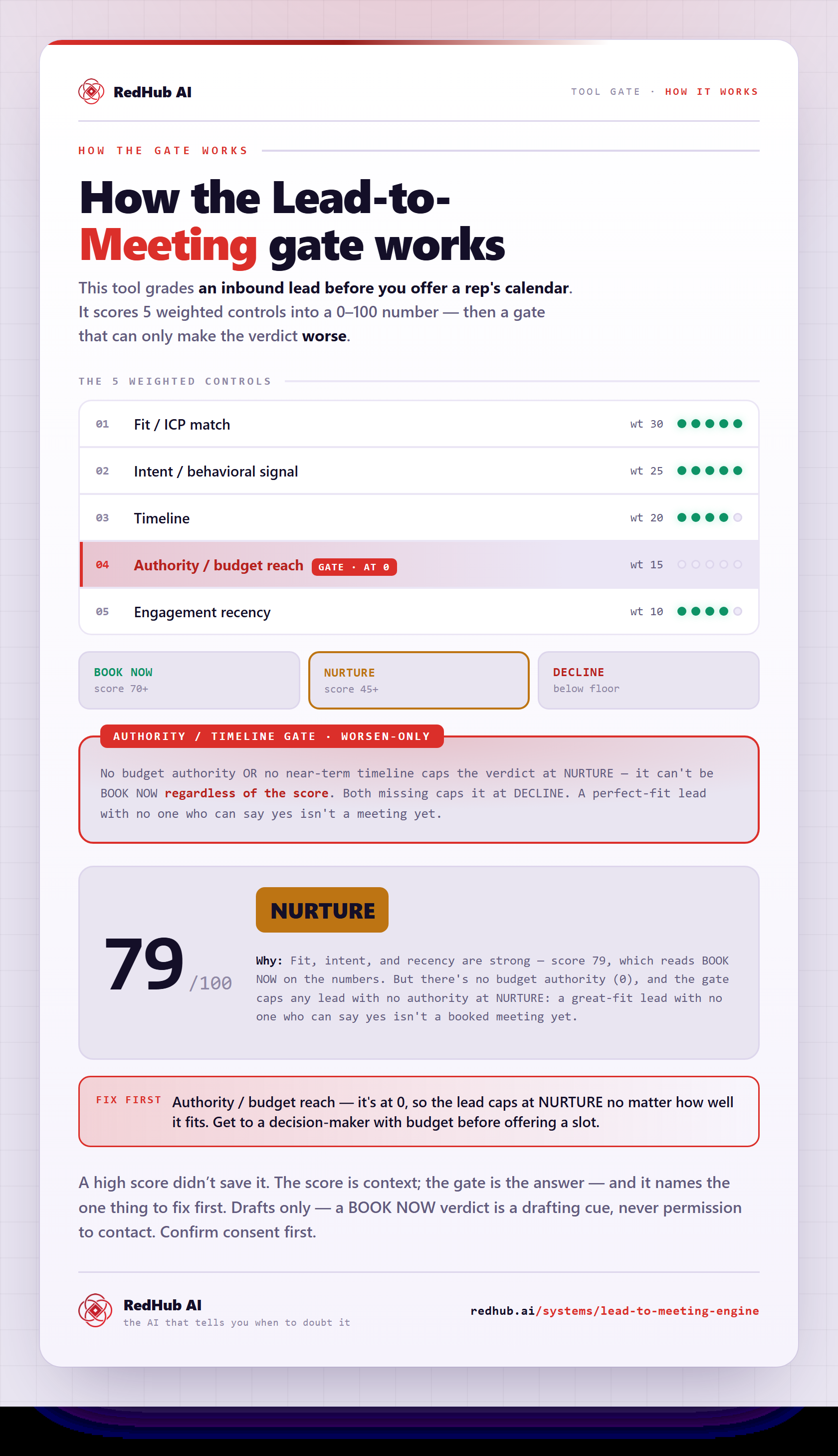
The gate this post refers to, drawn from the tool’s own logic. See the tool.