The AI Sales Skills Worth Building First
RedHub AI Editorialupdated September 20, 20265 min read

Jump to a section9
The five AI sales skills worth learning first are prospect research, drafting personalized outreach, call prep, follow-up writing, and CRM note cleanup. Each one saves real time, and each one needs a human review step so the output stays accurate and sounds like you, not a template.
TL;DR: Don't try to overhaul your whole sales process with AI at once. Start with these five skills, in order, and add a quick human check to each before anything reaches a prospect. The AI for the Sales Rep Kit ($39) walks through all five with the prompts and review steps built in.
This post is part of our guide to AI for Sales Reps — read that first for the bigger picture on where AI helps and where it doesn't.
Skill 1: Prospect research
Before you can write a good outreach email or walk into a discovery call prepared, you need to actually understand the account. AI is genuinely good at pulling together a first-pass summary — company size, what they likely do, recent public news, the role of the person you're contacting — from information you feed it or that's publicly available.
The skill isn't asking AI "tell me about Acme Corp." It's giving it a structured prompt: the prospect's name, title, company, and any specific detail you already know, then asking for a short summary plus two or three questions you should ask on a first call. That output is a starting point for your own research, not a replacement for it.
Skill 2: Drafting personalized outreach
A cold email to a VP of Marketing at a mid-size retail company should read differently than one to a founder at an early-stage startup. AI can draft both quickly once you give it context — who they are, what you sell, why you're reaching out now. What it can't do is know whether the "personalization" it inserted is actually true or just plausible-sounding filler.
The habit that keeps this honest: never send an AI draft as your first read of it. Read it once for tone — does it sound like you? — and once for facts — is every specific claim something you can back up? If either check fails, fix it before it leaves your outbox.
Skill 3: Call prep
A rushed five minutes before a discovery call is where deals quietly start going sideways. AI can build you a rough pre-call brief — likely questions the prospect will have, common objections for their industry, a simple agenda — in the time it takes to read this paragraph.
This works best when you give AI real context about the deal: what stage it's at, what you already know about the prospect's pain points, and what outcome you want from the call. A generic "help me prep for a sales call" prompt gets generic output.
Skill 4: Follow-up writing
The follow-up after a call is often the least fun part of a rep's day and the most likely to get skipped or delayed. AI can turn your rough notes — even a few bullet points typed right after the call — into a clean recap email that restates next steps and keeps momentum. You still need to check it against what was actually said and add anything AI couldn't have known, like a tone shift you noticed on the call.
Skill 5: CRM note cleanup
Messy CRM notes cost the next person on the deal — including future you — real time. AI is well suited to turning a scribbled bullet list into a structured summary: stakeholders, pain points, objections raised, next steps. This is lower-risk than customer-facing drafts since it stays internal, but it's still worth a quick scan for accuracy before you save it, since a wrong detail in the CRM can mislead a teammate months later.
How to build these skills without overloading yourself
- Pick one skill and use it for a full week before adding a second. Prospect research or CRM cleanup are the lowest-risk places to start since the output isn't customer-facing.
- Write down the prompt that worked, not just the output. A good prompt with real context (role, company, trigger event) beats a vague one every time.
- Build the review step into your routine from day one — don't add it later once bad habits are already set.
- Once a skill feels automatic, move to the next one. Most reps can build all five in a month of normal work, not a dedicated training sprint.
Where the deeper tools come in
These five skills cover the individual rep's daily workflow. If your real bottleneck is speed getting inbound leads onto a calendar, that's a system-level problem the Lead-to-Meeting Engine is built for. If you need a shared, maintained objection-handling library for a whole team rather than one rep's call notes, see Using AI to Prep for Sales Calls and Handle Objections and the Sales Enablement Battlecard Builder.
Pairs well with
If speed-to-lead on inbound is your bigger problem, the Lead-to-Meeting Engine handles the booking motion. For a maintained objection library beyond personal call prep, see the Sales Enablement Battlecard Builder. And if your team is drowning in unqualified inbound before it reaches a rep, the Inbound Lead Qualification Engine filters it earlier.
More in this guide
What's the single best AI sales skill to learn first?
Prospect research. It's low-risk since the output isn't customer-facing yet, and it makes every other skill — outreach, call prep — better once you're used to giving AI real context.
How long does it take to build these five AI sales skills?
Most reps can build all five in about a month of normal work, adding one skill at a time rather than trying to overhaul everything at once.
Is it risky to let AI write my CRM notes?
Lower risk than customer-facing drafts since notes stay internal, but still worth a quick scan — a wrong detail in the CRM can mislead a teammate who reads it months later.
Do I need to review every single AI draft?
Yes, for anything that reaches a prospect. Internal work like CRM notes needs a lighter check; outreach and call materials need a full read for tone and accuracy every time.
Can AI replace a sales rep's job?
No. AI handles research and drafting well, but discovery, trust-building, and closing are human skills. Reps who use AI well spend more time on those, not less.
What's in the AI for the Sales Rep Kit?
A $39 role-based skills brief covering all five skills in this post — prospect research, outreach drafting, call prep, follow-up writing, and CRM note cleanup — with prompts and review checkpoints included.
Does this require a specific CRM or sales tool?
No. The skills and prompts work alongside whatever CRM or outreach tool you already use — this is a workflow change, not a new piece of software to roll out.
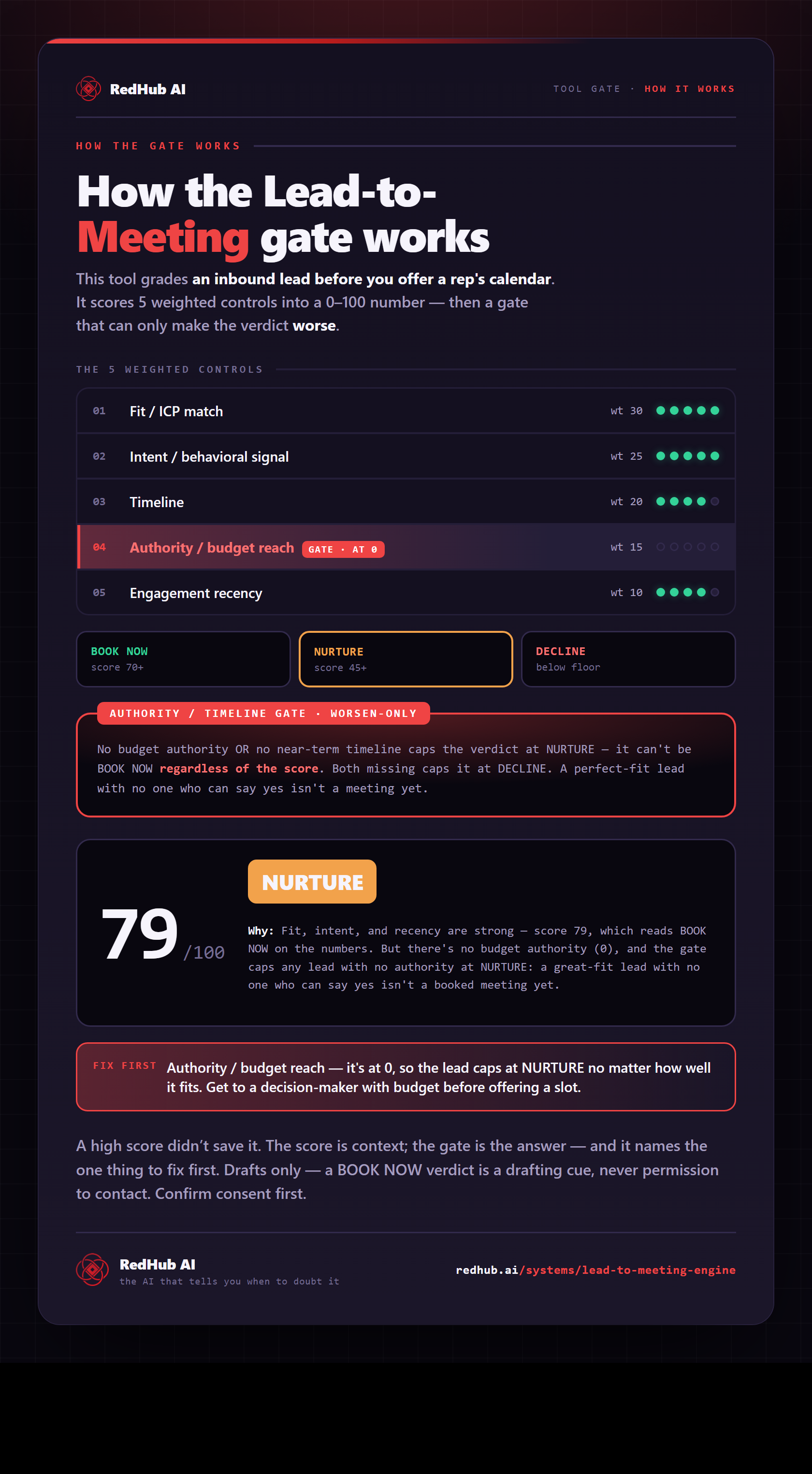
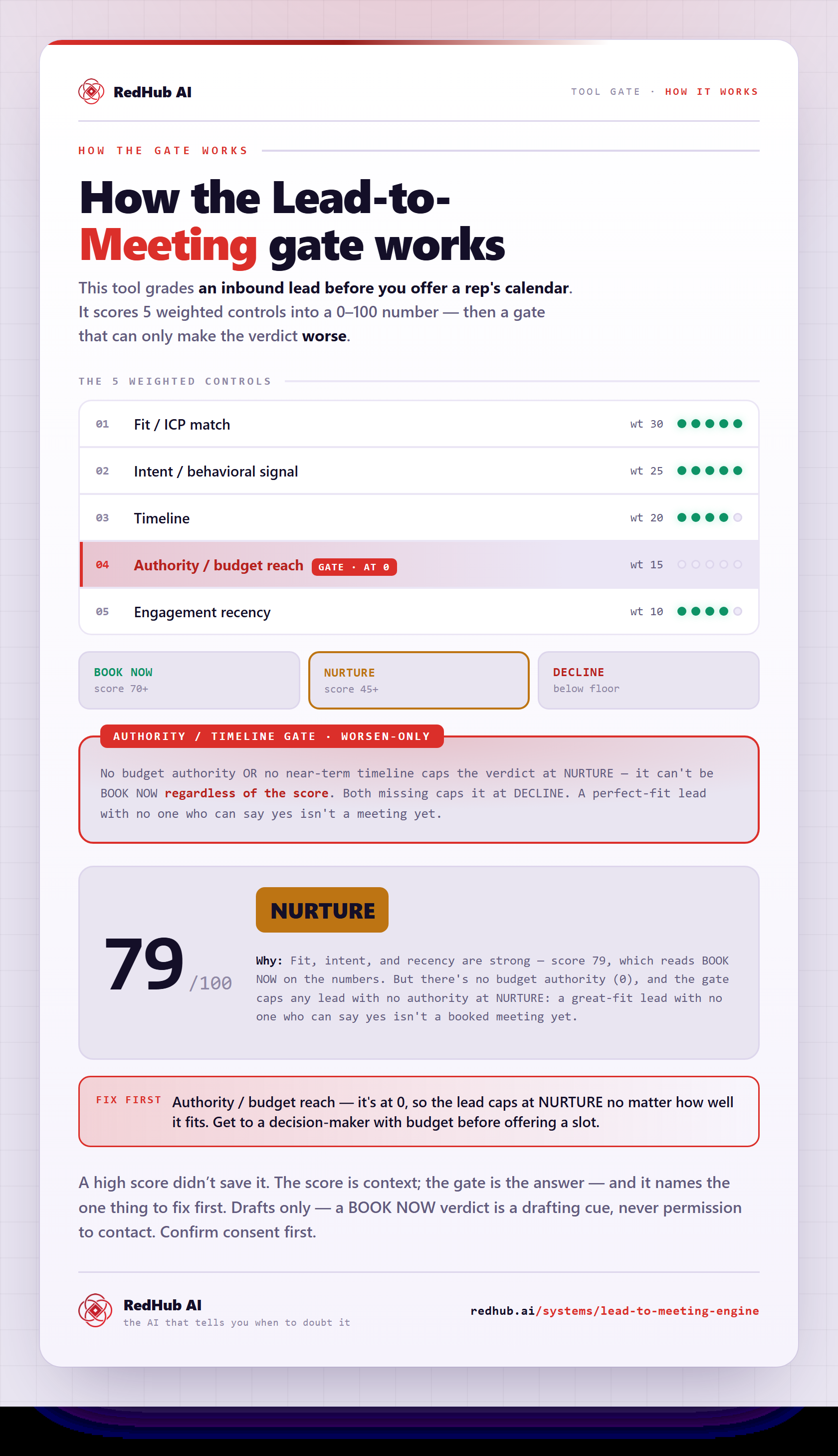
The gate this post refers to, drawn from the tool’s own logic. See the tool.