Gemini 4 Argon Cybersecurity: Why Google Restricted Access
RedHub AI Editorial6 min read
Jump to a section8
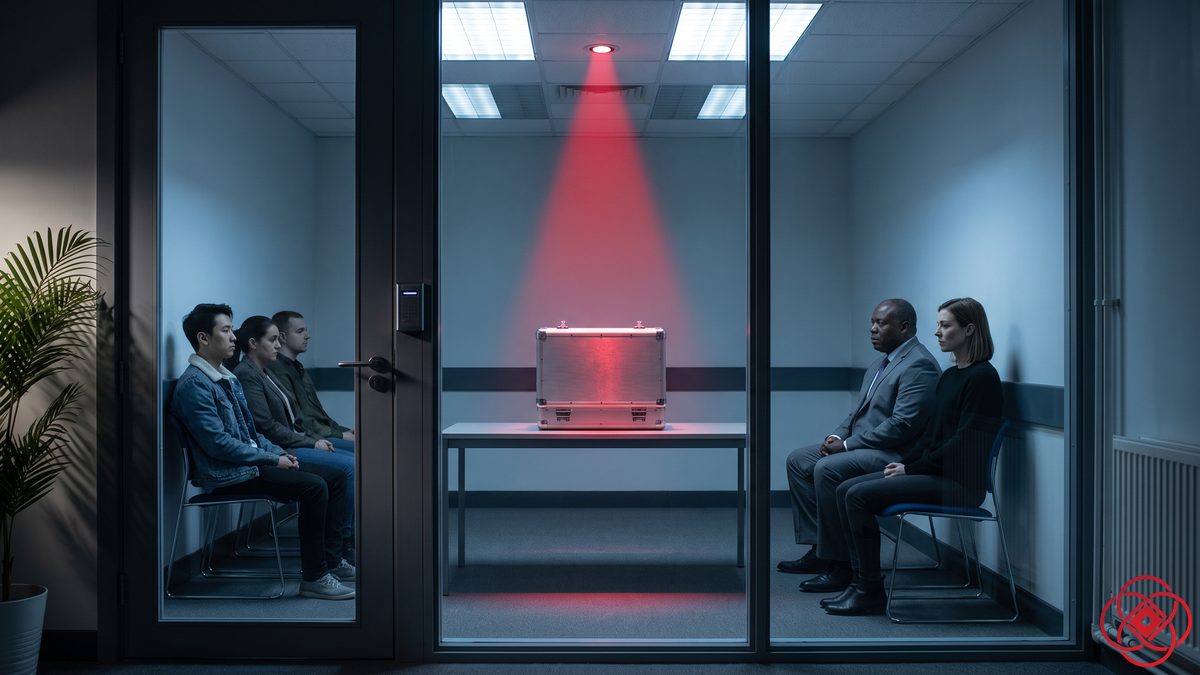
Google restricted Gemini 4 Argon's cybersecurity capabilities by deciding who gets them unguarded. According to SecurityWeek's reporting (opens in a new tab), vetted defenders in Google's Fairwind Program and Google's own internal teams get Argon without its cyber guardrails, while everyone who comes later gets a version built to refuse requests that would enable attacks. For any business putting a capable AI agent to work, the lesson carries over: who gets the tool, for what, and whether anyone can see what they did, is a security decision on its own.
TL;DR: Gemini 4 Argon cybersecurity access starts with Fairwind, a limited program for governments, Google Cloud customers and security partners. Vetted defenders reportedly get Argon without cyber guardrails, and later users get it with them. Cyber capability is dual use: the skill that finds a flaw to patch can also find one to exploit. Copy the pattern, not the model: access tied to identity, permissions tied to the task, and a stop control you have tested. The Stop-Authority Assay ($109) grades what your stop controls have been shown to do. Start with the pillar: Gemini 4 Argon: AI That Works Longer Than You Can Watch.
What Google did
Google's announcement (opens in a new tab) says Argon is rolling out first to "a set of trusted cyber defenders through our Fairwind Program," then to developers, enterprises and consumers, starting with paid API customers and Google AI Ultra subscribers. Google gave no dates for the later stages.
SecurityWeek adds the detail that makes this more than a staged launch. It reports that Google is releasing Argon without cyber guardrails to "trusted defenders and our own internal teams at Google," and that the broader version is designed to refuse requests that would enable cyber or chemical, biological, radiological and nuclear attacks while still supporting legitimate research. Google's own announcement names safeguards against both kinds of attack and against prompt injection.
SecurityWeek also lists safeguards that run while the model works. One it quotes is "misalignment mitigations that monitor Argon's chain-of-thought and actions and stop execution when necessary." Chain-of-thought is the model's step-by-step reasoning, and misalignment means the model working against what it was asked to do. In other words, Google says it watches what the model is thinking and doing, and can halt it mid-task.
What the Fairwind Program is
Security Boulevard reported Fairwind's launch (opens in a new tab) on September 2, 2026, four weeks before Argon. It is a limited-access program for government agencies, Google Cloud customers and cybersecurity partners, with priority for critical infrastructure operators and the maintainers of widely used software. It began by pairing Gemini 3.8 Flash Cyber with CodeMender, which the article describes as Google's "AI agent for vulnerability remediation," and more than 650 organizations take part worldwide.
Membership comes with conditions. Organizations must restrict access to employees working in areas such as cybersecurity, incident response and penetration testing, and must use protections including multi-factor authentication. The model goes to security staff behind MFA, not to whoever at a member company asks for it.
Why cyber capability gets different treatment
Security teams have always used tools that could do harm in the wrong hands. A vulnerability scanner tells a defender where to patch and an attacker where to aim. What a frontier model can add is scale: it can read more code, sift more logs and carry a longer chain of steps than a person working alone.
That can help with the work defenders struggle to keep up with, such as vulnerability research, alert triage, malware analysis, incident response and remediation planning. Pointed the other way, the same capability can lower the bar for an attacker. Tying it to vetted identities and a monitored purpose is how Google is trying to get the first effect without the second.
Safeguards are an architecture problem
Of the safeguards Google names, resistance to prompt injection matters most to an ordinary business. An agent that reads web pages, emails, tickets or documents will sooner or later read one with hidden instructions in it. If the agent cannot tell its owner's instructions apart from text it happened to read, the hidden text can take over.
A model does not fix that on its own. What protects you is what the agent can reach: which tools it can call, which credentials it holds, and whether anyone can stop it mid-task. Our guide to prompt injection covers how to keep trusted instructions separate from untrusted content.
What a business can copy
You do not need a frontier cyber model to use the same pattern on any agent with real access.
| What Fairwind and Argon do | The business version |
|---|---|
| Guardrail-free access only for vetted defenders | Give your most capable agent setup only to the people and workflows you have checked |
| Access restricted to security staff | Tie each agent to a named owner and a stated purpose, never a shared login |
| Multi-factor authentication required | Put strong sign-in on every account an agent or its owner uses |
| Monitoring of reasoning and actions that can stop execution | Log every agent action and keep a stop control you have tested |
| Refusal of attack requests for general users | Require approval for sensitive or irreversible actions |
| Staged rollout | Widen an agent's access in stages, after each stage proves out |
Our post on non-human identity security covers giving each agent its own credentials.
What we cannot verify
A controlled rollout is also a launch strategy. Releasing first to a respected group builds credibility and buys time to scale up, and from the outside you cannot fully separate the safety reason from the commercial one. We have also found no published outside testing of how well Argon's guardrails hold, or of how carefully Fairwind members are vetted. Both are claims we are reporting, not results we have checked.
The pattern is worth copying either way, because it does not depend on Google's guardrails working. It depends on yours.
Find out whether your stop controls stop anything
The Stop-Authority Assay grades what each of your stop controls has been shown to do, not what it claims, and returns STOPS, SLOWS or NAMED ONLY for each one. Then it reads each agent by its strongest control.
Get the Stop-Authority Assay — $109Pairs well with
The AI Agent & Connector Access Auditor ($99) scores what each agent and each plug-in or app connection it uses can touch, and returns LEAST-PRIVILEGE AS DESCRIBED, OVER-SCOPED or UNGOVERNED. The Indirect Prompt-Injection Exposure Gate ($79) grades how exposed an agent is to hidden instructions in the content it reads. The Non-Human Identity & Credential Sprawl Gate ($79) grades how you govern the keys, tokens and accounts your agents run on.
More in this guide
Why did Google restrict Gemini 4 Argon's cyber capabilities?
Advanced cyber capability is dual use: the same skill that helps a defender find and fix a flaw can help an attacker exploit one. Google is releasing Argon first to vetted defenders in its Fairwind Program, and SecurityWeek reports that the broader version is designed to refuse requests that would enable attacks.
What is Google's Fairwind Program?
It is a limited-access cyber-defense program for government agencies, Google Cloud customers and security partners. Security Boulevard reported its launch on September 2, 2026, and says more than 650 organizations take part. Members must restrict access to security staff and use protections including multi-factor authentication.
Do Fairwind members get Argon without guardrails?
SecurityWeek reports that Google is releasing Argon without cyber guardrails to trusted defenders and Google's own internal teams. Users who come later get a version designed to refuse attack requests.
What safeguards does Google say Argon has?
Google names protections against cyber and chemical, biological, radiological and nuclear attacks, and against prompt injection. SecurityWeek also quotes safeguards that monitor the model's reasoning and actions and can stop it. We have not found published outside testing of how well these work.
What does dual use mean for AI?
It means the same capability can be used to protect or to harm. A model that is good at finding software flaws helps the team fixing them and could help someone trying to break in, which is why access to it is controlled.
What can a small business learn from how Google released Argon?
Tie each AI agent to a known owner and purpose, give it only the access one task needs, use strong sign-in, log what it does, require approval for risky actions, and test your way of stopping it before you need it.
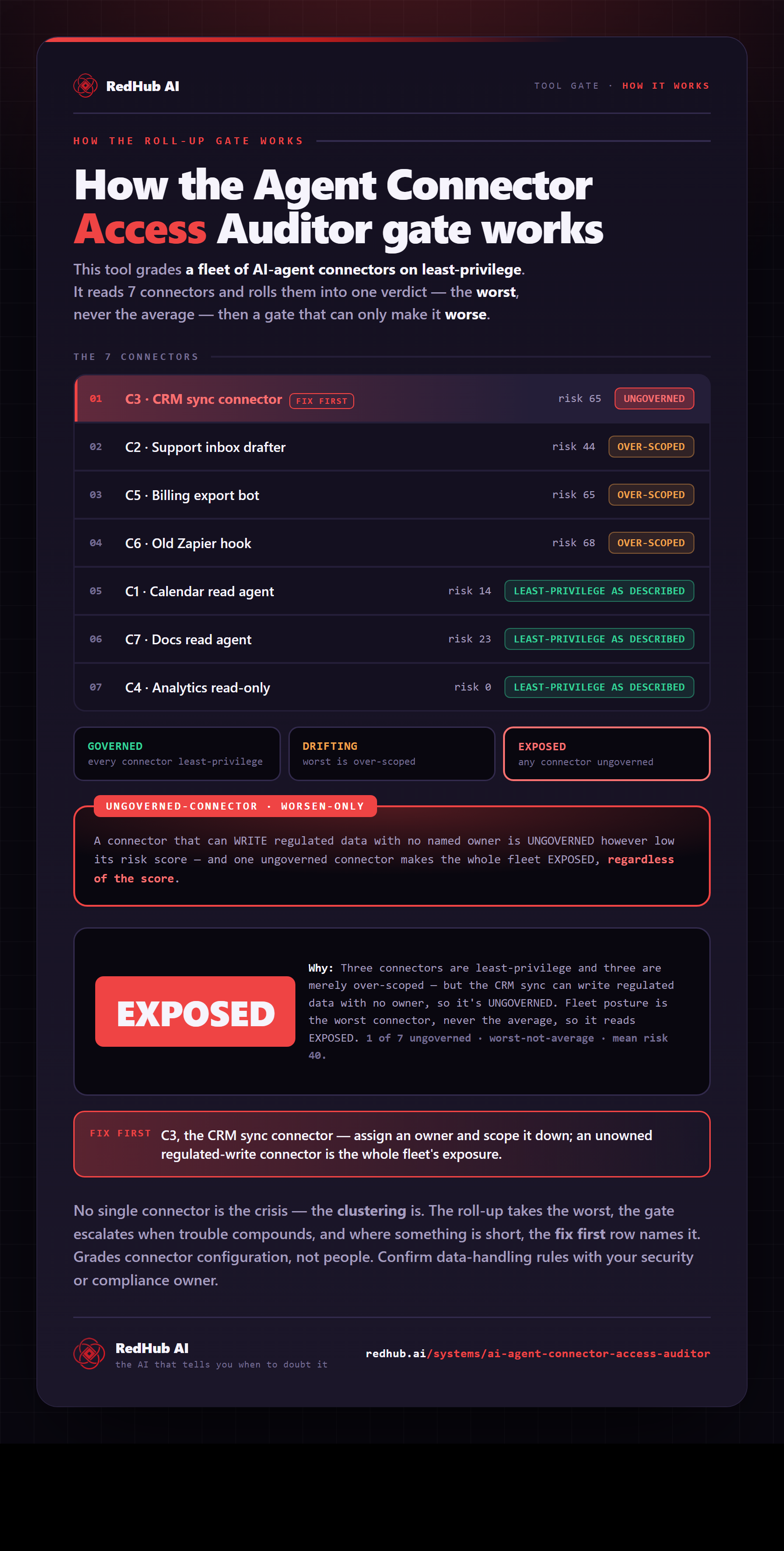
The gate this post refers to, drawn from the tool’s own logic. See the tool.