How to Present the Price in a Proposal Without Guessing
RedHub AI Editorialupdated October 7, 20266 min read

Jump to a section9
This guide answers how to price a proposal in one narrow sense: how the number appears on the page. State it once, tie it to the scope you just described, put it after the approach section, and stop. What the number should be is a separate decision about your market, your experience and your costs, and nothing here makes it for you.
TL;DR: Present the price as one clear figure, tied to the scope, on its own line, after the approach. A range or two tiers can fit when the scope is open. A hedge never does. Good presentation cannot rescue a wrong rate, and this guide does not set yours. The Proposal Quality Probe ($79) scores the rest of the proposal, and its rubric has no price criterion. Start with the pillar: How to Write a Freelance Proposal That Gets a Yes.
The same number, written two ways
Take one illustrative job, a three-email welcome sequence, and one made-up price, $2,400. A first freelancer writes: "I'd probably estimate somewhere around $2,400, though I'm flexible and happy to discuss if that doesn't work for your budget."
A second writes: "The three-email welcome sequence, including two rounds of revisions, is $2,400."
The figure is identical. The first version contains four signals that the number is not settled: "probably," "somewhere around," "flexible," and an offer to discuss before the client has objected. The second reads as a decision, because it is written like one.
Where the price goes in the document
After the approach, not before it. A number placed first is judged with nothing beside it. The same number placed right after you describe the work reads as the cost of that work. The full order, and why each section sets up the next, is in the freelance proposal structure that works.
Three formats, and when each one fits
| Format | Fits when | The risk |
|---|---|---|
| One fixed number | The scope and deliverables are well defined | Reads as rigid, or as a guess, if the scope is still open |
| A tight range | One named variable is unknown, such as page count | A wide range reads as not knowing your own costs |
| Two tiers with a recommendation | The work has a real smaller and larger version | Tiers with no recommendation hand the decision back to the client |
Whichever fits, pick one and state it. If you offer two versions, say which you recommend and why. A range should name the thing it depends on: "$2,000 to $2,600, depending on whether the sequence is three emails or four."
When one confident number is the wrong call
"State one number and stop" assumes you know what you are pricing. Often you don't. The brief says "redesign the site" and you cannot tell whether that is five pages or fifty. A single fixed figure on a scope like that is a guess with good posture, and the confidence is borrowed from information you do not have.
There are honest ways through. Ask the question before you bid. Price a defined first phase and say the rest follows once the scope is known. Or give a tight range and name the variable. Each is still a plain statement, and none of them hedges. The hedge is the vague one: a soft number with "happy to discuss" attached and no reason given.
The lowest-bidder trap
When you are worried about a cheaper bidder, it is tempting to price defensively: knock something off up front, or call the number negotiable before anyone has asked. A price presented as negotiable reads as an opening offer, so you have invited the negotiation you were trying to avoid.
We are not going to tell you a clear price beats a lower one. Sometimes the client buys on price and the cheapest bid wins, however yours was worded. What presentation controls is narrower: whether your number reads as considered or as a guess. It does not control which number the client can afford.
What presentation can't do
If your rate is wrong for the market or for your costs, clean presentation delivers the wrong number more clearly. So when proposals keep stalling at the price, there are two different questions. Is the number hedged on the page? That is this guide. Is the number itself off? That is a business decision, and a formatting guide cannot answer it.
Checking the rest of the proposal
The Proposal Quality Probe ($79) scores a finished proposal on five criteria: Opening Specificity, Proof Relevance, Approach Differentiation, Call to Action Clarity and a Bot Risk Score. Price is not one of them. The Probe will not tell you whether your price section is hedged or whether your rate is right.
What it does cover is the ground the price stands on. A number that follows a specific opening, matched proof and a distinct approach is judged against something. The nearest criterion to this guide is Call to Action Clarity, the close that comes straight after the price and says what happens when the client agrees to it.
Score what surrounds the price
The Proposal Quality Probe takes your marks on five criteria and returns SUBMIT, REVISE, DO NOT SEND or START OVER. Where a criterion is short, it names the one to fix first. It has no price criterion and gives no rate advice. It scores the proposal you enter and does not predict a win.
Get the Proposal Quality Probe — $79Pairs well with
For the rate question this guide leaves alone, the Should I Raise My Prices? Decision Kit ($49) models a price change, shows the customer loss you can absorb, and returns a raise, hold-and-test or restructure verdict. If you sell AI services as an agency, the AI Service Pricing Kit ($79) has 25+ service categories with sourced rates and a pricing-model decision tree. And when clients push back on price by naming a competitor, the Sales Enablement Battlecard Builder ($79) builds five battlecards from your real intel, objection handling among them.
More in this guide
How should I present my price in a freelance proposal?
State one clear number, tie it to the scope you just described, and stop. Give it its own line. Words like "probably" and "flexible" tell the client the number is not settled.
Where should the price go in a proposal?
After the approach section. A price placed first is judged with nothing beside it. The same number placed after the approach reads as the cost of the work you just described.
Should I offer multiple pricing tiers in a proposal?
Only if the work has more than one real version. Keep it to two options and say which you recommend. Tiers with no recommendation hand the decision back to the client.
What if I don't know the scope well enough to give one number?
Then a single fixed figure is a guess. Ask the question before you bid, price a defined first phase, or give a tight range and name what it depends on. Each of those is still a plain statement.
Does this guide tell me what to charge?
No. It covers how to present a price you have already set. What your rate should be depends on your market, experience and costs, and that is a separate business decision.
Is it better to price low to beat other bidders?
This guide cannot answer that, because it depends on the client and your costs. What it can say is that a price presented as negotiable reads as an opening offer. Whatever number you choose, state it as decided.
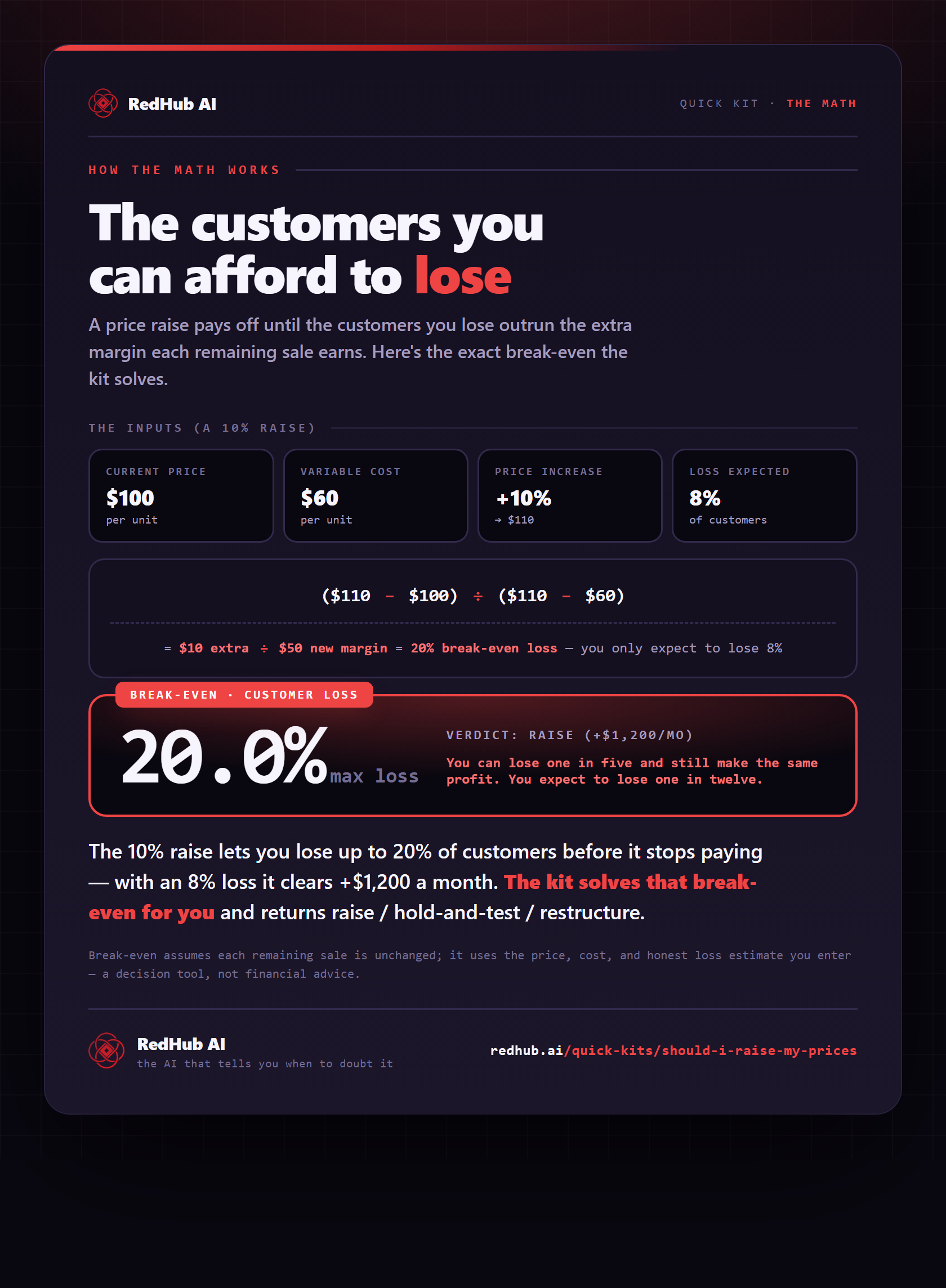
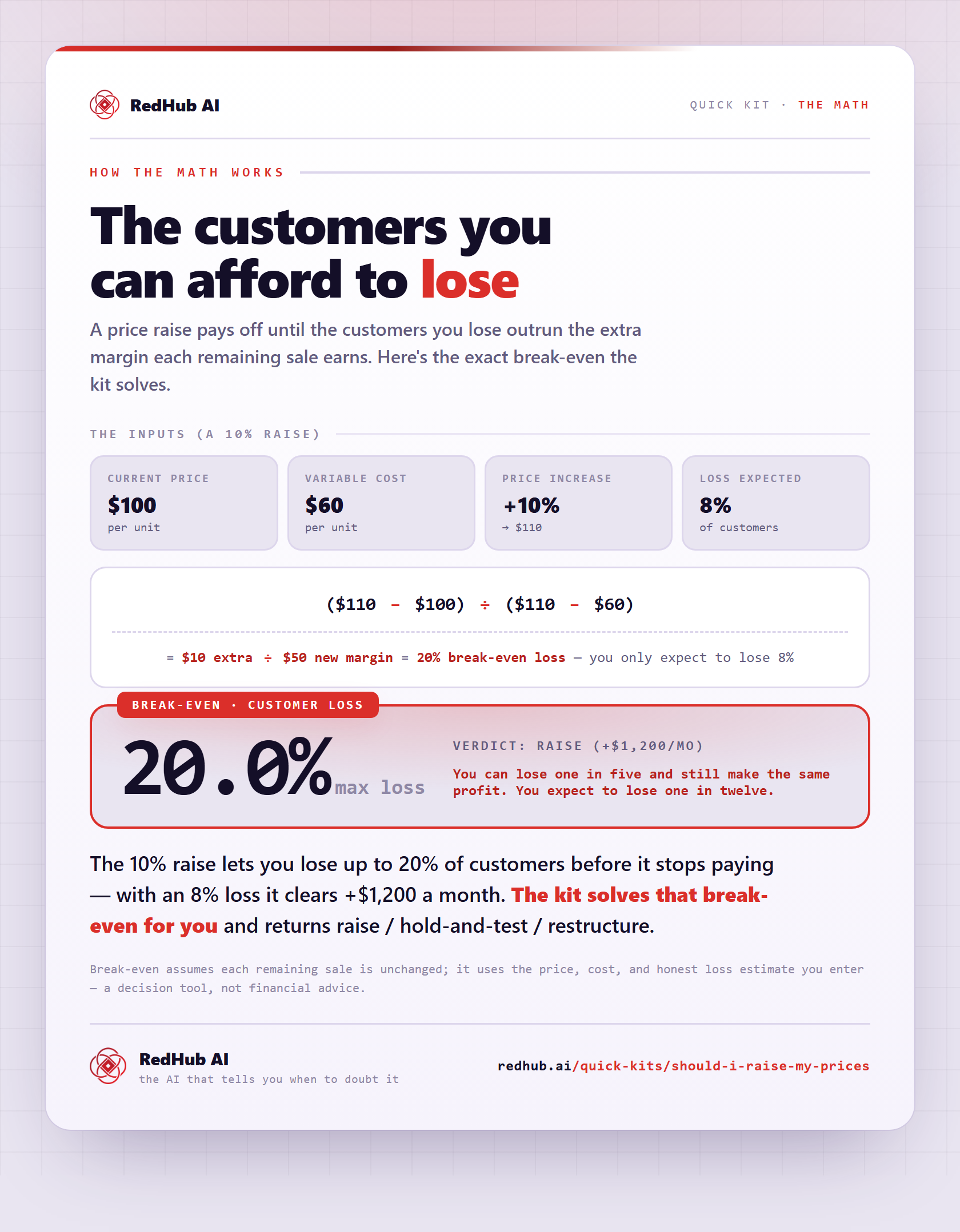
The gate this post refers to, drawn from the tool’s own logic. See the tool.