What Is Lead Scoring? A Simple System That Actually Works
RedHub AI Editorialupdated September 20, 20264 min read

Jump to a section7
Lead scoring is a way of ranking inbound leads by how likely they are to be a good customer soon, based on two inputs: fit (do they match your ideal customer) and intent (are they showing buying signals). The score doesn't decide anything by itself — it tells your rep which leads to call first, and a rep still makes the call.
TL;DR: Lead scoring assigns a priority level to each inbound lead using fit + intent signals, so your team calls the strongest leads first instead of working the list in the order it arrived. It's a prioritization aid, not a verdict — a low score routes a lead to nurture, not to the trash. Try the illustrative checker below, then see how the Inbound Lead Qualification Engine ($99) automates it for every real lead you get.
What Lead Scoring Actually Measures
A lead score is a shorthand for two separate questions: does this lead look like your best customers, and are they acting like someone ready to buy? Most scoring systems collapse into a single number, but the number is only useful if you know what fed it — a high score built entirely on fit with no intent behaves very differently from a high score built on urgent intent from a marginal fit.
Try It: A Simple Fit + Intent Read
This is an illustrative exercise, not a verdict on any real person — it shows the same two-input logic a scoring system uses, on a single hypothetical lead. Answer the three questions below and see how the read changes.
Lead priority — a simple fit + intent read (illustrative)
Why a Single Score Isn't Enough on Its Own
A number without context invites bad decisions. A "72" means nothing until you know it's built from a strong fit and a weak intent signal, versus a weak fit propped up by one urgent action. The most useful scoring systems show the components, not just the total — so your rep can see why a lead is a priority, not just that it is one.
What Good Fit Signals Look Like
- Company size, industry, or role matching your existing best customers
- Budget range consistent with your pricing
- Geography or market you actually serve
What Good Intent Signals Look Like
- Requesting pricing or a demo
- Repeat visits to a pricing or product page
- Filling out a form with specific, detailed information (versus a one-word entry)
Turning This Into Something That Runs Itself
The exercise above works fine for one lead at a time. It breaks down the moment you're getting dozens of inbound leads a week and nobody has time to manually weigh fit against intent for each one. That's the gap an automated scoring tool closes — it applies the same fit + intent logic consistently, on every lead, the moment it comes in, so the highest-priority leads surface automatically instead of waiting for someone to notice them in a spreadsheet.
Pairs well with: Once your leads are scored, the next step is booking a real conversation with the highest-priority ones before their intent cools — the Lead-to-Meeting Engine ($149) handles that handoff. And for leads that scored well on fit but not on timing, the CRM Win-Back System ($149) keeps them warm for later.
More in this guide
What is lead scoring?
Lead scoring ranks inbound leads by combining fit (do they match your ideal customer) and intent (are they showing buying signals), so your team knows which leads to call first.
Does a low score mean the lead is worthless?
No. A low score means the lead isn't the priority right now — it should go to a nurture sequence, not get discarded. Fit and intent both change over time.
Is a lead score a guarantee someone will buy?
No. It's a prioritization signal built from available data, not a promise of revenue or a specific close rate. A rep's judgment on the actual call still matters most.
What inputs make up a good lead score?
At minimum, fit (does this lead resemble your best customers) and intent (are they showing real buying signals). Scoring on just one of the two misses leads the other axis would have caught.
Can I build a lead scoring system without software?
Yes, for a low volume of leads — a simple checklist works. It stops scaling once you're getting more leads than someone has time to manually score consistently.
Who should act on a lead score?
A human rep, always. The score orders the call list; the rep decides what to say, whether to push forward, and when to walk away.
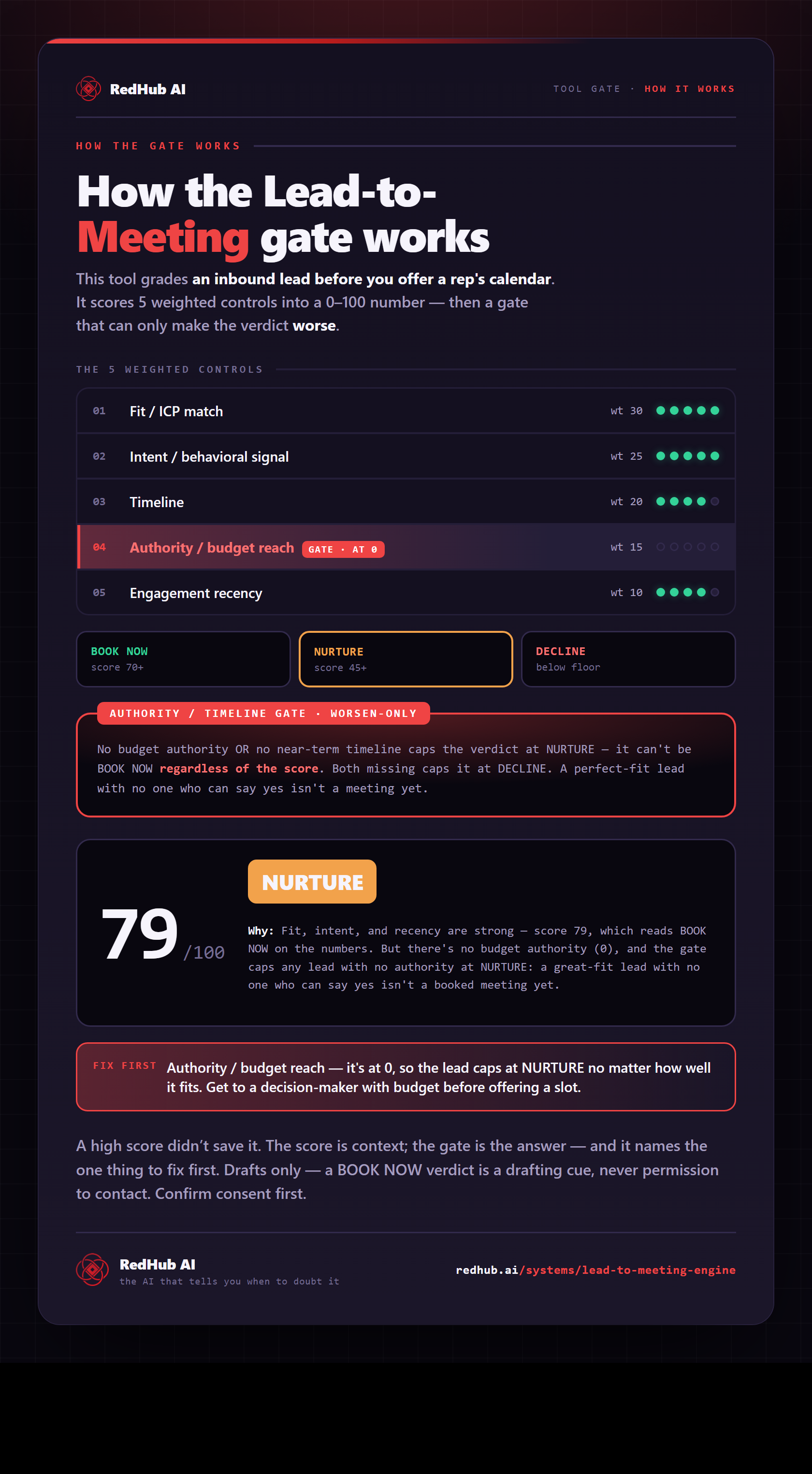
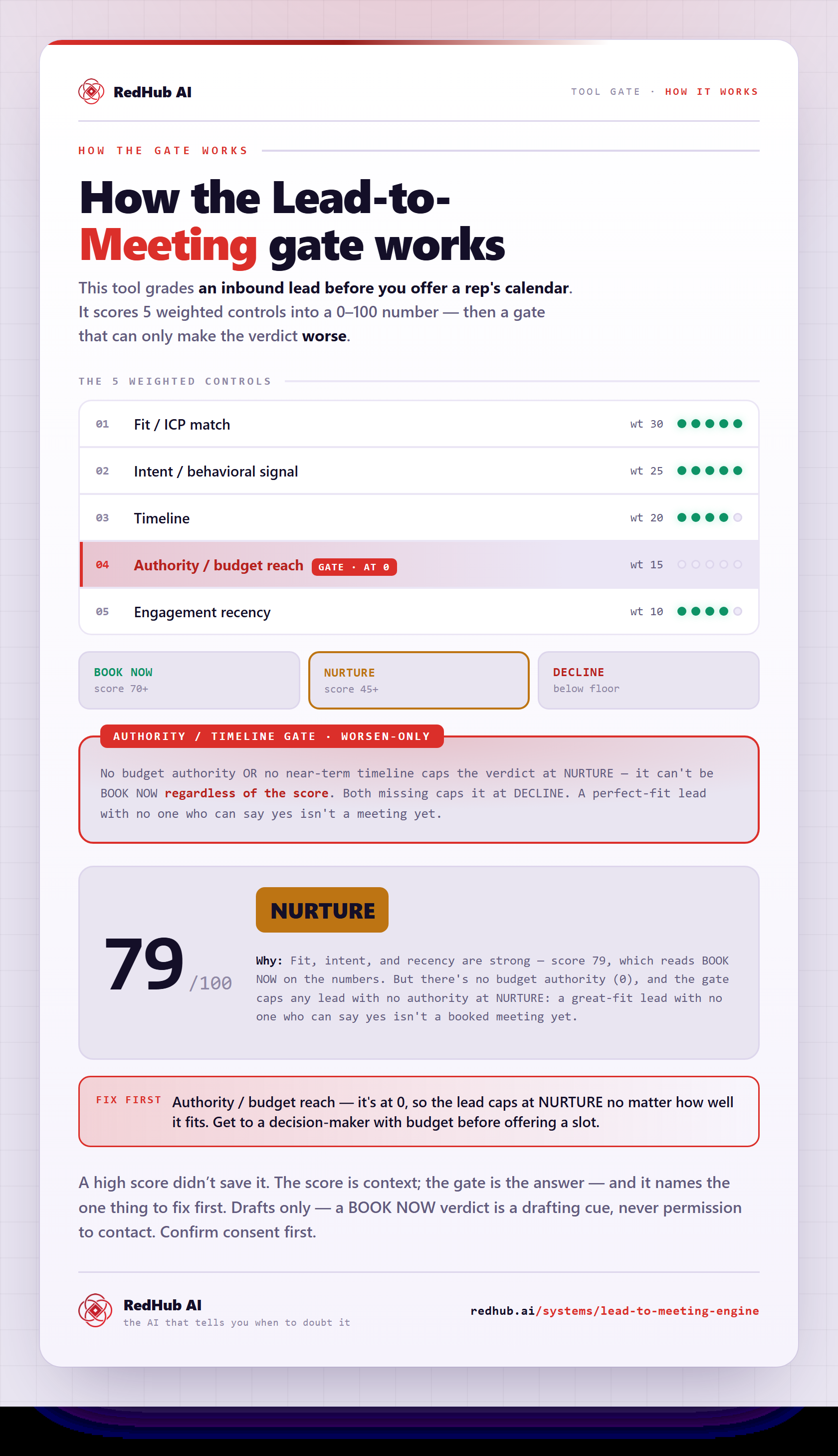
The gate this post refers to, drawn from the tool’s own logic. See the tool.