Lead Qualification: How to Score Inbound Leads So Sales Only Calls the Right Ones
RedHub AI Editorialupdated September 20, 20265 min read

Jump to a section7
Lead qualification is the process of sorting inbound leads by fit and intent so your team spends its limited call time on the leads most likely to become customers first. It's not a judgment on the person who filled out the form — it's a prioritization call. A lead that scores low today isn't disqualified forever; they're just not the first call you make this morning.
TL;DR: Lead qualification scores every inbound lead on two things — fit (do they match your ideal customer) and intent (are they showing buying signals) — so a small sales team calls the right five leads instead of working through fifty in the order they arrived. A low score routes a lead to nurture, not the trash. The Inbound Lead Qualification Engine ($99) does this scoring automatically; a rep still makes the actual call.
What Lead Qualification Actually Means
Every inbound channel — a contact form, a demo request, a downloaded guide, a pricing-page visit — produces a "lead." But not every lead is equally ready, and not every lead is equally likely to ever buy from you. Qualification is the step between "someone raised their hand" and "someone gets a phone call." It answers two questions: does this person or company look like your best customers (fit), and are they showing signs of wanting to buy soon (intent)? Get both answers before your team spends time on the phone, not after.
Why Treating Every Lead the Same Wastes Your Team
Small sales and support teams don't have the headcount to give every inbound lead an equal, unhurried follow-up. When every lead gets the same treatment — worked in the order it arrived, regardless of fit or readiness — the team spends real hours on leads that were never going to convert, while a genuinely ready buyer sits in the same queue behind them. Qualification isn't about calling fewer leads overall; it's about calling the right ones first so the leads with real buying intent don't go cold waiting their turn.
The Two Things That Actually Matter: Fit and Intent
Most qualification frameworks reduce to a version of the same two axes:
- Fit — does this person or company resemble your best existing customers? Company size, industry, role, budget range, geography — whatever actually correlates with your past wins.
- Intent — what are they doing that signals urgency? Asking for pricing, requesting a demo, and returning to your site repeatedly all read differently than a single newsletter signup.
A lead can be a strong fit with low intent (right company, not ready yet — nurture them) or high intent with a weak fit (eager, but not who you sell to — a fast, honest no is kinder than a long sales cycle that goes nowhere). Scoring both, not just one, is what keeps a qualification system from mislabeling either kind of lead.
MQL vs SQL, Briefly
Most teams eventually land on two labels: a Marketing Qualified Lead (MQL) has shown enough interest to be worth marketing's continued attention, and a Sales Qualified Lead (SQL) has cleared the bar for an actual sales conversation. The handoff between the two is where leads most often get stuck — sent to sales too early, or held back too long. We cover that handoff, and where it breaks, in a companion post on MQL vs SQL.
A Simple Framework You Can Start Today
- Write down what your best five customers had in common when they first came in — that's your fit definition.
- List the 3–4 actions on your site or forms that signal real intent (pricing page, demo request, repeat visits) versus passive interest (a single download).
- Score every new lead on fit and intent separately, then call the highest combined scores first each day.
- Route everything else to a nurture sequence instead of ignoring it — low priority now doesn't mean never.
What Happens After a Lead Is Qualified
Qualification tells you who to call first. It doesn't get you to that call faster — that's a separate problem, and a separate tool. Once a lead is scored and prioritized, the next job is getting a real conversation booked with them quickly, before their interest cools. That's the job of a booking-and-response system, not a scoring system — the two are complementary, not the same thing.
What qualification is — and isn't
It is
- A consistent, repeatable fit + intent score
- A way to prioritize a call list
- A signal your rep uses, not a verdict they follow blindly
It isn't
- A promise of more revenue or a specific close rate
- A replacement for a rep's judgment on the actual call
- A permanent label — a low score today can be a high score next month
Pairs well with: Once a lead clears qualification, the next job is booking the actual conversation before their intent fades — that's what the Lead-to-Meeting Engine ($149) is built for. And for the leads that scored low on timing rather than fit, the CRM Win-Back System ($149) keeps them warm until they're ready.
More in this guide
What is lead qualification?
Lead qualification is scoring inbound leads on fit and intent so your team calls the most promising ones first, instead of working every lead in the order it arrived.
Does a low score mean the lead is worthless?
No. A low score means "not now" or "not the priority today" — it routes the lead to nurture or a later follow-up, not the trash. Fit and readiness both change over time.
What's the difference between fit and intent?
Fit measures whether the lead resembles your best customers; intent measures whether they're showing buying signals right now. A qualification score needs both, because a good fit with no urgency and a high urgency with a poor fit are different problems.
Do I need a big sales team to qualify leads properly?
No — a simple fit + intent scoring framework works for a team of one. The point of qualification is to make a small team's limited time go further, not to add process overhead.
Does lead qualification replace my sales rep's judgment?
No. Scoring prioritizes the call list; the rep still decides what to say and whether to close. Treat the score as a starting point, not a verdict.
What should happen after a lead is qualified?
A qualified lead needs a fast, real conversation booked before their interest cools — that's a separate step (and tool) from scoring itself.
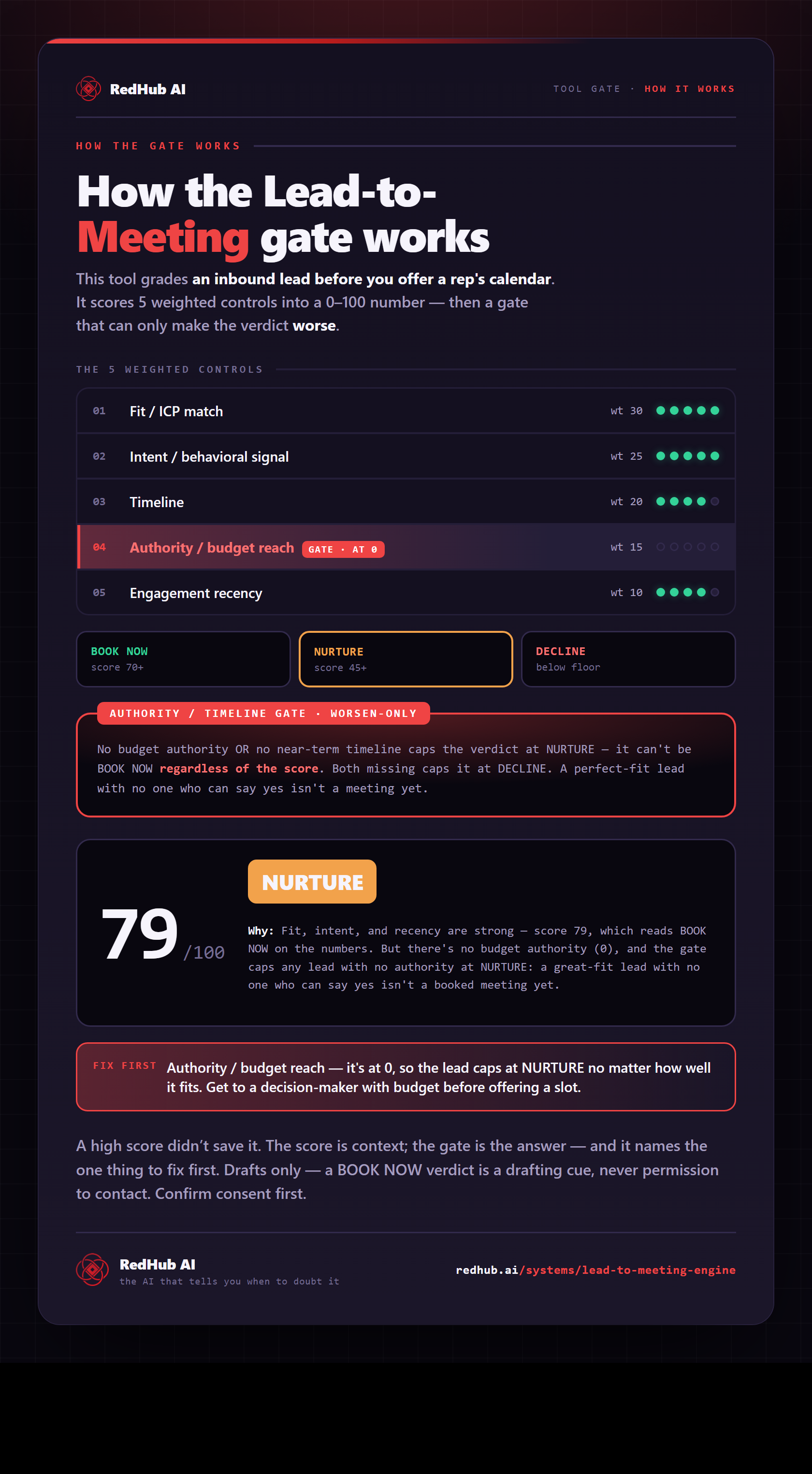
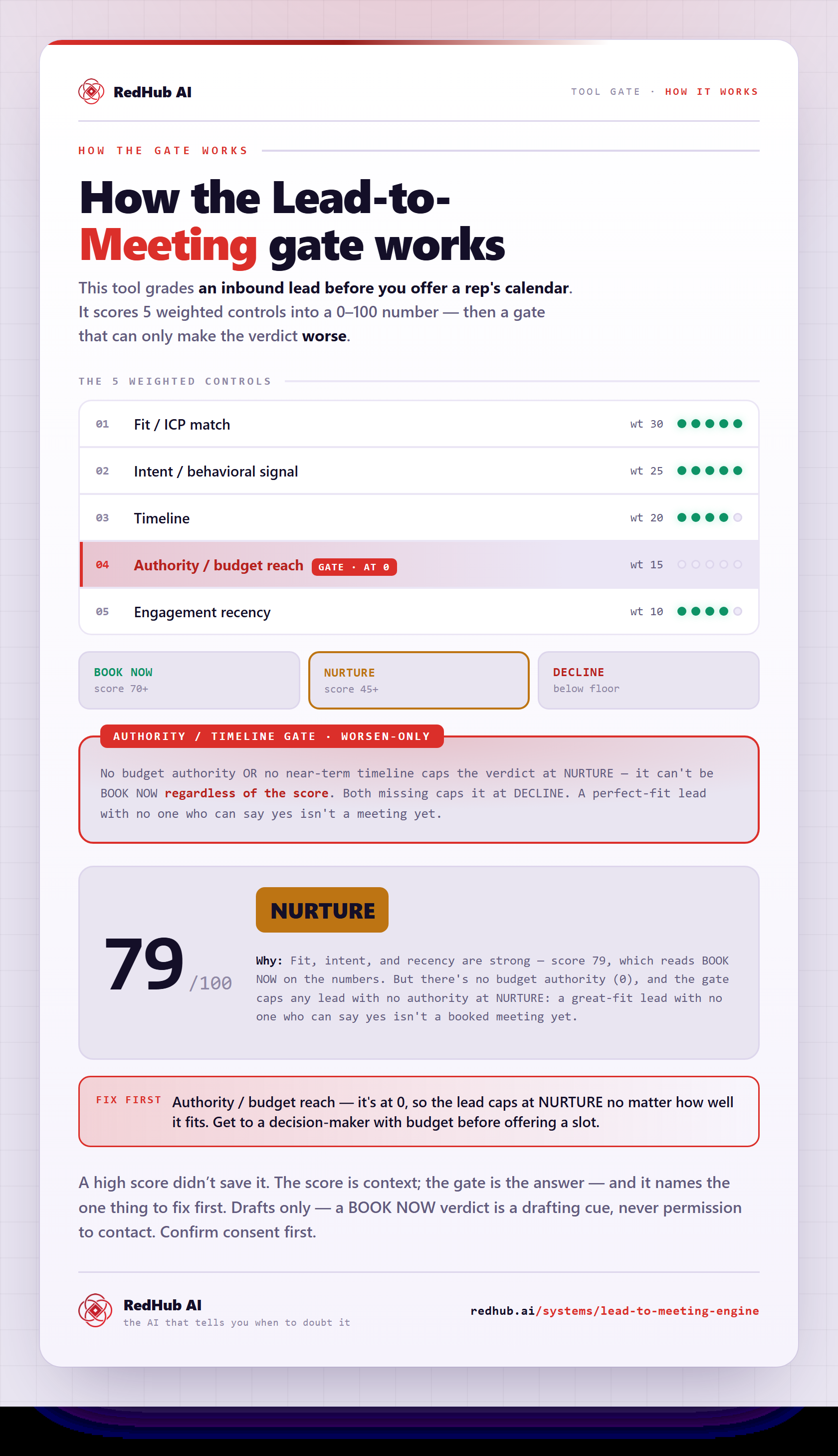
The gate this post refers to, drawn from the tool’s own logic. See the tool.