How to Qualify Inbound Leads (Without a Big Sales Team)
RedHub AI Editorialupdated September 20, 20264 min read

Jump to a section8
- Why Small Teams Need Qualification More, Not Less
- Step 1 — Define Fit From Your Own Past Wins
- Step 2 — Define Intent From Your Own Site Behavior
- Step 3 — Score Every Lead the Same Way, Every Time
- Step 4 — Work the List in Priority Order, Not Arrival Order
- What Doesn't Require a Big Team
- When to Automate the Scoring
- More in this guide
You can qualify inbound leads with a small team by scoring fit and intent consistently on every lead as it arrives, then calling the highest-priority ones first — you don't need a dedicated SDR team or an expensive martech stack to do this well.
TL;DR: A lean team qualifies inbound leads by defining fit (who your best customers actually look like) and intent (what actions signal real buying interest), scoring every new lead on both, and working the list in priority order instead of arrival order. The Inbound Lead Qualification Engine ($99) automates this scoring so it doesn't depend on someone remembering to update a spreadsheet.
Why Small Teams Need Qualification More, Not Less
A large sales org can afford to let SDRs work every lead in order — there's enough headcount to eventually get to all of them. A team of one or two doesn't have that luxury. Every hour spent on a low-fit, low-intent lead is an hour not spent on the lead that was actually ready to buy. Qualification is how a small team competes with a much bigger one on responsiveness to the leads that matter most.
Step 1 — Define Fit From Your Own Past Wins
Don't guess at an ideal customer profile from scratch. Pull your last 10–15 closed-won customers and look for what they actually had in common: company size, industry, the problem that triggered them to look for a solution, budget range. That's your fit definition — grounded in reality, not aspiration.
Step 2 — Define Intent From Your Own Site Behavior
Look at what your actual buyers did right before they converted, not what a generic playbook says intent should look like. Common high-intent actions: requesting pricing, booking a demo, returning to the same page multiple times in a short window. Common low-intent actions: a single form fill with minimal detail, a one-time visit with no return.
Step 3 — Score Every Lead the Same Way, Every Time
The value of qualification comes from consistency. If fit and intent are judged differently lead to lead — sometimes by gut feel, sometimes by whoever happens to glance at the form first — the "priority" list isn't actually prioritized, it's random. Write the fit and intent criteria down, and apply them the same way to every lead, whether that's manually against a checklist or automatically through a scoring tool.
Step 4 — Work the List in Priority Order, Not Arrival Order
- Call high fit + high intent leads first, same day if possible.
- Move high fit + lower intent leads into a nurture sequence rather than a cold call.
- Give low-fit leads a fast, honest response — a quick no or a self-serve resource — rather than a long, unproductive sales cycle.
- Revisit anything routed to nurture on a regular cadence; fit and intent both change over time.
What Doesn't Require a Big Team
Doesn't require a big team
- Writing down a fit definition from past customers
- Listing 3-4 real intent signals
- Scoring leads consistently as they arrive
- Working the highest-priority leads first
Does get harder without help as volume grows
- Manually scoring dozens of leads a week without drift
- Remembering to revisit nurtured leads on a cadence
- Keeping fit and intent definitions updated as your customer base evolves
When to Automate the Scoring
A manual checklist works fine at low lead volume. The moment inbound volume outpaces the time it takes to score each lead by hand, consistency breaks down — and that's exactly when a small team starts missing the leads that mattered. Automating the fit + intent score doesn't replace the judgment call on the actual sales conversation; it just makes sure the right leads reach that conversation in the first place.
Pairs well with: Once your leads are qualified, getting a real conversation booked quickly is the next problem — the Lead-to-Meeting Engine ($149) is built for exactly that handoff. As your qualified pipeline grows, Pipeline Commander ($249) helps a lean team manage it without losing track of anyone.
More in this guide
Can a small team qualify inbound leads without dedicated software?
Yes, at low volume — a written fit + intent checklist works fine for a team of one or two. It stops scaling once lead volume outpaces the time it takes to score each one consistently by hand.
Does a low score mean the lead is worthless?
No. A low-priority lead just isn't the first call today — route it to nurture and revisit it later, since fit and intent both change over time.
What's the fastest way to define "fit" for a small team?
Look at your last 10-15 closed-won customers and note what they had in common — company size, industry, budget, the problem that brought them to you. That's a grounded fit definition, not a guess.
Do I need a full CRM to qualify leads?
No. A spreadsheet with a consistent scoring column works at low volume. A dedicated tool becomes worth it once inconsistent manual scoring starts costing you real leads.
Should a small team ignore low-fit leads entirely?
No — give them a fast, honest response (a quick no or a self-serve resource) rather than ignoring them. A quick no protects your team's time without burning the relationship.
What's the single biggest mistake small teams make with inbound leads?
Working every lead in the order it arrived instead of by fit and intent — which means a genuinely ready buyer can sit behind several leads that were never going to convert.
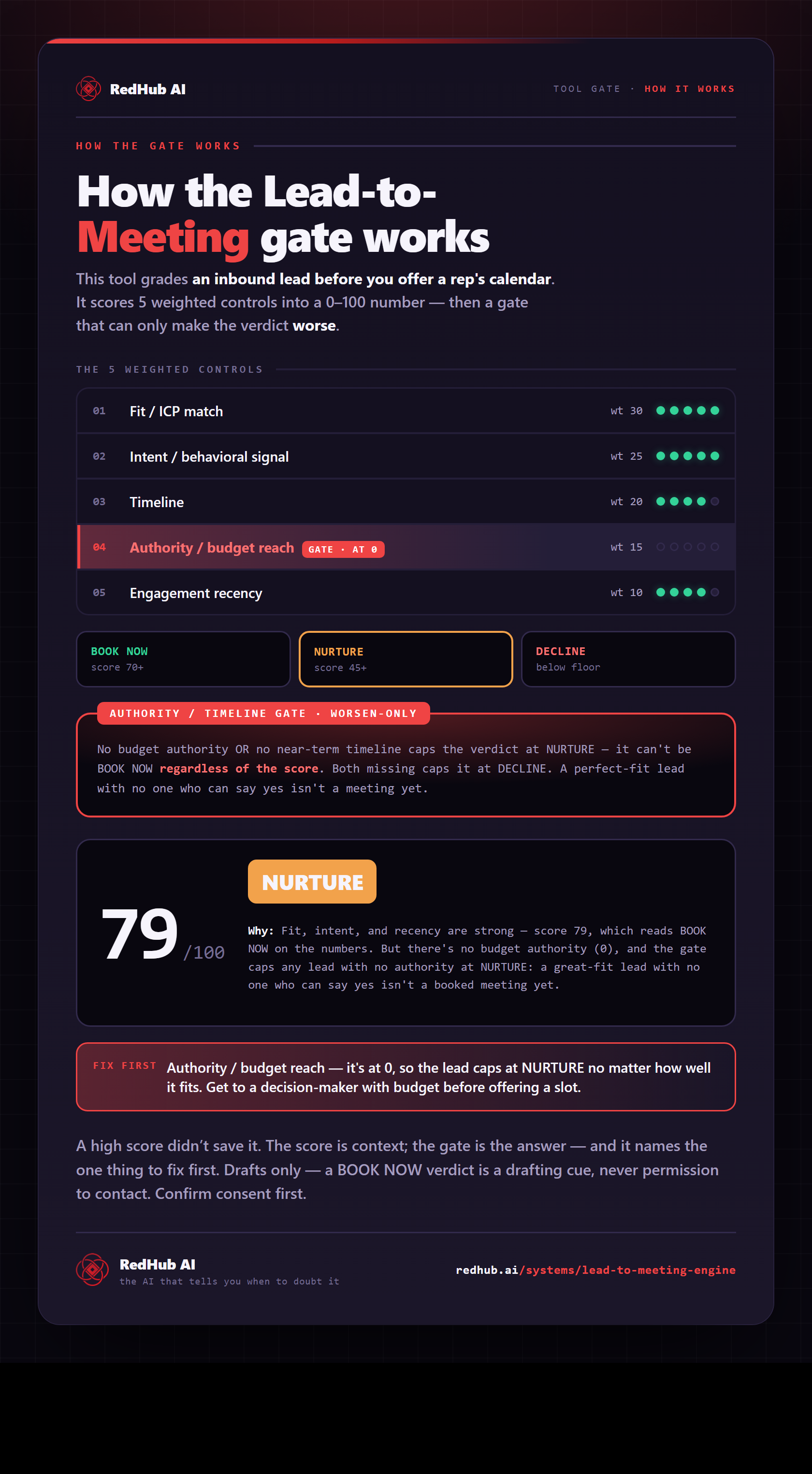
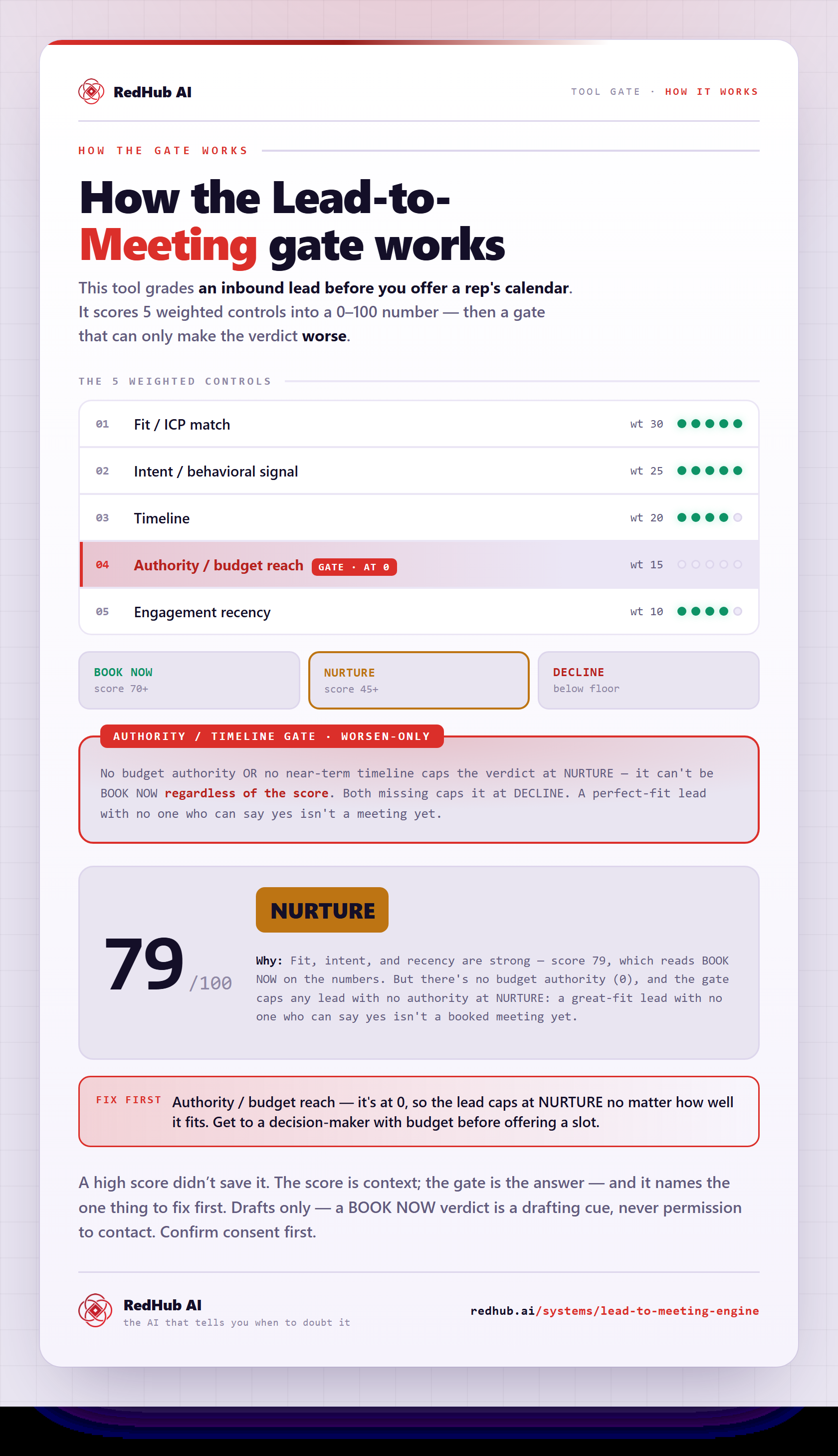
The gate this post refers to, drawn from the tool’s own logic. See the tool.