How to Build Authority on LinkedIn (as a Founder)
RedHub AI Editorialupdated October 7, 20266 min read

Jump to a section7
LinkedIn authority is a reader knowing what you stand for before the two of you have ever talked. A founder builds it in five moves, in this order: take a position, pick three or four pillars, write honest hooks, post at a pace that survives a bad week, and show up in other people's comments. Followers are a byproduct of that work, and a poor way to measure it.
TL;DR: Start with one sentence you believe that others in your field would argue with. Hang three or four pillars on it, post two to four times a week, and count conversations instead of likes. The Founder / Exec LinkedIn Authority System ($79) has the worksheet, the planner and a post checker for each step. It does not post for you. If you read one more post, read the content strategy guide.
What authority means here
Try this on your last ten posts. Cover your name and photo. Could a regular reader guess who wrote them? If yes, you have the start of authority. If the posts could belong to any founder in your industry, you have activity.
Readers form that guess through repetition. The same few ideas, argued from the same angle, turn up often enough that your name starts to mean something specific. This is why "post more" fails as advice. More posts with no position behind them is the same forgettable post, published more often.
The five moves, in order
- Position. Write one sentence that says what you believe and who it is for. The system's worksheet uses this frame: "I help [who] see/do [what] differently." If a peer in your field would not push back on the sentence, it is a description and you are not done.
- Pillars. Pick three or four themes you can speak to from experience. For each one, write down why you are credible on it. Our LinkedIn content strategy post covers how to choose them.
- Hooks. The first line or two decides whether anyone reads the rest. A good one makes a specific, true promise. See how to write LinkedIn hooks.
- Cadence. The system's playbook suggests two to four posts a week. Pick the number you can hit in your worst week of the quarter.
- Engage. Comment with substance on other people's posts and reply to the people who comment on yours. The LinkedIn engagement post has a daily routine.
The order matters because each move is useless without the one before it. A list of hooks with no position gives you ten openings for posts anyone could write. A posting schedule with no pillars gives you a calendar full of blank Tuesday mornings. Start at step four and you will run out of things to say within the month.
Count conversations, not applause
Likes are easy to count and say little. The workbook in the system tracks three other columns for each post: meaningful comments, profile views, and opportunities, meaning a direct message or a lead that came from the post.
There is a catch, and we do not have a clean answer for it. These signals lag. A founder can post for three months with a zero in the opportunities column and not know whether the position is wrong or only early. No spreadsheet can tell those two apart. The one partial check we know: read the comments you do get. If people argue with your position, they heard it. If they reply to the photo or the job title, they did not.
What we will not tell you
We are not going to tell you how LinkedIn's feed ranks a post. LinkedIn does not publish the full rules, the rules change, and anyone quoting you an exact percentage is guessing. The advice above holds up whatever the ranking does this quarter, because it is about readers.
LinkedIn is clear about one thing. Its Professional Community Policies say, "Don't do things to artificially increase engagement with your content." Pods, bought followers and comment bots are outside the platform's own rules, on top of being bad for trust.
The same line applies to the product. The system is a set of templates, a workbook and a checker. It does not post for you, grow your follower count or comment on your behalf. Its post checker scores a draft Ship, Tighten or Rework, and it will not return Ship for a draft in which it finds one of its listed engagement-bait phrases. The checker is a word-list heuristic. It cannot promise reach, and it cannot tell whether your story is true.
One viral post proves a hook worked once
A post that travels far tells you one opening line landed on one day. Authority is what is left a month later: a position people can state for you, a run of posts that argue it from different sides, and a few people who disagree with you by name. A founder with a clear position and a LinkedIn personal brand that sounds like one person gets there in months of ordinary posts.
Build the position before the posting schedule
The Founder / Exec LinkedIn Authority System covers all five moves: a POV worksheet, a content-pillar planner, four post frameworks, honest hook patterns, an engagement playbook with no pods or bots, a workbook that tracks comments and opportunities, and a post checker that returns Ship, Tighten or Rework.
Get the LinkedIn Authority System — $79Pairs well with
The Brand Voice Engine ($59) turns your voice into rules a machine can check, with a Voice Spec and a 100-point QA Checker, so fast drafts still sound like you. The Anti-Slop Content System ($79) adds a heuristic slop scanner and the SPARK scorecard, which returns Publish, Revise or Rework. It is a quality guardrail and does not detect AI. If Instagram is your second channel, the Instagram Profile Conversion Audit ($79) scores a profile across six surfaces as INVISIBLE, LEAKING or CONVERTING and, where a surface is short, names the one thing to fix first.
More in this guide
How long does it take to build authority on LinkedIn?
There is no fixed timeline, and we will not invent one. It depends on how clear your position is and whether you keep posting. Expect months of ordinary posts, and expect the useful signals, such as direct messages and leads, to show up later than likes do.
Do I need to post every day to build authority?
No. The system's playbook suggests two to four posts a week. A pace you keep for a year beats a daily streak you drop after three weeks.
What is the difference between a content pillar and a topic?
A topic is a one-off subject. A pillar is a theme you return to again and again because you have real experience in it and it supports your position. Three or four pillars is enough.
Does the LinkedIn Authority System post for me?
No. It is a playbook, templates, a workbook and a post checker. It does not auto-post, buy followers or automate comments. You write and publish every post yourself.
Is LinkedIn authority the same as a personal brand?
They overlap. A personal brand is how you come across as a whole. Authority is narrower: readers connect your name with a clear, credible position on one subject.
What do I get, and what are the terms?
A playbook, a templates file, an Excel workbook, a runnable post checker and its editable settings file. It is a one-time $79 purchase with lifetime access, 12 months of updates and a 30-day refund window.
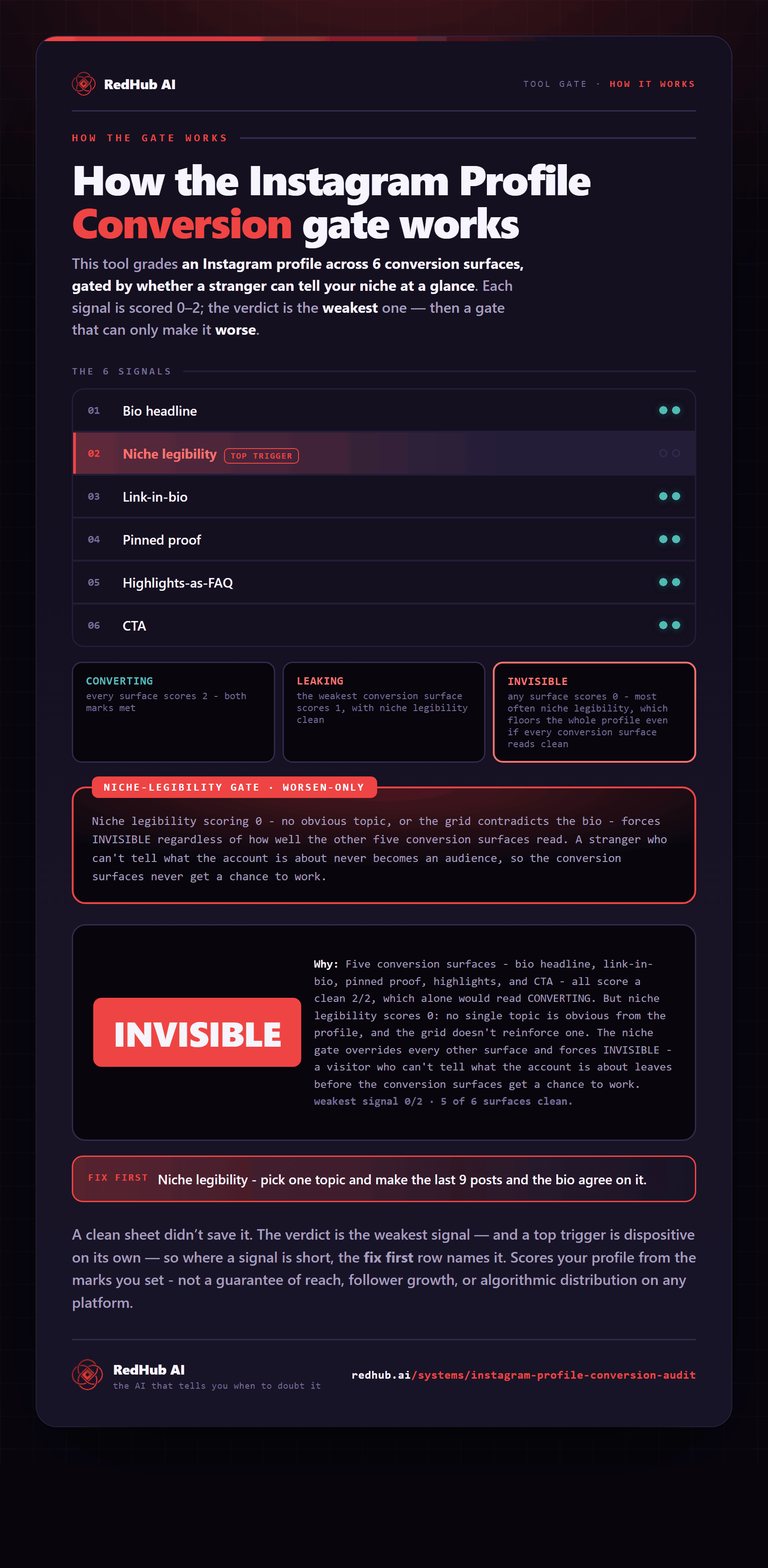
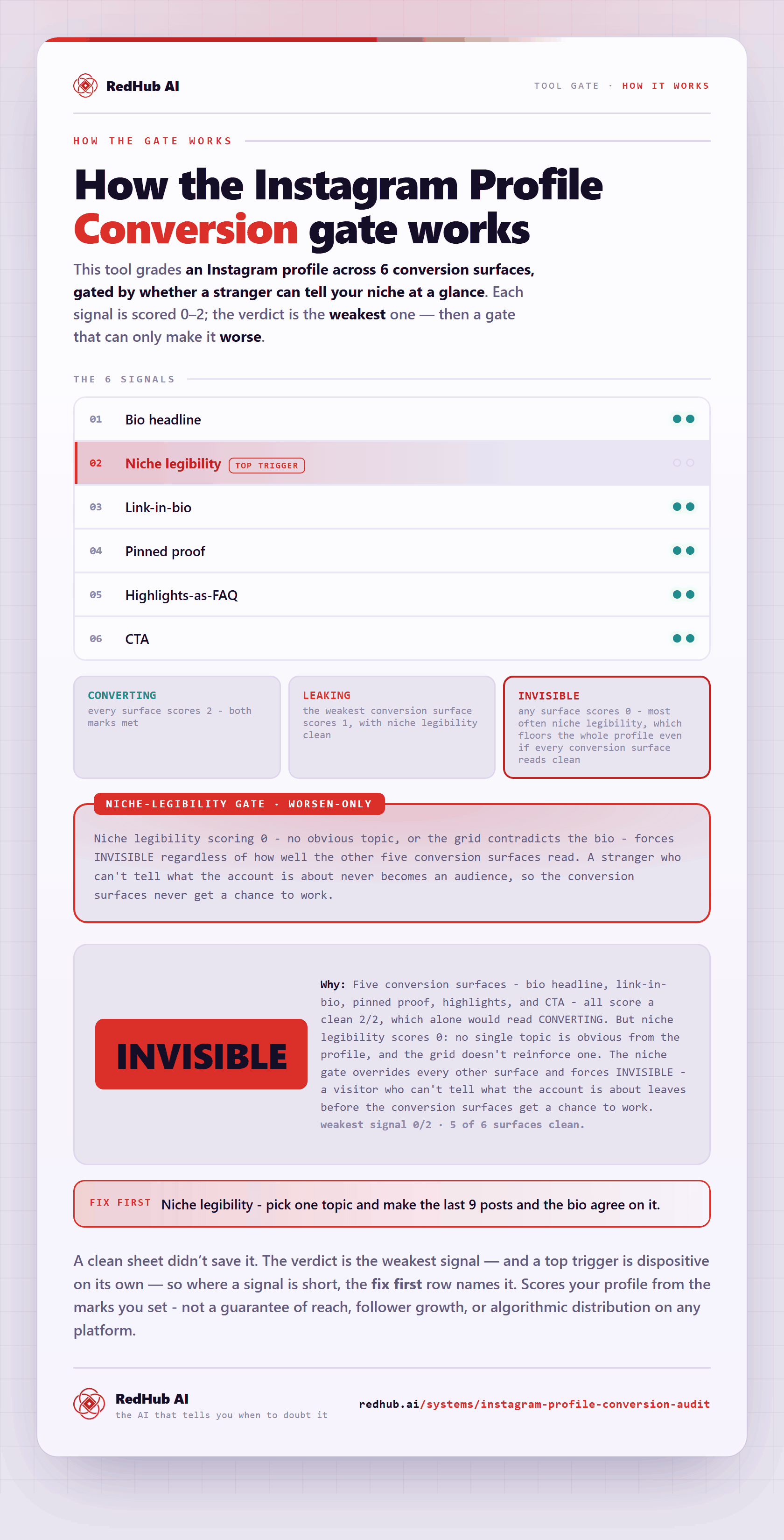
The gate this post refers to, drawn from the tool’s own logic. See the tool.