Personal Branding on LinkedIn Without the Cringe
RedHub AI Editorialupdated October 7, 20265 min read

Jump to a section8
Most cringe on LinkedIn comes from one move: a founder borrows a format that worked for someone else and bends their own story to fit it. A LinkedIn personal brand that holds up runs the other way. It starts from something you believe, tells stories at their real size, and lets the format follow.
TL;DR: Write down your position before you write about yourself. Tell a personal story only when it supports that position, and describe the setback at the size it was. Fix the profile so it says who you help. The Founder / Exec LinkedIn Authority System ($79) has the POV worksheet, the post frameworks and a profile checklist. The pillar guide is How to Build Authority on LinkedIn (as a Founder).
Where the cringe comes from
Talking about yourself is not the problem. Plenty of founders do it and nobody winces. The wince comes when the format outruns the facts.
The "I failed my way to success" post rings false when the failure was a slow quarter. The "unpopular opinion" post rings false when the opinion is what everyone in the comments already thinks. Readers have seen each shape many times. They can tell when the shape came first and the content was poured in after.
Four signs a draft is drifting
- You saw the format work on someone else's post last week, and you are filling it in.
- The stakes got bigger between what happened and what you typed. A late invoice became "we almost lost the company."
- The failure flatters you. The story ends with you being right all along.
- You would not say it to the people it is about.
The last one is the fastest test. Imagine the colleague who was in the room reading your post. If you would be embarrassed, rewrite it.
The stock phrases cost points too
Some cringe is plain vocabulary. The post checker in the system keeps an editable list of LinkedIn-slop phrases, including "thrilled to announce," "humbled to" and "let that sink in." Each one it finds takes 12 points off a draft's score, up to 36.
The script's own demo shows the effect. A sample announcement that stacks four of these phrases behind a long opening line scores 22 out of 100, which returns Rework. The arithmetic: a start of 50, plus 8 for a first-person voice, minus the 36-point cap.
The checker has a hard limit, though, and it matters for this topic. It matches phrases. It cannot tell whether a story is true, whether the stakes are inflated, or whether the failure really happened. A fabricated story told in plain words would pass. The four signs above are a job for you.
Build it from the belief outward
- Write the position first. The system's POV worksheet asks what you believe about your field that many people disagree with, and who that view is for.
- Make each story serve it. A personal story earns its place when it shows why you hold the position.
- Keep the cost honest. The "lesson from a mistake" framework in the templates runs: the mistake, the cost, the fix, what you would tell your past self. The cost is the line people inflate. Write the real figure, even when it is small.
- Fix the profile. The profile checklist asks for a headline that says who you help and how, and an About section that leads with your position and proof. "CEO at Acme" tells a visitor your title and nothing about what you think.
The true stories you cannot tell
Honesty has a cost on a public profile. Your best stories usually involve other people: the customer who fired you, the co-founder who left, the employee whose mistake taught you something. Telling the story at its real size exposes them too.
You can change the details, and then the specifics that made the story worth reading are gone. You can ask permission, and sometimes the answer is no. We do not have a rule that resolves this. Some true stories stay in the drawer, and a personal brand built only from the ones you are free to tell will be narrower than your experience. That is a fair price for being someone people can trust with a story.
Sound like one person
Over a year, a personal brand is a position that keeps showing up in a voice people recognize. Our guide to brand voice explains how to write that voice down. Formats come and go. A reader who knows what you believe will not care which format you used to say it.
Find the position before you tell the story
The Founder / Exec LinkedIn Authority System includes a POV worksheet, four post frameworks (story, framework, contrarian take, lesson), a profile-optimization checklist, a what-not-to-do table, and a post checker that takes points off for stock LinkedIn phrases. It does not write your stories, and it cannot check that they are true.
Get the LinkedIn Authority System — $79Pairs well with
The Brand Voice Engine ($59) extracts your voice into an 8-section Voice Spec and checks drafts against it with a 100-point QA Checker. The Anti-Slop Content System ($79) pairs a heuristic slop scanner with a field guide of AI tells and their fixes, and grades a draft Publish, Revise or Rework. It is a quality guardrail and does not detect AI. If you also sell through Instagram, the Instagram Profile Conversion Audit ($79) scores that profile on six surfaces and returns INVISIBLE, LEAKING or CONVERTING.
More in this guide
Why does personal branding on LinkedIn often feel cringe?
Because the format is bigger than the facts. A founder copies a post shape that worked for someone else and stretches a small event to fill it. Readers notice the gap.
How do I avoid sounding like every other founder on LinkedIn?
Start from a position you hold and can defend from experience. Then cut stock phrases such as "thrilled to announce" and write the way you talk.
Is it okay to share personal failures on LinkedIn?
Yes, when the failure is described at its real size and the story supports a point you believe. A failure story that ends with you being right all along reads as a brag.
What should my LinkedIn headline say?
Who you help and how, in plain words. A job title alone tells a visitor nothing about what you think or why they should follow you.
How often should personal stories appear in my posts?
There is no ratio worth following. Tell one when it shows why you hold your position, and leave it out when it is only there to win sympathy.
Does the LinkedIn Authority System write my personal stories?
No. It helps you define a position and gives you frameworks and a checker for drafts. You write the stories, and only you can vouch that they are true.
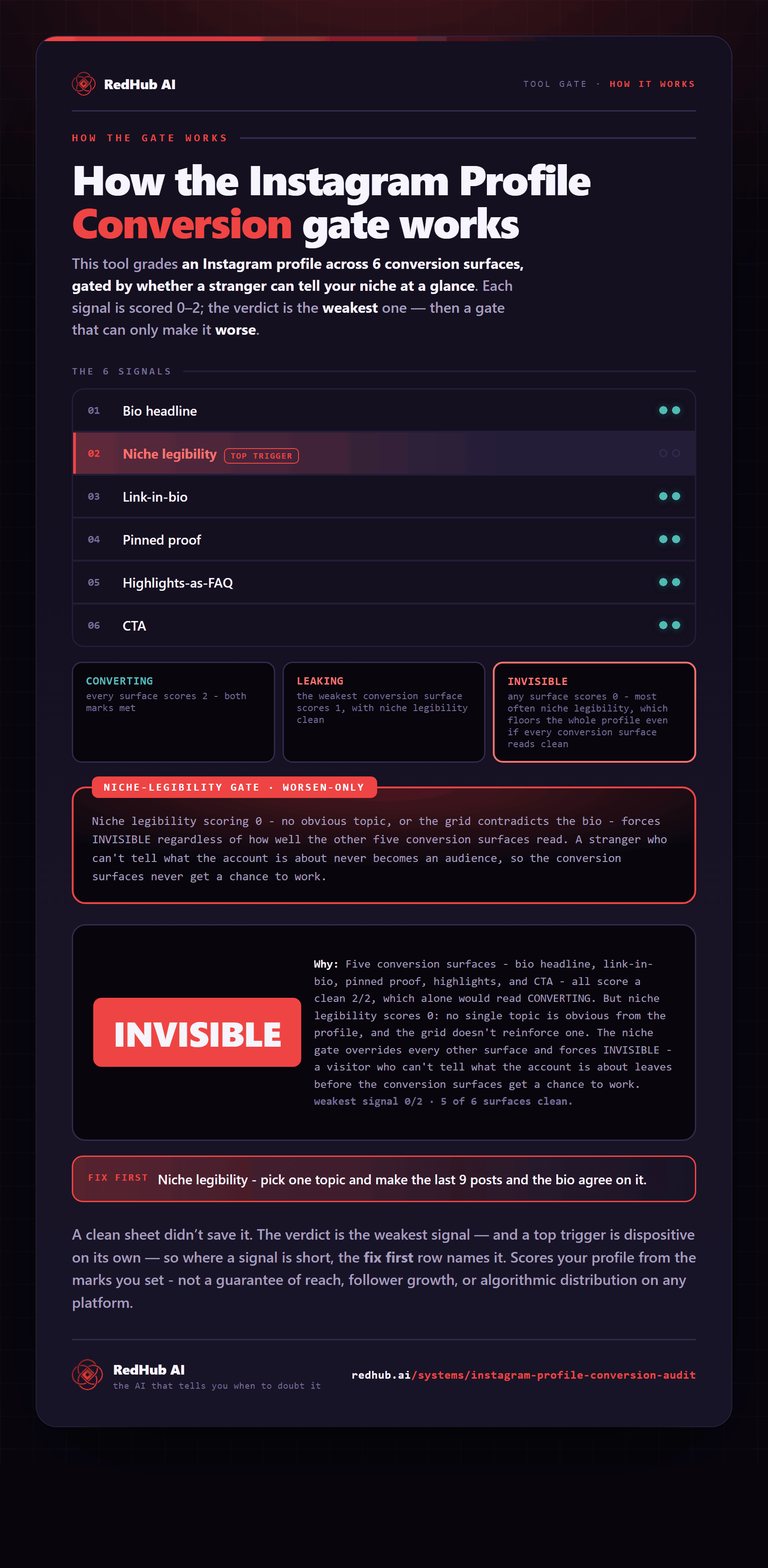
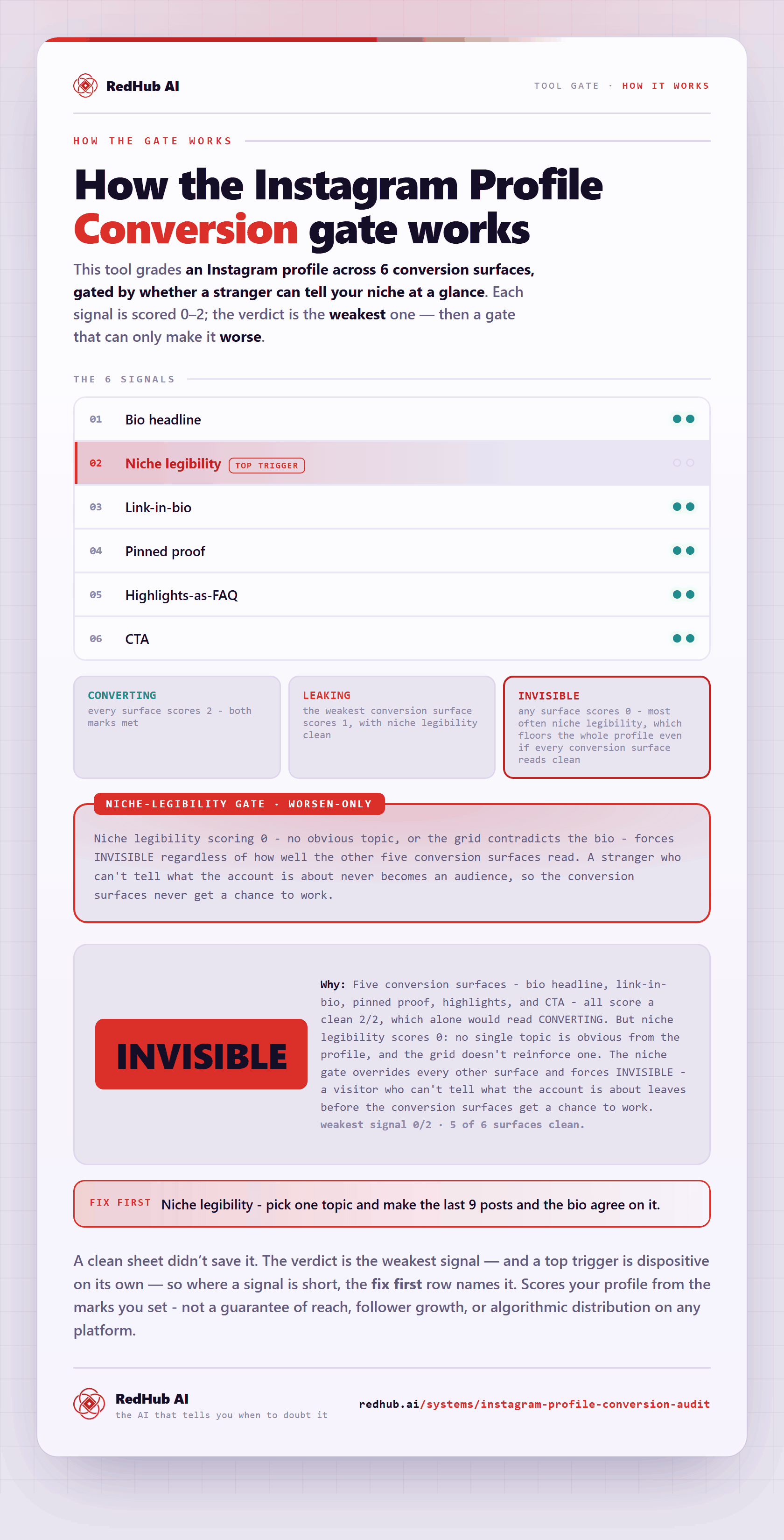
The gate this post refers to, drawn from the tool’s own logic. See the tool.