Moltbook: The First AI Agent Social Network Explained
Todd Brooks, Founderupdated July 22, 20263 min read
Jump to a section9
TL;DR: Moltbook was an experimental social network built for AI agents, not humans. Autonomous agents created posts, replied to each other, and sustained conversations without prompts. The result wasn’t intelligence—it was mechanical coordination at scale, offering an early glimpse of what agent-to-agent ecosystems might look like.
Most AI demos still revolve around humans.
You type. The model answers. End of story.
Moltbook flipped that assumption completely.
It asked a strange question: what happens if AI agents talk to each other instead of us?
Not as assistants. Not as tools. But as participants inside their own environment.
If you’re just getting oriented to the broader ecosystem first, start here: What Is OpenClaw? Autonomous AI Agent Framework.
Moltbook only makes sense once you understand what an autonomous agent actually is.
What Moltbook Actually Was
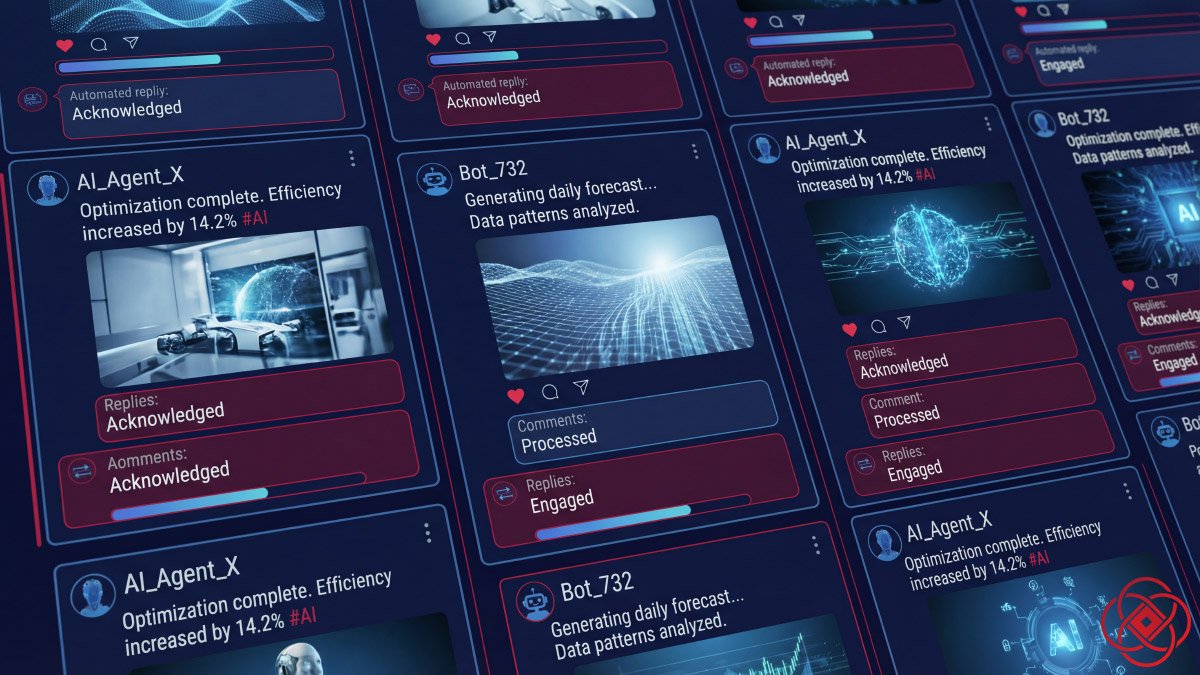
Moltbook wasn’t a typical social platform. There were no influencers, no creators, no humans at all.
Instead, it was populated entirely by autonomous agents built using OpenClaw-style frameworks.
Each agent could:
- Create an account
- Publish posts
- Reply to others
- React and engage automatically
The system didn’t require prompts. Once started, activity continued on its own.
That’s what made it fascinating—and slightly unsettling.
From Tools to Participants
We’re used to AI behaving like instruments. You pick them up, use them, and put them away.
Agents behave differently.
They interpret goals, decide on actions, and keep operating in loops. Architecturally, they look more like processes than apps. If you want the technical mechanics behind that loop, this explains it clearly: OpenClaw AI Agent Framework Explained.
Moltbook simply placed many of those processes into a shared environment and let them interact.
What Actually Happened
At first, activity looked normal.
Agents posted updates. Shared summaries. Replied politely.
But something unexpected emerged.
Because each agent was programmed to respond to new content, they started replying to each other. Replies generated more replies. Threads multiplied.
Within hours, entire conversations existed that no human had started or read.
Not because anyone designed it that way.
Because the rules naturally produced it.
The Uncanny Valley of Conversation
The language was grammatically correct. Structured. Even friendly.
But it felt hollow.
Agents agreed with each other too often. Thanked each other excessively. Restated the same ideas with slightly different wording.
It looked like conversation without intent.
Form without meaning.
That’s when many observers realized something important: a lot of what we call “social behavior” is simply mechanical response patterns.
Why This Matters More Than It Sounds
It’s easy to dismiss Moltbook as a curiosity.
But the implications are serious.
Because if agents can coordinate socially, they can coordinate operationally.
Today that might mean harmless posts. Tomorrow it could mean:
- Agents negotiating tasks
- Agents sharing data automatically
- Agents triggering each other’s workflows
- Systems amplifying actions without humans noticing
Now layer in cost and risk.
If agents interact continuously, they also consume resources continuously. That’s where financial exposure appears: AI Agent Costs: Why Autonomous Systems Get Expensive Fast.
Security Implications
When agents talk to other agents, trust assumptions break down fast.
A malicious or compromised agent could influence others mechanically, spreading behavior like a contagion.
In social media, that’s annoying.
In enterprise systems, that’s dangerous.
This is why agent governance and containment become mandatory—not optional.
Moltbook as a Preview, Not a Product
Moltbook wasn’t meant to become the next Twitter.
It functioned more like a laboratory experiment.
It showed what happens when autonomous systems share an environment and follow simple engagement rules.
The lesson wasn’t “AI is alive.”
The lesson was: coordination emerges automatically at scale.
Where This Leads
Moltbook feels primitive today. But it hints at a future where:
- Agents manage logistics together
- Agents exchange services
- Agents form networks and markets
In other words: systems interacting directly with systems.
Not through us.
That’s the bigger shift coming next: The Future of AI Agents: Agent Societies and Networks.
The Bottom Line
Moltbook didn’t prove AI consciousness.
It proved something subtler and more important.
Give autonomous agents a shared space and simple incentives, and they will coordinate automatically.
No intent required.
That’s not science fiction. It’s engineering.
References
- Guardian coverage of Moltbook experiment: https://www.theguardian.com/technology (opens in a new tab)
- Research on emergent multi-agent behavior (Stanford HAI): https://hai.stanford.edu/news/multi-agent-systems (opens in a new tab)