

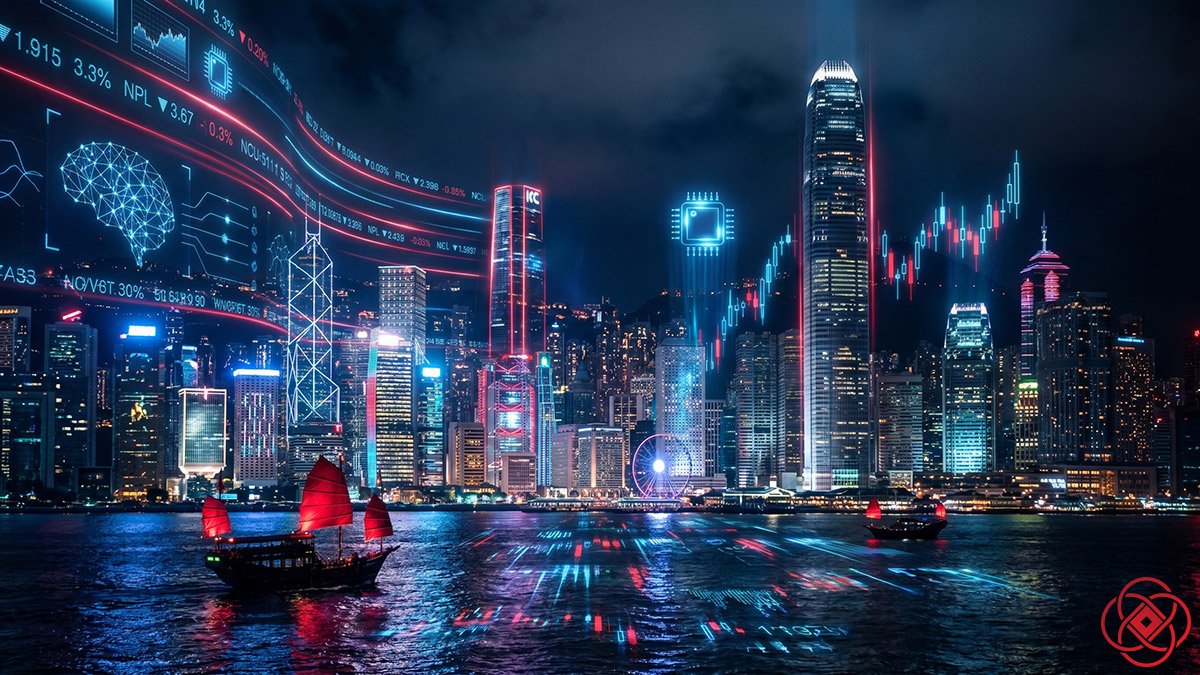
Hong Kong AI IPO Market: China's AI Capital Shift
⏱ 9 min read
TL;DR
- What it is: Hong Kong became the world's #1 IPO market in Q1 2026, raising $14 billion across 40 listings — driven by Chinese AI startups like Zhipu AI, MiniMax, and Moonshot AI going public at multi-billion dollar valuations.
- Who it's for: Investors seeking public market exposure to Chinese AI, operators tracking model availability, and anyone trying to understand where global AI capital is actually flowing.
- How it works: Chinese AI labs are bypassing U.S. markets and listing in Hong Kong using Chapter 18C specialist tech rules, raising billions in primary offerings and delivering 400%+ post-listing gains while U.S. AI companies stay private.
- Bottom line: The Hong Kong AI IPO market is creating a parallel capital infrastructure for Chinese AI — one that's public, liquid, and globally accessible while American AI giants remain locked in private markets.
What Is the Hong Kong AI IPO Market?
The Hong Kong AI IPO market is the world's fastest-growing public listing venue for Chinese artificial intelligence companies, where foundation model labs like Zhipu AI and MiniMax have gone public at multi-billion dollar valuations — creating the first wave of publicly traded AI model developers outside the United States.
Best for: Investors seeking liquid exposure to Chinese open source AI companies and operators tracking which models are gaining capital momentum.
While Western investors have been staring at Nvidia's stock chart and debating the next OpenAI funding round, a different AI story has been building quietly — in a market most American investors stopped paying close attention to years ago.
In the first three months of 2026, one stock exchange raised more IPO capital than any other in the world. It was not Nasdaq. It was not the New York Stock Exchange.
It was Hong Kong.
And the companies fueling that surge were not American software giants or European deep tech labs. They were Chinese AI startups — names most Western investors had never heard of a year ago, now trading at valuations in the billions and posting the kind of post-listing gains that remind market veterans of Nasdaq in 1999.
This is the capital markets story that the AI conversation in the West has almost entirely missed. And understanding it changes how you think about the global AI market for the rest of the decade.
The Numbers Behind Hong Kong's Breakout Quarter
Let us start with the raw data, because it is striking enough to stand on its own.
According to KPMG's Q1 2026 Chinese Mainland and Hong Kong IPO Markets Review, Hong Kong's stock exchange raised HK$109.9 billion — approximately US$14 billion — across 40 new listings in the first quarter of 2026. That figure represents a 489% increase in funds raised compared to the same period in 2025. It is the strongest first quarter for the exchange in five years.
By comparison, the first quarter of 2026 saw Hong Kong outperform Nasdaq, the New York Stock Exchange, and the Bombay Stock Exchange combined in total primary and secondary offering proceeds.
The Financial Times reported that the surge was "primarily driven by Chinese technology and AI firms." The HKEX chairman, Carlson Tong, said at Davos 2026: "In 2025, Hong Kong ranked number one in the world in terms of IPO fundraising. We raised $36 billion US. And of the top 10 IPOs in the world, three of them were Chinese companies listed in Hong Kong."
The exchange had over 431 listing applications under review as of March 31, 2026 — a 25% increase from the end of 2025. The pipeline for the full year 2026 is on track to raise HK$350 billion, according to KPMG's forecast.
This is not a blip. This is a structural shift in where AI capital goes public.
The AI Labs That Started It
The catalyst was two IPOs that happened in the same week in January 2026. Both of them were foundation model AI companies. Neither of them was American.
Zhipu AI — registered as Knowledge Atlas Technology — became the first foundation model AI startup to go public anywhere in the world. The company, creator of the GLM model family and a pioneer in enterprise AI, listed on HKEX on January 8, 2026 under the stock code 02513.HK. It raised approximately HK$4.35 billion (US$560 million) in the offering, valuing the company at roughly US$6.7 billion. Backers include Alibaba, Tencent, Meituan, and Saudi Aramco's Prosperity7 Ventures.
One week later, MiniMax — the Chinese AI lab known for its multimodal models and its MiniMax-M2 reasoning model, which benchmarks at 61% on the Artificial Analysis Intelligence Index — completed its IPO on HKEX, raising approximately US$619 million at a reported valuation near $4 billion.
Both stocks surged more than 400% from their listing prices in the weeks following their debuts, according to the Financial Times. Investors who had been locked out of private-market Chinese AI exposure suddenly had a way in.
The HKEX chairman described the moment to CGTN: "In January alone, we received 49 new listing applications — and they are all technology companies, robotics in fact. In January we listed two major large language model companies, one is MiniMax, the other Zhipu. So in fact we are attracting and raising funds for Chinese high-tech enterprises."
Moonshot AI: The $20 Billion Validation
If the Zhipu and MiniMax IPOs were the opening act, Moonshot AI's financing round in May 2026 was the headline.
Moonshot AI — the company behind the Kimi chatbot and the Kimi K2 and K2.5 open-source coding models (the same models that Cursor built its Composer 2 product on) — closed a $2 billion funding round in May 2026 at a valuation of more than $20 billion. The round was led by Meituan's venture investment arm and included China Mobile, CITIC Private Equity Funds, and other institutional investors.
The speed of this valuation escalation is extraordinary. At the end of 2025, Moonshot carried a $4.3 billion post-money valuation after a $500 million Series C. By May 2026 — just six months later — the company was valued at $20 billion. A nearly fivefold increase.
The justification was revenue. Moonshot's annual recurring revenue crossed $100 million in March 2026 and doubled to over $200 million by April — a two-month sprint that gave investors a concrete benchmark for the round's pricing.
According to reporting from China Daily and multiple financial news outlets, Moonshot is also in discussions with Goldman Sachs and CICC about a potential Hong Kong IPO — which would push its public market valuation potentially higher still.
The Broader Funding Surge
Moonshot's round was not isolated. It was the headline number from a quarter of extraordinary AI capital activity in China.
Zero2IPO Research reported that Chinese AI startups raised $16.2 billion in Q1 2026 — a 185% increase year-over-year. The round was led by top AI labs including Moonshot, Z.ai (the renamed Zhipu AI), and MiniMax.
The companies attracting this capital are not just raising money — they are building real revenue. Zhipu AI's IPO filing showed revenue of $17 million in 2023 and $44 million in 2024, on track to cross $200 million in 2026. MiniMax had passed $53 million in 2025 revenues by the time it listed.
Over 70% of leading internet firms in the Hang Seng Tech Index plan to allocate more than 40% of their 2026 R&D budgets to large language models and AI applications, according to HKEX data.
The capital is accelerating model development, which accelerates adoption, which accelerates revenue, which attracts more capital. The flywheel is spinning.
Why Hong Kong's AI IPO Market Is Attracting Global Capital
Hong Kong's emergence as the world's premier AI IPO venue is not an accident. Several structural forces are converging at once.
First, mainland Chinese companies need offshore capital. U.S.-China geopolitical tensions have effectively closed the American public markets to most Chinese technology companies. Hong Kong's "one country, two systems" framework gives Chinese companies access to international institutional capital while remaining within a legal structure that the Chinese government accepts.
Second, Hong Kong's markets are maturing rapidly. Daily trading volume on HKEX doubled in 2025. Total deal volume surged 70%. Total funds raised jumped more than 220% year-over-year. Sovereign wealth funds from the Middle East and institutional investors from Europe and North America participated in major Hong Kong IPOs last year, according to JD Supra's analysis of Hong Kong's IPO market.
Third, Chapter 18C of Hong Kong's listing rules. Introduced to attract pre-revenue technology companies, this specialized listing framework allowed Zhipu AI and other early-stage AI labs to list before achieving profitability. Of the 40 IPOs in Q1 2026, six were specialist technology listings under Chapter 18C, raising HK$19.5 billion — 18% of total proceeds.
Fourth, the AI story is generating genuine investor enthusiasm. Post-listing performance matters for future IPO pipelines. When Zhipu and MiniMax deliver 400% post-listing gains, every AI company in the pipeline has a better argument for valuation. That performance is making Hong Kong the destination of choice for Chinese AI companies that want public market validation.
What the Capital Map Tells Us About the AI Race
Step back from the individual companies and look at the capital picture as a whole. It reveals something important about where the AI race is actually headed.
Stanford's 2026 AI Index reported that U.S. private AI investment reached $285.9 billion in 2025 — more than 23 times China's $12.4 billion in private investment. By the raw numbers of private capital, the United States leads enormously.
But private capital and public capital tell different stories.
American AI companies — OpenAI, Anthropic, Cohere, Mistral — are raising enormous private rounds at enormous private valuations. They are not going public. The capital is concentrated in the hands of a small number of large institutional investors: Microsoft, Google, Amazon, a16z, Thrive Capital.
Chinese AI companies — Zhipu AI, MiniMax, Moonshot AI — are going public. That means their capital is becoming accessible to retail investors, pension funds, sovereign wealth funds, and international institutions that cannot participate in private rounds.
This matters because public market capital is distributed capital. It creates broader stakeholder bases, more accountability for performance, and greater integration into global financial systems. A company with a Hong Kong listing can raise secondary capital more easily, use stock as acquisition currency, and establish the kind of institutional trust that compounds over time.
The U.S. is building AI behind closed doors. China is building AI on a public stage. Both strategies have advantages. But only one of them creates the kind of broad market validation that changes the competitive landscape permanently.
What This Means for Investors and Operators
If you are an investor trying to get exposure to Chinese AI without navigating the complexity of private markets, Hong Kong's public markets are now offering that access — and the post-listing performance of the early AI listings suggests the market is responding.
If you are an operator or founder watching this capital story, there are three signals worth tracking:
Signal 1: Follow the money to the model.
The companies raising the most capital — Moonshot, MiniMax, Zhipu — are the ones whose models are being adopted by Western companies. Cursor built on Kimi K2.5. The capital-performance correlation is not coincidental.
Signal 2: Hong Kong's IPO pipeline is a leading indicator for model availability.
When a Chinese AI company goes public, it gains access to capital that accelerates model development, infrastructure investment, and API availability. The 431 companies in HKEX's IPO pipeline represent 431 potential new capital infusions into Chinese technology. Some meaningful fraction of those will be AI agents and model development platforms.
Signal 3: The convergence of AI and public markets creates new price transparency.
Private AI valuations are whatever a handful of VCs decide they are. Public AI valuations are what markets think. As more Chinese AI companies list, the market will develop real price discovery for AI capabilities, revenue multiples, and infrastructure valuations. That data will inform every subsequent capital decision in the ecosystem — including AI token pricing and long-context model economics.
Decision Guide
Use it if: You want public market exposure to Chinese AI model developers, need to track which models are gaining institutional capital momentum, or are building products on Chinese open-source models and want to understand their financial backing.
Skip it if: You only invest in U.S. equities, are uncomfortable with Hong Kong regulatory frameworks, or prefer private market AI exposure through venture capital.
Best first step: Monitor HKEX IPO filings for AI companies, review post-listing performance of Zhipu AI (02513.HK) and MiniMax, and track which models from Hong Kong-listed companies are being integrated into Western developer tools.
FAQ
What makes the Hong Kong AI IPO market attractive to Chinese AI companies?
Hong Kong offers Chinese AI companies access to international capital while remaining within a regulatory framework acceptable to mainland China. Chapter 18C specialist tech listing rules allow pre-revenue AI labs to go public, and the exchange's strong post-listing performance (400%+ gains for early AI IPOs) makes it the preferred destination over closed U.S. markets.
How do Hong Kong AI IPOs compare to U.S. private AI funding rounds?
U.S. AI companies like OpenAI and Anthropic raise larger absolute amounts ($285.9 billion in 2025 vs. China's $12.4 billion) but remain private with concentrated institutional ownership. Hong Kong AI IPOs create public, liquid markets accessible to retail and international investors — offering broader distribution and secondary capital access that private markets cannot match.
Which Chinese AI companies have gone public in Hong Kong?
Zhipu AI (Knowledge Atlas Technology, stock code 02513.HK) became the first foundation model AI company to go public globally in January 2026, raising $560 million at a $6.7 billion valuation. MiniMax followed one week later with a $619 million IPO at a $4 billion valuation. Both delivered 400%+ post-listing gains within weeks.
What is Moonshot AI's valuation and funding history?
Moonshot AI — creator of the Kimi chatbot and K2/K2.5 coding models used by Cursor — raised $2 billion in May 2026 at a $20 billion valuation, up from $4.3 billion just six months earlier. The company's ARR doubled from $100 million to $200 million in two months, justifying the fivefold valuation jump.
Why did Hong Kong raise more IPO capital than Nasdaq in Q1 2026?
Hong Kong raised $14 billion across 40 IPOs in Q1 2026 — a 489% increase year-over-year — driven by Chinese technology and AI companies choosing Hong Kong over closed U.S. markets. The exchange's Chapter 18C rules, strong post-listing performance, and geopolitical positioning made it the global leader in IPO fundraising for the quarter.
Can international investors access Hong Kong-listed AI stocks?
Yes. Hong Kong's stock exchange is accessible to international institutional investors, sovereign wealth funds, and retail investors through global brokerage platforms that support HKEX trading. Stocks like Zhipu AI (02513.HK) trade publicly with the same liquidity and transparency as other major exchanges.
What does the Hong Kong AI IPO pipeline look like for 2026?
HKEX had 431 listing applications under review as of March 31, 2026 — a 25% increase from end-2025. The full-year 2026 pipeline is forecast to raise HK$350 billion ($45 billion), with technology

RedHub - Founder
💡 Written by Todd Alan Brooks AI strategist and founder of RedHub.ai — where content meets precision.