AI Slop: What It Is and How to Stop Writing It
RedHub AI Editorialupdated October 4, 20267 min read

Jump to a section8
AI slop is low-quality content produced in bulk with AI, and in writing it has a recognizable shape: sentences that are correct, confident and empty. Merriam-Webster's editors chose slop as their 2025 Word of the Year (opens in a new tab) and defined it as "digital content of low quality that is produced usually in quantity by means of artificial intelligence." This guide covers the written kind. It explains what slop is on the page, why a process produces it, and the edit that takes it out. The image version has its own causes, covered in why AI images all look the same.
TL;DR: Written slop is a draft nobody made decisions about. Nobody took a side, nobody checked a fact, and nobody added a detail only they knew. It comes from the process, not the tool, so a human draft can be slop and an AI-assisted one can be fine. Score the draft on the five SPARK marks, fix the weakest one, and score it again. The Anti-Slop Content System ($79) ships the scorecard, a heuristic scanner and a field guide of tells. For the hands-on edit, start with how to make AI content sound human.
What the dictionary definition covers, and what it leaves out
Merriam-Webster announced its pick on December 14, 2025. Its list of what the flood of slop included that year runs from "absurd videos" and "off-kilter advertising images" to "junky AI-written books" and "'workslop' reports that waste coworkers' time." The definition is about quality and quantity. It says nothing about how to recognize the written kind before you publish it.
On the page, slop reads like this. A section opens with "It's important to note that" and then notes nothing. "Many businesses" stands in for the one business the writer could have named. Every sentence runs about the same length. A claim arrives with total confidence and no source. You reach the end of a paragraph and you have learned nothing you did not know at the start.
None of those problems needs a machine. A tired person on deadline writes every one of them. What a model adds is speed: it can produce that paragraph a thousand times before lunch.
Judge the text, not the author
RedHub does not claim to detect AI writing, and this guide will not teach you to. Detection fails in both directions, which is the subject of why AI detectors don't work. The lists of tells that circulate online, from em dashes to the word "delve," are cheap to strip. Anyone can remove them in one pass, including a model told to.
So the useful definition of slop is about the draft, not where it came from. Slop is a draft with no decisions in it. A writer who decides what they think, which fact proves it and which example only they have will not produce slop, with or without a model. A writer who skips those decisions will, with or without one. The signs people point to are better read as places where a decision is missing.
Three habits that produce it
- A prompt with no material in it. "Write a blog post about onboarding" gives the model nothing but the topic, so it returns the average of everything it has read on the topic. Average is the definition of forgettable.
- No written voice. Without a spec for how you sound, every draft drifts toward how everyone sounds. Our guide to keeping AI writing on brand covers what goes in that spec.
- Publishing the first draft. This one does the most damage, because it skips the only step where a person adds what the model could not know.
The prompt pack in the Anti-Slop Content System goes after the third habit with one rule. Wherever a draft needs a real number, name, story or proof point, the model writes a [FILL: ...] marker instead of inventing one. The draft comes back with holes in it on purpose, and only you can fill them.
SPARK: a scorecard for the missing decisions
SPARK turns "does this read like a person?" into five ratings and a verdict. In the kit's scorecard workbook, you rate a draft from 0 to 5 on each mark. Each mark carries a weight, and the weighted points add up to a score out of 100.
| Mark | What a 5 looks like | Weight |
|---|---|---|
| Specific | Concrete names, numbers and examples, not vague generalities | 25 |
| Point of view | A clear opinion or angle, not hedged, balanced mush | 20 |
| Authentic voice | Sounds like a real person or brand, free of cliché tells | 25 |
| Real | Every claim is true and supported, with no overclaiming | 10 |
| Kinetic structure | Varied sentence and paragraph rhythm, no templated sameness | 20 |
A score of 80 or more reads Publish, 60 to 79 reads Revise, and under 60 reads Rework. The workbook ships with a sample rated 3, 3, 3, 4 and 4. That works out to 66, a Revise. Notice what the weights say about where slop lives. Specific and Authentic voice carry half the score between them, and those are the two marks a model is least able to fill on its own.
Where the scorecard is not worth the time
Scoring every draft has a cost, and not every draft earns it. An internal status update read by three colleagues does not need five ratings and a verdict. Neither does a first-pass outline nobody outside the team will see. The return comes on writing that carries your name to someone deciding whether to trust you: a sales page, a customer email, a post you want cited.
The trade-off is real, and we cannot draw the line for your team. A useful test: if a reader would judge your company by this piece, score it. If they would never see it, skip the scorecard and spend the time on the pieces they will.
The edit, in four moves
- Score the raw draft on all five marks before changing a word.
- Fill every
[FILL: ...]marker with a fact you can stand behind, or cut the sentence that needed it. - Fix the lowest mark first: add a stance where the draft hedges, or vary the rhythm where it marches.
- Score it again. Ship on Publish, edit again on Revise, and send a Rework back to drafting.
The two clusters that go furthest on this are making AI content sound human, which works one draft at a time, and keeping AI content quality high at scale, which covers the same gate for a team publishing every week.
Catch the slop before it publishes
The Anti-Slop Content System is a heuristic slop scanner (slopcheck.py), the SPARK scorecard with a Publish / Revise / Rework verdict, a field guide of AI tells with fixes, brand-voice prompts and a playbook. A quality guardrail, not an AI detector.
Get the Anti-Slop Content System — $79Pairs well with
The Brand Voice Engine ($59) codifies your voice into an 8-section Voice Spec and scores drafts on a 100-point QA Checker, so Authentic voice has something written to measure against. The AI Deliverable Claim & Citation Defensibility Gate ($79) grades a finished deliverable claim by claim and returns DEFENSIBLE, VERIFY FIRST or DO NOT SHIP, which goes deeper on the Real mark than any scorecard row can. For the image side of slop, the Distinctive AI Visuals Kit ($79) pairs twelve ownable style recipes with a worksheet that scores each asset On-system, Tweak or Off-brand.
More in this guide
What does "AI slop" mean?
Merriam-Webster, which named slop its 2025 Word of the Year, defines it as digital content of low quality produced usually in quantity by means of AI. In writing, it means correct, confident text with no stance, no checked fact and no detail only the writer had.
Is AI slop the same as AI-generated content?
No. AI-assisted writing can be specific, opinionated and true. Slop is what ships when nobody makes those decisions, and a human writer on deadline can produce it without any model involved.
Can I use an AI detector to check for slop?
No. A detector guesses at how text was produced, not whether it is worth reading, and detectors misfire on human writing often enough that a score proves nothing. Grade the draft itself instead.
What is the SPARK framework?
SPARK rates a draft from 0 to 5 on five marks: Specific, Point of view, Authentic voice, Real and Kinetic structure. In the Anti-Slop Content System's scorecard, the weighted total out of 100 returns Publish at 80 or more, Revise at 60 to 79 and Rework under 60.
Is AI slop the same problem in images and writing?
The root is similar: a vague request returns the average output. The fixes differ. Images need ownable style choices repeated on purpose, covered in our post on the AI slop look. Writing needs facts, a stance and a voice only the writer can supply.
Does fixing AI slop mean writing everything by hand?
No. Let AI draft, outline and produce variations, then make the decisions it cannot: what you think, which fact proves it, and which example only you have. The goal is a draft worth reading, not a draft no model touched.
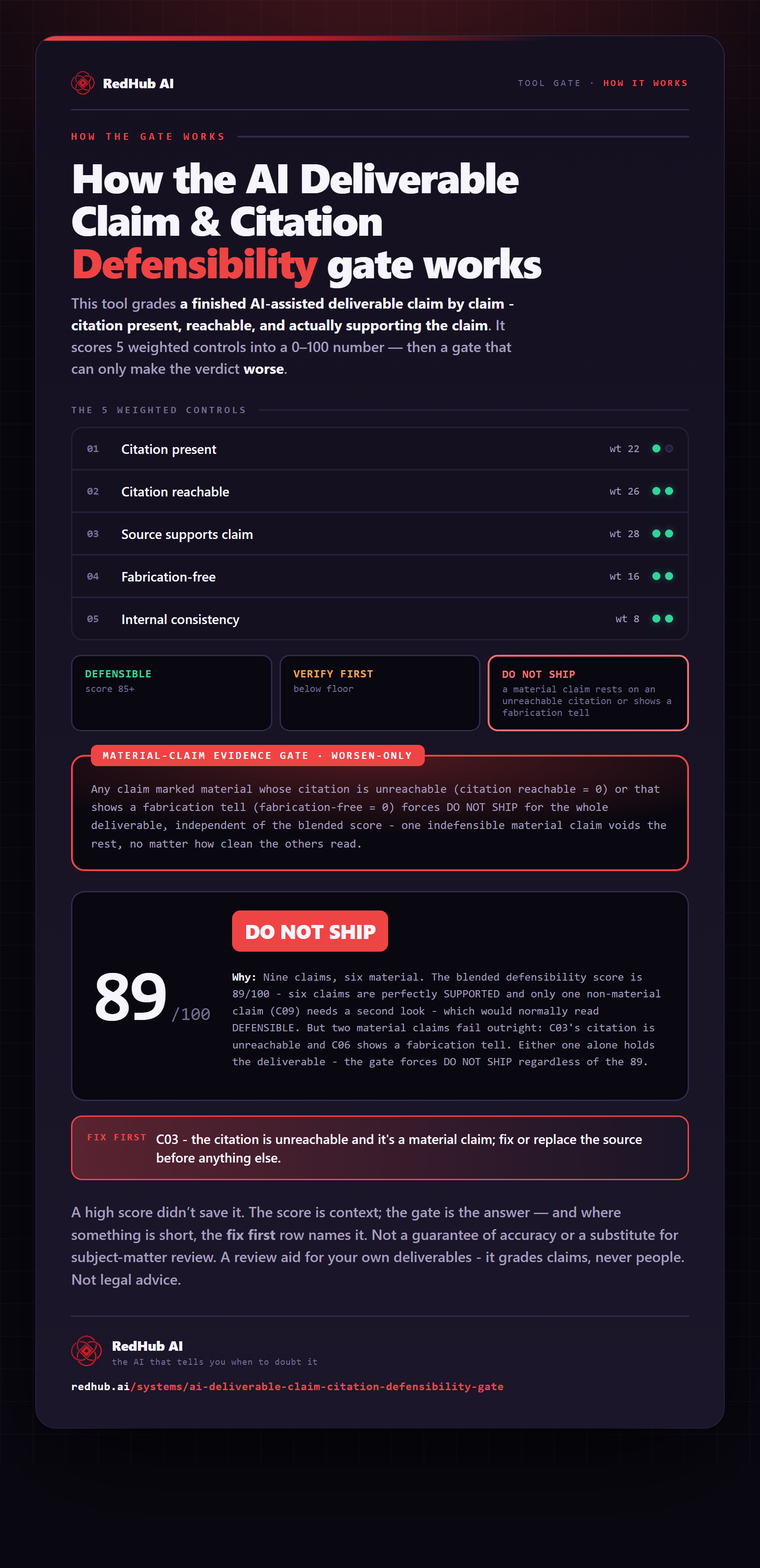
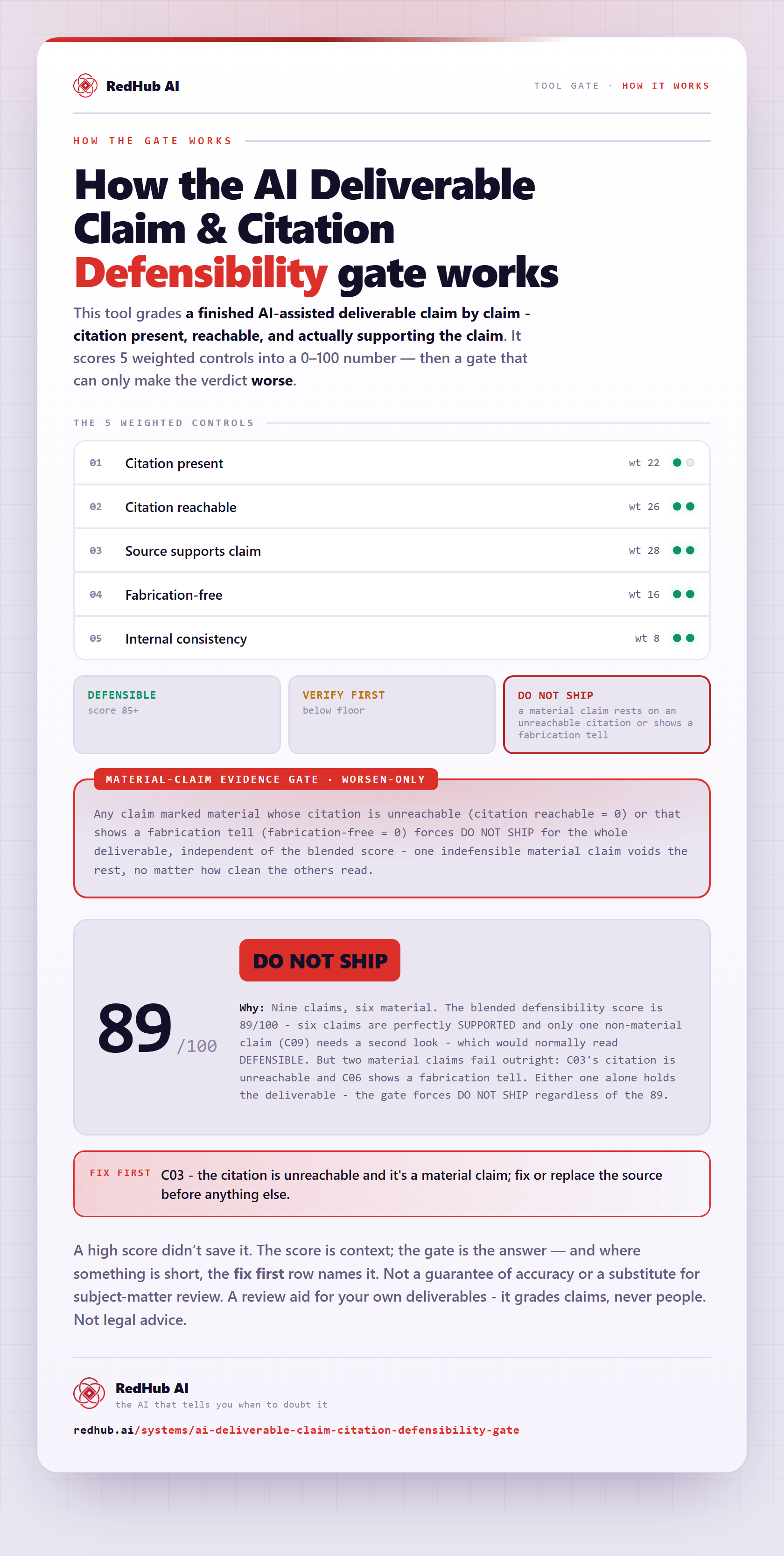
The gate this post refers to, drawn from the tool’s own logic. See the tool.