SOP Templates vs AI: Why a Template Alone Doesn't Get Used
RedHub AI Editorialupdated October 4, 20265 min read

Jump to a section8
The SOP template below has ten fields, and you can paste it into Google Docs, Notion or your wiki today. It is free and it works. What it can't do is tell you what goes in the fields, and that is where most template projects stop: the blank Steps field, filled from memory, is the same hard job it always was. Use the template for the shape, and fill the steps from a recording of the real task.
TL;DR: Copy the ten-field template in this post: name, trigger, owner, time to complete, tools and locations, steps, decision points, escalation, definition of done, and last verified. The structure is the easy part. Getting the real steps down, in order, with the exceptions, is the hard part, and a recording of the task does that better than memory. The AI-First SOP Engine ($79) drafts a filled SOP in a similar format from your transcript, inside Claude.
The SOP template: copy these ten fields
- SOP name and ID: ______
- Trigger (the event that starts it): ______
- Owner (one role, not "the team"): ______
- Time to complete: ______
- Tools and locations (exact links or folder paths): ______
- Steps (numbered, one action each): ______
- Decision points (if this, do that): ______
- Escalation (when to stop, who to ask, how): ______
- Definition of done (what proves it's finished): ______
- Last verified (date, by whom, against which recording): ______
A filled-in example
This version is filled in for a small agency's new-client kickoff. The details are made up to show how specific each field needs to be.
| Field | Example entry |
|---|---|
| Name and ID | SOP-07: New client kickoff |
| Trigger | A signed contract lands in Drive > Clients > Signed |
| Owner | Account manager |
| Time to complete | About 40 minutes, spread over two days |
| Tools and locations | Drive > Clients > _Template; Gmail template "Kickoff-01"; the CRM's Onboarding pipeline |
| Steps | 1. Copy the _Template folder and rename it with the client's name. 2. Move the CRM deal to Onboarding. 3. Send "Kickoff-01" to the signer. 4. Book the kickoff call. 5. Send invoice #1. |
| Decision points | If the signer is not the billing contact, send step 3 to both. If the client wants the call within 48 hours, offer the account lead's open slots first. |
| Escalation | No reply in 3 business days: post the client name in the #clients channel and tag the account lead. |
| Definition of done | Kickoff call on the calendar and invoice #1 sent |
| Last verified | The account lead, against the recording of the most recent kickoff |
For more filled examples, RedHub's free Founder's AI SOP Library has 14 operating procedures you can copy, with no signup.
Templates solve the easy problem
Search "SOP template" and you'll find dozens of free ones: a title, an owner field, a numbered list, maybe a revision table. Most are fine. A template solves formatting, and formatting was never the hard part. The hard part is getting the steps out of your head and onto the page accurately, in order, with the exceptions included, and a template does nothing for that.
That is where the folder of half-filled templates comes from. Each one was downloaded with good intentions, opened once, and abandoned at the Steps field. The template moved the work from "find a format" to "rebuild the process from memory," which was the hard task all along.
A filled field is not a useful field
A template checks that something is written in each box. It can't check whether it helps. "Escalation: ask a manager" fills the box and strands the reader at 6 p.m. when no manager is online. "Definition of done: client is onboarded" fills the box and settles nothing. A complete template can still be useless, and it looks finished, which makes it harder to catch than a blank one.
The strict version of this check exists for SOPs an AI agent will run: RedHub's Agent-Executable SOP Readiness Gate marks an SOP NOT EXECUTABLE if any step lacks a checkable success criterion or a stop and escalation path. For an SOP a person runs, there is no clean line. How much detail is enough depends on who reads it, and a field that's plenty for a five-year employee can leave a new contractor guessing.
Template vs AI-first: what each gets you
| Blank template | AI-first (from a recording) | |
|---|---|---|
| What it provides | Structure only | Structure, plus a draft of the step content |
| Where the effort goes | Rebuilding the process from memory | Doing the task once, narrated, then reviewing |
| Exceptions | Only the ones you remember to add | The ones that happened during the recording |
| Where it stalls | The Steps field | The review, if nobody owns it |
How to fill the template from a recording
- Record yourself doing the task, narrated, before you open the template
- Have AI structure the transcript into the template's fields
- Check every step against the recording, and fix what it got wrong
- Rewrite any vague field that would pass the template and still leave a new hire guessing
- Fill in Last verified with today's date and the reviewer's name
Skip the blank Steps field
Instead of filling the Steps field from memory, paste a transcript into Claude and run the chain. The Engine drafts the SOP in its own format: trigger, owner, time to complete, numbered steps with decision branches, escalation criteria and KPI markers. Twelve worked example SOPs ship with it, alongside the Claude skill and automation map it builds from the same transcript.
Build the SOP from a recording — $79Pairs well with
The Agent-Executable SOP Readiness Gate ($79) is the field-by-field check for SOPs an agent will run, returning RUNNABLE, TIGHTEN or NOT EXECUTABLE. The Agency Operators Skills Pack ($89) gives agency teams six Claude skills, including client onboarding and weekly status reports, that sit next to the SOPs you write. If you're weighing whether a documented process should go to an AI agent at all, the Agent Use-Case Fit & Proof-of-Value Gate ($99) scores the proposal and returns BUILD, PILOT FIRST or DON'T BUILD.
More in this guide
What fields should an SOP template have?
At minimum: a name, a trigger, an owner, the time it takes, the tools and where they live, numbered steps, decision points, an escalation rule, a definition of done, and the date someone last checked it against the real task.
Isn't a free SOP template good enough for a small business?
The template is fine. The bottleneck is filling it in from memory, which is just as hard with a free template as with a paid one. Fill the steps from a recording of the task instead.
Why do template-based SOP projects stall?
Because the template only provides the format. The real work, remembering and writing every step in order with the exceptions, is unchanged, and that is where most people get stuck.
Can I use my own template with a recording-based tool?
Yes. Have the AI draft into its default format, then move the content into your company's template, or paste your field list in and ask it to fill those fields instead.
How do I know a filled-in SOP is good enough?
Give it to someone who has never done the task and watch where they stop or ask a question. Each stop points to a field that is filled in but not useful yet.
How often should I update an SOP?
Whenever the process or a tool in it changes, and before you hand it to someone new. The Last verified field shows at a glance how stale it might be.
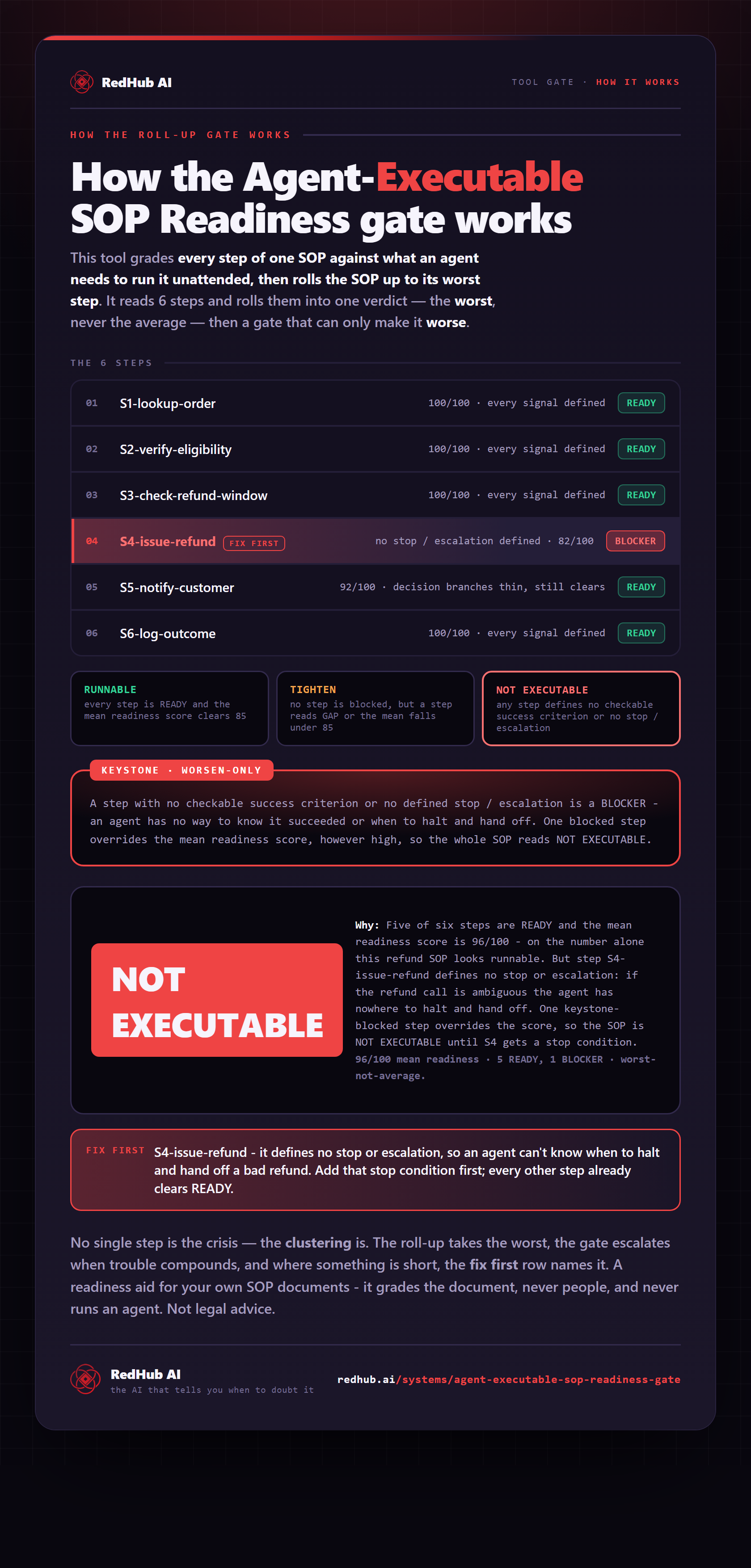
The gate this post refers to, drawn from the tool’s own logic. See the tool.