How to Turn SOPs Into Real Delegation (So You Can Hand Work Off)
RedHub AI Editorialupdated October 4, 20265 min read
Jump to a section9
Three things have to be true before you can delegate with SOPs, and the document can't make any of them true on its own: someone named owns the task, everyone agrees what "done" looks like, and you have checked the new owner's first run. Before that, an SOP is a manual for a job nobody has taken over yet. Handoffs that bounce back to you usually bounce at one of those three points, well after the writing was finished.
TL;DR: A written SOP removes one blocker: there is now something to follow. Delegation also needs a named owner, a definition of done, an escalation rule and a first run you check against what you expected. Hand over the decisions inside the steps as well, or every fork routes back to you. The AI-First SOP Engine ($79) gets you an accurate SOP from a recording; running the handoff is still your job.
Why the task comes back to you
You finally write the SOP, hand it over, and the task still lands back on your desk: wrong, half-done, or with a question about whether a 10% discount needs your sign-off. The document existing doesn't mean the delegation worked. A written SOP fixes one problem, that nobody had anything to follow. It leaves the others in place: unclear ownership, no shared idea of done, and no check on the first few runs.
What a delegation-ready SOP adds
- A named owner: the person doing the task, not "the team" or "whoever's free"
- A definition of done: what confirms the task is finished, so there's nothing ambiguous to escalate back to you
- Documented decision points: what to do at each fork, so the new owner doesn't have to guess or interrupt you
- An escalation rule: exactly when to ask for help instead of guessing, and who to ask
- A checked first run: the new owner runs it once while you review the output, before it is fully off your plate
The steps moved. Did the decisions?
An SOP can be complete and still keep you in the loop. If step 4 says "check with me before issuing a refund," you have handed over the typing and kept the decision. The new owner becomes a messenger between the customer and you, and our post on why delegation fails describes that middleman in detail.
The fix is a threshold written into the step itself. For example: refunds up to $200, approve and log them; above $200, send them to the owner with the order number. Where to set that line is something no SOP can tell you. Set it too low and nothing moves without you. Set it too high and you hear about the mistake from the customer. Starting low and raising it after a few clean weeks trades some speed for some safety, and whether that trade is right depends on what one wrong call costs your business.
The first handoff is a checkpoint
Don't hand off an SOP and disappear. The first time someone new runs the process, compare the result with what you expected. The point isn't to hover. It's to find the gap between what the SOP says and what the person understood from it. Most SOPs have at least one step that reads clearly to the person who wrote it and ambiguously to everyone else, and the first run exposes it.
Where a Claude skill fits
A written SOP is what a person follows. A Claude skill built from the same checked SOP gives Claude the same instructions every time it runs the task. That reduces drift between runs without removing it, so treat the skill like a new hire: check its first runs before you stop looking. Our explainer on Claude Agent Skills covers what a skill is and where it loads.
Not every step goes to the same place
The automation map from the AI-First SOP Engine lays out the flows each step could trigger in n8n, Zapier, Make, GHL or HubSpot. It doesn't rank which steps should be automated, so you sort them. Rule-based steps are automation candidates. Steps that need judgment but not yours go to a person. A few stay with you for now. Our guides on delegate, automate or eliminate and what to delegate first walk through the sorting.
Re-check before every new handoff
If the process has changed since the SOP was written, such as a new tool, a new step or a new exception, the document is now the thing that's wrong. A new hire who follows it faithfully will make the same mistake every time until someone catches it. Re-check the SOP against the current process before each new handoff, and update the date it was last verified.
Get the SOP right before you hand it over
Every SOP the Engine drafts from your transcript carries an owner, decision branches and escalation criteria, and the same transcript yields a Claude skill and an automation map of the flows it could trigger. It runs inside Claude. The thresholds and the first-run check are yours to set.
Build the SOP for your next handoff — $79Pairs well with
If most of what you hand off arrives by email, the Inbox-to-Done Engine ($129) triages each thread as REPLY NOW, DELEGATE, SCHEDULE or ARCHIVE, with a delegate gate that routes off your pile what matters but isn't yours. Once several areas are delegated, the Operating Cadence Engine ($299) grades each one against the target and floor you set and rolls the week up to STEADY, NEEDS ATTENTION or OFF PLAN, so you can see what slipped without checking every task. And if the new owner is an AI agent rather than a person, the AI Agent Go-Live Readiness Gate ($79) rates five operational controls and returns READY, FIX or DO NOT DEPLOY before you switch it on.
More in this guide
Why does a task still come back to me after I write the SOP?
Usually because the SOP is missing a definition of done, an escalation rule or a documented decision point. The document exists, but it hasn't removed every reason the new owner has to check back with you.
Should I check the first time someone runs a new SOP?
Yes. The first run is where you find the step that reads clearly to you and ambiguously to someone without your context. Catching it there costs far less than catching it after a real mistake.
How do I stop every decision routing back to me?
Write the decision into the step with a threshold, such as a dollar limit the new owner can approve alone, and name who handles anything above it. Raise the limit as the runs stay clean.
Should every step be automated once it's documented?
No. Some steps are automation candidates, some suit a team member, and some still need your judgment. An automation map shows how a step could be automated; whether it should be is your call.
How often should an SOP be re-checked?
Whenever the process changes, and before each new handoff if time has passed. A stale SOP is worse than none, because a new hire will follow it faithfully into the same mistake.
Does a documented process guarantee the delegation will work?
No. Documentation is a prerequisite. Delegation also needs a named owner, a definition of done and a checked first run before it can run without you.
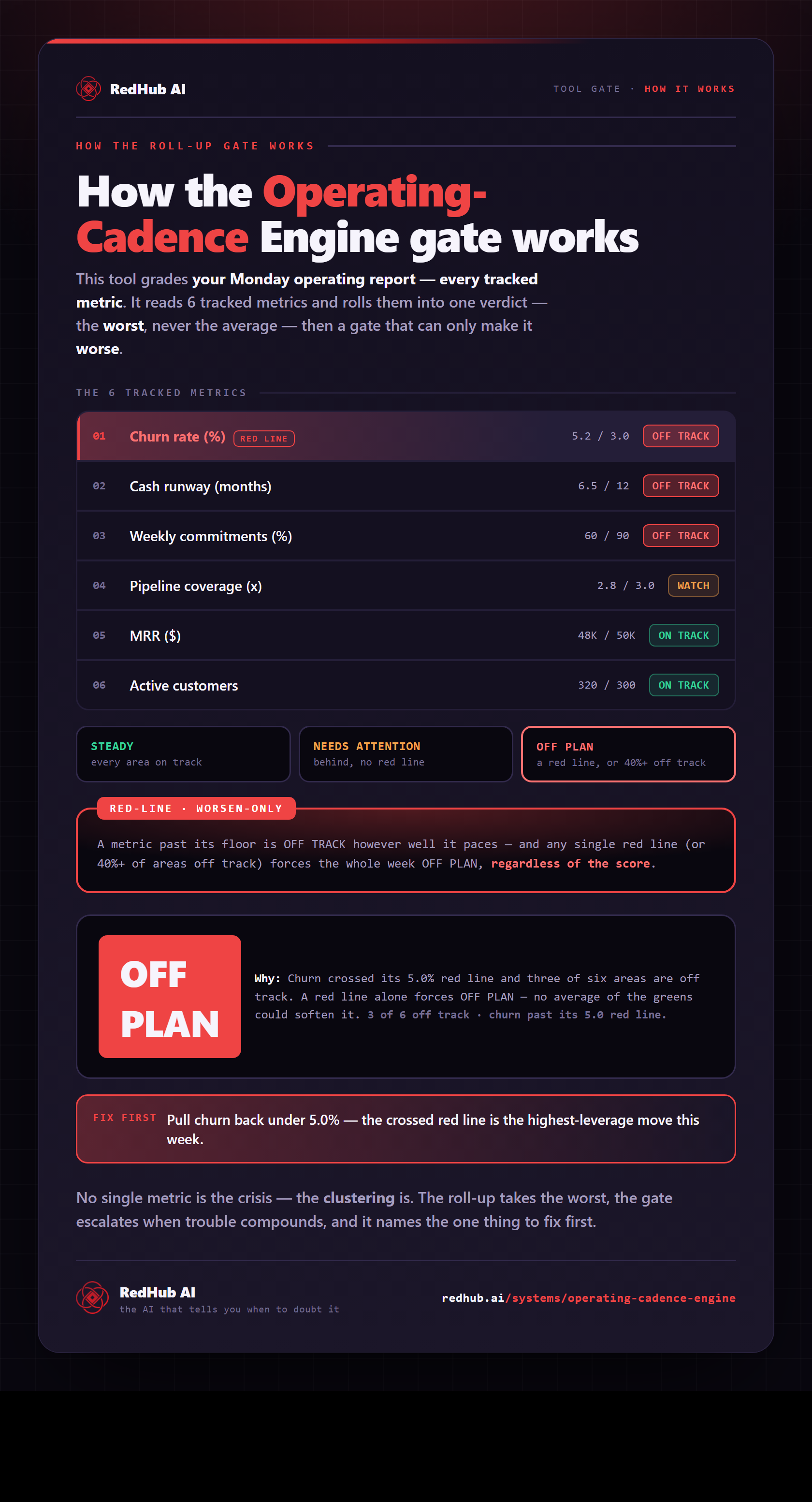
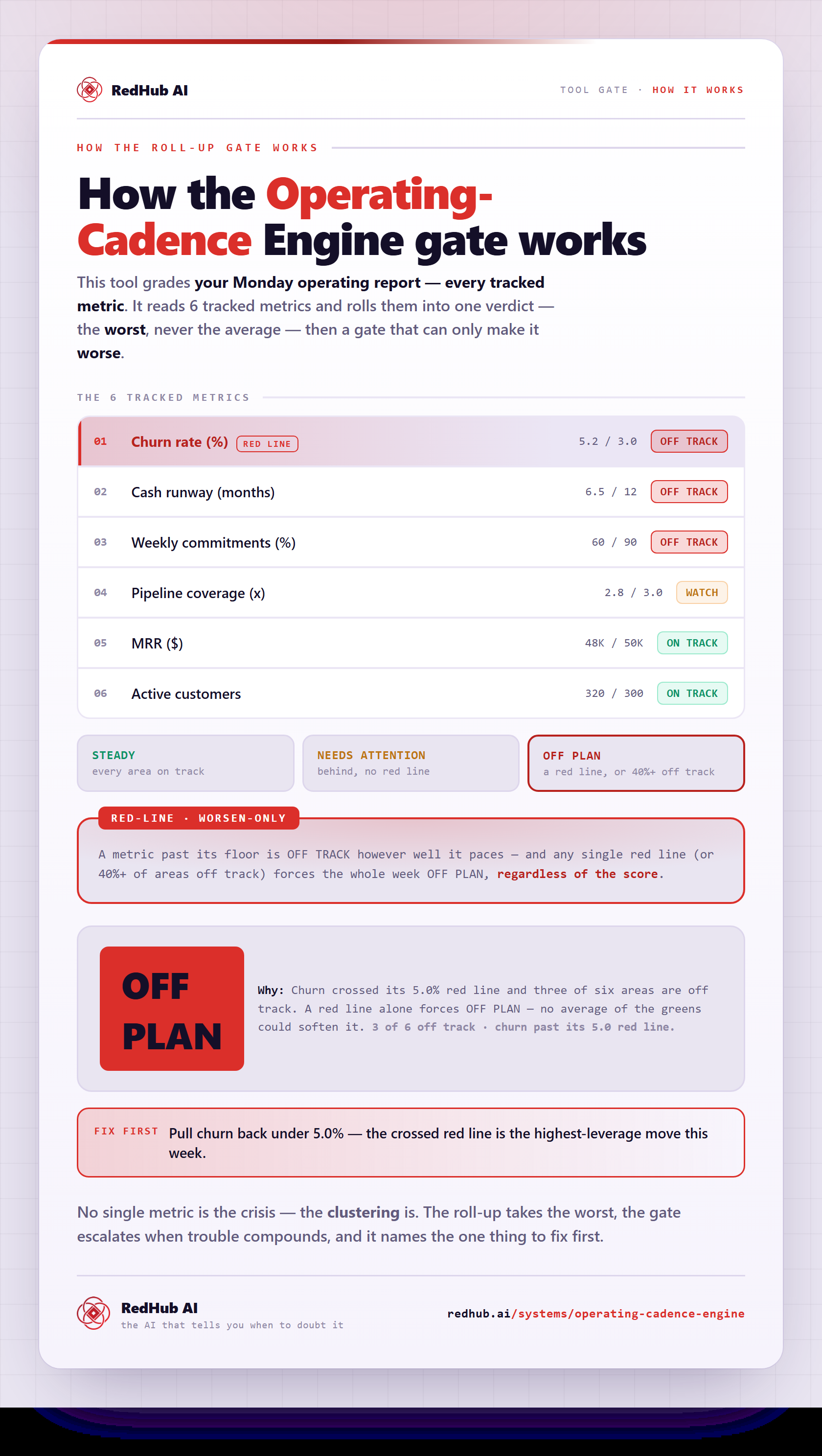
The gate this post refers to, drawn from the tool’s own logic. See the tool.