Vanity Metrics vs Real Metrics: What to Stop Reporting
RedHub AI Editorialupdated September 20, 20263 min read

Jump to a section5
A vanity metric is any number that goes up without any evidence it changed revenue — impressions, followers, page views, email opens. A real metric is one that's tied to a decision someone in your business would actually change based on the result. If a weekly report can't answer "so what do we do differently now," it's probably reporting the wrong layer.
TL;DR: Impressions, followers, opens, and page views describe exposure, not outcomes — they belong in a monthly brand-health note, not a weekly performance report. Replace them with metrics that trace back to pipeline and revenue: qualified leads, cost per qualified lead, close rate by source, and payback period. The table below maps the common vanity metric to the real metric that should sit next to it (or replace it).
Why Vanity Metrics Are So Sticky
Vanity metrics survive because they almost always go up. More content means more impressions. More ad spend means more clicks. That upward trend feels like proof of progress — but a number that goes up by default isn't evidence of anything except that you did more of the activity. It doesn't tell you whether the activity worked.
Vanity Metric vs. Real Metric, Side by Side
| Vanity metric | What it actually tells you | Real metric to use instead |
|---|---|---|
| Impressions / reach | How many times something was shown, not whether anyone cared | Click-through rate + qualified leads generated |
| Follower / subscriber count | Audience size, not audience intent or buying stage | Engaged-audience rate (opens, replies, repeat visits) |
| Email open rate | Subject line performance, increasingly unreliable post-privacy-updates | Click-to-reply rate and downstream meeting bookings |
| Page views / sessions | Traffic volume, not traffic quality or fit | Qualified-lead conversion rate from that traffic |
| Social shares / likes | Content resonance within an existing audience | Referral traffic and pipeline sourced from shares |
| Total content published | Output volume, not output effectiveness | Revenue or leads produced per piece of content |
What to Do With Vanity Metrics — Don't Delete Them, Demote Them
- Keep them in a monthly brand-health appendix, not the weekly performance deck.
- Never let them justify a budget increase on their own.
- Pair each one with the real metric it's supposed to feed, so a reader can see whether the exposure actually converted.
The Test for "Is This a Real Metric?"
- Can you trace this number to a specific downstream business outcome, even loosely?
- Would a meaningfully different result change what you do next month?
- Is the number comparable across channels, or does each platform define it differently?
If a metric fails all three, it's a vanity metric — fine to glance at, wrong to lead a report with.
Pairs well with the Content Engine for One Person if content output is the vanity metric you're most tempted to over-report, and Pipeline Commander once you're ready to track the revenue side those real metrics feed into.
More in this guide
Can any tool give me perfect attribution?
No — even the real metrics in the table above are directional, not exact. No tool fully separates a vanity signal from a revenue signal; the goal is a defensible read, not false precision.
Should I stop tracking vanity metrics entirely?
No — demote them instead. Keep them in a monthly brand-health note rather than a weekly performance report, and never let them justify a spend decision on their own.
Is follower count ever a real metric?
Rarely on its own — pair it with an engaged-audience rate (replies, repeat visits, click-throughs) to see whether the audience is actually paying attention, not just accumulating.
Why do impressions keep going up even when revenue doesn't?
Because impressions scale with activity volume, not effectiveness — doing more of something increases exposure by default, regardless of whether it's working.
What's the fastest way to spot a vanity metric in my own reporting?
Ask whether a meaningfully different result would change what you do next week. If the answer is no, it's a vanity metric.
How does the AI Marketing Measurement Kit help with this?
It gives you a structured way to separate vanity metrics from revenue-driving ones and rebuild your reporting around the numbers that actually predict outcomes.

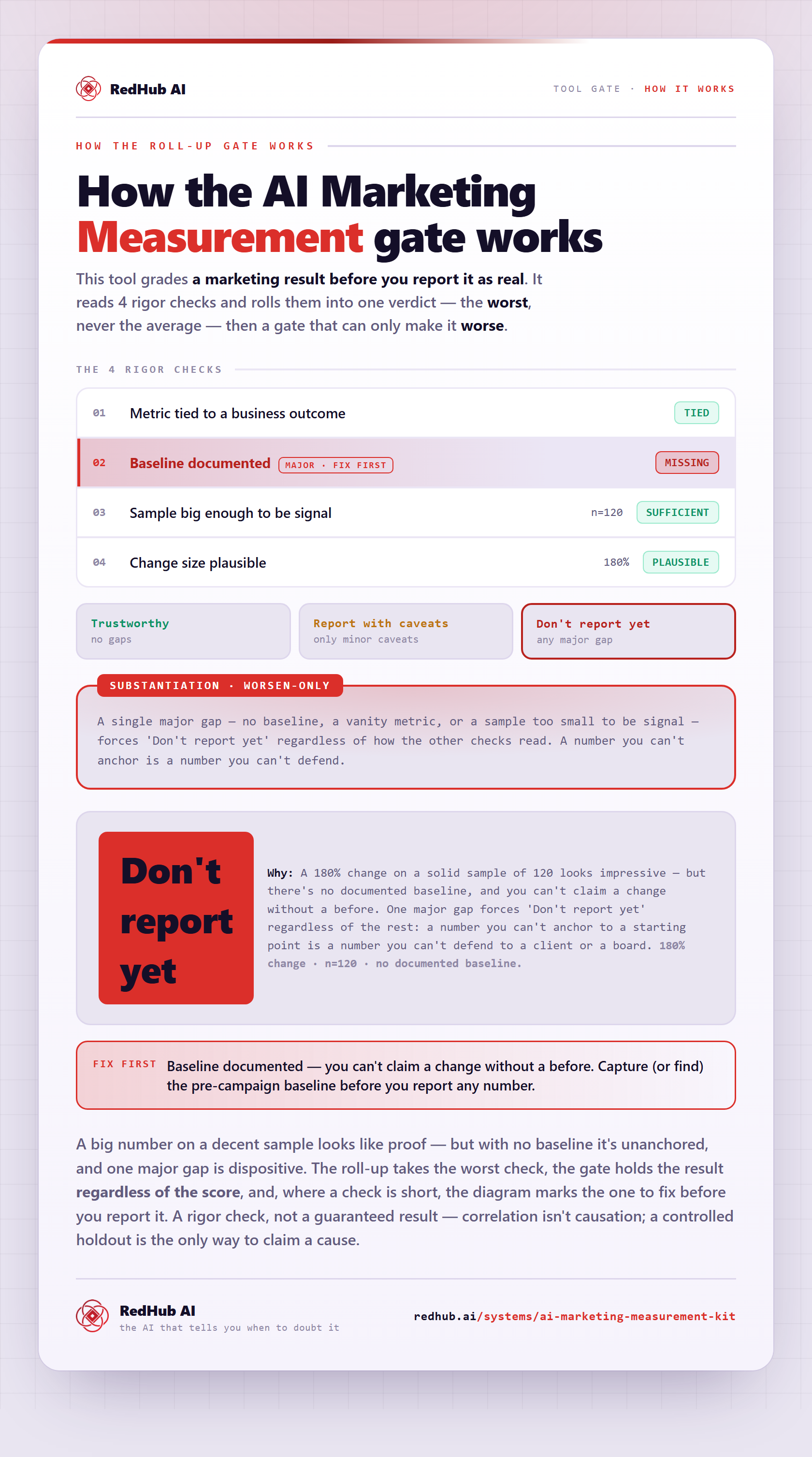
The gate this post refers to, drawn from the tool’s own logic. See the tool.