Will AI Replace Bookkeepers? What Actually Changes
RedHub AI Editorialupdated September 20, 20264 min read

Jump to a section8
No — AI doesn't replace a bookkeeper's judgment, client relationships, or accountability for the books. What it changes is how much of the routine, mechanical work a bookkeeper has to do by hand before applying that judgment.
TL;DR: AI shifts a bookkeeper's time away from manual data entry and toward review and judgment — it drafts categorizations, reconciliation prep, and client notes, but it doesn't own the books, doesn't know a specific client's context, and can't be accountable for an error. The bookkeeping role changes shape; it doesn't disappear. Not accounting or tax advice.
Why the "Will AI Replace Bookkeepers" Question Keeps Coming Up
Every wave of accounting software has raised the same question — spreadsheets, then cloud accounting platforms, now AI. Each time, the tools absorbed more of the manual, repetitive work, and the bookkeeping role shifted toward review, judgment, and client relationships rather than disappearing. AI is a bigger leap than the previous waves in what it can draft, but the underlying pattern — tools absorb mechanical work, humans keep judgment and accountability — is the same one.
What AI Can Take Off a Bookkeeper's Plate
- First-pass transaction categorization suggestions
- Reconciliation pre-matching between bank feeds and ledgers
- Reading receipts and invoices into draft entries
- Flagging month-end anomalies for a closer look
- Drafting client-facing notes and summaries
These are all real time savers on the mechanical, first-draft layer of the work.
What AI Can't Take Off a Bookkeeper's Plate
- Client context. AI doesn't know why a specific client's spending pattern changed, whether a large charge was expected, or what that client's chart-of-accounts quirks mean.
- Accountability. When books are wrong, a client needs someone accountable to fix it and explain what happened. AI can't be that person.
- The trust relationship. Clients hire a bookkeeper they trust to flag problems, ask the right questions, and tell them the truth about their finances — a relationship, not a feature.
- Professional judgment on ambiguous calls. Materiality, edge-case categorization, and when to escalate a concern all require judgment AI doesn't have.
What Actually Changes in the Role
The bookkeepers who benefit most from AI are the ones who use it to spend less time on data entry and more time on the parts of the job that were always the actual value: catching problems early, advising clients, and making sure the numbers tell an accurate story. The mechanics shift from the bookkeeper's hands to the AI's draft; the responsibility for correctness doesn't move at all.
How to Position Yourself as AI Takes On More of the Mechanical Work
- Learn to review AI output critically rather than avoiding AI tools entirely — the review skill is what stays valuable.
- Use the time AI saves on data entry for more client-facing communication and proactive flagging.
- Build a habit of tracking where AI tools get things wrong for your specific clients, so your review process gets sharper over time.
- Stay current on data-privacy practices for client information, since that responsibility doesn't shift to the tool either.
Pairs Well With
As AI absorbs more of the mechanical bookkeeping layer, the work shifts toward reporting and reconciliation oversight. The Finance & Reporting Automation Kit ($129) automates the reporting and close work built on top of clean books, and the AI & SaaS Subscription Auditor ($49) is a useful one-time check on the AI and software tools a bookkeeping practice is paying for.
More in this guide
FAQ
Is this accounting or tax advice?
No. This is educational content about how AI tools are currently used in bookkeeping, not accounting, tax, career, or legal advice.
Will AI replace bookkeepers?
No, not as it stands today. AI can draft categorizations, reconciliation prep, and notes, but it can't hold client context, accountability, or the trust relationship a bookkeeper provides.
What parts of bookkeeping is AI actually good at?
The mechanical, repetitive first-pass work — sorting transactions, pre-matching reconciliations, reading receipts, and drafting notes for a human to review.
What parts of bookkeeping still require a human?
Client-specific context, professional judgment on ambiguous or material items, accountability when something is wrong, and the client trust relationship.
How should a bookkeeper adapt as AI takes on more routine work?
Lean into review skills rather than data-entry speed, use freed-up time for client communication and proactive flagging, and stay disciplined about data privacy for client information.
Is it risky for a bookkeeping practice to ignore AI entirely?
It can mean falling behind on efficiency compared to practices that use AI carefully for drafting work — but adopting it without a human review step carries its own real risk. The safest path is deliberate, reviewed adoption, not all-or-nothing.
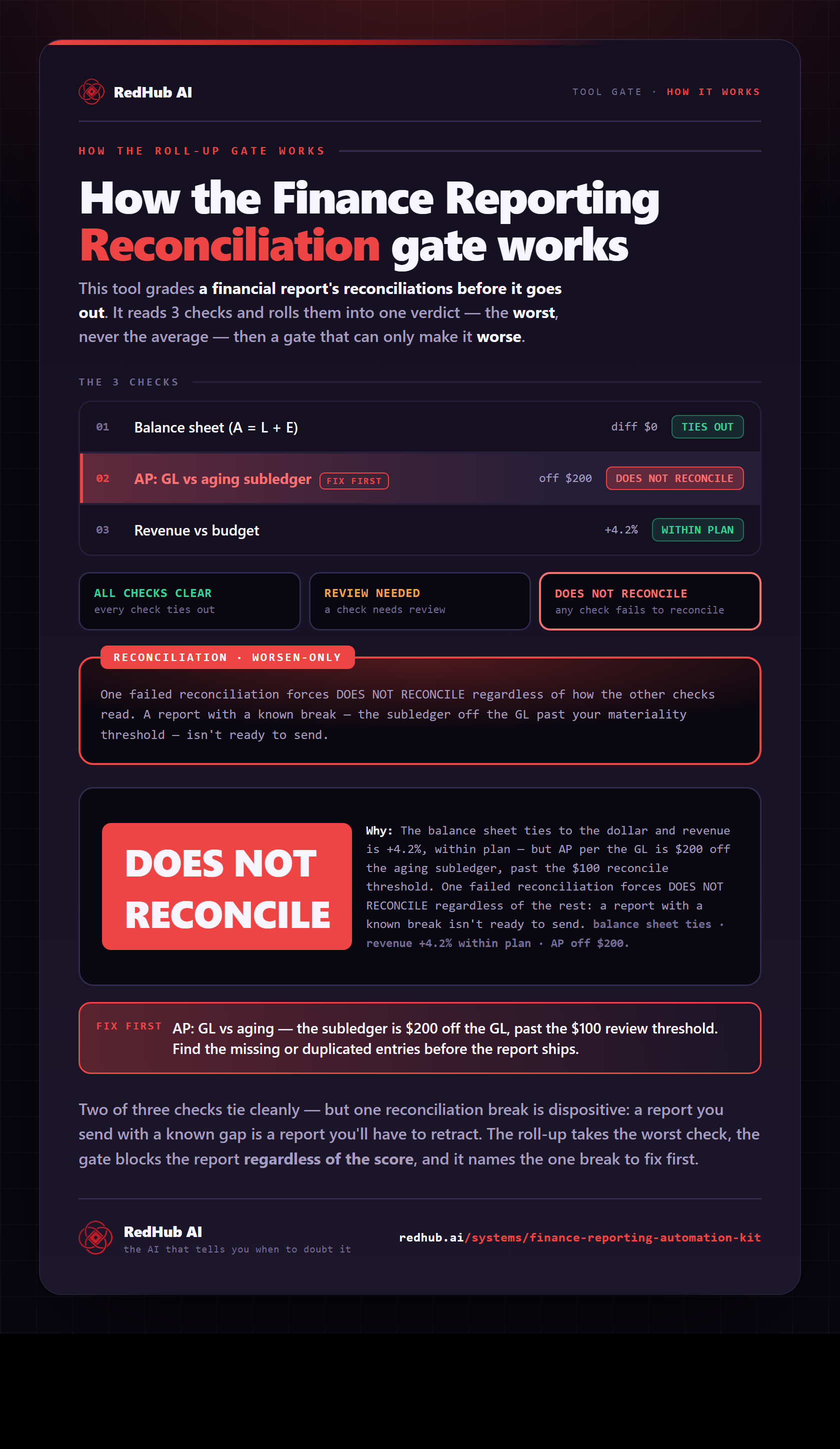
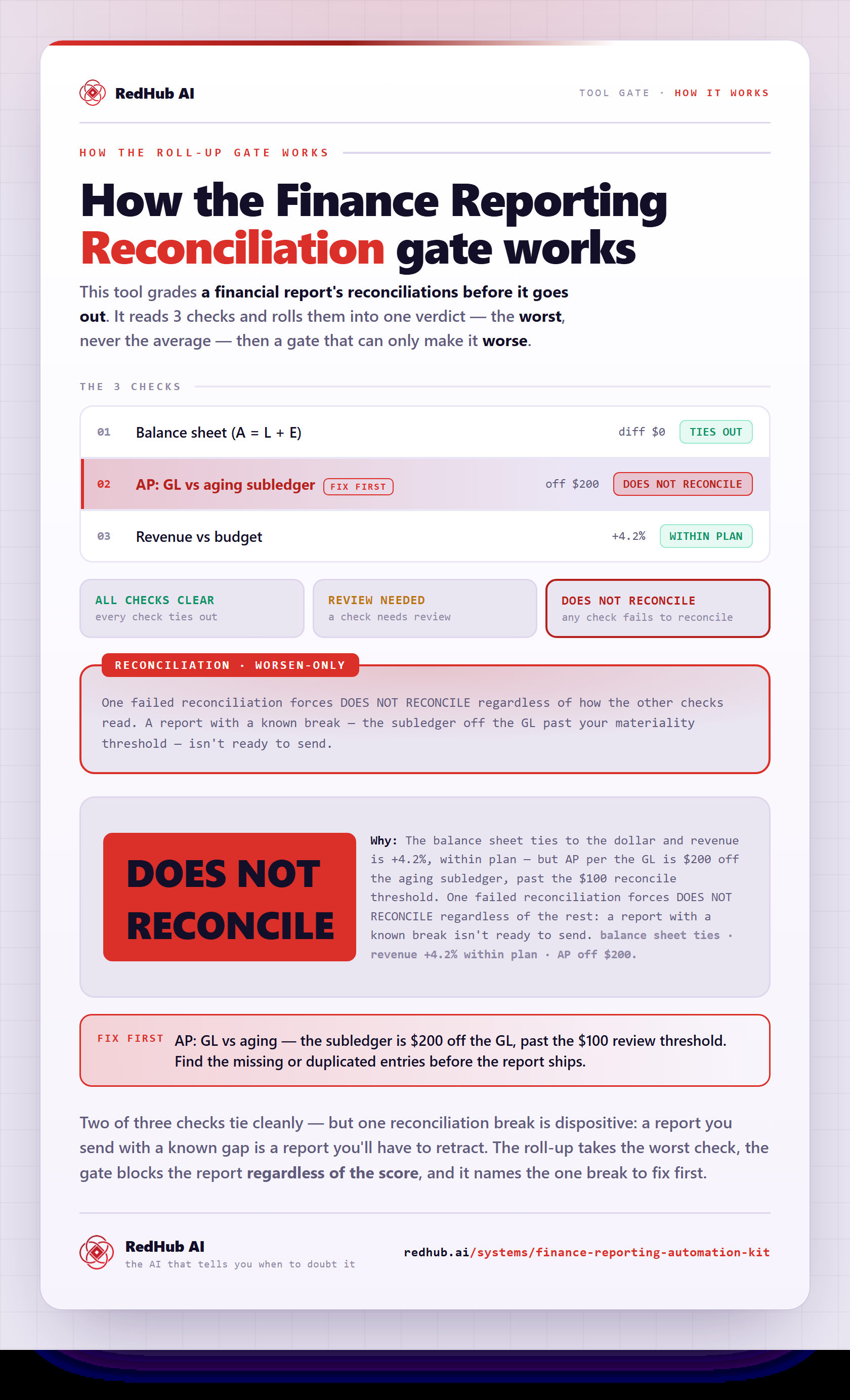
The gate this post refers to, drawn from the tool’s own logic. See the tool.