AI Automation ROI: Is This Task Actually Worth Automating?
RedHub AI Editorialupdated September 20, 20265 min read

Jump to a section8
A task is worth automating with AI when the gap between what it costs to run through AI and what it costs to have a person do it is wide enough, at your actual volume, to cover the time and cost of setting the automation up in the first place. That's the whole ROI question — not "is AI impressive," but "does the math clear, for this task, at this volume, once you account for the real cost of getting it running."
TL;DR: AI automation ROI = (human cost saved per task − AI cost per task) × volume, minus the one-time cost of setup and the ongoing cost of oversight. A wide per-task savings gap at low volume can still be a bad investment; a modest gap at high volume can be a clear win. Volume is usually the deciding factor — get the full method in how to calculate your AI cost per task, and if the task touches customer acquisition specifically, the CAC & Payback Calculator handles that side of the math.
The real question isn't "is AI cheap"
It's tempting to look at a low per-task AI cost and conclude the decision is obvious. It isn't. A task that costs very little per run but only happens a handful of times a month may never earn back the hours you'd spend setting up, testing, and maintaining the automation. Meanwhile a task that costs more per run but happens constantly can pay for itself fast. The question that actually matters is whether this specific task, at this specific volume, is worth automating at this specific cost — not whether AI in general is cheap.
The ROI framework, step by step
- Find your human cost per task. Minutes a person takes, times their loaded hourly rate (wage plus benefits plus overhead).
- Find your AI cost per task. Your actual usage-based spend for the task, plus a fair share of any subscription or seat cost, divided by task volume — see the full method in the cost-per-task pillar guide.
- Subtract to get your per-task savings. Human cost minus AI cost. If this is negative, stop — the task costs more to automate than to do by hand, at least at current pricing.
- Multiply by monthly volume. This gives you your monthly savings, which is the number that actually matters for a budget conversation.
- Subtract setup and oversight cost. One-time integration and testing time, plus any ongoing time a person spends reviewing or correcting AI output. This is the step most ROI pitches skip.
- See what's left. If the number is still solidly positive, the task is likely worth automating. If it's thin or negative, the task probably isn't ready yet — either the volume is too low or the setup cost is too high relative to the savings.
Break-even volume: the number that actually decides it
Every automation has a break-even point — the volume at which the savings finally outweigh the setup cost. Below that volume, you're paying to automate something that would've been cheaper to just keep doing by hand. Above it, every additional task run is close to pure savings. Finding your break-even volume is more useful than staring at a per-task cost in isolation, because it tells you exactly when (not if) the automation becomes worth it — which might be "not yet, but soon" rather than a flat no.
Three examples, worked through honestly
Support-ticket summarizer. High volume, short task, low setup complexity — this is usually the easiest ROI case to clear. The break-even volume tends to be low, so most teams handling any real ticket volume clear it quickly.
Invoice-data-extraction task. The per-task savings can look smaller here because extraction tasks take real setup time to get accurate (mapping fields, handling edge-case formats). The ROI case still often clears, but it takes longer to break even, and the value includes error reduction that's harder to quantify than pure time saved.
First-draft email. Because a person still reviews and edits most AI-drafted emails, the real time saved is the editing delta, not the full drafting time. Overestimating savings here — counting the full "writing from scratch" time as saved — is one of the most common ROI mistakes teams make.
When the ROI case doesn't clear yet
Not every task is ready to automate today, and that's a fine answer. Low-volume tasks, tasks where human judgment is doing most of the real work, and tasks where the setup cost is unusually high relative to the savings are all legitimate reasons to wait. Revisit the math again once volume grows, the tooling gets simpler, or vendor pricing drops — none of those conditions are permanent.
Don't confuse task ROI with company-wide AI ROI
This framework is for one task at a time. A company can have some tasks that clear the ROI bar easily and others that don't — that's normal and expected. Resist the pressure to automate everything at once just because a few tasks clearly paid off; run the same honest math on each new candidate task rather than assuming the win generalizes.
Pairs well with
If the task you're weighing is tied to customer acquisition specifically, the CAC & Payback Calculator runs the payback math on that side. And once you're automating at real volume, the AI Spend Runaway & Billing-Safeguard Gate keeps your savings case from getting eaten by an unexpected bill spike.
More in this guide
What is AI automation ROI?
It's the savings a task generates from being automated (human cost saved minus AI cost, times volume) minus the one-time setup cost and ongoing oversight cost. A positive, meaningful number means the task is likely worth automating.
Does a cheap AI cost per task guarantee good ROI?
No. Low unit cost at low volume can still fail to cover setup time. ROI depends on the combination of cost, volume, and setup effort — not the unit cost alone.
What is break-even volume?
The task volume at which your savings finally outweigh the one-time cost of setting up the automation. Below it, automating costs more than it saves; above it, most of the additional savings is close to pure profit.
What's the most common ROI mistake?
Counting the full original task time as "saved" when a person still reviews or edits the AI's output. Count only the time actually eliminated.
Should I automate every task that clears the ROI bar?
Run the math task by task rather than assuming a win on one task means every task should be automated. Some tasks simply won't clear the bar yet, and that's a legitimate outcome.
How do I find my starting numbers for this framework?
Start with the cost-per-task pillar guide, which walks through gathering real AI spend, task volume, human time, and loaded rate.
What if the ROI is close but not clearly positive?
Revisit it later — volume growth, cheaper vendor pricing, or simpler tooling can all shift a close call into a clear yes over time.
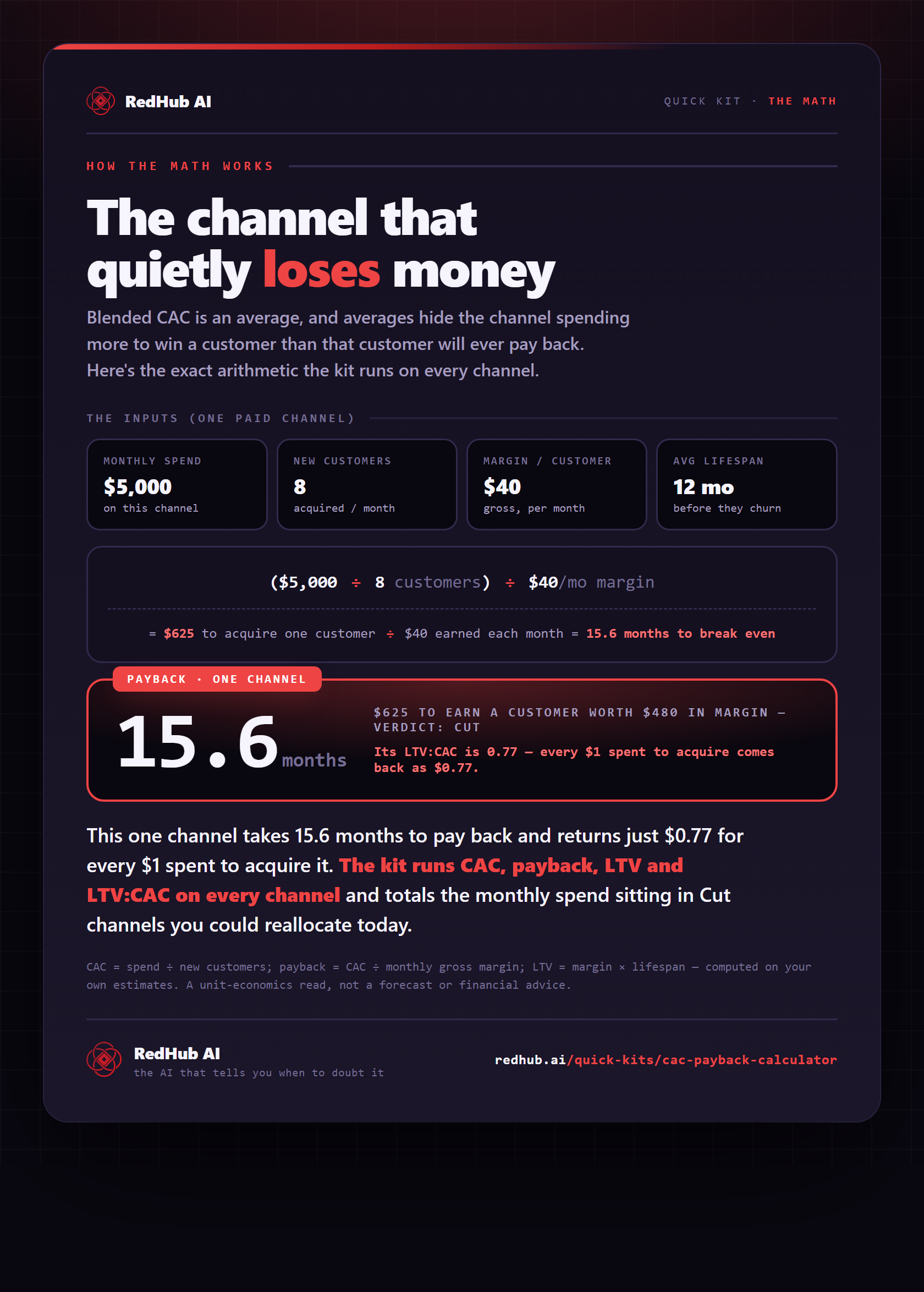
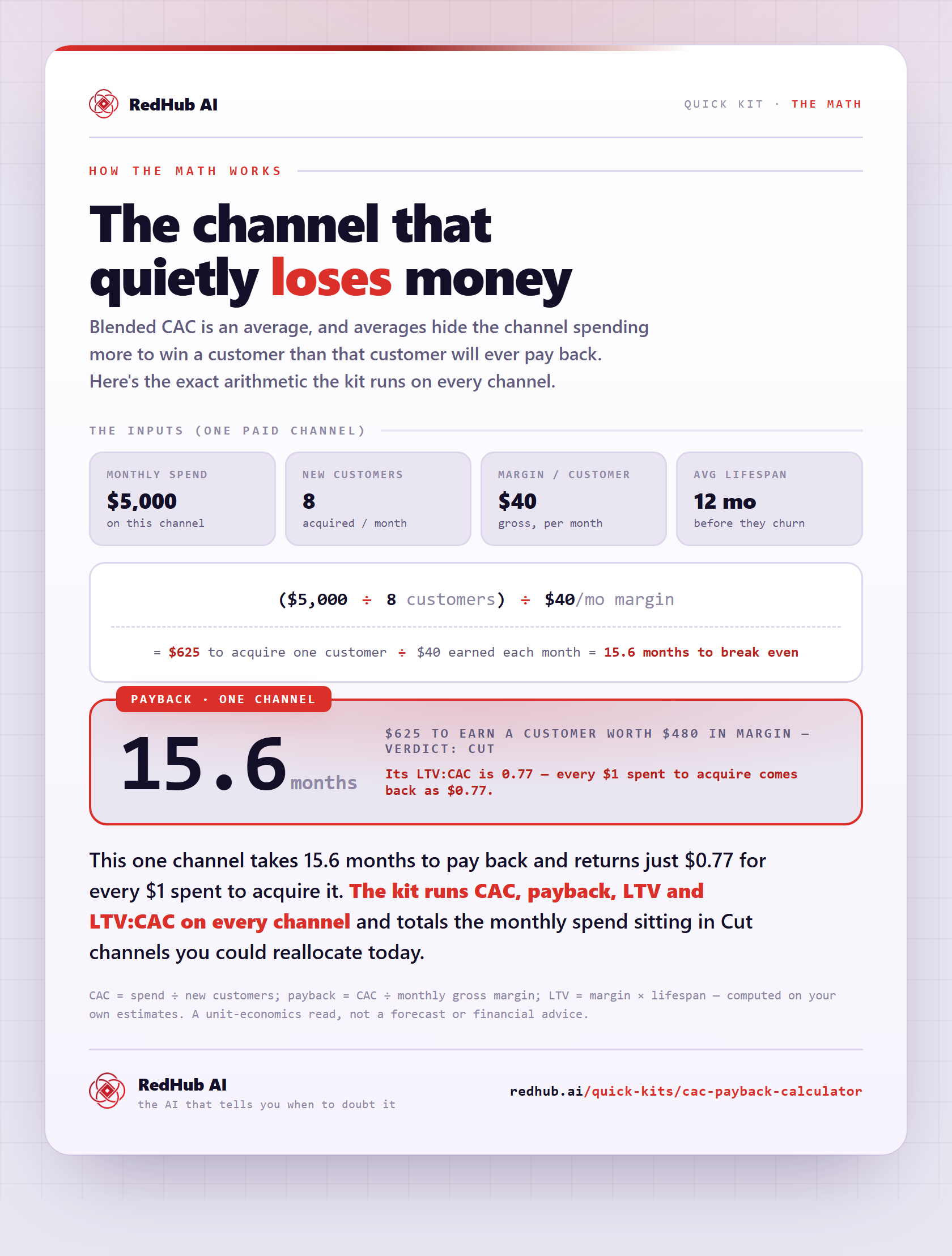
The gate this post refers to, drawn from the tool’s own logic. See the tool.