The Hidden Costs of AI Tools Nobody Budgets For
RedHub AI Editorialupdated September 20, 20265 min read

Jump to a section7
The hidden costs of AI tools are the ones that never show up on the vendor's pricing page: integration and setup time, the human hours spent reviewing and correcting AI output, per-seat costs that creep up as more people get added, and the time it takes to clean and prepare your data before the tool can even use it. None of these show up in a per-token or per-seat price quote, and all of them belong in your real cost-per-task number.
TL;DR: The advertised price of an AI tool is rarely the full cost. Budget for setup and integration time, ongoing human review of AI output, seat creep as adoption spreads, and data-prep work before the tool can run cleanly. Fold all of it into your real number using the method in how to calculate your AI cost per task, and if your usage-based spend is climbing unpredictably, the AI Spend Runaway & Billing-Safeguard Gate is built to catch that before it becomes a surprise bill.
Why the sticker price is never the real price
Vendor pricing pages show you the cost of using the tool. They don't show you the cost of getting the tool working well for your specific data and workflow, or the cost of the people who still have to check its work. That gap between "what the vendor charges" and "what the task actually costs your team" is where most automation budgets quietly blow past their original estimate. It's not dishonest marketing, exactly — it's just that setup and review time genuinely aren't the vendor's to quote, because they depend entirely on your data, your process, and your team.
Four hidden costs to budget for up front
1. Integration and setup time
Connecting an AI tool to your actual workflow — your ticketing system, your invoice queue, your email client — almost always takes longer than the demo suggested. Someone has to map fields, handle edge cases, and test against real (messy) data before the tool is trustworthy in production. Budget real hours for this, not "an afternoon."
2. Human review time
Very few AI outputs go straight to production without a human glance. Someone reviews the draft email before it sends, checks the extracted invoice data before it posts to the ledger, skims the ticket summary before it's logged. That review time is a real, recurring cost — and if you don't count it, your ROI math overstates the savings, because you're comparing AI cost to a human doing the whole task instead of AI cost plus a human doing the reviewing.
3. Per-seat creep
A tool that starts with three licensed seats has a way of ending up with fifteen, as more of the team wants access. Each new seat is a real, recurring cost that doesn't always get re-evaluated against actual usage. Periodically audit who's actually using their seat versus who signed up once and forgot about it.
4. Data prep
AI tools are only as good as the data you feed them. Messy, inconsistent, or poorly formatted source data — old invoice templates, inconsistent ticket tagging, unlabeled files — often needs cleanup before a tool can work reliably. That cleanup is real labor, and it's usually a one-time cost that's easy to forget when you're estimating ongoing task cost.
How to fold hidden costs into your cost-per-task number
- Estimate one-time setup and data-prep hours and spread them across a reasonable time window (say, the first year) to get a monthly amortized cost.
- Add human review time as an ongoing per-task cost — minutes per task, times the loaded hourly rate of whoever's reviewing.
- Audit actual seat usage quarterly and drop unused licenses rather than letting seat count silently grow.
- Recalculate your real cost per task with all of the above folded in, using the method in the cost-per-task pillar guide — not just the vendor's advertised usage rate.
Hidden costs don't mean "don't automate" — they mean "budget honestly"
None of this is an argument against automating. It's an argument against building your business case on the vendor's sticker price alone. A task can still clear the ROI bar comfortably once you count the hidden costs — it just needs to clear it with the real numbers, not the optimistic ones. Teams that skip this step are the ones who end up surprised three months in when the tool "costs more than we thought," when really the cost was always there — just uncounted.
The billing-surprise version of hidden cost
There's a second category of hidden cost worth naming separately: usage that quietly scales past what you budgeted for, because more people started using the tool, or a workflow started calling it more often than planned. That's less about setup and review time and more about spend monitoring — worth a dedicated guardrail rather than trying to catch it by eyeballing a monthly invoice.
Pairs well with
To catch usage that's quietly scaling past budget, the AI Spend Runaway & Billing-Safeguard Gate is built for exactly that. And for the token-level detail behind a usage-based bill, the Token Economics Workbook goes deeper than a task-level estimate.
More in this guide
What are the most common hidden costs of AI tools?
Integration and setup time, ongoing human review of AI output, per-seat cost creep as adoption spreads, and data-prep work needed before the tool performs reliably on your real data.
Why doesn't the vendor's price include these costs?
Because they depend on your specific workflow, data quality, and team — not something the vendor can quote in advance. The advertised price only covers usage or seat access, not the work of making the tool fit your business.
How do I estimate human review time if I've never tracked it?
Watch someone actually review a batch of AI outputs and time it, or ask them directly rather than assuming it's negligible. Most teams underestimate this until they measure it.
Does per-seat creep happen even with usage-based pricing?
It can still happen if the tool has any per-seat or subscription component layered on top of usage — audit both regularly.
Do hidden costs mean I shouldn't automate this task?
Not necessarily — they mean you should run the ROI math with honest numbers. Many tasks still clear the bar once hidden costs are counted; some don't, and it's better to know before you commit.
How often should I re-audit hidden costs?
Quarterly is a reasonable cadence — seat usage, review time, and vendor pricing can all shift meaningfully in that window.
What's the difference between hidden costs and billing runaway?
Hidden costs are the uncounted human and setup labor around a tool. Billing runaway is usage-based spend quietly scaling past what you budgeted — a related but distinct risk worth its own guardrail.
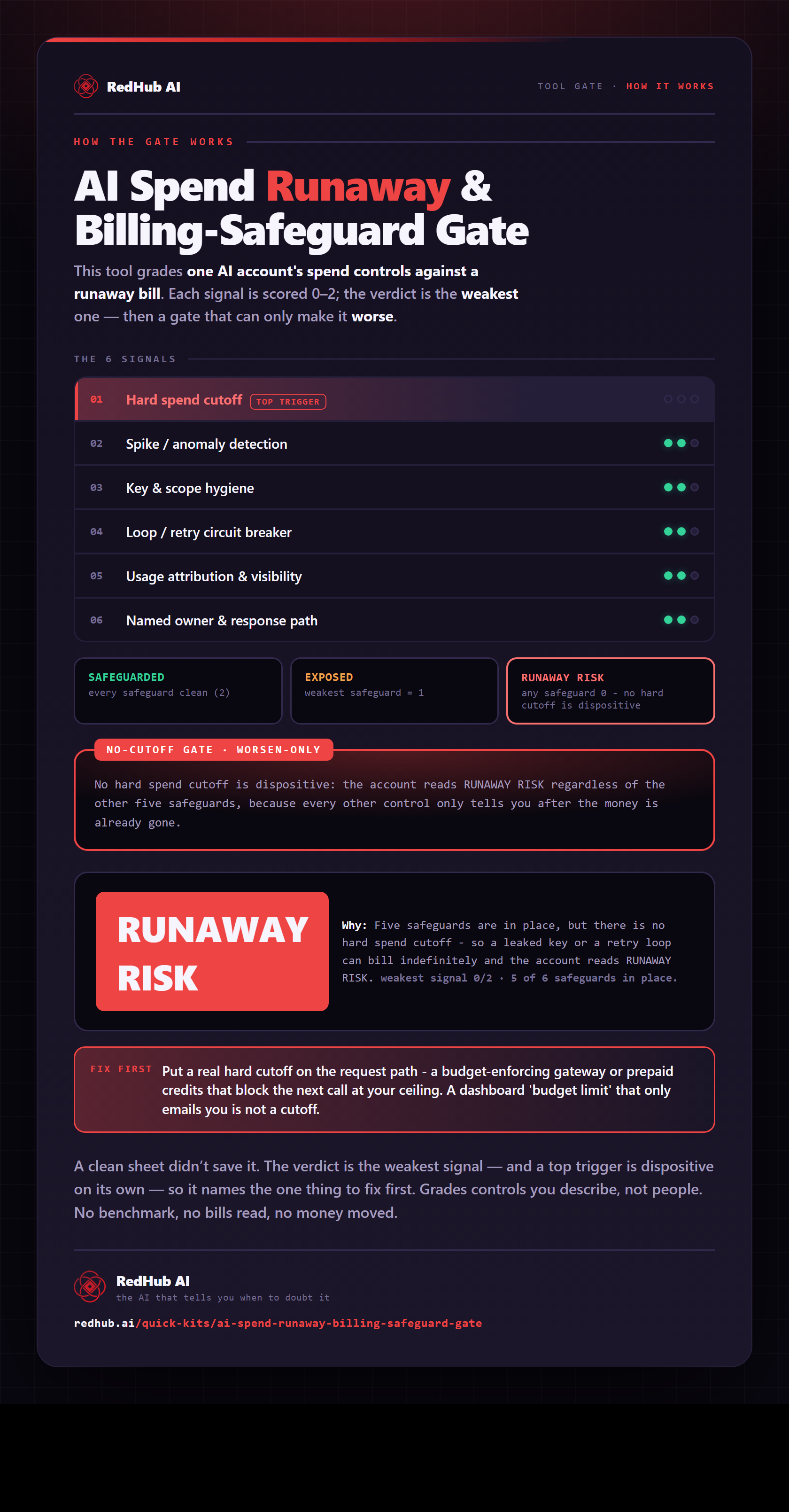
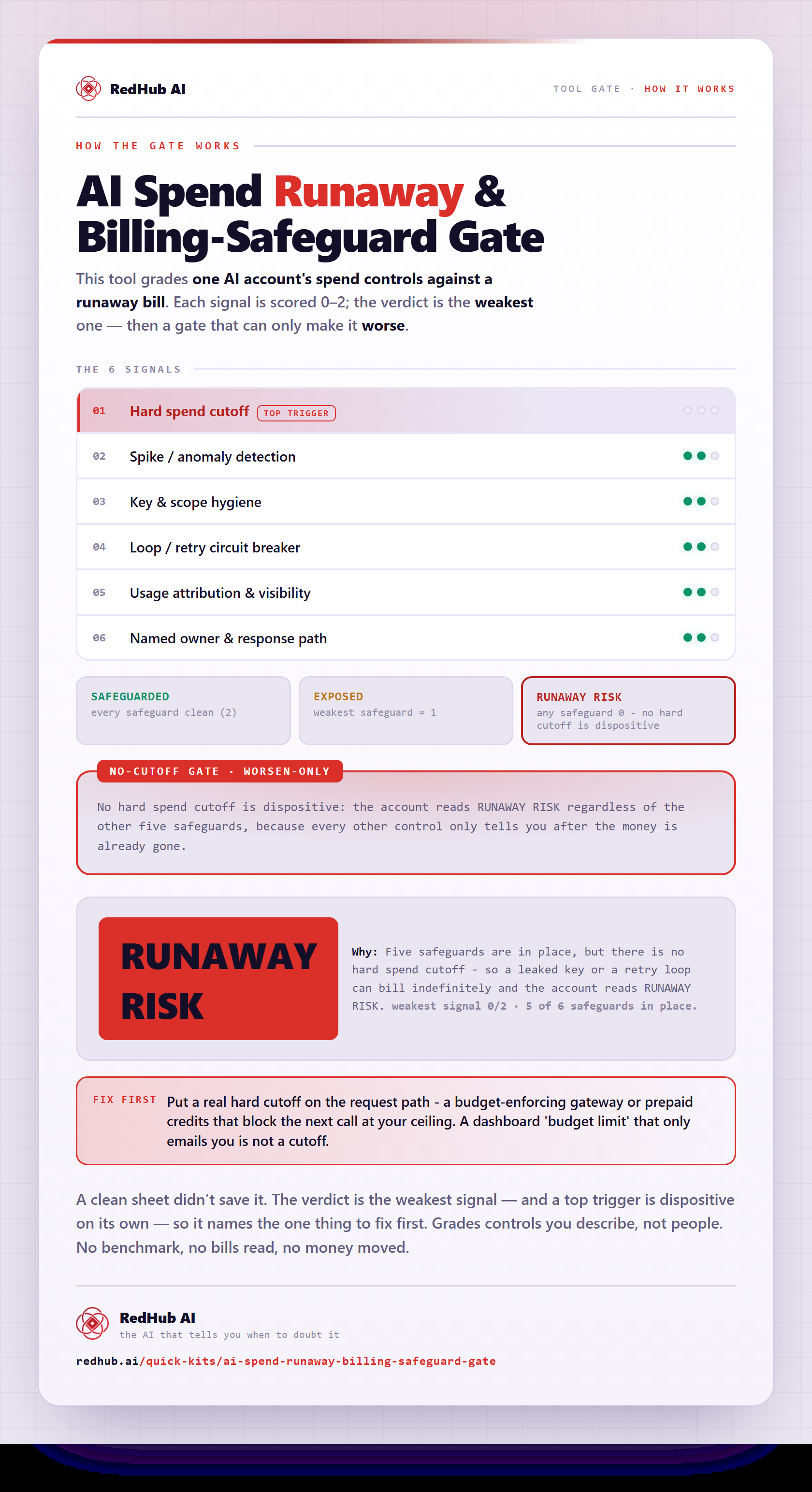
The gate this post refers to, drawn from the tool’s own logic. See the tool.