AI Capability-Control Gap: Smarter Agents Need More Control
RedHub AI Editorialupdated October 2, 20266 min read

Jump to a section7
The AI capability-control gap is the distance between what an AI system can do and what a business can safely govern, observe, explain and reverse. Models keep improving at reasoning, coding and tool use while inference gets cheaper, so teams hand agents more tasks, time and access. The controls around those agents do not upgrade themselves. Each time an agent gains an ability and its controls stay the same, the gap gets wider, usually without anyone deciding it should.
TL;DR: The AI capability-control gap opens when an agent gains abilities faster than the business gains ways to watch and limit them. The risk sits in the system around the model, not the model alone. Nine operating controls close it, each answering one question someone will eventually ask, starting with "which agent took this action?" Sometimes the cheapest fix is to switch a capability off. Who Authorized This ($719) bundles all ten execution-layer instruments with a roll-up engine that names which of your readings are moot. Start with the pillar: Enterprise AI Control Plane: When Agents Skip the Checkpoint.
How one upgrade widens the gap
An accounts-payable agent at a fictional building-supply distributor shows how it happens. Last year it read invoices and drafted a payment summary for the controller, who approved every payment by hand. This year the team moved it to a newer model and connected it to the vendor portal, so it could fix mismatched invoices itself.
Now it can read vendor emails, change bank details and schedule a payment. Its controls are still the ones written for a drafting tool: a shared service login, a log of final answers, no approval step. Nothing broke. The agent now has more reach than its controls were built for.
Then an email arrives asking to update a vendor's remittance details. The old agent could only mention it in a summary. The new one can act on it. Whether it does depends on the prompt, the model's judgment and an outsider's wording. Finance teams treat a bank-detail change with suspicion even when a person handles it.
The risk is in the wiring
The gap is not a model problem. It is a wiring problem. Business risk shows up when a model is connected to tools, credentials, sensitive data and production systems. The full system is the model plus identity, permissions, tools, network access, memory and human process.
A better model raises what that system could do for you, and it also grows the surface you have to govern. In the accounts-payable case, the model swap was the smaller change. The portal access was the big one, and it skipped review because it looked like part of an upgrade. Treat a new connection like a new hire's system access: someone decides it on purpose.
Nine controls that close it
If you cannot answer a row's question for a given agent, that row is where its gap is.
| Control | Question it answers |
|---|---|
| Model inventory | Which models are running where, and for what purpose? |
| Identity | Which agent took the action? |
| Permissions | What was it allowed to access or change? |
| Policy enforcement | Why was this tool call allowed? |
| Auditability | What did the agent see, decide and do? |
| Regression testing | Did the new model or prompt improve the workflow? |
| Human escalation | When does a person approve or step in? |
| Kill and rollback | Can we stop a bad action and recover from it? |
| Portability | Can the business survive a vendor or model change? |
The accounts-payable agent fails three rows at once. A shared login cannot say which agent acted. Nobody wrote down what it may change. No rule stands between it and the payment screen, so "why was this allowed?" has no answer beyond "nothing stopped it." Our guide to non-human identity security covers giving each agent its own credentials.
Order matters among these controls. A complete log of an action no rule ever bound is a record of the gap, not a control on it. So authority comes first and evidence second; our post on logs versus an audit trail is worth reading before you buy more logging. Regression testing, a re-run of real tasks to check that a change made nothing worse, keeps pace with capability itself, because every model upgrade is a capability change.
What the FTC news signals
As of October 2026, the Federal Trade Commission is investigating OpenAI, Anthropic and other AI companies over product risks, according to CNBC's reporting (opens in a new tab) on September 30, 2026. CNBC reports that the agency is preparing civil investigative demands, which are similar to subpoenas, for information and testimony. That reporting describes demands being prepared, not issued.
The reporting names OpenAI, Anthropic and other AI organizations. It does not say what, if anything, the inquiry means for businesses that build on their models, and we are not going to guess what any regulator would expect of your agents. That is a question for counsel; this section is news, not legal advice.
The practical point needs no legal reading. "Show us how this system works and what it did" is a question with records behind it, and a customer, an insurer, an auditor or your own board can ask it any day. An agent whose authority, data access, controls and history exist on paper is one you can explain. One whose history lives in an engineer's memory is one you can only describe.
Some of the gap should stay open
Closing the gap does not mean a control for every new ability. Each control costs something. An approval step slows the agent. A narrower permission blocks some useful work. A full trace costs storage and someone's attention.
Often the cheaper move is to leave the capability unused. The accounts-payable agent does not need to change bank details at all. Remove that permission, route every remittance email to a person, and the gap on that path closes without a single new control.
The harder case is a capability you want but whose failures nobody yet knows. There the honest answer is a small pilot with tight limits, and accepting that the gap stays open for a while. How long has no general answer. It depends on how fast you would notice a mistake and what one would cost.
Find out which of your control readings are moot
Who Authorized This bundles all ten instruments of the execution-layer lane with a roll-up engine that reads their findings in order across three stages. A later stage can never read higher than an earlier one, so the roll-up names which of your readings are moot, and returns HELD END TO END AS DESCRIBED, HELD IN PARTS or NOT HELD, and NOT RUN until every stage has a finding.
Get Who Authorized This — $719Pairs well with
The Non-Human Identity & Credential Sprawl Gate ($79) grades how you govern the keys, tokens and service accounts agents run on, headlines the weakest control, and returns GOVERNED, SPRAWLING or UNMANAGED. The Agent Action Admissibility Engine ($99) checks each action an agent proposes against your own domain rules before it runs, and returns ADMISSIBLE, REVIEW or INADMISSIBLE. The Indirect Prompt-Injection Exposure Gate ($79) grades how exposed an agent's design is to hidden instructions in the content it reads: CONTAINED, HARDEN or HIGH EXPOSURE.
More in this guide
What is the AI capability-control gap?
It is the distance between what an AI system can do and what a business can safely govern, observe, explain and reverse. It widens whenever an agent gains abilities or access while its controls stay the same.
Why does a more capable model widen the gap?
A more capable model can do more with the tools, data and credentials it is connected to, and new access often arrives with an upgrade. Unless identity, permissions, logging and approvals change too, its reach outgrows anyone's ability to see or limit it.
Which controls close the capability-control gap?
Nine operating controls: model inventory, per-agent identity, scoped permissions, policy enforcement, auditability, regression testing, human escalation, kill and rollback, and portability. Each answers one question, such as which agent took an action.
Is the FTC investigating AI companies?
CNBC reported on September 30, 2026 that the FTC is investigating OpenAI, Anthropic and other AI companies over product risks, and is preparing civil investigative demands, which are similar to subpoenas, for information and testimony. This describes news reporting as of October 2026, not legal advice; ask counsel what, if anything, applies to you.
Do I need a new control for every new AI capability?
No. Often the cheapest fix is to leave a capability switched off. If an agent does not need to change bank details or send outside messages, remove that permission and route those cases to a person.
Where should a business start closing the gap?
With authority: give each agent its own identity, write down what it may access and change, and put a rule between it and any action you could not easily undo. Logs come second.
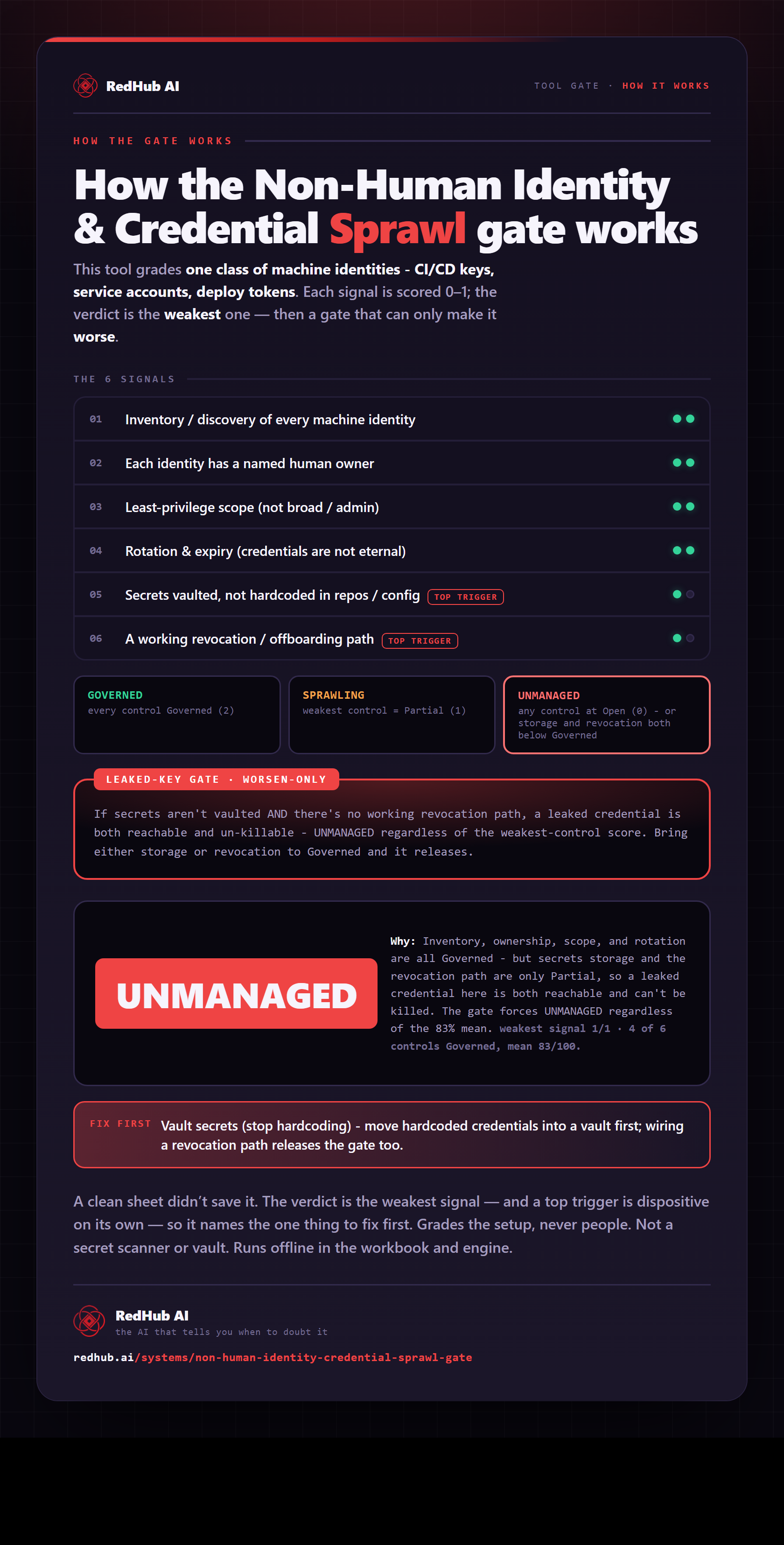
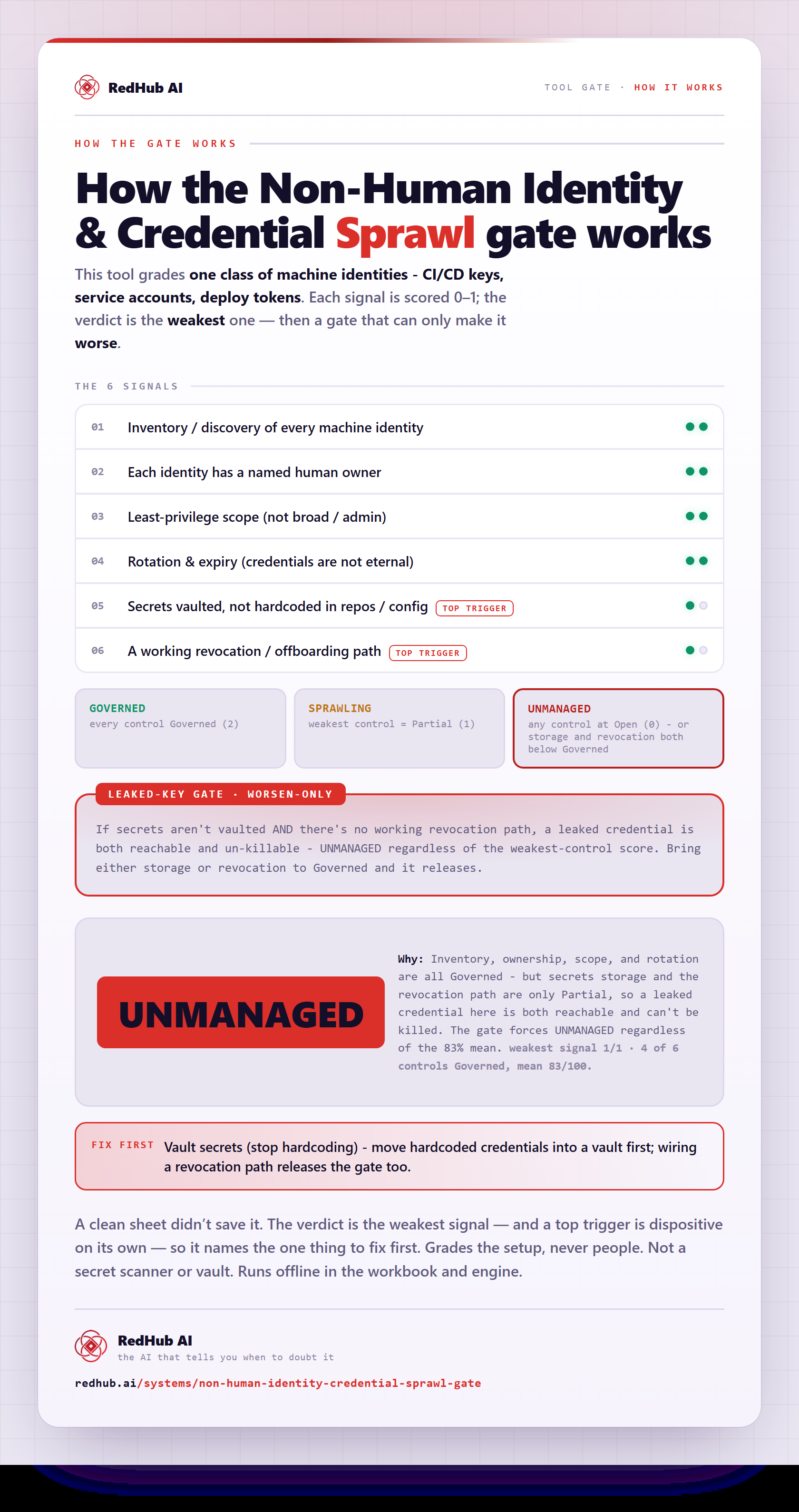
The gate this post refers to, drawn from the tool’s own logic. See the tool.