How to Prevent Chargebacks (and Win the Rest)
RedHub AI Editorialupdated October 5, 20267 min read

Jump to a section8
Chargeback prevention runs on three fronts, and each one is won with different work. You win the disputes worth fighting with evidence matched to the reason code. You stop disputes before customers file them by fixing why they file. And you keep your chargeback ratio under the card-network lines that decide whether you keep your merchant account. The third front is where accounts get lost, because a won dispute still counts against the ratio.
TL;DR: Treat chargebacks as three jobs: win, prevent, survive. Winning recovers money on one order, but Visa and Mastercard count the dispute whether you win or lose, so the ratio moves mainly through prevention. Visa's merchant Excessive line in the US, Canada, the EU and Asia Pacific fell from 2.2% to 1.5% on April 1, 2026. Know your ratio first, let it set how hard you fight, and run the work as a 90-day loop. The issuing bank decides every dispute, so nobody can promise you a reversal.
Front one: win the disputes worth fighting
When a cardholder disputes a charge, you can contest it. That process is called representment: you re-present the transaction to the issuing bank with evidence. It is the front everyone sees, and the one merchants tend to over-invest in.
A thick packet does not win. A fitted one does. Every dispute is filed under a reason code, and each code turns on different decisive evidence. Proof of delivery wins a "merchandise not received" case and does nothing against "not as described." Miss the response deadline, which Stripe says is usually 7 to 21 days depending on the card network, and nothing you send gets read.
So some disputes should be skipped. A case with a blown deadline or a missing decisive item is already lost, and the hour you would spend on it buys more as prevention work. The full evidence playbook is in chargeback representment: how to win disputes.
Front two: prevent the ones you can
Not every dispute involves a stolen card. Some come from real customers disputing real charges. They did not recognize your billing descriptor. A family member bought it on the shared card. Clicking "dispute" in the banking app was easier than finding your refund page. Some are lying. Others are confused or in a hurry. This is friendly fraud.
We are not going to quote you an industry-wide share for friendly fraud. Group one quarter of your own disputes by reason code and you will have a number that describes your business, which no survey can.
Prevention is plain process work: a descriptor customers recognize, confirmations that answer questions before the bank does, a refund easier than disputing, delivery proof on what you ship, and fraud screening that stops bad orders before they post. Each fix removes disputes at the source, month after month. Two posts go deeper: friendly fraud: what it is and how to fight it and the lever-by-lever playbook in how to reduce your chargeback rate.
Front three: survive your processor's thresholds
This front usually announces itself by email. Visa and Mastercard track your disputes as a share of your transactions and run monitoring programs with fees and remediation demands for merchants over the line. Your processor watches the same numbers and often acts first, with rolling reserves, payout holds or a frozen account.
Winning does not get a dispute out of that count. Stripe's guide to the networks' monitoring programs says they do not consider dispute outcomes, and that Mastercard counts a chargeback regardless of its outcome. You can win most of your disputes and still lose the account. The ratio falls when fewer disputes get filed, which is why front two feeds front three.
Visa also moved the line. Its Visa Acquirer Monitoring Program (VAMP) fact sheet lowered the merchant Excessive ratio from 2.2% to 1.5% on April 1, 2026, in the US, Canada, the EU and Asia Pacific. A merchant who was comfortable in March could be over in April on the same volume. If you do not know your own number, start with merchant account hold: why Stripe froze your account.
| Front | The question it answers | What wins it | Go deeper |
|---|---|---|---|
| Win | Is this dispute worth fighting, and with what? | Reason-code-matched evidence, inside the deadline | Representment |
| Prevent | Why are disputes being filed at all? | Descriptor, refund path, delivery proof, fraud screening | Friendly fraud · Reduce your rate |
| Survive | How close is my account to the line? | Fewer counted disputes; won disputes still count | Account holds |
Your ratio sets your fighting posture
One rule connects the three fronts. How hard you fight disputes should follow where your ratio sits, not how annoyed you are at the dispute in front of you.
- Over the line: triage. Fight every dispute whose evidence is complete, strengthen the rest, and put most of your effort into cutting counted events. You are defending the account now, not the order.
- Approaching: disciplined. Fight the clean cases, strengthen the higher-value ones, and start prevention before you cross.
- Headroom: selective. Fight the clean cases, skip the low-value maybes, and spend the saved hours on prevention.
A merchant who does not know the ratio tends to fight everything, which spends the hours prevention needed.
Run it as a 90-day loop
Chargeback work fails as a scramble every time a dispute lands. It works as a cycle on a calendar.
- Measure every account. Compute your ratio for each merchant account against current network thresholds. Confirm the thresholds with your acquirer, because the networks revise them and they differ by region.
- Set posture. Let the ratio band decide how hard you fight, and write it down so the whole team triages the same way.
- Work the queue. For each dispute, read the reason code, check the deadline, and check for the decisive item. Fight what your posture says to fight and log every skip. The skips are prevention data.
- Fix root causes. "Not recognized" points at your descriptor. "Canceled recurring" points at your cancellation flow. "Not received" points at delivery proof.
- Re-measure at day 90. Run the numbers again. If the ratio moved, it moved because fewer disputes were filed.
The exit from a monitoring program is the part nobody can schedule for you. Stripe says Mastercard removes a merchant after three consecutive months below the threshold. Visa's VAMP fact sheet does not publish an exit rule at all. If you are in Visa's program, ask your acquirer what "out" means for your account, and plan for more than one loop.
No tool can promise a reversal. The cardholder's issuing bank decides each dispute and does not publish its reasoning. Matching evidence to the reason code improves your odds on the disputes you fight, and prevention lowers how many get filed. Those are odds and rates. Anyone selling a guaranteed win rate is selling certainty they do not have.
Where to start this week
Start with the ratio if you cannot state your chargeback ratio for each merchant account today. Nothing else can be ranked until you can.
Start with evidence if you have headroom but keep losing disputes you think were winnable. The fix is a packet aimed at the code, not more effort.
Start with prevention if the same dispute reasons keep repeating. A repeat is a process failure, and process fixes are what move the ratio.
Run all three fronts as one system
The Chargeback Defense Bundle pairs two tools with a bundle-only 90-Day Chargeback Defense Loop playbook. The Chargeback Threshold & MID-Survival Gate reads each merchant account HEADROOM, APPROACHING or OVER THE LINE from your own numbers. The Chargeback-Proof Order Evidence Kit rates each dispute SUBMIT-READY AS DESCRIBED, STRENGTHEN or DON'T FIGHT. The playbook connects them: your ratio band sets your representment posture. $119 for both tools and the playbook, $138 bought separately.
Get the Chargeback Defense Bundle — $119Pairs well with
The Returns & Refund Profit Analyzer ($39) shows the true profit on each product after returns and gives each one a keep, fix returns or drop-or-fix verdict, which matters once you start refunding faster to head off disputes. The Payment Processing Effective-Rate & Fee-Padding Audit ($79) checks a processor statement for your real effective rate and padded fees, with a FAIRLY PRICED, RENEGOTIATE or BEING BLED verdict. The AI-Receipt Fraud Exposure Gate ($69) grades your expense-reimbursement controls against AI-generated fake receipts, program by program.
More in this guide
What is a chargeback?
A chargeback is a payment reversal the cardholder starts through their bank, not through you. The funds come back out of your account, your processor usually charges a dispute fee, and the dispute counts in the card networks' monitoring programs whether or not you later win it.
What is the best way to prevent chargebacks?
Work the levers that stop disputes at the source: a billing descriptor customers recognize, clear order and renewal messages, refunds that are easier than disputing, delivery proof, and fraud screening on risky orders. No single lever fixes it. They add up over months.
Which front should I work first?
Start with your ratio if you do not know it for each merchant account. Start with evidence if you have headroom but lose disputes you think were winnable. Start with prevention if the same dispute reasons keep repeating.
Should I fight every chargeback?
No. Fight the disputes where the response window is open and you hold the decisive evidence for that reason code. A blown deadline or a missing decisive item means the packet loses however complete it looks. How hard you fight should follow your ratio band.
Can any tool guarantee I win a chargeback dispute?
No. The issuing bank decides every dispute, and outcomes vary by code, evidence and issuer. Good evidence improves your odds and good prevention lowers your rate. The Chargeback Defense Bundle is built on that limit, which is why it can tell you not to fight.
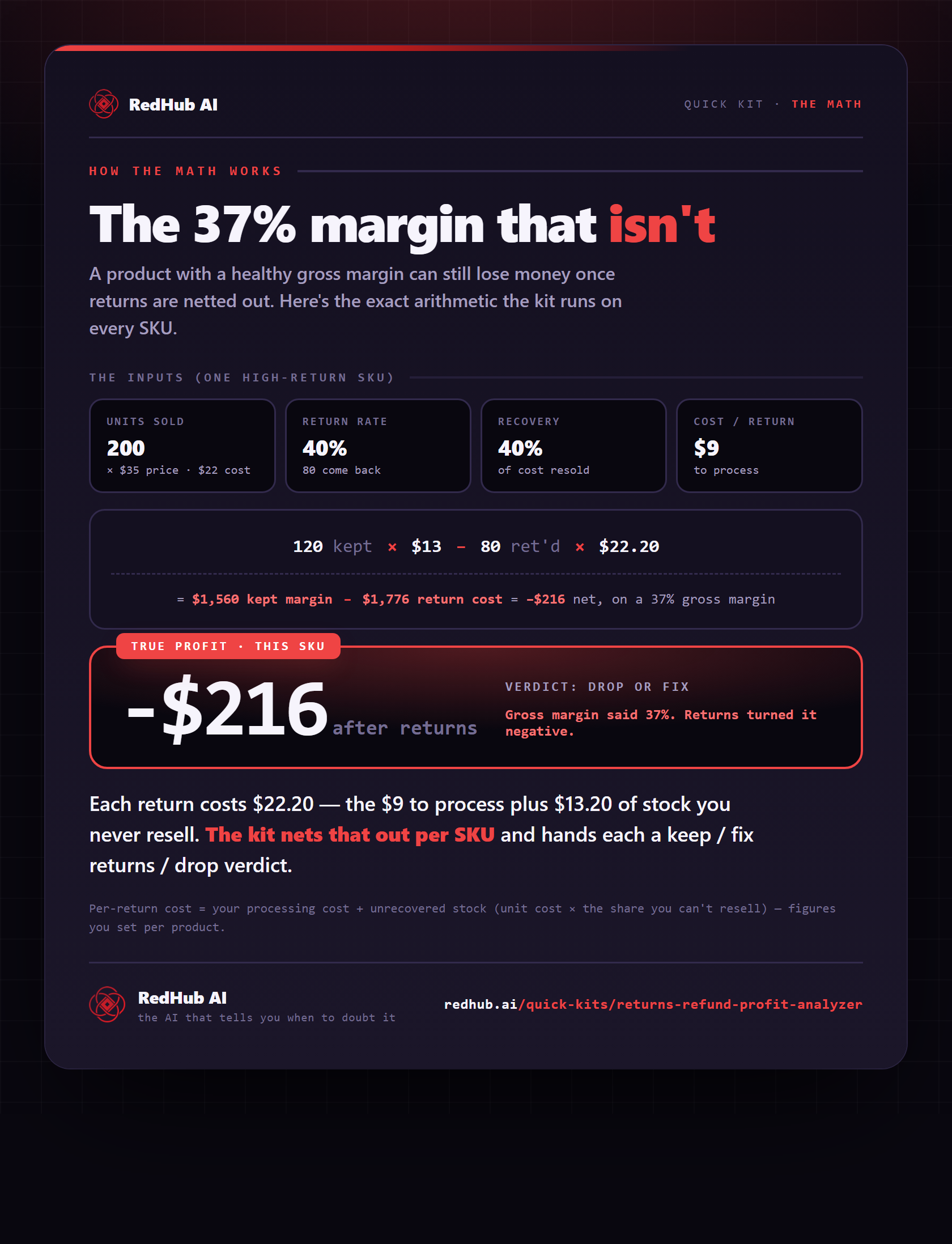
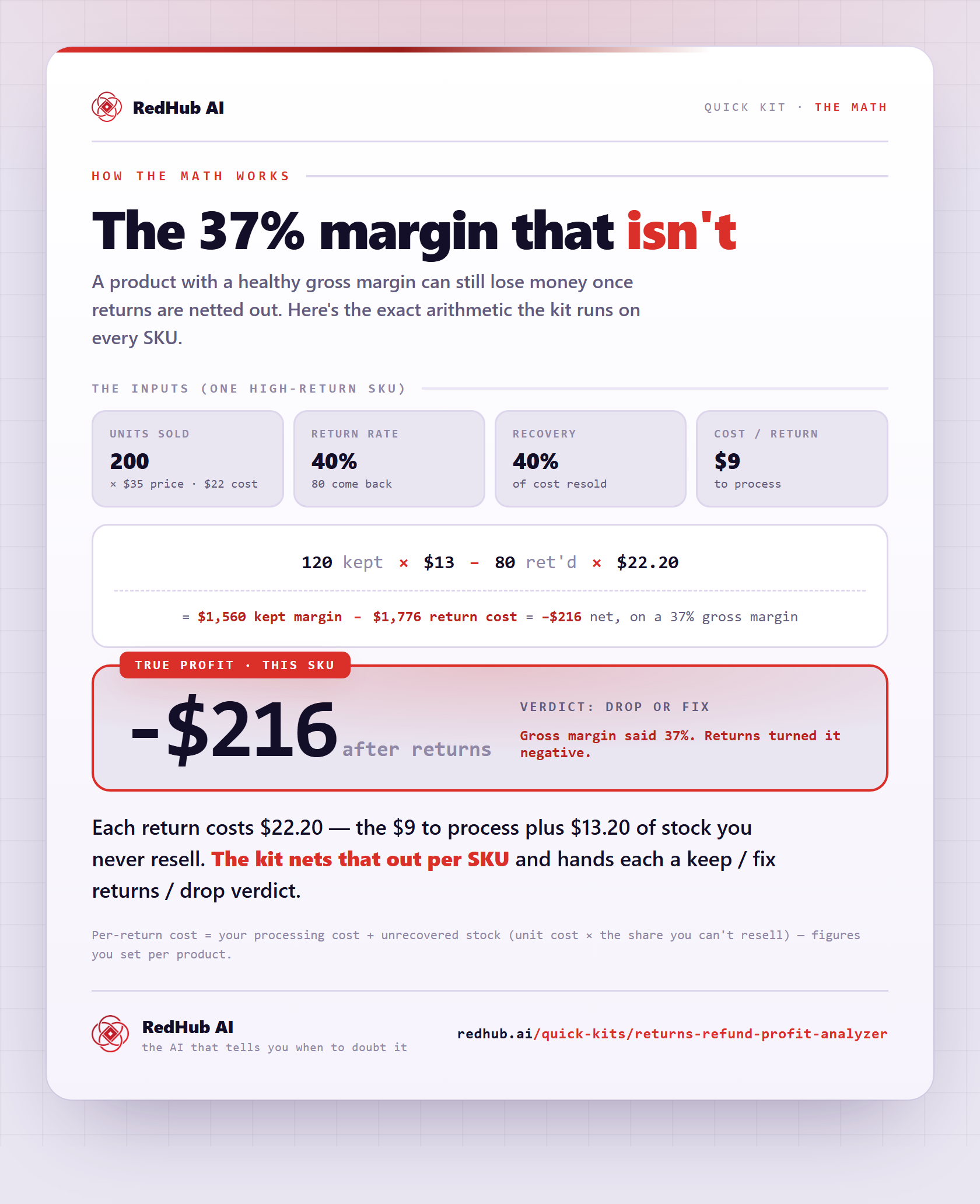
The gate this post refers to, drawn from the tool’s own logic. See the tool.