How to Reduce Your Chargeback Rate
RedHub AI Editorialupdated October 5, 20266 min read

Jump to a section7
If you need to reduce chargeback rate figures before your processor acts, winning more disputes will not get you there. The card networks count a dispute when it is filed, whatever the outcome, so the rate falls only when fewer customers file. Six levers do that work: a billing descriptor customers recognize, messages before the charge, refunds easier than disputing, delivery proof, fraud screening, and dispute alerts that settle a case before it is counted.
TL;DR: Measure first, because Visa and Mastercard compute your rate differently and Visa can count one transaction twice. Then pull the six levers in the order your own reason codes point to. Two limits keep this honest. A refund only helps if it lands before the customer calls the bank, and an alert can stop a dispute while a fraud report already filed still counts in Visa's math. Judge the result over a 90-day cycle, not a week.
First, compute the number correctly
Your processor dashboard may show one blended dispute rate. The networks do not use one. Visa's fact sheet defines the VAMP ratio as TC40 fraud reports plus TC15 disputes, divided by settled card-not-present transactions in the same month, and Stripe notes that a transaction in both reports counts twice. Mastercard's Excessive Chargeback Program divides this month's chargebacks by last month's transactions, so a slow sales month pushes the ratio up on its own.
So your network number can run higher than your dashboard, and a blended rate can hide which network you are close to. Compute both, for each merchant account, every month. Then check them against current lines: Visa's merchant Excessive ratio in the US, Canada, the EU and Asia Pacific dropped to 1.5% on April 1, 2026. Confirm the lines that apply to you with your acquirer. The full threshold picture is in merchant account hold: why Stripe froze your account.
The six levers
- Fix the billing descriptor. If the statement line reads like your legal entity instead of your brand, good customers dispute charges they would recognize under the right name. Match it to your storefront, add support contact details where your processor allows, and check it on a real statement. Stripe says Visa identifies your account by the descriptor and the acquiring bank, so pick one prefix and keep it.
- Message the customer before the bank does. Order confirmation, shipping notice, delivery confirmation, and for subscriptions a renewal reminder before the charge. This goes after the "I don't recognize this" disputes at the root.
- Make refunds easier than disputes. A visible refund policy, one-step cancellation and fast support pull refund requests back into your process. A refund costs the order. A dispute costs the order, a fee and a counted event.
- Keep delivery proof on everything you ship. Tracking with delivery confirmation, and a signature on higher-value orders. It deters "never arrived" claims and gives support a fact to answer with before the customer escalates.
- Screen the orders that become fraud disputes. Address and card-code checks, velocity limits, and 3-D Secure on risky orders. Tune with care: screening that is too tight trades disputes for lost sales and turns away good buyers, a cost covered in checkout friction: the small frictions that kill conversions.
- Enroll in alerts and deflection. Visa's Rapid Dispute Resolution, Verifi CDRN and Ethoca alerts let you refund or settle a case before it becomes a chargeback. Visa's fact sheet excludes disputes resolved through pre-dispute solutions from the VAMP count.
| Lever | Dispute family it targets |
|---|---|
| Descriptor fix | "I don't recognize this charge" |
| Messages before the charge | Forgotten purchases, surprise renewals |
| Easy refunds and cancellation | "I canceled" and refund-by-dispute |
| Delivery proof | "Merchandise not received" |
| Fraud screening | True stolen-card fraud |
| Alerts and deflection | Any dispute, caught before it counts |
The first four aim at friendly fraud: real customers disputing real charges out of confusion or convenience. The anatomy is in friendly fraud: what it is and how to fight it.
Where refunds and alerts stop working
Levers three and six both depend on timing, and both have edges.
A refund prevents a dispute only if the customer never files one. Stripe's guide to the monitoring programs says they do not consider refunds when identifying disputes. A customer who calls the bank after you refunded still produces a counted dispute, and Stripe says Mastercard counts a chargeback even when a refund hid it. So the refund has to beat the customer to the bank. A fast reply to the first complaint does more than a generous policy page.
Alerts have a narrower gap. Stripe says early fraud warnings, which come from Visa's TC40 reports, count in VAMP regardless of their outcome. An alert can stop the dispute, and a fraud report the issuer already filed on that transaction still counts once. How many of your alerted cases carry a fraud report is something only your own data shows. Watch both numbers after you enroll, so you know what the alerts are buying.
Let your reason codes pick the next lever
Do not work the list top to bottom on faith. Pull last quarter's disputes, group them by reason code and read the split. A pile of "not recognized" points at the descriptor. "Canceled recurring" points at renewal reminders and the cancellation flow. "Not received" points at delivery proof. Fraud codes point at screening. Work the biggest pile first.
Expect a lag. Stripe says card networks typically allow cardholders to dispute within 120 days of the payment, and longer in some cases. A fix you ship today keeps meeting disputes on orders placed before it.
Prevention compounds and fighting does not. A won dispute recovers one order's revenue and the dispute stays counted. A prevented dispute never lands, this month or any month the fix stays in place. A healthy ratio comes from disputes that were never filed, plus a short list of cases worth fighting, per the representment discipline.
Run it as a measured 90-day cycle
Prevention without measurement drifts into busywork. Measure both network ratios for each merchant account at the start. Set your dispute-fighting posture from where you stand: selective with headroom, disciplined when approaching, triage when over. Work the levers your reason codes point at, then re-measure at day 90. No lever guarantees a specific reduction, and anyone quoting you one is guessing. What you can know is your number, its trend, and which lever you pulled before it moved.
Prevention and dispute-fighting, one measured loop
The Chargeback Defense Bundle runs this playbook as a system. The Chargeback Threshold & MID-Survival Gate computes your VAMP and ECP ratios, reads each merchant account HEADROOM, APPROACHING or OVER THE LINE, and scores six prevention controls, and on an approaching ratio it names the weakest one to fix first where a control is short. The Chargeback-Proof Order Evidence Kit rates each dispute SUBMIT-READY AS DESCRIBED, STRENGTHEN or DON'T FIGHT. A bundle-only 90-Day Chargeback Defense Loop playbook connects them. $119 for both tools and the playbook, $138 bought separately.
Get the Chargeback Defense Bundle — $119Pairs well with
The Returns & Refund Profit Analyzer ($39) shows the true profit on each product after returns, so you can see what a faster refund policy costs. The Churn-Save Offer Decision Kit ($49) decides whether to save, pause or let go of a churning customer from your own margin numbers, useful before a cancellation turns into a "canceled recurring" dispute. The Checkout Friction & Abandonment Exposure Gate ($79) grades a checkout flow on seven friction signals, including total-cost transparency and delivery clarity, and returns SMOOTH, LEAKING or HEMORRHAGING.
More in this guide
What is a chargeback rate?
Your chargeback rate, or ratio, is disputes as a share of transactions for one merchant account. Visa's VAMP counts fraud reports plus disputes against card-not-present transactions in the same month. Mastercard's program divides this month's chargebacks by last month's transactions. So you have two numbers, not one. This is general information, not legal advice.
What is the fastest way to reduce a chargeback rate?
Dispute alerts and deflection programs, plus refunding quickly when a customer complains. Both act before a dispute is filed or counted. Descriptor and messaging fixes are cheap and start working on new orders right away.
Does refunding a disputed order lower my chargeback rate?
No. Stripe's guide says the monitoring programs do not consider refunds when identifying disputes, so a dispute filed after your refund still counts. The refund has to reach the customer before they go to the bank.
Why does my billing descriptor matter so much?
It is the only thing the customer sees when they scan their statement. If the name does not match the store they bought from, disputing looks like the safe move. A recognizable descriptor removes that whole dispute family for the cost of a settings change.
How long does it take to lower a chargeback rate?
Think in monthly cycles. Stripe says card networks typically allow disputes within 120 days of the payment, so disputes on older orders keep arriving after a fix. Measure both network ratios monthly and judge the trend across a quarter.
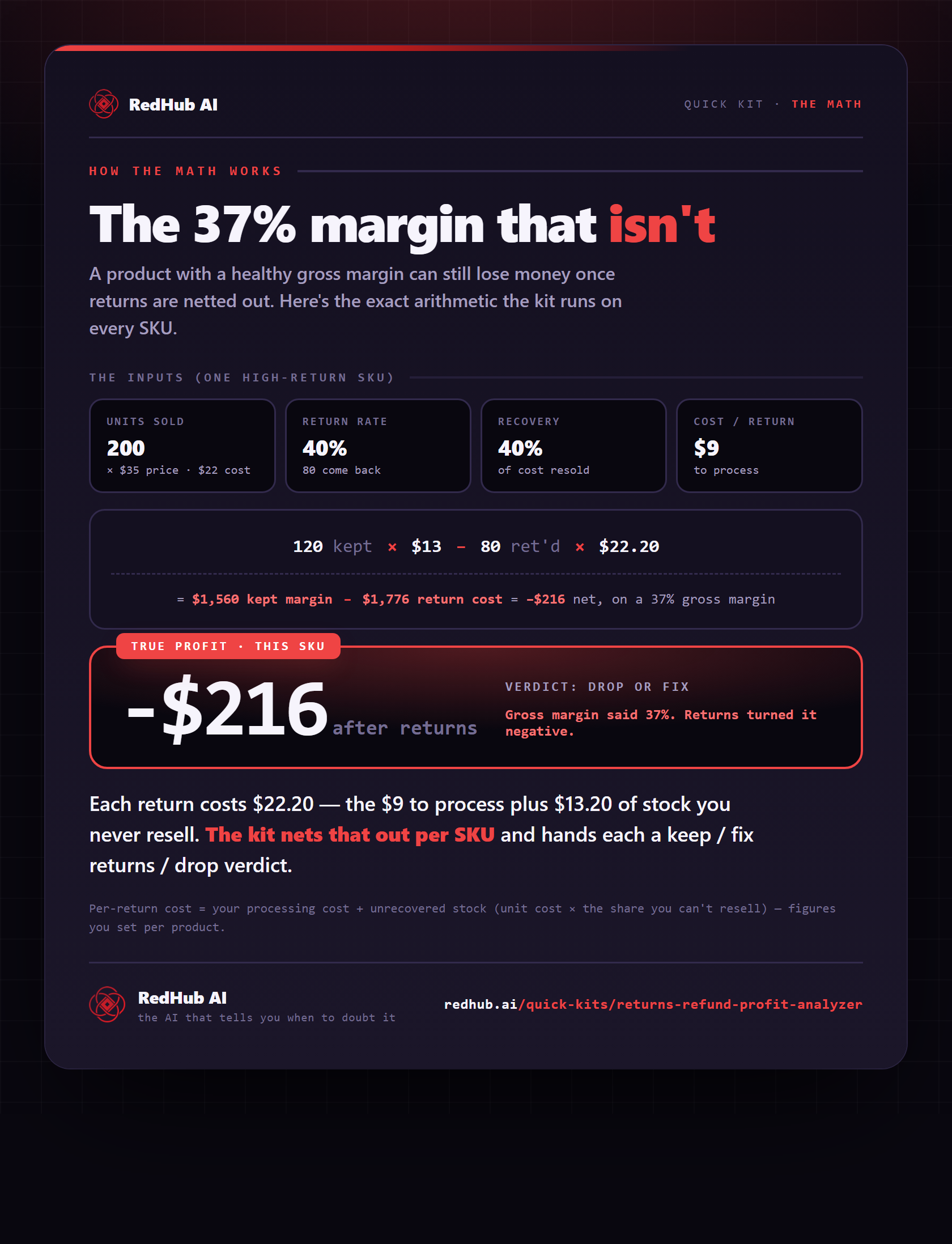
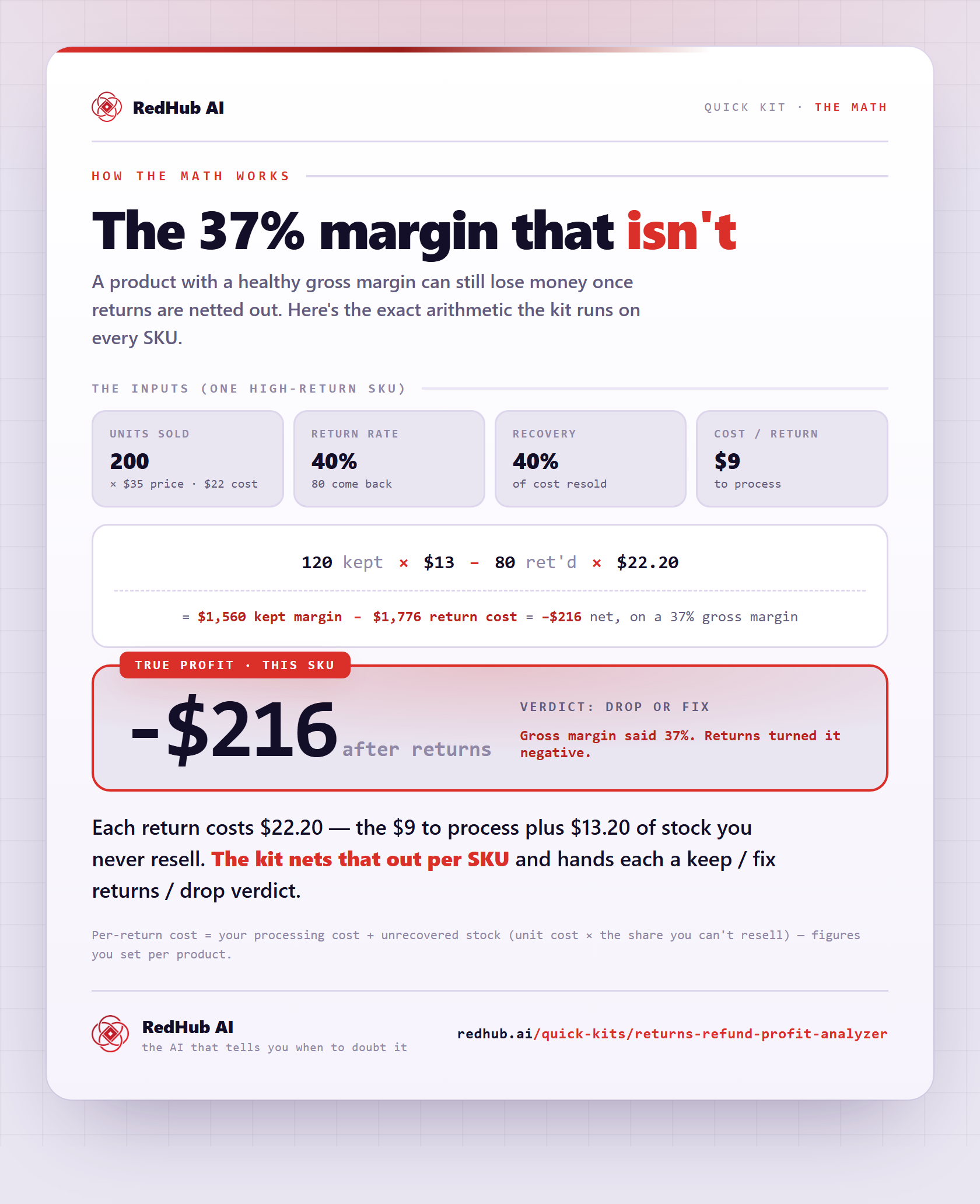
The gate this post refers to, drawn from the tool’s own logic. See the tool.