How to Improve Your Cold Email Reply Rate (The Right Way)
RedHub AI Editorialupdated October 4, 20266 min read

Jump to a section7
Your cold email reply rate improves in a fixed order: reach the right people, land in the inbox, and only then test the words, one change at a time, while counting interested replies, not every reply. The usual instinct runs the other way. A team rewrites subject lines to chase a bigger reply number and ends up with an inbox of "unsubscribe" and "not interested." A count that rose because more people said no is not progress you can bank. The slower path holds up: fix the list, fix delivery, then run clean tests against your own baseline.
TL;DR: Raw reply rate counts "no" the same as "tell me more," so score positive reply rate instead. Fix targeting and deliverability first, because no wording rescues an email that reached the wrong person or the spam folder. Then A/B test copy one variable at a time. The Cold Email Reply-Rate Optimizer ($39) is a spreadsheet that scores variants that way. The four posts in this guide: positive reply rate, A/B testing without fooling yourself, why cold emails get no replies, and what a good reply rate is.
Reply rate counts the replies you don't want
"Reply rate" treats every response as a win. A reply that says "take me off this list" tells you the targeting or the tone missed. If a subject-line change doubles your replies and most of the new ones are annoyed, the dashboard says you won while the pipeline stayed flat. The same annoyance also shows up as spam complaints, and those cost more than a lost reply: Google and Yahoo both ask senders to keep the spam rate below 0.3%, in Google's sender guidelines and Yahoo's sender requirements.
The fix is to split replies into positive (interested, asks a question, wants a call) and everything else, and rank variants only on the positive share. The positive reply rate guide covers how to define "positive" and hold the definition steady, and it's the number the Optimizer ranks variants by.
Fix the foundation before you touch the copy
Copy is the last thing to optimize, not the first. If your reply rate is near zero, the words are rarely the reason. The message either didn't reach a real, relevant person, or it didn't reach the inbox. Work the layers in this order:
- Targeting. Are you emailing people who have the problem you solve? A perfect email to the wrong list gets silence. Tighten the list before you tighten a sentence.
- Deliverability. Are you landing in the inbox or the spam folder? A high bounce rate, a new domain or missing authentication sinks you before a word is read. Google's sender guidelines require SPF or DKIM from every sender to Gmail, and more from anyone sending 5,000 or more messages a day.
- Relevance. Does the opening line prove you know who they are and why you're writing? A generic opener gets deleted before the pitch is read.
- Ask. Is the call to action small and specific? "Worth a 15-minute look next week?" is easier to say yes to than "Let's hop on a call."
The full teardown of each cause is in why your cold emails get no replies. The reason for the order: an A/B test run on a broken foundation teaches you lessons that are list and inbox artifacts.
Then test copy, one variable at a time
Once targeting and deliverability are sound, copy testing pays off, but only if each test isolates a single variable. Change the subject line and the opener and the CTA at once, and a better result tells you nothing about which change did it. Pick one thing, split your send evenly, and let it run long enough to gather a real sample.
This is where the advice pulls against itself. A tighter list means fewer sends, and fewer sends means each test takes longer to say anything. Say a team cuts a 4,000-name list down to the 900 people who fit. That was the right call for targeting, and it also means a small copy difference may never separate from luck at that volume. The A/B testing guide shows the arithmetic. Sometimes the answer is to test bigger changes. Sometimes it's to act on a directional read and write down that it was one.
Benchmark against yourself, not the internet
The question "what's a good cold email reply rate?" has no honest universal answer. Published figures differ by industry, list quality and how "reply" is defined, and one vendor's figures can disagree with each other. Instantly's 2026 Cold Email Benchmark Report puts the average reply rate at 3.43%, while Instantly's own reply-rate guide calls 5 to 10% "solid" for B2B. The number that matters is your own trend: is this month's positive reply rate higher than last month's, on a comparable list? The benchmarks guide explains what those headline figures measure and how to set a baseline you can beat.
What the Optimizer does
The Cold Email Reply-Rate Optimizer ($39) is one spreadsheet for Google Sheets or Excel with an A/B scoreboard and nine AI prompt formulas. You log each variant's delivered emails, replies, positive replies, meetings and bounces. It ranks variants by positive reply rate, shows raw and positive rates side by side, and marks a variant "Fix list" when its bounce rate is above 2%. A next-test prompt turns the result into your next single-variable test. It won't write your outreach, and it won't promise a number.
Score the replies that matter
Log each variant's results, see which one wins on interested replies instead of raw replies, and catch a broken list before you blame the copy. One spreadsheet, nine prompt formulas.
Get the Cold Email Reply-Rate Optimizer — $39Pairs well with
Once positive replies start coming in, the Lead-to-Meeting Engine ($149) reads the replies that just arrived through your own CRM and Gmail, scores each BOOK NOW, NURTURE or DECLINE, and drafts a reply that proposes real open times from your calendar, which you then send. The Sales Enablement Battlecard Builder ($79) builds five battlecards from your own intel, objection handling included, for the replies that push back. And the Inbound Lead Qualification Engine ($99) scores each lead PURSUE NOW, NURTURE or DISQUALIFY from your own fit, intent, timeline, authority and recency marks.
More in this guide
How do I improve my cold email reply rate?
Fix targeting and deliverability first, then test copy one variable at a time while scoring positive replies rather than all replies. A near-zero reply rate usually points to the list or the inbox, not the wording, so rewriting the email before fixing the foundation wastes the experiment.
Why is chasing reply rate a mistake?
Because raw reply rate counts "unsubscribe" and "not interested" the same as "tell me more." A change can lift replies while filling your inbox with rejections. Scoring positive reply rate, interested responses only, tells you which variant works.
What should I fix first, the list or the copy?
The list, then deliverability, then the copy. When replies are near zero, the cause is usually that the message reached the wrong people or never reached the inbox. Copy testing pays off only once the message reaches real, relevant people who receive it.
Is cold email legal?
It depends on where your recipients are. The FTC's CAN-SPAM compliance guide says the US law makes no exception for business-to-business email and lists accurate header information, a valid physical postal address and a working opt-out among its requirements. The UK regulator, the ICO, says PECR's consent rule for marketing email doesn't apply to companies, but does apply to sole traders, and that UK GDPR still covers a business contact's personal data. EU countries set their own rules. This is general information, not legal advice; check with qualified counsel for the markets you send to.
How long should an A/B test run before I trust it?
Long enough to gather a real sample. A handful of replies isn't a result, and calling a winner after 20 sends is guessing. Keep the test to one changed variable, split the send evenly, and wait for enough responses that the difference isn't just noise.
Does the Optimizer write my emails for me?
No. It's a scoreboard and a prompt library, not a copywriter. It scores your variants by positive reply rate, flags variants whose bounce rate is too high to trust, and helps you design the next single-variable test, but you (or your AI tool) still write the outreach.
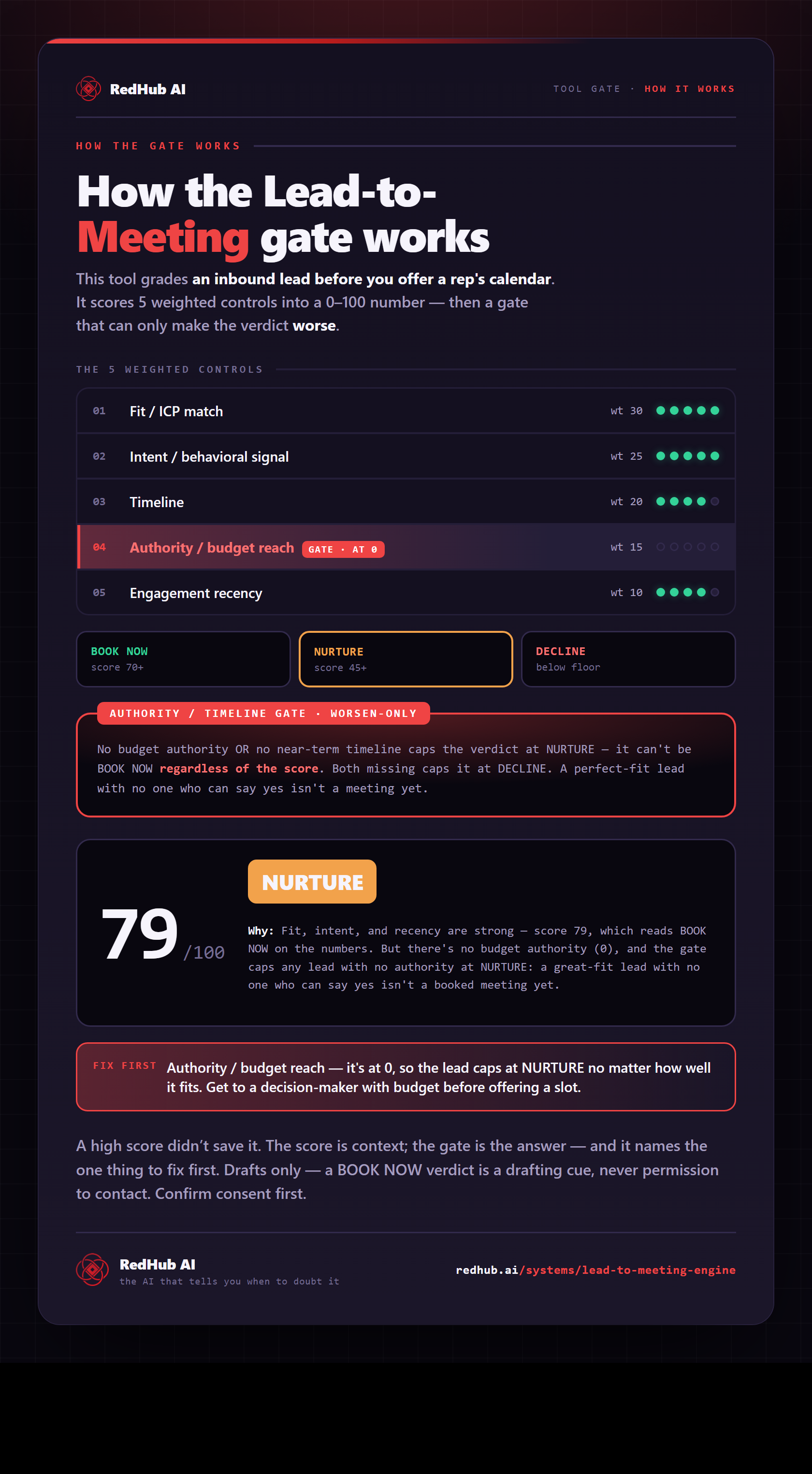
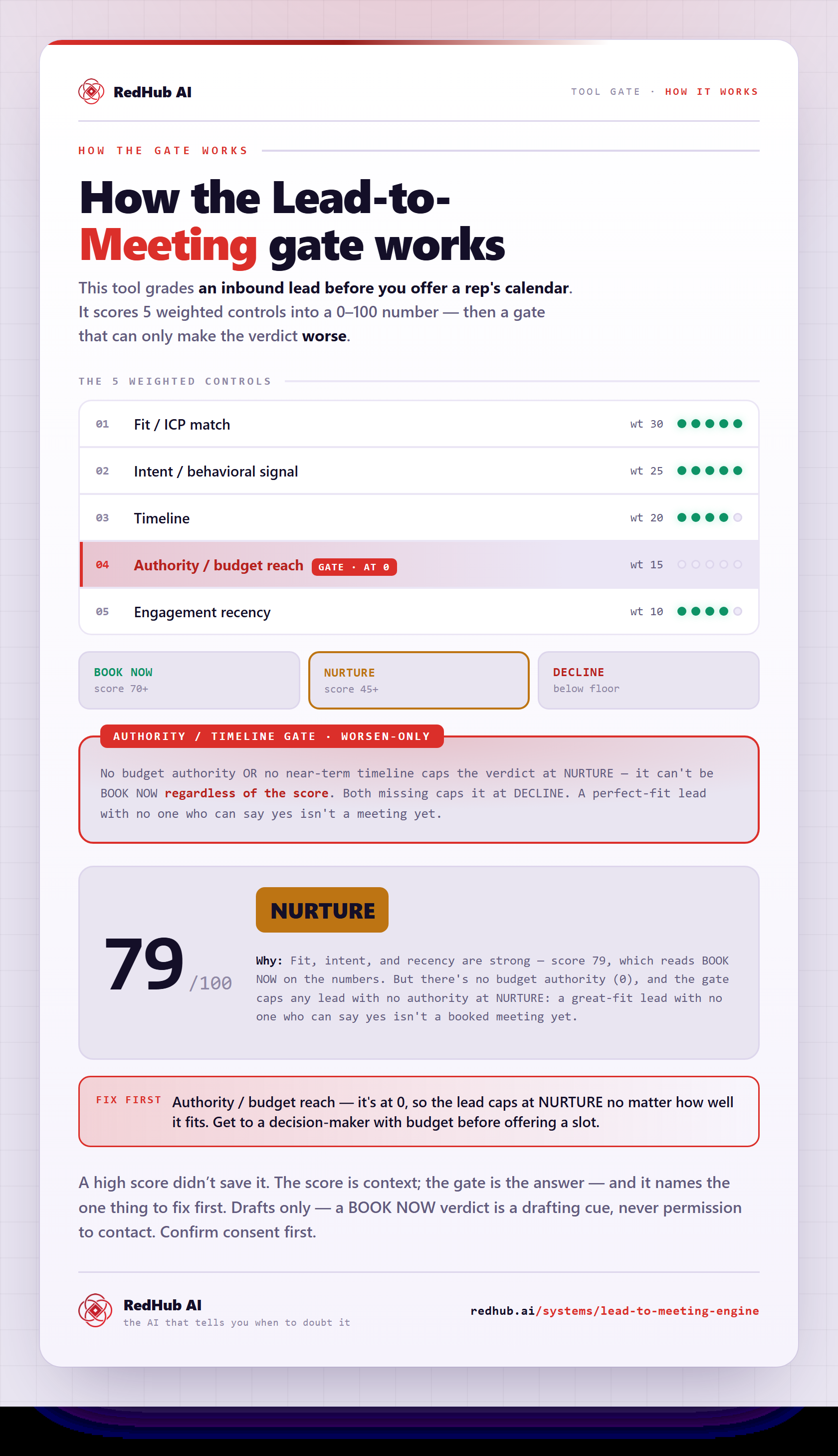
The gate this post refers to, drawn from the tool’s own logic. See the tool.