Positive Reply Rate: The Only Cold-Email Metric That Matters
RedHub AI Editorialupdated October 4, 20266 min read

Jump to a section6
Positive reply rate is the share of delivered cold emails that get an interested response, such as a question, a "tell me more" or a request for a call, as opposed to any reply at all. It matters more than plain reply rate because it moves in the same direction as your pipeline. You can lift raw replies by annoying more people. You can lift positive replies only by reaching the right people with the right message. It's the number the Cold Email Reply-Rate Optimizer ($39) ranks variants by.
TL;DR: Positive reply rate = interested replies ÷ delivered. Raw reply rate counts rejections as wins, so it can rise while a campaign gets worse. In the Optimizer's sample data, the variant with a 14% reply rate has a 2% positive reply rate, and the one with 11% has 5.6%. Define "positive" once, track it per variant, and rank on it. Part of the guide on improving your cold email reply rate.
Why raw reply rate misleads you
Raw reply rate is easy to measure and easy to game, which is a bad combination. Every "unsubscribe," every "how did you get my email," every terse "no" lands in the same bucket as a genuine "this is interesting." So a variant that provokes people, like an aggressive subject line or a bait-and-switch opener, can post a higher reply rate while burning goodwill and drawing spam complaints.
The Optimizer ships with three example variants, and the third shows the problem. Variant C, an aggressive subject line, draws 70 replies from 500 delivered emails, a 14% reply rate. Only 10 of those replies are interested, so its positive reply rate is 2%. Variant B draws 55 replies, or 11%, and 28 of them are interested: 5.6%. Ranked on raw replies, C wins. Ranked on positive replies, B wins by nearly three to one. These are the sheet's sample numbers, not results from a real campaign, but the pattern is the one to watch for in yours.
How to define "positive" without kidding yourself
The metric is only as honest as your definition, so pick one and hold it. A reply counts as positive if it moves toward a conversation: it asks a question, requests information or a call, or expresses genuine interest. It is not positive if it's an opt-out, an auto-reply or a flat rejection. A polite "no thanks" is not a soft yes, however slow the week has been.
The hard cases don't sort cleanly. "Not me, try Dana in ops" isn't interest, yet it may be the best lead the campaign produced. "Not now, check back in Q3" might be a brush-off or a real future yes. Two people scoring the same inbox will split on replies like these, and the Optimizer can't settle it for you, because it counts whatever number you type in. Write the rule down before the first reply arrives, decide where referrals and "later" go, and have one person apply it. You will still get some calls wrong. Consistent wrong calls still compare fairly across variants.
How to track it per variant
Positive reply rate earns its keep when you track it variant by variant, so you can see which specific change produced the interested responses. For each version of an email, record:
- Delivered: sent minus bounces, because a bounce never had a chance to reply.
- Replies: every response, so you can also watch the negative share.
- Positive replies: the interested subset, by your fixed definition.
- Meetings: the outcome positive replies are supposed to produce.
- Bounces: the deliverability check that tells you whether a low score is a copy problem or a list problem.
Positive reply rate is positive replies divided by delivered. The Optimizer computes bounce rate as bounces divided by delivered plus bounces, and above 2% it marks the variant "Fix list." Variant C in the sample trips it: 12 bounces out of 512 sent is 2.3%. Watching meetings alongside the positive rate catches a different failure, a variant that gets warm replies that never convert, which usually means the interest is shallow or the follow-up is broken.
Where the metric points you next
Once you're ranking by positive reply rate, the next move depends on what the number says. A low positive rate with a high bounce rate is a foundation problem (see why cold emails get no replies). A low positive rate with clean delivery is a message problem, and the fix is a disciplined test (see A/B testing without fooling yourself). And when you want to know whether your rate is "good," compare it with your own baseline, which the benchmarks guide unpacks.
Rank your variants on the replies that count
The Optimizer puts raw and positive reply rate side by side for every variant, picks the winner on positive replies among the variants that pass its bounce check, and flags a bounce rate too high to trust. One spreadsheet for Google Sheets or Excel, with nine AI prompt formulas.
Get the Cold Email Reply-Rate Optimizer — $39Pairs well with
The Lead-to-Meeting Engine ($149) reads the replies that just arrived, scores each BOOK NOW, NURTURE or DECLINE, and drafts a reply proposing real open times from your calendar, for you to send. The Inbound Lead Qualification Engine ($99) ranks who to work first, PURSUE NOW, NURTURE or DISQUALIFY, from your own fit, intent, timeline, authority and recency marks. For the replies that push back, the Sales Enablement Battlecard Builder ($79) builds an objection-handling card, among five, from your own intel.
More in this guide
What is positive reply rate?
The number of interested responses (a question, a request for a call, a "tell me more") divided by cold emails delivered. It excludes opt-outs, rejections and auto-replies, so it tracks pipeline instead of noise.
Why not just track total reply rate?
Because total reply rate counts rejections and unsubscribes as replies. A provocative email can raise it while damaging your reputation. Positive reply rate is harder to game, because the reliable way to raise it is to reach the right people.
How do I decide what counts as a positive reply?
Set one definition and apply it to every variant: a reply is positive if it moves toward a conversation. Opt-outs, auto-replies and flat rejections don't count. Decide in advance where referrals and "check back later" replies go, and have one person do the scoring.
Should I measure against delivered or sent?
Delivered, which is sent minus bounces. A bounced email never reached anyone, so including it in the denominator hides a deliverability problem inside your reply rate. Tracking bounces separately tells you whether a low score is copy or list.
Is a higher reply rate ever worse than a lower one?
Yes. In the Optimizer's sample data, a variant with a 14% reply rate has a 2% positive reply rate, while one with an 11% reply rate has 5.6%. The raw number can rise while the campaign gets worse, which is why positive reply rate is the one to rank on.
How does the Optimizer use this metric?
The Cold Email Reply-Rate Optimizer ($39) ranks your variants by positive reply rate, shows it beside raw reply rate, and marks a variant "Fix list" when its bounce rate is above 2%, so you don't mistake a list problem for a copy problem. You log the numbers, and it does the scoring.
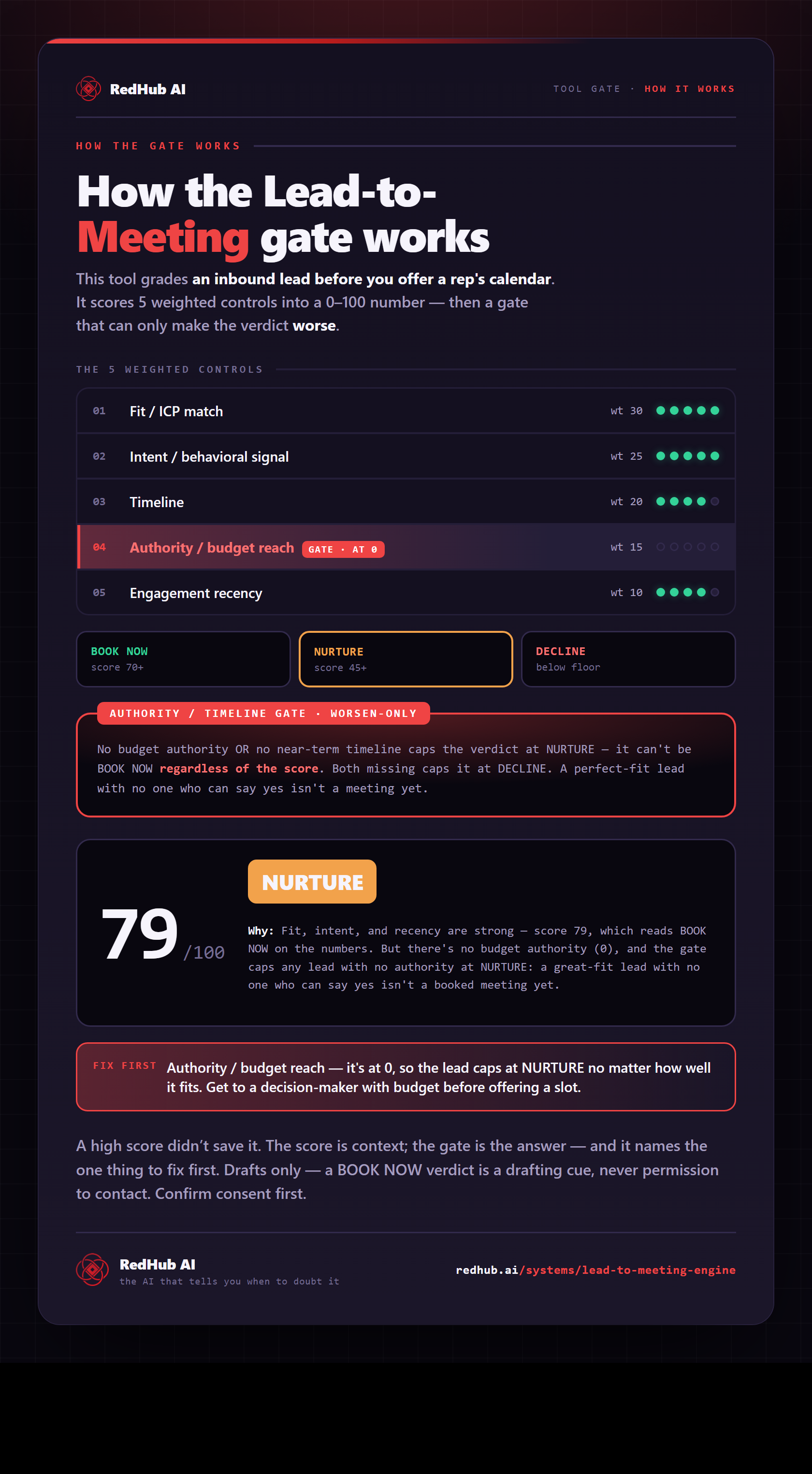
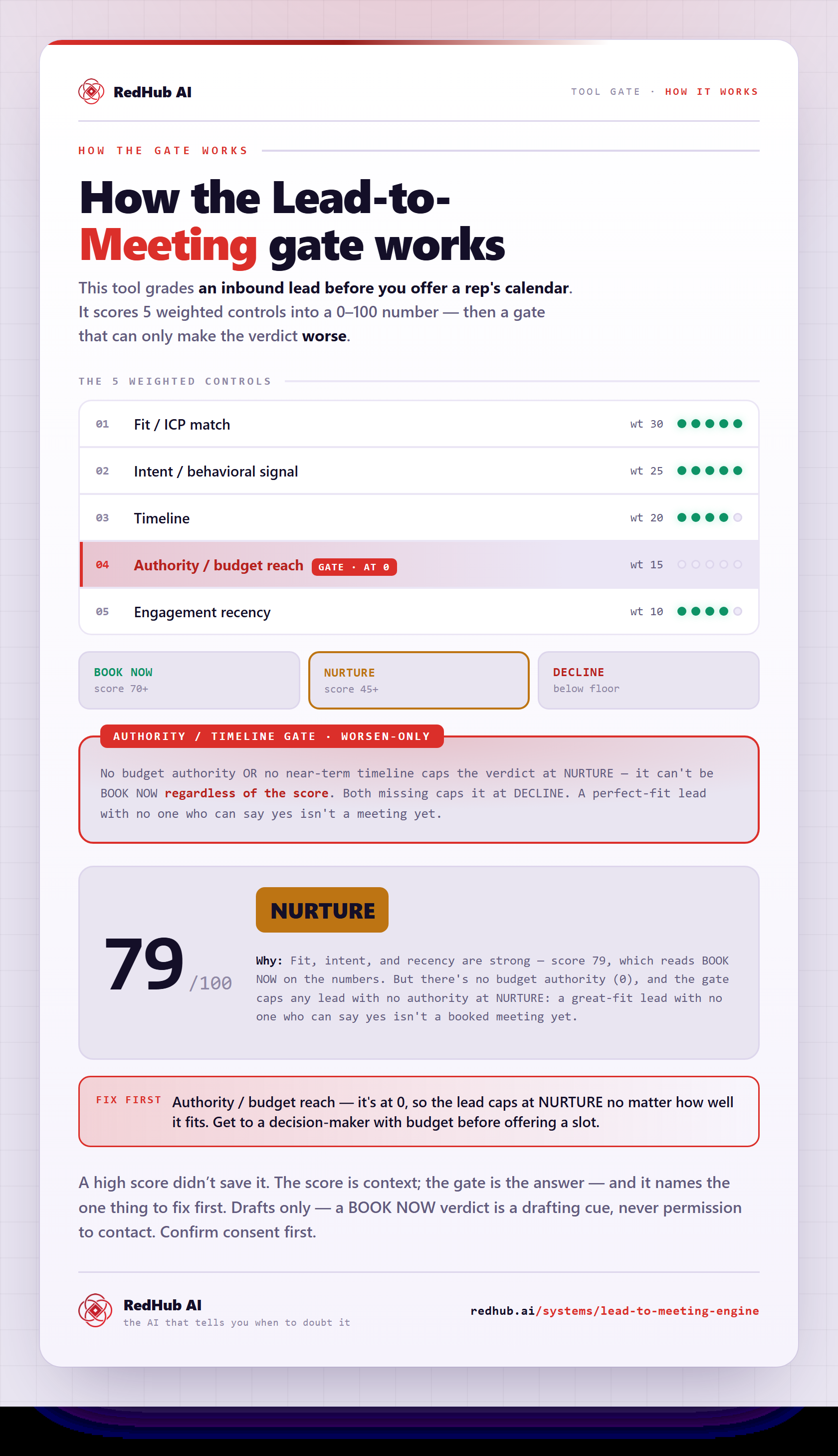
The gate this post refers to, drawn from the tool’s own logic. See the tool.