Deal Qualification: What Makes a Deal Real
RedHub AI Editorialupdated September 7, 20264 min read

Jump to a section8
TL;DR
- What it is: deal qualification is confirming a deal has the two things that make it real — an economic buyer and a real next step.
- Who it's for: founders and sales-led operators grading their own pipeline.
- How it works: check both signals directly instead of trusting the stage a rep set.
- Bottom line: a deal missing either signal is AT RISK — the disqualifier gate Pipeline Commander runs on every open deal.
What is deal qualification?
Deal qualification is the process of confirming that an open deal has two things: a named economic buyer who can actually approve the purchase, and a real next step scheduled with a date. A deal can look advanced — a big number, a late-funnel stage — and still fail qualification if either signal is missing. Qualification is what tells you a deal is real, separate from what the stage says.
Best for: anyone tired of pipeline reviews built on stage names. Pipeline Commander checks both signals on every open deal automatically.
Ask ten sales teams what "qualified" means and you'll get ten different acronyms. Strip away the frameworks and it comes down to two things that actually matter: can this person say yes, and is something specific scheduled to happen next? Deal qualification is checking those two signals directly — not trusting the stage a rep dragged the deal into.
The two signals that actually qualify a deal
Everything else — budget range, timeline, competitive situation — is useful context. These two are the gate:
| Signal | Qualified looks like | Unqualified looks like |
|---|---|---|
| Economic buyer | A named person confirmed to approve the budget | "The champion said it's not really up to them" or unclear who decides |
| Real next step | A specific action with a date on both calendars | "We'll circle back" or nothing booked |
The disqualifier gate
Key insight: a deal missing either signal is AT RISK, regardless of stage or dollar size. This is the disqualifier gate — the rule that a deal can't buy its way out of being unqualified just by being big or advanced-looking.
The gate matters because size and stage are the two things reps unconsciously use to argue a deal is fine. A $50,000 deal at "Proposal" feels safer to report than a $5,000 deal at "Discovery" — even when the smaller deal has a confirmed buyer and a booked next step, and the bigger one has neither. The gate strips out that bias and grades what's actually true.
Other signals worth checking — but not the gate itself
Budget range, decision timeline, and competitive situation all matter for how you work a deal. But treat them as context, not gatekeepers. A deal can be missing a firm budget number and still be qualified if the buyer and next step are confirmed — the number often firms up once the buyer is engaged. Don't let a soft secondary signal excuse a missing primary one.
Why qualification beats stage or size
Stage tells you where a deal sits in a process a rep controls. Size tells you what a rep typed into a dollar field. Neither one is verified against reality. Qualification checks the two facts that are actually confirmable — who can say yes, and what's scheduled next — which is why it's the more honest read on whether a deal deserves your time.
Let the gate check every open deal
Pipeline Commander runs the disqualifier gate on every deal in your CRM — no confirmed buyer or next step means AT RISK, no matter the stage or size — and, where anything needs working, names the one deal to work first.
Get Pipeline Commander — $249 →Once a deal clears qualification, the next job is winning it — see the Sales Battlecard Builder for that. For the full picture on grading and reviewing open deals, start with the sales pipeline management guide.
Decision Guide
Apply this gate if: your pipeline review keeps getting fooled by big, late-stage deals that stall out anyway.
Skip the strict gate if: your sales cycle is genuinely committee-based with no single economic buyer — adapt the signal, don't drop it.
Best first step: pick your five biggest open deals and confirm, in writing, who approves and what's scheduled next.
FAQ
What is deal qualification?
Confirming a deal has a named economic buyer and a real, dated next step — the two signals that separate a real deal from an optimistic guess.
What's an economic buyer?
The specific person who can actually approve the purchase — not a champion or user who likes the product but can't say yes on budget.
What counts as a "real" next step?
A specific action with a date, confirmed on both sides — a scheduled call, a signed proposal review, a demo with the buyer present. "We'll follow up" doesn't count.
Why does missing one signal disqualify the whole deal?
Because size and stage don't offset it. A deal with no confirmed buyer or no next step isn't more real for being large or advanced — it's just a bigger guess.
What if my sales cycle has multiple decision-makers?
Confirm the one person (or small group) with final budget authority. Multiple stakeholders is normal; no confirmed approver at all is the red flag.
How is this different from BANT or MEDDIC?
Those frameworks cover more ground. This is the two-signal core underneath most of them — buyer and next step — kept simple enough to check on every deal, every week.
Can AI check this automatically?
Yes — a tool that reads your CRM can flag deals missing either signal instantly. Confirming the signal in the first place still takes a real conversation with the buyer.
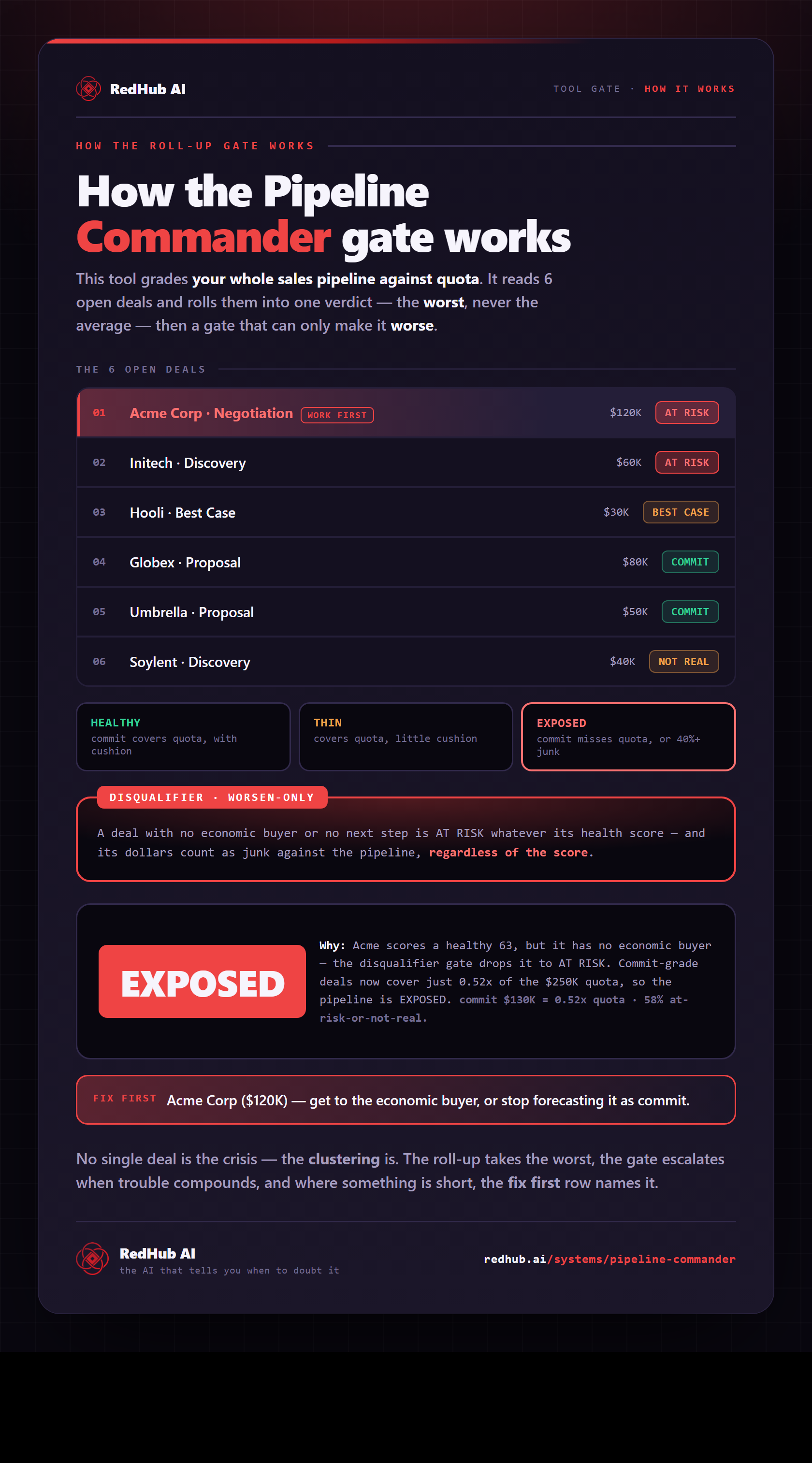
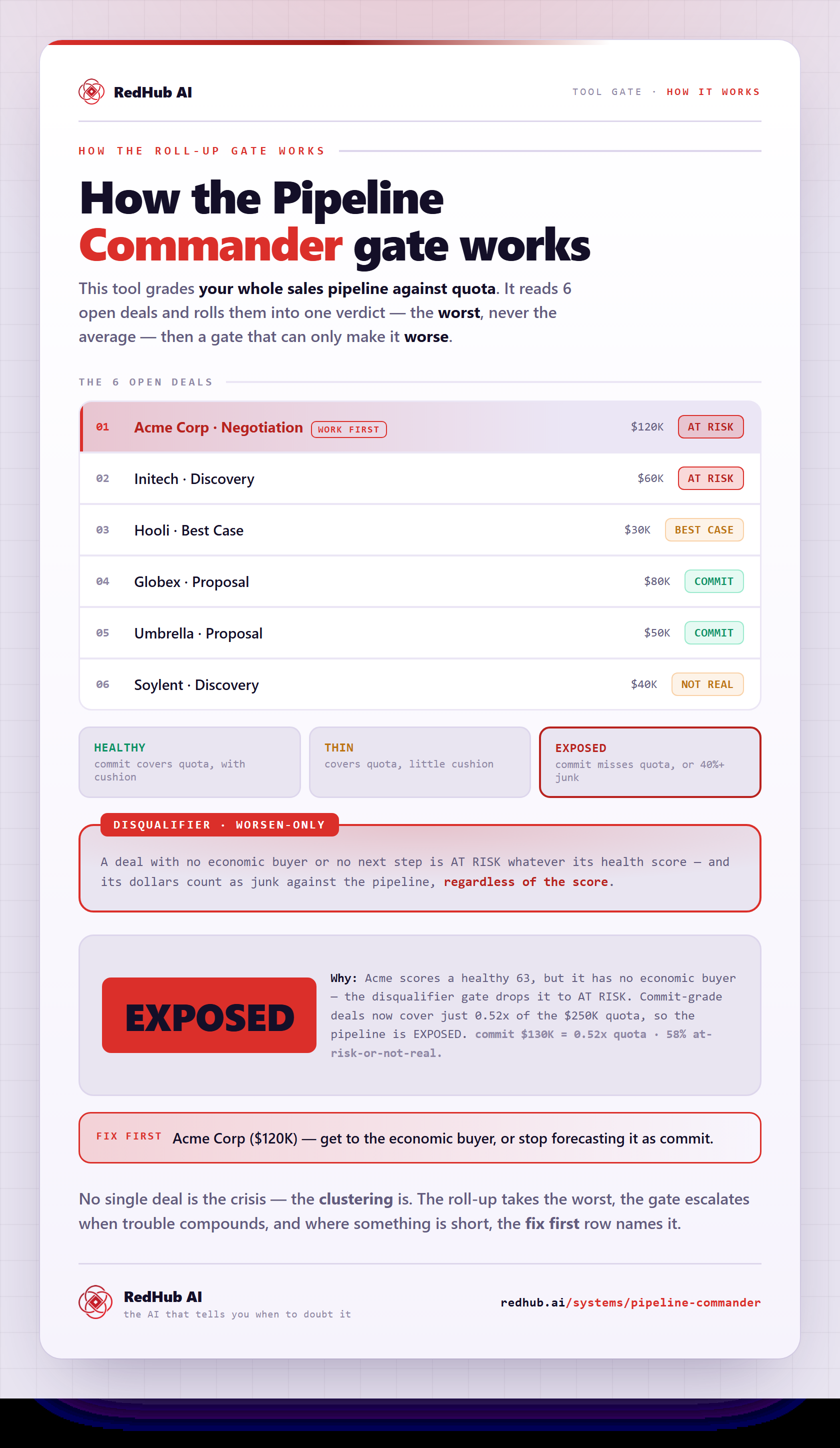
The gate this post refers to, drawn from the tool’s own logic. See the tool.