How to Run a Pipeline Review That Isn't Theater
RedHub AI Editorialupdated September 7, 20264 min read

Jump to a section7
TL;DR
- What it is: a pipeline review that inspects qualification and next steps instead of reciting stage names.
- Who it's for: founders and sales-led operators who run their own review — part of full sales pipeline management.
- How it works: for every open deal, ask about the economic buyer and the next step before you ask about the stage.
- Bottom line: Pipeline Commander runs a version of this review automatically and hands you the honest read.
What is a pipeline review?
A pipeline review is a regular meeting or check where a founder or sales leader looks at every open deal and decides what's real and what needs to happen next. Most pipeline reviews are theater: a rep reads the stage and dollar amount off a screen, a manager nods, and nothing changes. A real review inspects qualification, not recitation.
Best for: teams whose weekly or monthly review feels like status theater. Pipeline Commander grades every open deal before the review even starts.
You know the meeting. A rep pulls up the CRM, reads the deal names, the stages, and the dollar amounts, and everyone nods along. Nothing gets challenged, nothing gets fixed, and the same shaky deals show up next week in the same shaky spot. That's not a pipeline review — it's a status update dressed up as one. A pipeline review that actually works spends its time on one question: is this deal real?
Why most pipeline reviews are theater
Reviews turn into theater when the only thing on screen is what a rep already typed in. Stage and dollar amount are self-reported and unverified — reviewing them is just reviewing the rep's optimism back to them. A real review digs one layer under the stage: who's actually going to approve this, and what's actually scheduled next. Those two answers tell you more than the stage ever will.
Eight questions that kill a fake deal
Run these against any open deal. If the answer to more than one or two is "I don't know" or "we'll follow up," the deal isn't real yet — no matter what the stage says.
- Who is the person who can actually approve this purchase, by name?
- When did that person last speak with us directly?
- What specific next step is on the calendar, with a date?
- What happens if the buyer does nothing? Is there a real cost to them?
- Has the buyer told anyone else on their side about this deal?
- What would make this deal die today, if we're honest?
- If this deal doesn't close this period, what actually changes for us?
- Is the stage on this deal describing reality, or describing hope?
Key insight: if the answer to the buyer question or the next-step question is a shrug, the deal is AT RISK — full stop. That's the disqualifier gate: a missing buyer or a missing next step outranks stage and dollar size every time.
Who should run the review — and how often
A founder or sales leader should run it, not the rep whose optimism is being checked. Weekly is right for a small, active pipeline; monthly is enough once the discipline is established and deals are graded automatically between reviews. Either way, the review is one piece of a founder's broader operating rhythm — the kind of recurring check the Operating Cadence Engine is built to hold in place alongside the rest of the business.
Skip the theater — get the graded review
Pipeline Commander reads your CRM and grades every open deal COMMIT / BEST CASE / AT RISK / NOT REAL before your review starts, so the meeting time goes into decisions, not detective work.
Get Pipeline Commander — $249 →A pipeline review is one part of managing the pipeline honestly — see the full picture in the sales pipeline management guide, or go deeper on the qualification signals themselves in how to qualify a deal.
Decision Guide
Run this version if: your current review is a status recitation and deals routinely stall without anyone noticing.
Skip it if: you already qualify hard before a deal enters the CRM and your pipeline is small enough to track from memory.
Best first step: run the eight questions against your three biggest open deals this week and see how many survive.
FAQ
What is a pipeline review?
A regular check where a founder or sales leader looks at every open deal to decide what's real and what to do next — not a meeting where a rep recites stages and dollar amounts.
How often should we run one?
Weekly for a small, active pipeline. Monthly is enough once deals are graded automatically between reviews, so the meeting only covers exceptions.
Who should run the review?
A founder or sales leader — someone checking the optimism, not the person whose optimism set the stage in the first place.
What questions should we actually ask?
Who can approve the purchase, when they last spoke with us, and what's specifically scheduled next. Those two signals — buyer and next step — matter more than the stage.
How is a pipeline review different from a forecast call?
A review inspects whether individual deals are real. A forecast rolls graded deals up into a number for the period. Run the review first — the forecast is only as honest as the review behind it.
Can AI run the review for me?
It can grade every deal before you sit down, so the meeting starts from an honest read instead of a guess. Deciding what to do about an AT RISK deal is still your call.
Does a graded review replace the rep's job?
No. It tells you which deals need attention. The rep still owns the relationship and does the work of closing the gap.
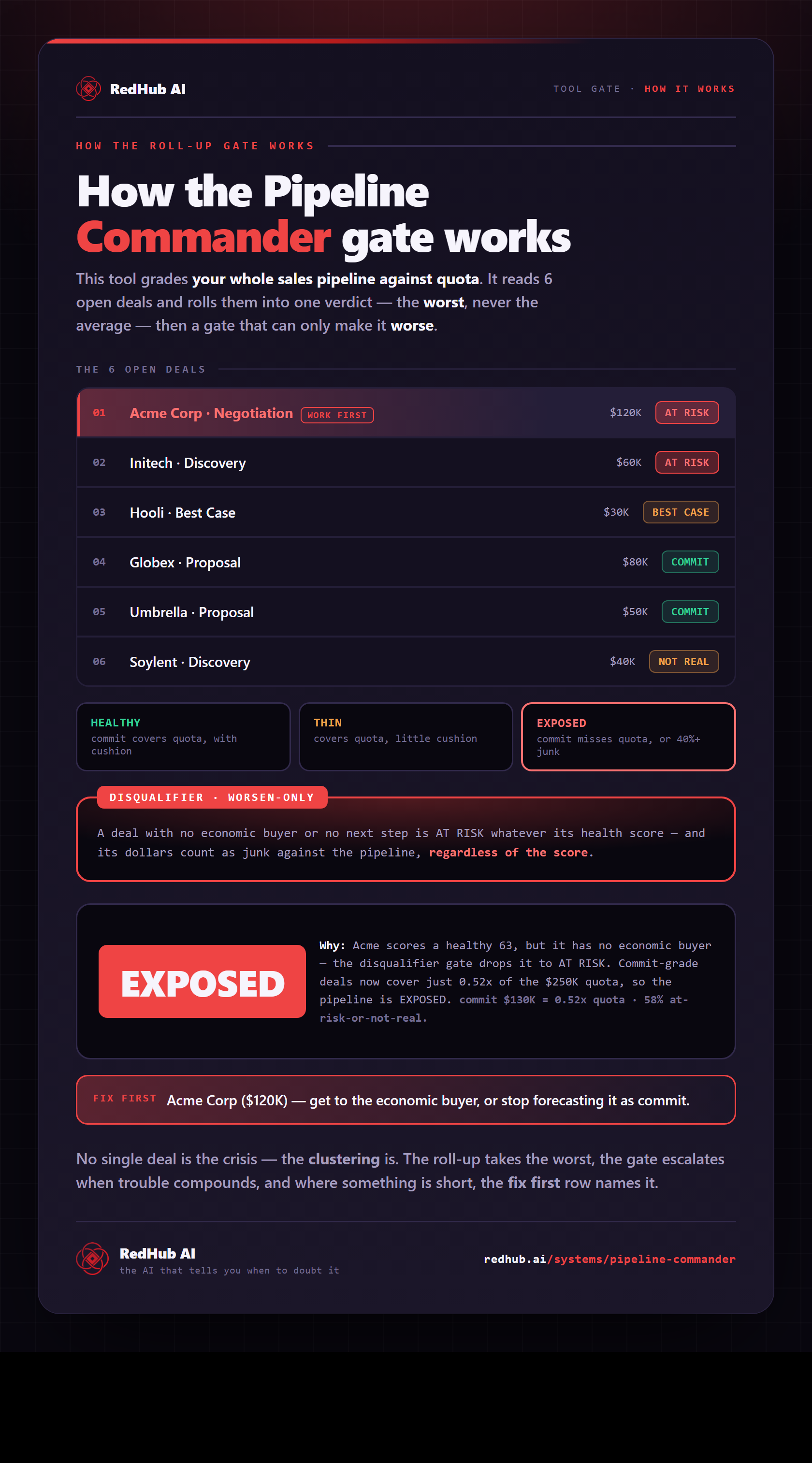
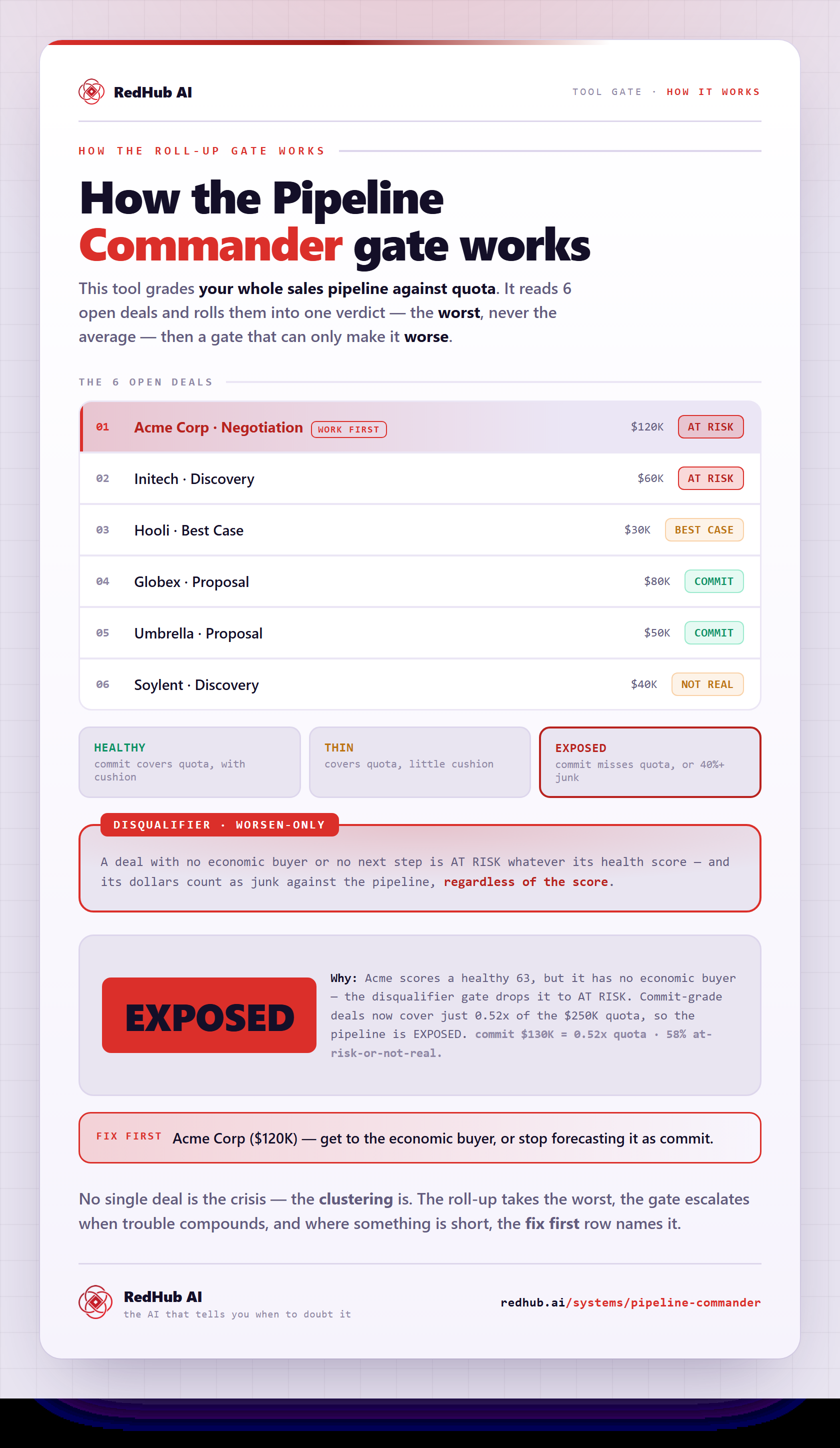
The gate this post refers to, drawn from the tool’s own logic. See the tool.