How to Find Your Category: Where Your Product Actually Competes
RedHub AI Editorialupdated October 5, 20266 min read

Jump to a section7
Call your product a CRM and buyers expect contacts, pipelines and a price near what other CRMs cost. Call the same product a "revenue operating system" and you have changed who they compare you to, what they expect to pay, and whether they understand you at all. That choice is product category positioning: picking the shelf a buyer files you on, which sets their expectations before you say a word about features. Most startups should anchor to a category buyers already know and win inside it. Inventing a new one is a real option, and an expensive one.
TL;DR: Your category is the reference frame buyers use to understand and price you. Join an existing category and you inherit its expectations, which help and constrain you. Create one and you owe the market an education you may not be able to afford. Most early startups should join or subdivide a category buyers already grasp. The exception is a product that fits no existing shelf, where forcing it into one misleads buyers. The Founder's Positioning Forge ($59) makes the category a deliberate decision. See the full guide to startup positioning.
Why the category does so much work
When someone hears your category, they load a set of expectations at once: what you probably do, who else is in the race, roughly what you cost, and what good looks like. That saves you from explaining everything from scratch. It also cuts the other way, because the category's expectations become the yardstick you're measured against, including on price. A product in a cheap, crowded category fights to charge more. A product in a premium category meets buyers who already expect to pay more. The category is the comparison set and the price anchor, whether you chose it or inherited it.
The three category moves
April Dunford's Obviously Awesome describes three styles of positioning for choosing a market: head-to-head, big fish in a small pond, and creating a new game. In plain terms:
- Join an existing category. Anchor to a category buyers already understand and win on your difference inside it. The education cost is lowest and the competition is highest.
- Subdivide a category. Claim one corner of a known category, such as a hypothetical "project management for construction crews." You keep the parent category's clarity and carve out space of your own. 7 Up's "Uncola" ads of the late 1960s worked a version of this, setting a lemon-lime soda against colas, the drinks every buyer already knew.
- Create a new category. Invent a frame that does not exist yet. The upside is highest and so is the cost, because you have to teach the market a new idea before you can sell into it.
When no existing shelf fits
The advice to join a known category has a limit. Some products do not fit any shelf a buyer already has. Force one of those into the nearest category and buyers judge it on features it was never built to have, then call it a weak version of something else. Joining the category misleads them in a quieter way than inventing one would. Creating a category is honest in that case, and it is still slow and expensive to teach. Which mistake costs less depends on how much time and money you have to educate the market, and there is no formula for that. A useful check before you commit: ask five target buyers what they would call your product after a one-minute description. If they all reach for the same existing category, you are probably in it.
How to find the right one
Start from the buyer, not from your product's cleverness. When someone has the problem you solve, what do they type into a search bar or ask a peer for? That phrase is a strong candidate, because it is the frame already in their head. Next, look at what you replace. If buyers switch to you from a specific tool, you are in that tool's category whether you like it or not. Then check the price. If your product is premium and the category is a race to the bottom, resolve that mismatch before launch.
AI is a good devil's advocate here. Describe your "new category" and ask it to argue that you are already in an existing one; that tends to deflate a premature category dream. Its maps of who competes in a category and how it is priced can be out of date or invented, so check them against real search results and competitor pages.
Then commit
Once you choose the category, use it everywhere: your positioning statement, your homepage and your search keywords should all point at the same frame. A product that calls itself three different things on three pages confuses buyers and search engines alike. From there, the category flows into your messaging framework.
Pick the shelf on purpose
Market Category is one of seven time-boxed phases in the Founder's Positioning Forge, a guided 90-minute sprint. Its decision framework helps you choose between joining an established category, sub-categorizing within one, or naming a new one. That choice feeds the positioning statement, ideal customer profile, three messaging pillars and homepage hero rewrite the sprint produces.
Get The Founder's Positioning Forge — $59Pairs well with
The Sales Enablement Battlecard Builder ($79) builds competitor cards from your real intel, which helps reps hold your category frame when a rival tries to compare on its own terms. The AI Offer & Landing-Page Conversion Kit ($79) puts the category on a landing page and scores it with a Conversion-Ready Scorecard. The Brand Voice Engine ($59) keeps the way you describe that category consistent from page to page.
More in this guide
What is a product category in positioning?
It is the reference frame buyers use to understand and compare you: the mental shelf they file you on. It sets expectations about what you do, who your competitors are and what you should cost before you explain anything.
Should I create a new category or join an existing one?
Most early startups should join or subdivide a category buyers already understand and win on their difference inside it. Creating a category forces you to educate the market first, which is slow and expensive. It makes sense mainly when no existing category describes the product honestly.
What are the three ways to position a product's category?
April Dunford's book Obviously Awesome names three styles: head-to-head in an existing market, big fish in a small pond by winning a subsegment, and creating a new game. In plain terms: join, subdivide or create.
Why is inventing a category risky?
If nobody searches for or thinks in your new category, you have swapped a crowded shelf for an empty room and must teach every buyer what you are. Founders often invent categories to dodge comparison, which usually makes them harder to find.
How do I figure out my category?
Start from the buyer: what they search for when they have your problem, and which tool they are switching from. Then check that the category's usual price fits what your product needs to charge.
Does my category affect my pricing?
Yes. The category acts as a price anchor, because buyers arrive expecting roughly what that category costs. A premium product in a cheap category fights uphill on price, so matching category to price point is part of the decision.
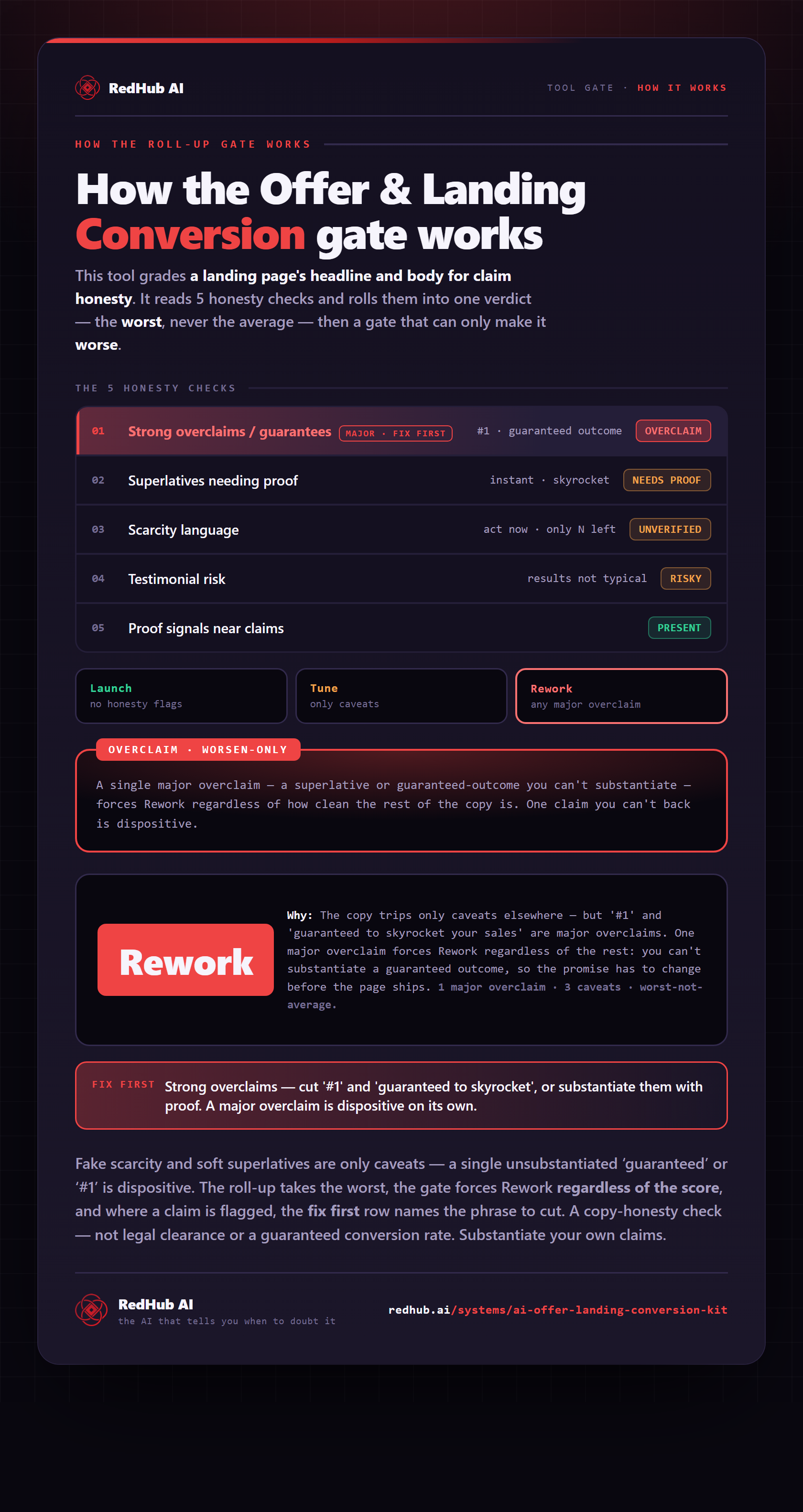
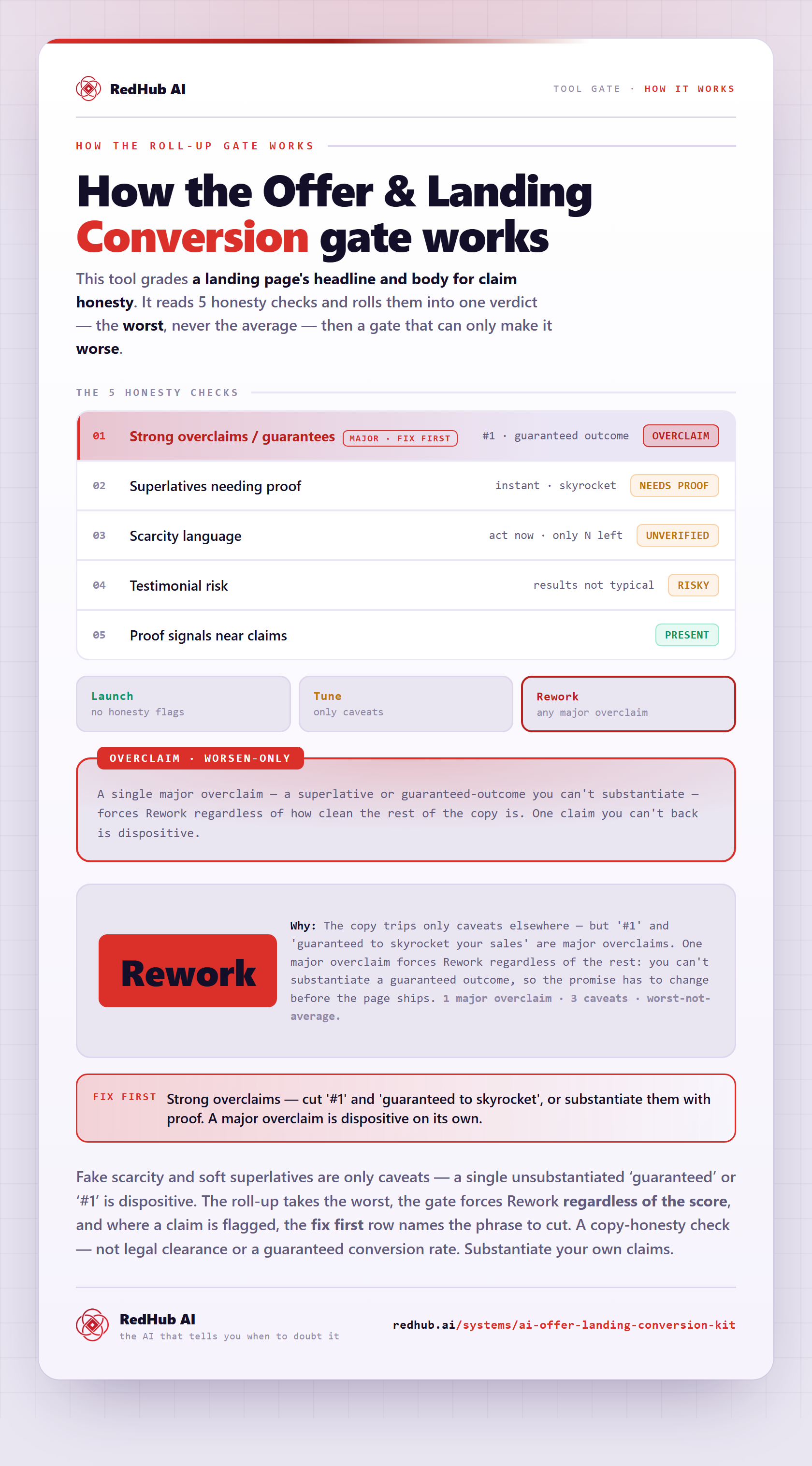
The gate this post refers to, drawn from the tool’s own logic. See the tool.