How to Position Your Startup (So People Instantly Get It)
RedHub AI Editorialupdated October 5, 20266 min read

Jump to a section8
Startup positioning is three decisions made on purpose: who your product is for, what it replaces, and why that buyer should pick it over what they use today. Get them right and a stranger understands you in one sentence. Leave them fuzzy, as in "an AI-powered platform that helps teams do more," and people nod politely and forget you. The hard part is not the wording. It is the choices underneath it, because good positioning excludes people, and saying no to some buyers feels like leaving money on the table. A startup that tries to be for everyone ends up legible to no one.
TL;DR: Positioning is a decision, not a slogan. You choose who the product is for, what it competes against, and why it wins for that buyer. It works by excluding the wrong fit, which feels risky and is the point. It also needs evidence: the buyer you name should come from customers who already love the product, not from a guess. AI can draft and stress-test a position, but it cannot confirm your difference is real. The Founder's Positioning Forge ($59) runs those decisions as a guided 90-minute sprint.
What positioning is, and where the idea came from
Al Ries and Jack Trout popularized the idea in a 1972 series of articles in Advertising Age and in their 1981 book, Positioning: The Battle for Your Mind. Their point was that a position is a place in the prospect's mind, not a line in an ad. That still holds. Positioning answers "what is this, and who is it for?" Your logo, tagline and tone of voice come later, and they express it.
A useful way to hold the difference: brand voice is how you say things, a landing page is where you convert, and positioning is what you are in the first place. If that is muddy, polishing the voice or the page only says a fuzzy thing more beautifully.
The three decisions underneath a position
A widely used modern method comes from April Dunford's book Obviously Awesome, first published in 2019; her site says it has sold more than 100,000 copies. She splits positioning into five components: competitive alternatives, unique attributes, the value those attributes deliver, the customers who care most about that value, and the market category, with relevant trends as an optional sixth. For a first pass, three decisions carry most of the weight.
- Who it's for. A specific buyer with a specific problem, defined tightly enough that they recognize themselves. "Small businesses" fails that test.
- What it replaces. Every product replaces something: a competitor, a spreadsheet, a manual process, or doing nothing. When Userlist, an email platform for SaaS companies, reworked its positioning in 2019, it started naming its main competitors, especially Intercom, and its write-up says prospects then grasped the product faster. The alternative is the reference point that makes a new thing make sense.
- Why you win for that buyer. Better for the person you named, against the alternative you named, rather than better in general. This is where a real, defensible difference has to exist.
Why positioning has to exclude
The urge to keep positioning broad, so nobody feels left out, is a common way founders blunt their own message. Broad positioning captures no one in particular, because nobody feels addressed. Say "for freelance designers who hate accounting," and that designer feels seen while an enterprise finance team correctly opts out. You won a believer, and you skipped a wasted sales cycle on a buyer who was never going to fit.
Narrow only works with evidence
Exclusion has a catch: the buyer you name has to be real. Dunford's method starts by listing your best customers, the ones who understood the product quickly, bought quickly and referred others. Userlist's 2019 positioning work used her method, and its write-up has blunt advice for newer teams: "If you're just starting out, it's worth investing your time into customer calls first, so that you have legitimate material for your positioning exercise."
A founder with no customers has nothing to narrow from. A narrow guess can be wrong. A wrong narrow position can be worse than a broad one, because it turns away the people who would have bought. How much evidence is enough is a judgment call. Five customers who bought for the same reason may tell you more than fifty who bought for different ones, or they may be a coincidence.
Where AI helps, and what it cannot decide
AI is a useful positioning partner in two ways. It drafts fast, giving you ten versions of a statement to react to. And it stress-tests, playing the skeptical prospect who asks "how is this different from what I use now?" What it cannot do is make the call. It does not know your customers, and it cannot check your "different" against what competitors ship today. Ask it to position your startup from scratch and it will write confident copy built on a difference nobody verified. Use it to generate and challenge options. Keep the decision, and the honesty check, with the people who talk to customers.
How the pieces fit together
The rest of this guide walks down the stack. First, write the decision down as a positioning statement that isn't vague. Then separate two things founders mix up constantly: the value proposition versus the positioning. Part of the decision is the category you compete in, because the category sets expectations before you say a word. Last, turn the position into everyday language with a messaging framework the whole team can use.
After that, the position feeds work that is its own craft: brand voice, a landing page that converts, and sales battlecards that defend it in a deal.
Make the positioning decisions in one sitting
The Founder's Positioning Forge is a guided 90-minute sprint: an interactive worksheet, a Claude prompt chain with a ChatGPT version, and decision frameworks. You leave with a positioning statement, an ideal customer profile, three messaging pillars and a homepage hero rewrite. You need a Claude or ChatGPT subscription to run it. Its own page says to skip it if you have not found product-market fit, since sharper positioning won't save a product nobody wants.
Get The Founder's Positioning Forge — $59Pairs well with
The Brand Voice Engine ($59) turns your voice into rules a machine can check, with an 8-section Voice Spec and a 100-point QA Checker. The AI Offer & Landing-Page Conversion Kit ($79) builds the landing page and runs a claim-honesty check that returns Launch, Tune or Rework. The Sales Enablement Battlecard Builder ($79) builds five battlecard types from your real competitive intel, so reps can defend the position on a call.
More in this guide
What is startup positioning?
It is the deliberate decision about who your product is for, what it replaces, and why it is the better choice for that buyer. It is the place you hold in a customer's mind, and your brand voice, website and sales all express it.
How is positioning different from branding or a tagline?
Branding and taglines are how you look and sound, and they come later. Positioning is the decision they express. A polished brand on top of muddy positioning says a fuzzy thing more beautifully, so fix the position first.
Why does good positioning exclude people?
A message aimed at everyone addresses no one. When you name a specific buyer and a specific alternative, the right customer feels seen and the wrong-fit buyer opts out, which saves a sales cycle you would have lost anyway.
Can I position a startup before it has customers?
You can write a hypothesis, but treat it as one. Positioning methods such as April Dunford's start from the customers who already love the product. Without them you are guessing at the buyer, so talk to prospects first and expect to revise.
Can AI write my startup's positioning?
AI can draft versions and play a skeptical prospect, which is useful. It cannot make the strategic call or verify that your difference is real, and it will write confident positioning on a difference nobody checked. Keep the decision with the people who talk to customers.
How do I know if my positioning is any good?
Apply the competitor test: could a rival say your exact sentence? If yes, it describes the category. Then read it to real prospects in your target market and watch whether they recognize themselves in it.
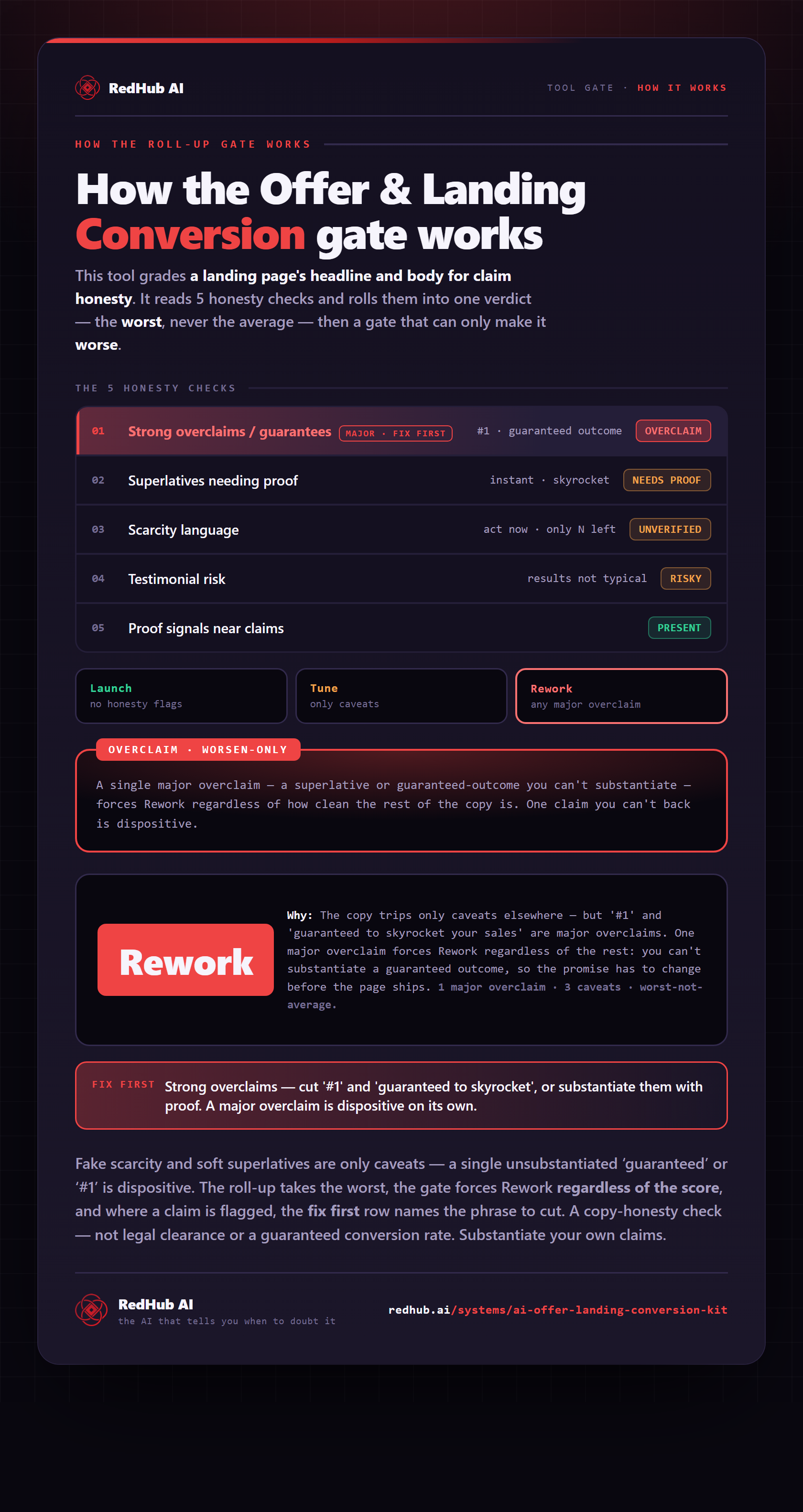
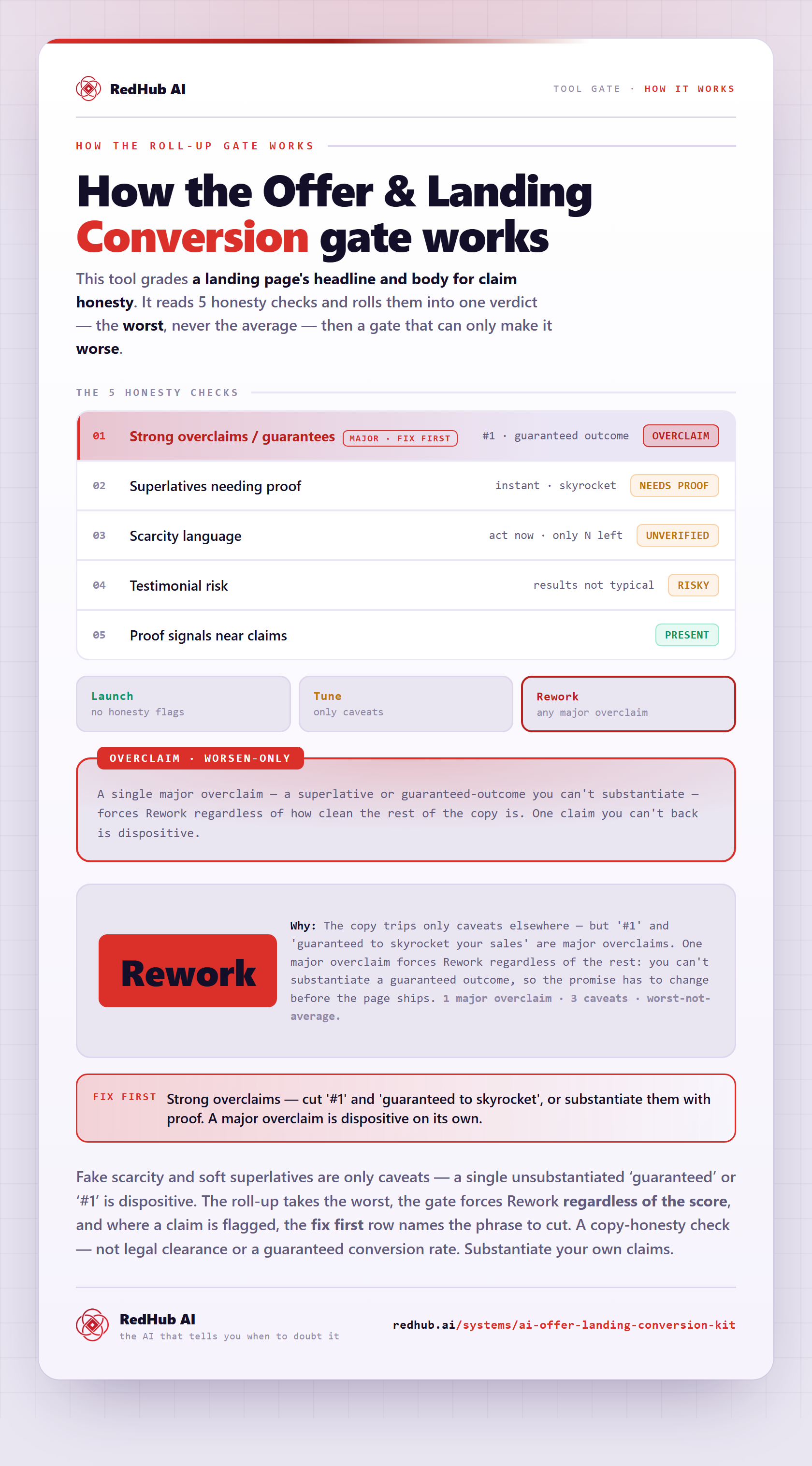
The gate this post refers to, drawn from the tool’s own logic. See the tool.