Value Proposition vs. Positioning: The Difference (and Why Both Matter)
RedHub AI Editorialupdated October 5, 20265 min read

Jump to a section7
Positioning answers "what is this, and who is it for?" A value proposition answers "why should I pick it?" That is the short version of value proposition vs positioning. Positioning is the slot you hold in the market, against the alternatives a buyer already knows. The value proposition is the promise you make to the buyer once you are in that slot. Founders mix them up constantly. The result is marketing with a clear slot and a weak promise, or a strong promise aimed at no one in particular. You need both, and positioning comes first.
TL;DR: Positioning is where you fit and who you are for. The value proposition is the specific benefit that makes a buyer choose you. Decide the slot first, then write the promise for the buyer in it. The line between them blurs in practice: one headline often carries both, and a real, unique benefit can still be the wrong thing to lead with. The Founder's Positioning Forge ($59) sets the positioning so the promise has a frame. This post is part of the guide to startup positioning.
Frame and picture
Think of positioning as the frame and the value proposition as the picture. The frame decides which wall the picture hangs on, who walks past it, and what hangs next to it, which is your competitors. The picture is what the buyer sees and wants. Hang a great picture in the wrong room and the right people never see it. Hang a blank canvas in the perfect room and the right people see nothing worth stopping for.
Positioning: the decision behind the page
Positioning is made of the choices this guide covers: the target buyer, the alternative you replace, the category you compete in, and your defensible difference. It is fairly stable, and you do not rewrite it every quarter. In raw form it is mostly internal. A positioning statement is a decision document, not a headline. Its job is to make sure everything you say points at the same buyer and the same fight. When it is unclear, your homepage, your ads and your sales deck quietly contradict each other, and a prospect who sees two of them notices.
Value proposition: the promise on the page
The value proposition sits closer to the surface. It is the specific, benefit-led promise a buyer reads and thinks "yes, I want that," written in the buyer's words. It shows up directly in customer-facing copy and often becomes the homepage headline. Because it is a promise, it has to be true and deliverable. A value proposition your product cannot keep is a fast way to lose a customer who believed you. That applies twice to drafts from an AI tool, which will happily promise what your product does not do, because it does not know your product's limits.
How they work together
This guide's made-up invoicing tool shows the sequence.
- Positioning sets the frame. It is the invoicing tool for freelance designers who hate accounting, against the alternative of a general accounting app.
- The value proposition fills it. "Send invoices and get paid without opening a spreadsheet." That promise lands because the frame already told the right person it is for them.
- Everything downstream inherits both. The headline carries the promise, the targeting carries the position, and a messaging framework keeps the two consistent across channels.
Where the line blurs
The clean split above is a teaching device, and it leaks. In April Dunford's method from Obviously Awesome, value is one of positioning's components, so the value proposition sits inside the positioning rather than beside it. And on a real homepage, one headline usually does both jobs at once.
Userlist, an email platform for SaaS companies, published a record of its own positioning changes. From March to October 2022 it called itself "company-level email automation for SaaS," built around what it named its unique value proposition: company accounts. Then it moved to "email marketing platform for B2B SaaS." It still offered the company-level features, but the write-up says the idea "was too confusing for many people as part of the value proposition." The feature was real. The value was real. Leading with it still confused too many buyers. There is no rule that tells you in advance when your sharpest difference belongs in the headline and when it belongs one scroll down. You find out by putting it in front of buyers.
Set the frame before you write the promise
Four outputs come out of the Founder's Positioning Forge, a guided 90-minute sprint. The positioning statement and ideal customer profile set the frame. The three messaging pillars and a homepage hero rewrite are where the promise shows up. It runs on an interactive worksheet and a Claude prompt chain, with a ChatGPT version included.
Get The Founder's Positioning Forge — $59Pairs well with
The AI Offer & Landing-Page Conversion Kit ($79) turns the promise into a landing page and keeps a Claim & Proof Log where you match each promise to its evidence. The Brand Voice Engine ($59) keeps the promise sounding like one company on every page. The Sales Enablement Battlecard Builder ($79) builds objection-handling and competitor cards, for the moment a buyer asks a rep why your promise beats the alternative's.
More in this guide
What's the difference between positioning and a value proposition?
Positioning is where you fit and who you are for: the slot you hold against the alternatives. A value proposition is the specific benefit promise that makes a buyer choose you. Positioning is the frame, and the value proposition is the picture inside it.
Which comes first, positioning or value proposition?
Positioning. Decide the buyer and the slot, then write the promise for that buyer. A value proposition written first risks a clever headline that converts the wrong people because it was aimed at no one in particular.
Is the value proposition part of positioning?
In some methods, yes. April Dunford's positioning method treats value as one of its components. In practice the value proposition is the customer-facing promise that comes out of the positioning decision.
Is the value proposition the same as a tagline?
No. A value proposition is the concrete benefit promise, such as "get paid without opening a spreadsheet." A tagline is a short brand phrase. The value proposition often powers the homepage headline, and it is judged on the benefit, not the wordplay.
Can I have positioning without a value proposition?
You can, but it is incomplete. The right people find you and see no strong reason to choose you. You need a promise inside the slot.
Does the value proposition go on my website?
Yes. The raw positioning statement is mostly an internal decision document, while the value proposition is customer-facing and usually anchors the homepage. Because it is a public promise, it has to be something your product delivers.
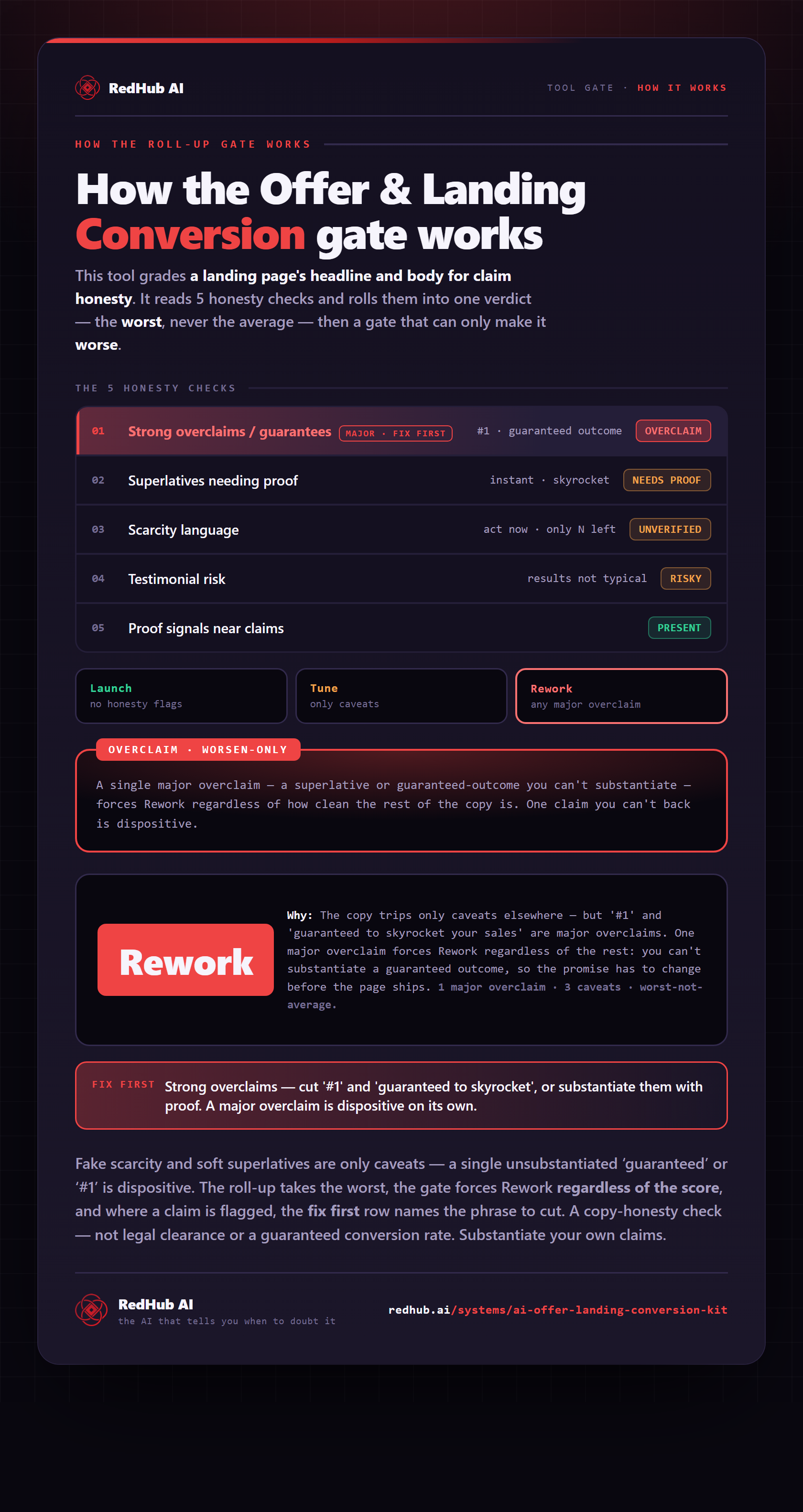
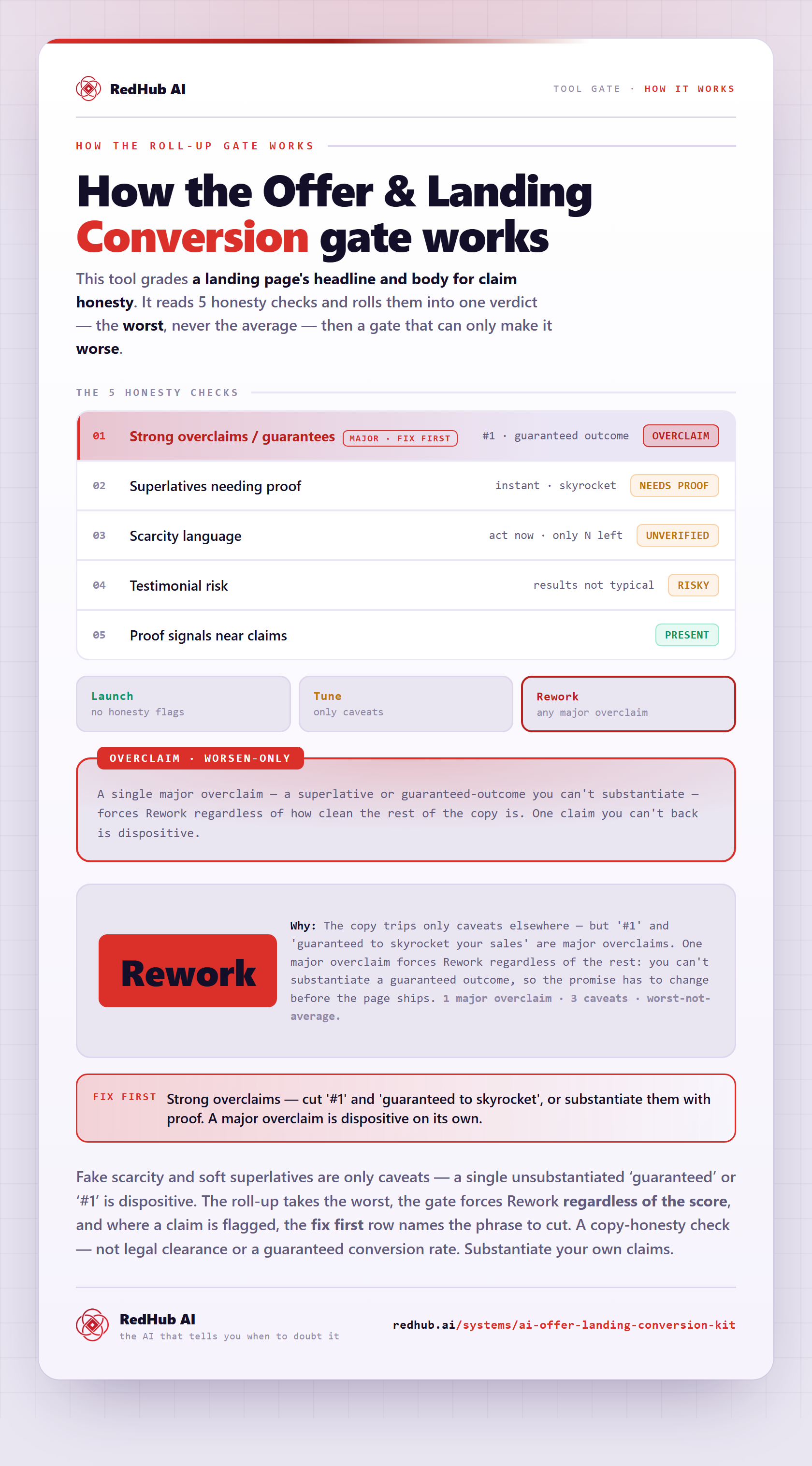
The gate this post refers to, drawn from the tool’s own logic. See the tool.