Reduce Early Churn: Fix the First 30 Days of Onboarding
RedHub AI Editorialupdated August 17, 20266 min read

Jump to a section9
TL;DR
- What it is: Early churn is customers leaving in the first weeks — before your acquisition spend ever pays back.
- Who it's for: Founders and CS leads watching new customers sign up and quietly disappear — see the Customer Onboarding Sequence Kit.
- How it works: Early churn is mostly drift, not decision. Close the gap between signup and first value with a welcome that points at one win, an activation sequence, and a stall-recovery net.
- Bottom line: You can't win back a customer who never got value. The cheapest churn to fix is the churn that hasn't happened yet.
How do you reduce early churn?
You reduce early churn by shortening the gap between signup and the customer's first real value. Most early churn isn't an angry cancellation — it's quiet drift: the customer signs up, hits a small obstacle, gets busy, and never comes back. The fix is an onboarding system with three layers: a welcome that points at one concrete first win, an activation sequence that removes obstacles one at a time, and a stall-recovery sequence that notices silence within days instead of months.
Best for: teams with a refund or churn spike in the first 30–90 days — part of our customer onboarding playbook.
Early churn is the most expensive kind of churn, and the quietest. A customer who leaves in month one cost you the full acquisition price — the ads, the sales calls, the content that won them — and paid back almost nothing. Worse, they rarely tell you they're leaving. They just stop showing up, and the subscription lapses or the refund request lands weeks later.
If you want to reduce early churn, the work happens before the customer ever thinks about leaving. Here's why the first 30 days decide, and the three-layer defense that closes the gap.
What early churn actually costs
Every business's number is different, and any universal figure you read is an estimate — but the mechanics are the same everywhere. A customer who churns before activating forfeits their entire remaining lifetime value, and a leaky first month does that to a slice of every cohort you acquire. Depending on the business, illustrative estimates of that forfeited share of new-customer lifetime revenue often land somewhere in the 10–30% range — not a measured law, but the right order of magnitude to take seriously.
Run your own numbers instead of trusting a range. This is arithmetic on your inputs, not a measured claim:
Estimate what early churn costs you per year
The output is an estimate — it assumes every early-churned customer would otherwise have stayed the average lifetime, which is generous. But even discounted heavily, the number is usually large enough to make onboarding the highest-leverage retention work you can do. And unlike acquisition, fixing it doesn't require new spend. The customers are already arriving.
Early churn is drift, not decision
The mental model most teams have is wrong. They picture a customer weighing the product and choosing to leave. What actually happens, most of the time, looks like this:
- Signup with intent. The customer had a real problem and real hope. Nobody signs up planning to quit.
- A small obstacle. A confusing setup step, a missing teammate, an import that didn't work. Small enough that they plan to come back to it.
- Silence. Life intervenes. Days pass. The product slides down the list.
- The lapse. By the time the renewal or the "should I cancel?" moment arrives, the product never delivered value — so the decision makes itself.
Key insight: the churn "decision" in month three was actually made in week one, when the customer stalled and nothing noticed. That's why win-back campaigns underperform onboarding fixes — by the time you're winning someone back, you're arguing against their lived experience of getting no value.
The three-layer defense
Layer 1: a welcome that points at one win
The welcome sequence's job isn't to tour the product. It's to make the first win feel close and concrete: one action, clearly stated, that gets the customer measurably nearer to value. Every extra option you present in week one is a place to stall.
Layer 2: an activation sequence that clears obstacles
Map the obstacles between signup and your activation milestone — the setup step people skip, the screen that confuses, the invite that unlocks the value — and dedicate one touch to each, in the order customers hit them. This is the core sequence; the full build is in the customer onboarding email sequence that drives activation. If you haven't defined your activation milestone yet, start with customer activation: opens are not the goal — you can't defend a first-value moment you haven't named.
Layer 3: a stall-recovery net that notices silence early
The highest-leverage trigger in the whole system is inactivity. A customer who's been quiet for five days in week one is recoverable; the same customer at month three usually isn't. Stall-recovery messages should be specific and helpful — "here's the step most people get stuck on, and the two-minute fix" — never guilt-based. You're removing the obstacle they stalled on, not scolding them for stalling.
Build the defense before the next cohort arrives
The Customer Onboarding Sequence Kit ($69, one-time) builds all three layers — welcome, activation, stall-recovery — plus adoption, expansion, and milestone messages, with Claude, from your real product and activation milestone. Honest by design: no invented features, no naggy pressure. Runs in your existing email or lifecycle tool.
Get the Onboarding Sequence Kit — $69 →What to do about the churn that already happened
Onboarding fixes forward. For the customers already lost, two different tools apply. If they canceled, learn from it — the Customer Churn Autopsy Kit ($69) turns cancellations into pattern-level findings, and the most common finding feeds straight back into onboarding: they never activated. If they went quiet but haven't formally left — dead CRM contacts, lapsed accounts — the CRM Win-Back System ($149) works that lane. Teams that want the whole retention motion in one purchase can look at the Customer Retention Bundle ($225).
Measure the right number
Two metrics tell you whether early churn is improving: the share of new customers who reach your activation milestone (and how fast), and the share still active at 30, 60, and 90 days. Watch them by cohort — this month's signups versus last month's — so an onboarding change shows up as a visible break in the trend. Open rates can stay flat the whole time; that's fine. Opens were never the point.
Decision Guide
Prioritize early churn if: a visible share of new customers goes quiet in the first month, or refunds and cancellations cluster in the first 90 days.
Look elsewhere if: customers activate reliably but leave at month six or twelve — that's an adoption, value, or pricing problem, not an onboarding one.
Best first step: pull last quarter's signups and count how many never reached your activation milestone. That percentage is your early-churn ceiling — and your onboarding to-do list.
FAQ
What counts as early churn?
Customers who leave — cancel, refund, or lapse — in roughly the first 30 to 90 days, before the product delivered sustained value and before their acquisition cost paid back.
Why is early churn worse than later churn?
Because you paid full acquisition cost and collected almost nothing. A customer who leaves at month eighteen paid you back many times over; one who leaves in month one is pure loss, and the loss repeats with every new cohort until onboarding is fixed.
What causes most early churn?
Drift, not dissatisfaction. The customer hits a small obstacle before reaching first value, gets busy, and never returns. The churn decision at renewal was really made in week one, when they stalled and nothing noticed.
Can better onboarding really reduce early churn?
It removes the largest cause — customers who never reached value because nobody guided them there. It won't save customers with genuine product-fit problems, and no honest tool promises otherwise. Fix the drift first; it's the cheapest churn you'll ever address.
Is the calculator above a measured claim?
No — it's arithmetic on your own inputs, labeled as an estimate. It assumes early-churned customers would otherwise have stayed the average lifetime, which is generous. Use it for order-of-magnitude, then measure your real cohorts.
What about customers who already churned?
Different tools for a different job. Run the Customer Churn Autopsy Kit ($69) to learn why they left, and the CRM Win-Back System ($149) for accounts that went quiet without formally canceling.
How fast can I fix this?
The sequences can be drafted in an afternoon with the Customer Onboarding Sequence Kit and live in your email tool this week. The measurement takes longer — give each cohort 30–90 days to show the trend break.
The cheapest churn to fix is the churn that hasn't happened yet
The Customer Onboarding Sequence Kit ($69, one-time) ships six Claude-built onboarding sequences — welcome, activation, adoption, stall-recovery, expansion, milestones — anchored to your real activation milestone. It protects the revenue you already paid to win. 30-day guarantee.
Get the Customer Onboarding Sequence Kit — $69 →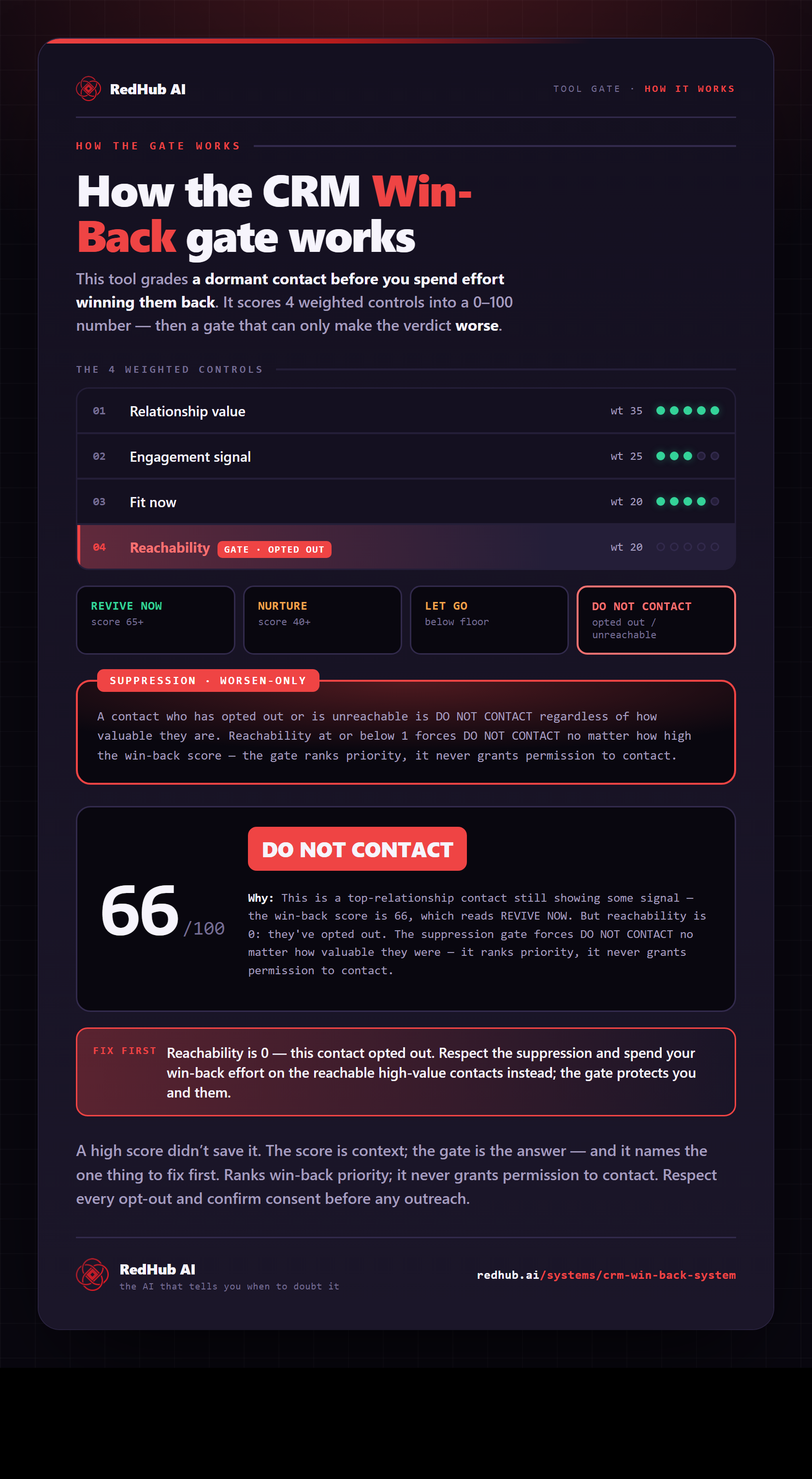
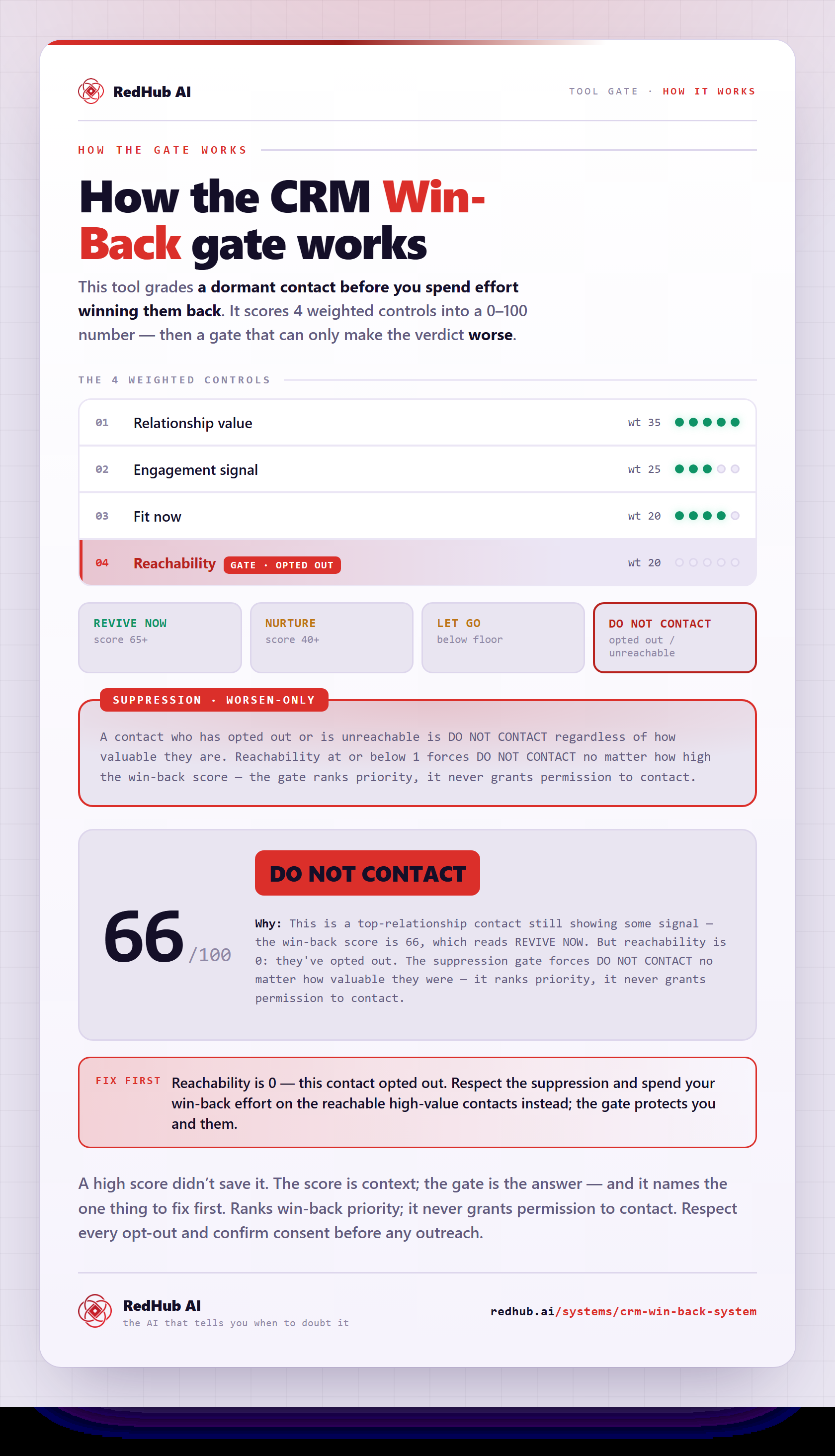
The gate this post refers to, drawn from the tool’s own logic. See the tool.