SaaS Onboarding Best Practices That Drive Activation
RedHub AI Editorialupdated August 17, 20266 min read

Jump to a section9
TL;DR
- What it is: The SaaS-specific onboarding playbook — eight practices that move trials and signups to activation without dark patterns.
- Who it's for: SaaS founders and product/CS teams with signups that don't convert to active customers — see the Customer Onboarding Sequence Kit.
- How it works: Define activation, sequence six message types, trigger on behavior, mix email with in-app, and measure activation rate — not opens.
- Bottom line: The best practices that last are the ones that help the customer succeed. Nagging works once; helping compounds.
What are SaaS onboarding best practices?
The core SaaS onboarding best practices are: define one measurable activation milestone before writing anything; cover the journey with six sequences (welcome, activation, adoption, stall-recovery, expansion, milestones); trigger messages on customer behavior rather than only the calendar; mix email with in-app messages; ask for one action per touch; never oversell the product; catch stalls within days; and measure activation rate instead of opens. The through-line is respect — onboarding that helps the customer reach value, at their pace, with honest claims.
Best for: SaaS teams building or rebuilding their sequence — part of our customer onboarding playbook.
SaaS onboarding has a special problem: the product is self-serve, so nobody has to talk to a human before drifting away. A signup can arrive, poke around for four minutes, hit one confusing screen, and vanish — and the first anyone notices is a trial that didn't convert or a month-two cancellation. The acquisition budget already paid for that signup. Onboarding is what decides whether the spend comes back.
These are the eight practices that consistently separate SaaS onboarding that activates from onboarding that just sends email. None require dark patterns. All of them require deciding what activation means first.
The eight practices
- Define the activation milestone before anything else. One measurable sentence: "A customer is activated when ___." Every practice below depends on this one. The full method is in customer activation: opens are not the goal.
- Cover the journey with six sequences, not one drip. Welcome, activation, adoption, stall-recovery, expansion, and milestone messages — each with one job. A single calendar drip treats the activated power user and the stalled signup identically, and serves neither.
- Trigger on behavior wherever your stack allows. Stall-recovery fires on inactivity. Milestone messages fire on wins. Expansion waits for sustained value. Calendar-only onboarding is a broadcast; behavior-triggered onboarding is a conversation.
- Mix email and in-app. Email carries the narrative between sessions; in-app messages catch the customer at the moment of action, where a nudge actually helps. SMS only where the customer opted in and the moment is genuinely time-sensitive.
- One action per touch. Each message asks for exactly one next step. The "here are ten things to try" email is where signups go to stall.
- Never oversell. Every feature and outcome you name must be real. Oversold onboarding converts trials into disappointed customers — churn with extra steps, plus a trust cost you never fully recover.
- Catch stalls within days, not weeks. A signup quiet for five days in week one is recoverable; the same account at month three usually isn't. Make stall-recovery specific ("here's the step most people get stuck on") instead of guilt-based ("we miss you!").
- Measure activation rate by cohort. The share of new signups reaching the milestone, and how fast. If a change to onboarding doesn't move that number, it didn't work — whatever the open rates say. The measurement side is covered in reduce early churn: the first 30 days decide.
Helpful versus naggy: the line that decides everything
Helpful onboarding
- Removes one obstacle per message
- Triggers on what the customer did (or didn't do)
- Exits customers who already activated
- Claims only what the product delivers
- Celebrates real wins as they happen
Naggy onboarding
- Asks for sessions, not progress
- Sends the same calendar drip to everyone
- Keeps emailing "getting started" to power users
- Manufactures urgency and overpromises
- Guilt-trips silent users instead of unblocking them
Key insight: nagging and helping can look identical on an email dashboard — both generate opens. They look completely different on activation rate and churn. That's the argument for measuring the right thing: it makes the honest strategy also the winning one.
SaaS onboarding versus client onboarding
Worth being precise about lanes. SaaS onboarding moves a self-serve user to a first in-product win, mostly through automated sequences. Client onboarding — agencies, consultants, service firms — moves a paying client through a human-led delivery process with kickoffs, expectations, and handoffs. The milestone-first thinking is shared; the mechanics aren't. This post is the SaaS lane. If you onboard clients, the Client-Onboarding Runway ($129) is purpose-built for that motion.
Where onboarding hands off to support
Even great sequences don't answer every question. The handoff to support is part of the onboarding experience: a confused week-one customer who gets a fast, accurate, honest answer often ends up more committed than one who never needed help. If your support side needs the same treatment as your sequences, the Customer Support & Success Skills Pack ($89) covers accurate, on-brand support workflows with Claude.
Ship all eight practices in one build
The Customer Onboarding Sequence Kit ($69, one-time) operationalizes this playbook: it makes you define the activation milestone first, then builds all six sequences with Claude — behavior-aware, multi-channel, one action per touch, grounded in your real product. Output runs in your existing tool: Klaviyo, HubSpot, Customer.io, Mailchimp, in-app, SMS.
Get the Onboarding Sequence Kit — $69 →Start smaller than you think
You don't need all six sequences live on day one. Start with the welcome and activation sequences — they carry most of the value — and add stall-recovery the week after. Adoption, expansion, and milestone messages layer in as the early numbers stabilize. The mistake isn't starting small; it's starting without a milestone, or measuring the wrong thing once you've started.
Decision Guide
Apply this playbook if: you run a self-serve SaaS product and signups or trials are drifting away before activating.
Adapt it if: your onboarding is human-led (sales-assisted or client services) — keep the milestone-first thinking, swap the mechanics for a client-onboarding process.
Best first step: practices one and two — define the milestone, then draft welcome and activation. Those two sequences carry most of the early-churn defense.
FAQ
What are the most important SaaS onboarding best practices?
Define a measurable activation milestone first, cover the journey with six sequences instead of one drip, trigger on behavior, and measure activation rate by cohort instead of opens. Everything else builds on those four.
How long should SaaS onboarding last?
The scheduled part typically runs about two weeks — welcome plus activation. The triggered parts (stall-recovery, milestones, expansion) don't have an end date; they fire whenever the customer's behavior calls for them.
Should onboarding be email or in-app?
Both, doing different jobs. Email carries the story between sessions; in-app catches the customer mid-action where a nudge helps most. Email-only onboarding misses the moment; in-app-only onboarding can't reach a customer who stopped logging in.
What's the difference between SaaS onboarding and client onboarding?
SaaS onboarding is automated sequences moving a self-serve user to a first in-product win. Client onboarding is a human-led delivery process for service businesses. Shared philosophy, different mechanics — the Client-Onboarding Runway ($129) covers the client lane.
Do these practices guarantee better trial conversion?
No — and distrust any playbook that says so. They remove the obstacles messaging can remove, which is the largest fixable cause of early drift. Product quality and fit decide the rest.
What's the fastest way to implement all this?
The Customer Onboarding Sequence Kit ($69) builds all six sequences with Claude from your product facts and milestone — as a master prompt, an installable Claude skill, or a Claude Project. Draft in an afternoon, edit, load into your tool.
Onboarding that activates — without the dark patterns
The Customer Onboarding Sequence Kit ($69, one-time) turns these best practices into six ready-to-edit sequences, grounded in what your product actually does. Helpful, honest, and anchored to your activation milestone. One-time purchase, 30-day guarantee.
Get the Customer Onboarding Sequence Kit — $69 →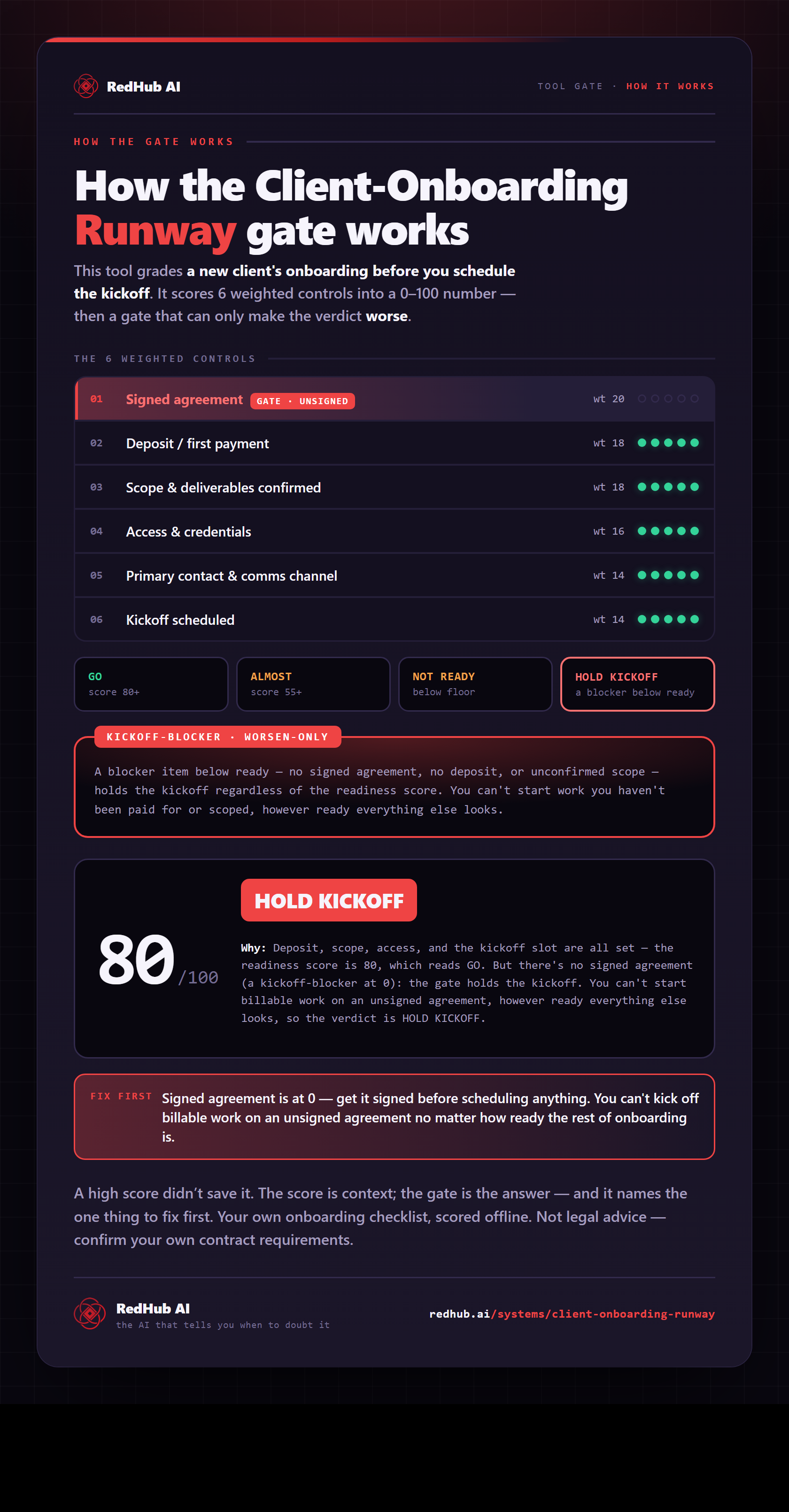
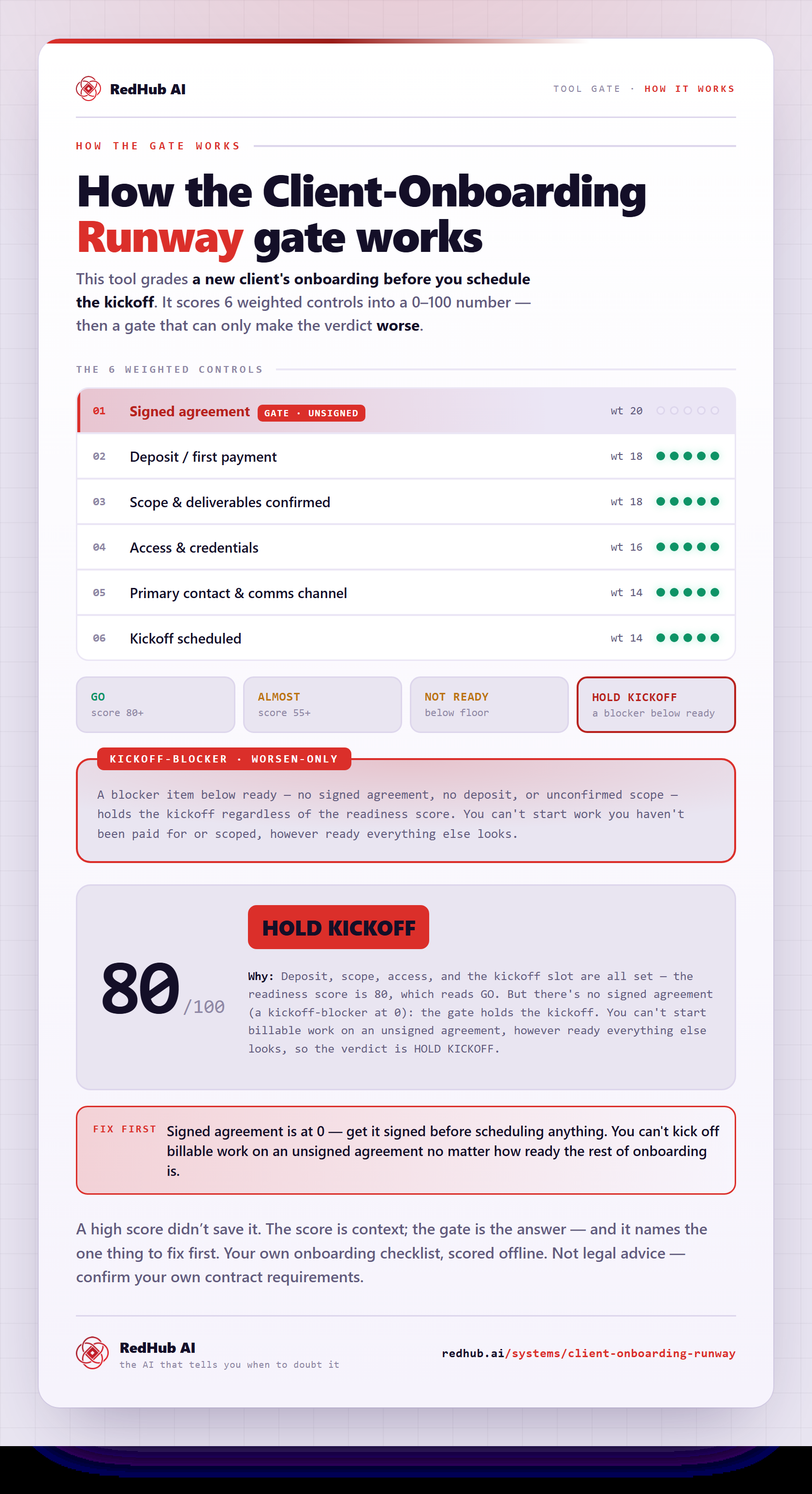
The gate this post refers to, drawn from the tool’s own logic. See the tool.