How to Use AI for Marketing Content (Without Sounding Like a Robot)
RedHub AI Editorialupdated September 20, 20265 min read

Jump to a section8
The fix for AI-written content sounding like AI-written content is editing, not a better prompt. Use AI to get a fast first draft, then rewrite it against a real voice reference — specific words your brand uses, specific words it avoids, and real examples of your own past copy. Skip that step and every piece reads like every other brand's AI output: competent and forgettable.
TL;DR: Default AI output sounds generic because it's trained to sound safe and average, not like a specific brand. Close the gap by editing every draft against real voice examples, cutting the tells (throat-clearing openers, "in today's world," overused em-dashes), and never letting AI write a claim about your product it can't verify. The AI for the Marketer Kit ($39) covers this editing workflow.
Why AI-generated content sounds the same everywhere
AI writing tools are trained on a huge, averaged pile of internet content. Left alone, they default to the statistical middle — polished, safe, and interchangeable. That's fine for a first draft. It's a problem if you ship it as-is, because your brand voice is specific and the AI's default voice is generic by design.
The tell isn't subtle once you know what to look for: throat-clearing openers ("In today's fast-paced world..."), overused transition phrases, a habit of hedging every claim with three qualifiers, and a rhythm that never quite matches how your team actually talks to customers. None of that is a dealbreaker — it's just draft-quality, not ship-quality.
The editing pass that actually fixes it
Three things close most of the gap between an AI draft and something that sounds like you:
- Cut the throat-clearing. Delete the first sentence of most AI drafts — it's almost always a warm-up the reader doesn't need. Start with the actual point.
- Swap in your real vocabulary. If your brand says "team" and AI keeps writing "organization," fix it every time. Small word choices are most of what makes voice recognizable.
- Read it out loud. If it doesn't sound like something a real person on your team would say in a meeting, it's not ready. This single check catches more off-voice copy than any style guide.
A concrete example: a landing-page headline test
Say you're testing headlines for a new pricing page. An AI first draft might give you something like "Unlock Powerful Savings With Our Flexible Pricing Plans" — grammatically fine, brand-voice nowhere. If your actual brand voice is direct and a little blunt, the edited version might become "Pricing that doesn't punish you for growing." Same information, completely different read. The AI got you to a structure fast; the edit is what made it yours.
Run this pattern across every headline variant AI drafts for you. The AI's job is volume and speed. Your job is the two or three edits that make each one sound like your brand instead of a template.
Where AI content work goes wrong
Two failure modes show up constantly: publishing the first draft unedited because it "reads fine," and letting AI write specific claims about your product it has no way to verify — a feature that doesn't exist yet, a pricing tier that changed last quarter, a stat about your own customers it invented because you didn't give it the real number. Both are avoidable with the same discipline: nothing ships without a human checking voice and facts, every time.
What this doesn't replace
Editing a single AI draft to sound on-brand is a skill every marketer needs. It's a different job from building a repeatable, documented voice system your whole team (or your future AI drafts) can follow consistently — that's a deeper problem the Brand Voice Engine is built to solve. It's also a different job from producing content at real volume, which is what the Content Engine for One Person is for when you're the entire content team and need more than one polished piece a week.
The bigger picture
Content quality is one piece of the marketer's AI toolkit — see AI for marketers: where it helps and where to keep your hands on the wheel for how it fits alongside research, skills, and prompting. The short version: AI content work is never "generate and publish." It's "generate, verify, and edit until it sounds like you."
Pairs well with
For a documented, repeatable brand voice across every piece of content, use the Brand Voice Engine. To produce content at volume as a one-person team, use the Content Engine for One Person. Both build on the editing habits in this post.
More in this guide
Why does AI-written marketing content sound generic?
Because AI models default to the statistical average of everything they were trained on — safe and polished, not specific to your brand. Editing against real voice examples is what closes the gap.
What's the fastest way to fix AI copy that sounds off-brand?
Read it out loud. If it doesn't sound like something your team would actually say, rewrite the sentences that feel off — usually the opener and any hedge-heavy phrasing.
Can AI write my brand voice for me?
Not reliably on its own. It needs real examples of your past copy and clear guidance on what to avoid — without that input, it defaults to generic phrasing every time.
Is it safe to let AI write product claims or statistics?
No — never publish a specific claim, statistic, or testimonial that AI generated without verifying it against your actual product and data first. AI will write a confident-sounding number even when it's wrong.
How is this different from the Brand Voice Engine?
This post covers the editing habits for a single piece of AI-drafted content. The Brand Voice Engine builds a documented, repeatable voice system so every draft — yours or your team's — starts closer to on-brand.
How is this different from the Content Engine for One Person?
This post is about quality — making one piece sound like you. The Content Engine for One Person is about volume — producing a steady stream of content when you're a team of one.
Does Google penalize AI-assisted marketing content?
Search engines don't penalize content for being AI-assisted specifically — they penalize thin, generic, or inaccurate content, which is exactly what unedited AI drafts tend to be. Editing for voice and verifying claims fixes both problems at once.
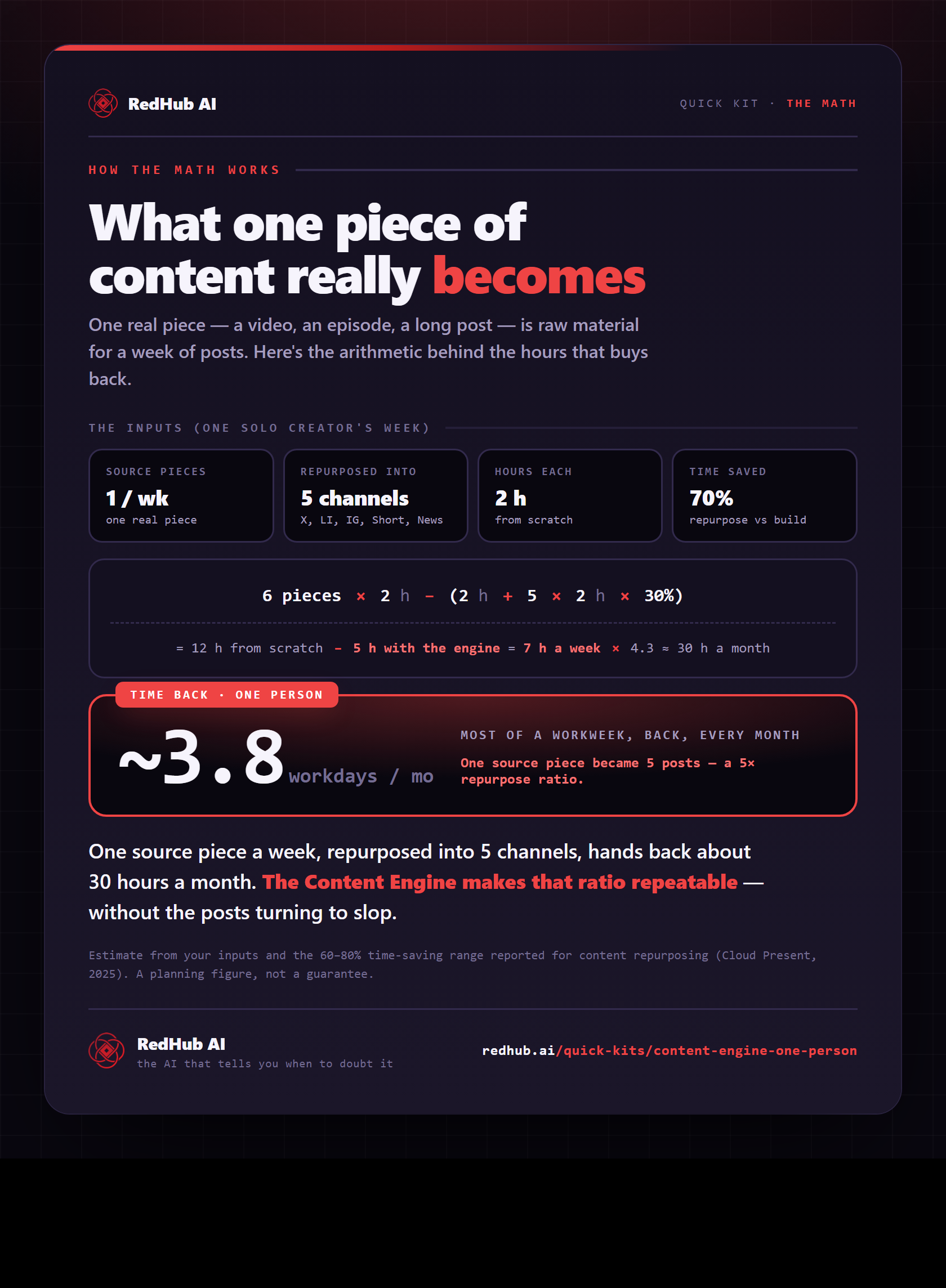
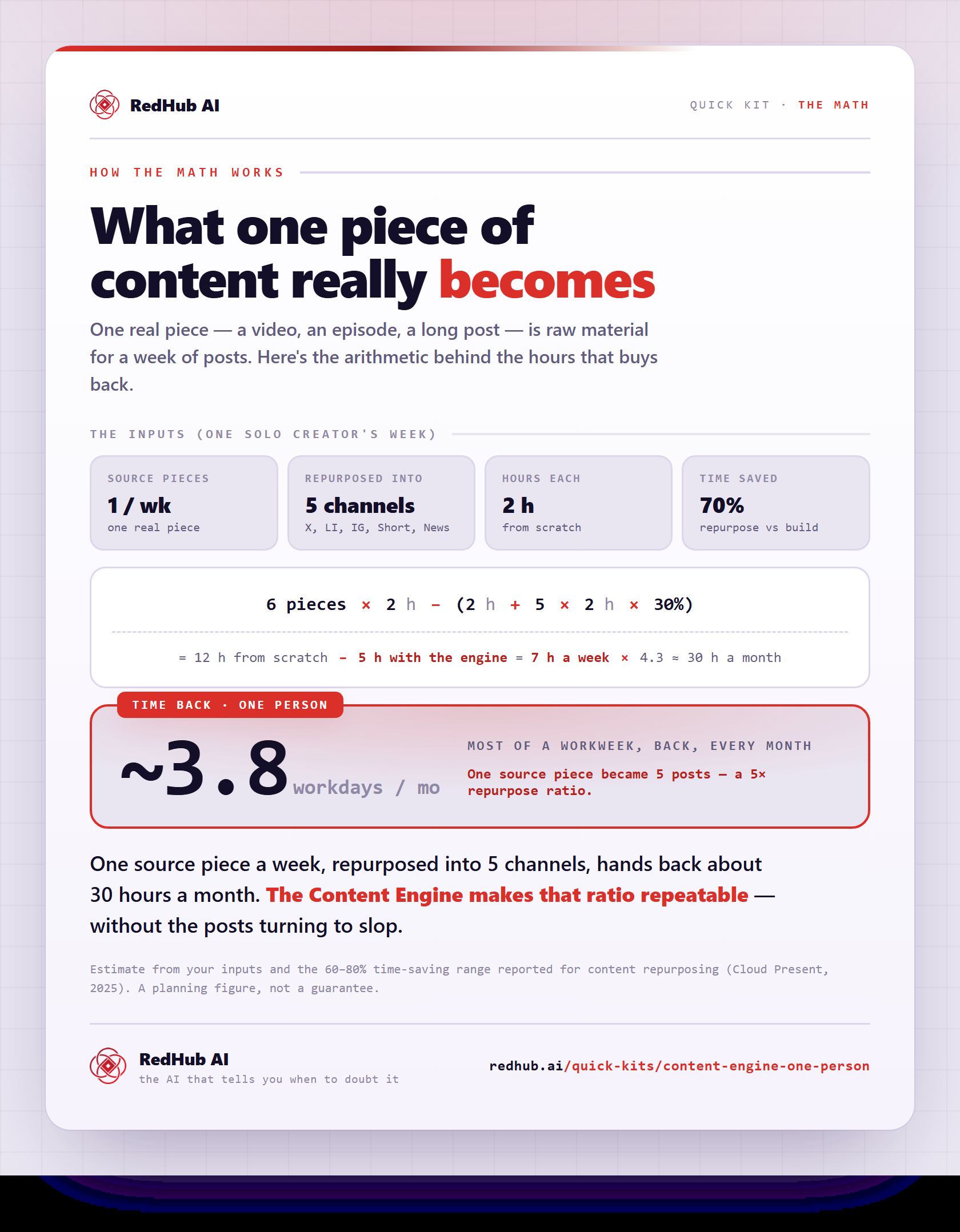
The gate this post refers to, drawn from the tool’s own logic. See the tool.