The AI Marketing Skills Worth Building First
RedHub AI Editorialupdated September 20, 20265 min read

Jump to a section9
- Why most marketers start in the wrong place
- Skill 1: Writing a brief AI can actually work from
- Skill 2: Summarizing research without losing the nuance
- Skill 3: Generating variants you edit, not ship
- Skill 4: Structuring a campaign from a rough goal
- What order to learn them in
- Where this fits in the bigger picture
- Pairs well with
- More in this guide
The AI marketing skills worth building first are: writing a brief AI can actually work from, summarizing research without losing the nuance, generating draft variants you edit rather than ship, and structuring a campaign outline from a rough goal. Learn those four, in that order, before you try anything more advanced — everything else in AI-assisted marketing builds on them.
TL;DR: Most marketers jump straight to "write my email" prompts and get generic output, then conclude AI isn't useful. The actual skill gap is upstream — writing a good brief, summarizing research honestly, and knowing when to trust a draft versus rewrite it. Build those first. The AI for the Marketer Kit ($39) walks through this exact skill order.
Why most marketers start in the wrong place
The typical first move is asking AI to write a finished piece of copy — an email, a landing page, an ad. That's the hardest task to get right and the easiest one to get generic. Copy quality depends on inputs: audience, offer, brand voice, proof points. Skip the inputs and you get filler, no matter how good the tool is.
The better starting point is upstream of copywriting — skills that make every later task easier, not just the current one. Get these right and drafting gets faster and better automatically.
Skill 1: Writing a brief AI can actually work from
A brief that says "write about our new feature" produces generic output. A brief that includes who the audience is, what problem the feature solves for them, what's different about your approach, and one proof point produces something worth editing. This is the single highest-leverage skill in the whole list — every other task gets better once you're feeding AI a real brief instead of a one-line request.
Practice this with something low-stakes first: brief AI on a task you already know the answer to, then check whether the output matches what you'd have written. If it doesn't, your brief was missing something — figure out what, and add it next time.
Skill 2: Summarizing research without losing the nuance
AI is genuinely fast at condensing ten support tickets, a stack of survey responses, or a pile of sales call notes into a one-page brief. The skill isn't asking for the summary — it's knowing what gets lost when you compress. A customer who said "I like it but the onboarding confused me" can get flattened into "customer likes product" if you don't check the source. Always skim the raw material behind an AI summary before you build a campaign on top of it — a summary is a starting point for reading, not a replacement for it.
Skill 3: Generating variants you edit, not ship
Ask for one subject line and you'll either love it or hate it with nothing to compare. Ask for six and you can spot patterns — which angle actually lands, which words feel off-brand, which one you'd never send. The skill is treating every AI draft as raw material for editing, not a finished product. If you're pasting AI output straight into a live campaign without changing a word, you've skipped the skill entirely.
Skill 4: Structuring a campaign from a rough goal
"We're launching a feature next month" is a goal, not a plan. AI is useful for turning that into a first-pass structure — what assets you'll need, what order to ship them in, what the email-to-landing-page-to-follow-up sequence looks like. The skill is treating the output as a checklist to challenge, not a plan to execute blind. Does the sequence match how your actual customers buy? Does it assume a sales team you don't have? Fix the structure before you fix the copy inside it.
What order to learn them in
- Start with briefs. Every other skill depends on this one — a bad brief poisons everything downstream.
- Move to research summarization once briefing feels natural. This builds the habit of checking AI's compression against the source.
- Add variant generation and editing once you trust your own judgment on what "off" looks like.
- Finish with campaign structuring — it's the highest-context task and benefits from having the other three skills already automatic.
Trying to learn all four at once is how people burn a week and give up. One at a time, with real work, builds the habit faster than any tutorial.
Where this fits in the bigger picture
These four skills are the foundation covered in AI for marketers: where it helps and where to keep your hands on the wheel — the role-level view of what to hand off and what to keep. Once the foundation is solid, the deeper skill is producing content that still sounds like your brand at scale, not like default AI output.
Pairs well with
Once briefing and drafting are second nature, the Brand Voice Engine locks a consistent voice into every AI-assisted draft, and the Content Engine for One Person takes these skills to production volume for a one-person content team.
More in this guide
What's the first AI marketing skill to learn?
Writing a brief AI can work from — audience, problem, angle, and one proof point. Every other skill gets easier once this one is solid.
Why does AI-written copy so often sound generic?
Because the prompt behind it was generic. A one-line request like "write an email" gives AI nothing to work with, so it defaults to safe, interchangeable phrasing.
How many variants should I ask AI to generate?
Five or six is usually enough to spot real patterns without wasting time reading dozens of near-duplicates. The goal is comparison, not volume.
Can I trust an AI research summary on its own?
Not without checking the source material. Summaries compress information, and compression can quietly drop nuance that matters — always skim the raw data behind a summary before building a campaign on it.
How long does it take to build these skills?
Most marketers get comfortable with briefing and drafting within a couple of weeks of regular use. The habit of checking AI output critically takes longer, since it depends on catching your own near-misses, not just following a checklist.
Do I need a technical background to learn these skills?
No. None of these four skills involve code or tooling — they're about how you brief, read, and edit, which is closer to good writing habits than technical skill.
What comes after these four skills?
Producing content that stays on-brand at scale and building a research process where you verify numbers before you trust them — covered in the linked posts above.
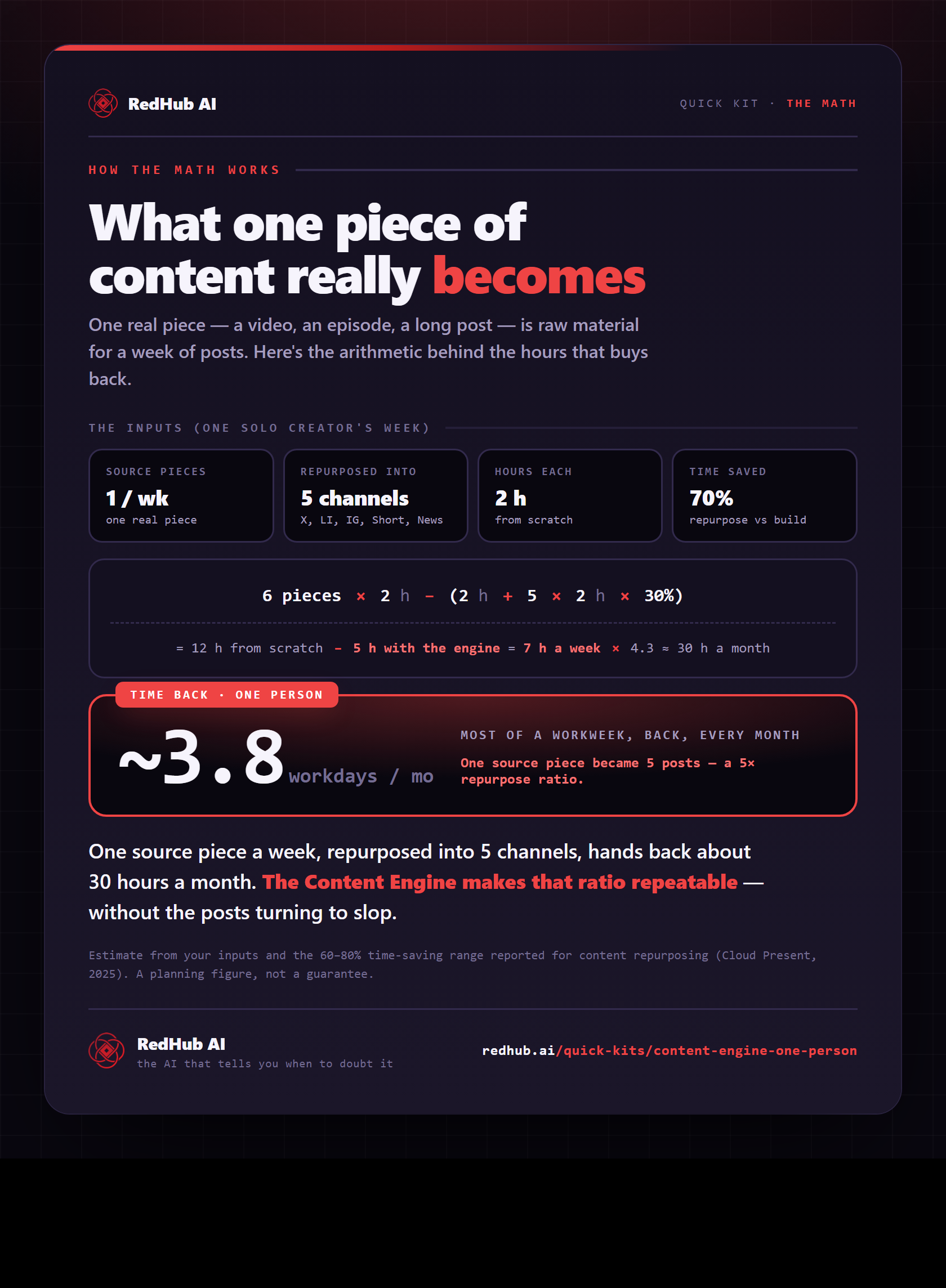
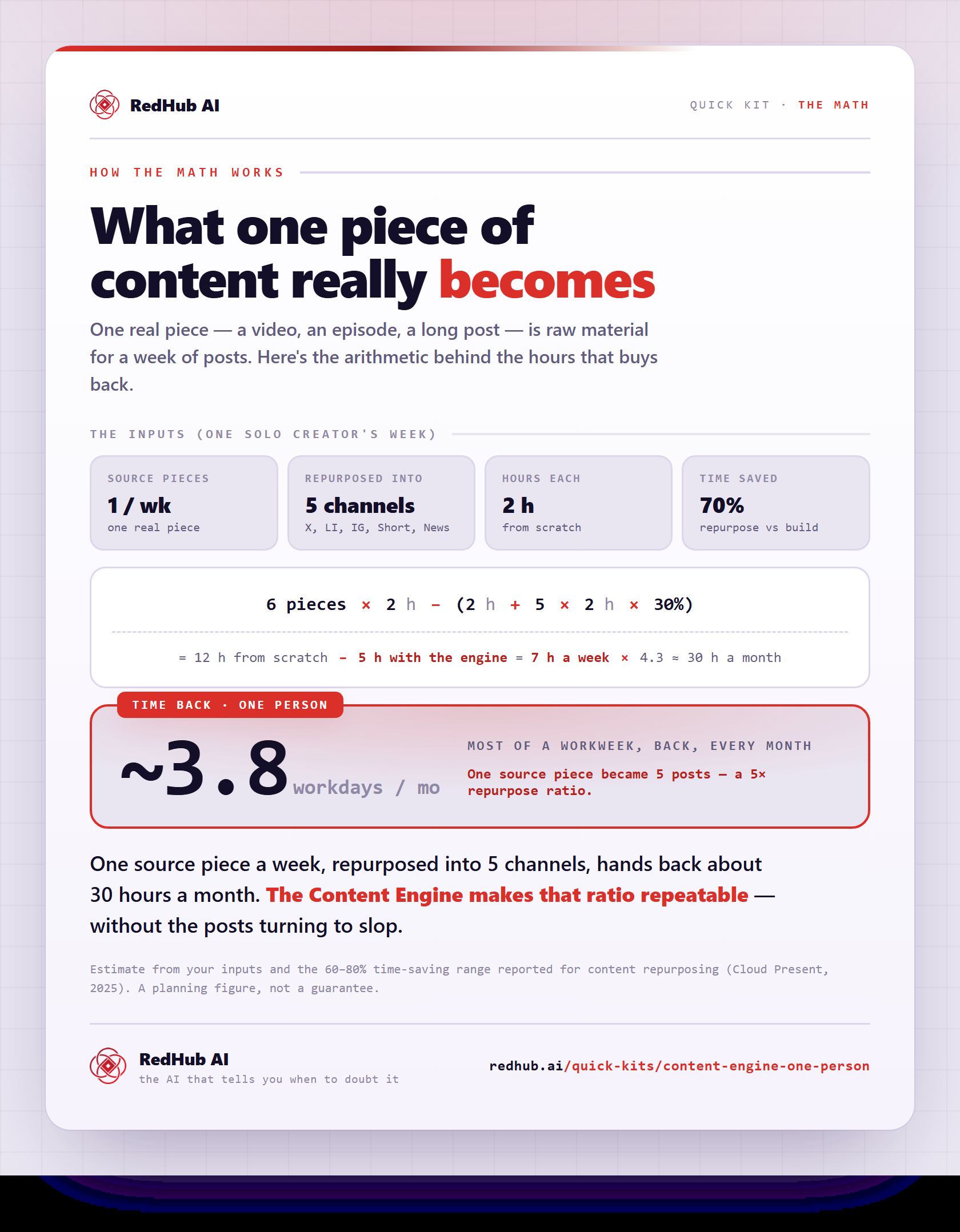
The gate this post refers to, drawn from the tool’s own logic. See the tool.